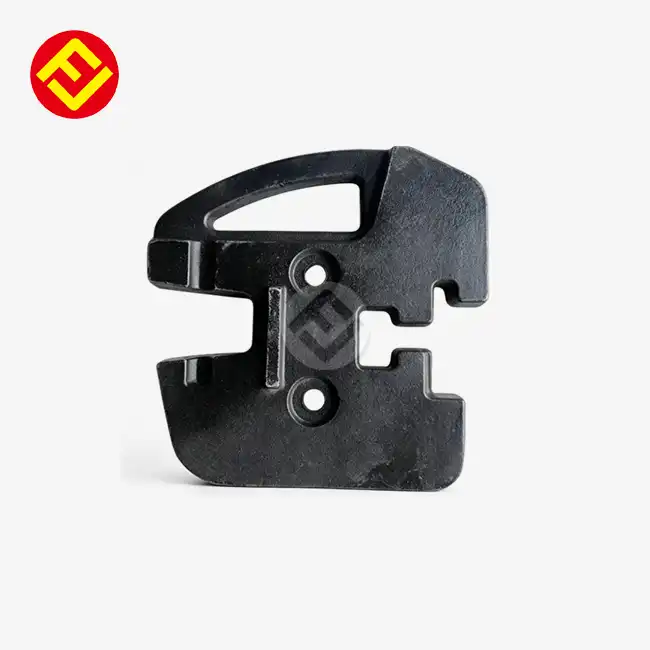
Counterweight For Agricultural Machinery


Material: Gray Cast Iron / Ductile Iron / Steel / Cast Steel (available with rubber coating or plastic overmolding)
Application: Used on agricultural machinery such as tractors, harvesters, and seeders for balancing, counterweighting, and stabilizing operations
Appearance: As-cast natural finish, painted (anti-rust coating), hot-dip galvanized, or plastic-coated surface treatment
Place of Origin: China
Manufacturing Process: Casting (sand casting / lost foam / die casting), machining, welding or bolted connection, surface treatment
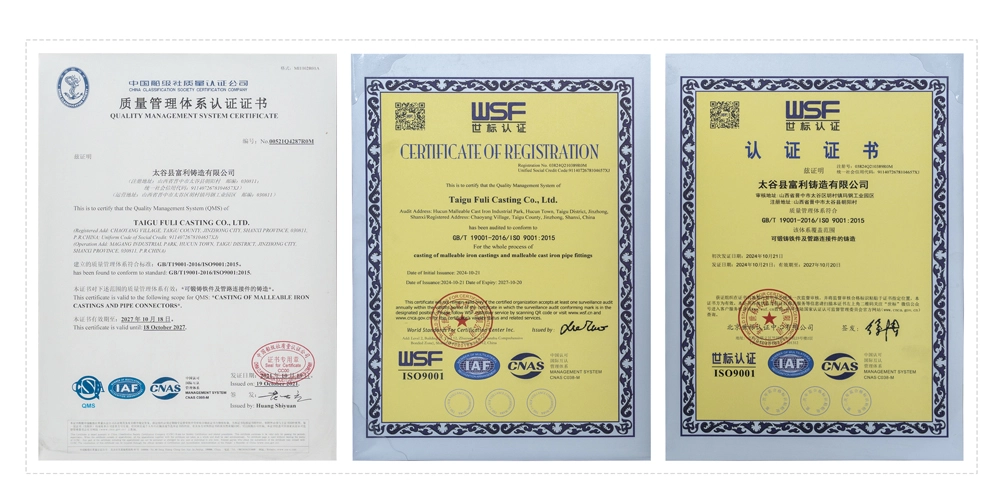
Certification: ISO9001, CE, compliant with relevant machinery safety standards (e.g., EN or GB standards)
Counterweight For Agricultural Machinery: Cast Iron Suitcase, Wheel and Ballast Weights for Stable, High-Traction Field Work
Farm equipment gets its cast iron and steel ballast from FLA Industrial and Trading Co., Ltd. Tractors, combine harvesters and seeders all use one product from that range: Counterweight For Agricultural Machinery. Fit one and the axle load rises. The center of gravity shifts as well. Traction improves, and in the field the machine sits steadier. Gray cast iron is one of the materials. Ductile iron is another. Steel and cast steel turn up too. Every part is made in China. Sand casting is one way to shape it. Lost foam works as well. Die casting is a third method, and after that each part gets machined and finished. Weight tolerance runs ±2% to ±3%. Precision ballasting can hold ±1%. ISO9001 and CE certification come with most Products" target="_blank" style="color:blue" >products.
Overview
This product is a ballast part. It sets axle load, center of gravity and traction on heavy farm equipment. Tractors carry them. So do combine harvesters, sprayers and seeders. Out in the field, they keep the machine steady.
Three things make ballast important. Wheel slip climbs past the 10-15% target when the weight is too low. Fuel use then rises, soil gets compacted, and tires wear early. Put on a heavy plow or a front loader and the center of gravity moves. Tipping or "power hop" can follow. For heavy draft work, aim at a weight-to-power ratio of 45-55 kg/hp. More engine power then reaches the ground. Before you pick a weight, check your machine manual for the maximum ballast and axle load.
Material Options and Surface Finishes
The load decides which material fits your this product. Space on the machine matters too. So does your budget.
| Parameter | Specification | Standard |
|---|---|---|
| Primary Material | Gray Cast Iron HT200/HT250 | ASTM A48 Class 30/35 |
| Alternative Material | Ductile Iron | ISO 1083 (Tensile >400 MPa) |
| Density | 7.2 g/cm³ | ISO 185 |
| Weight Tolerance | ±1% to ±2% | Custom OEM Requirements |
| Surface Finish | Ra 12.5-25 | Optimized for Coating |
| Corrosion Resistance | 500+ Hours Salt Spray | ASTM B117 |
| Mounting Tolerance | CMM Verified | ISO 4298 |
| Surface Treatment | E-Coat Primer + Polyurethane | Multi-Stage Protection |
Rubber coating or plastic overmolding is available on the metal options.
Specifications
Dimensions, unit weight, and mounting hole patterns are not listed here. Send a drawing or your tractor model to confirm them, and confirm certification coverage for your specific item.
Applications in the Field
High-horsepower tractors. Plowing or subsoiling heavy clay takes traction. Suitcase weights on the front bracket balance rear-mounted tillage tools. Bolt wheel weights to the rim for extra grip. Front 40% and rear 60% is a common target split.
Front-end loaders. Round bales and silage call for a heavy rear Counterweight For Agricultural Machinery. A 3-point hitch ballast box is common on many setups. Lose that weight and the rear axle loses traction. Too much load then lands on the front axle. Axle damage and tipping can follow.
Combine harvesters. On uneven ground, a wide, heavy header can lift the rear wheels. Weights fitted to the rear steering axle hold those wheels down. Hillside steering control also stays intact.
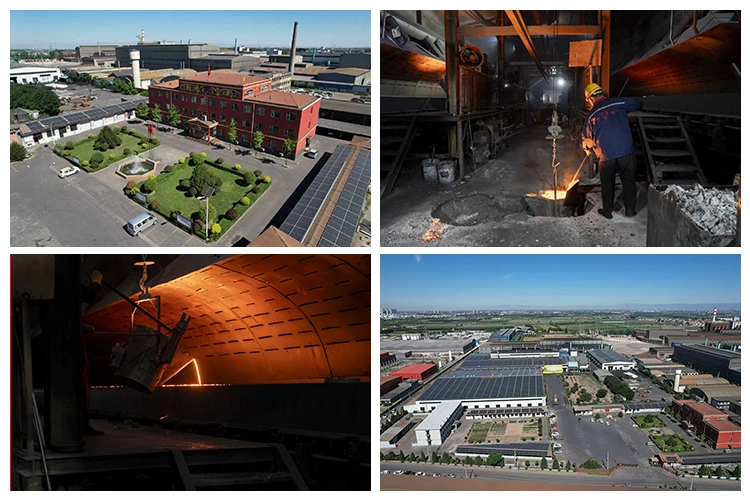
Manufacturing and Quality Control
Every this product gets checked before shipping. We look at chemical composition, fit, and weight. The checks below cover structural strength and mounting precision:
- Chemical analysis: Carbon, silicon, and manganese levels are confirmed by spectrometer tests. Phosphorus stays under 0.15%. The risk of cold shortness and fracture goes down.
- Dimensional fit: CMM or Go/No-Go gauges check the mounting holes and slots. Vibration can start at a misaligned point. Frame damage may come next.
- Weight check: Every part has to stay within the tolerance it states. Too little weight lowers the ballast value. Too much weight adds stress to the machine.
- Ultrasonic testing: This test is meant to catch internal shrinkage cavities and sand holes.
- Impact testing: Sudden loads change how the material behaves. Low-temperature impact testing makes that clear.
- Coating tests: Rust resistance against fertilizer and moisture gets checked two ways. One is cross-cut adhesion (ISO 2409). The other is salt spray (ASTM B117).
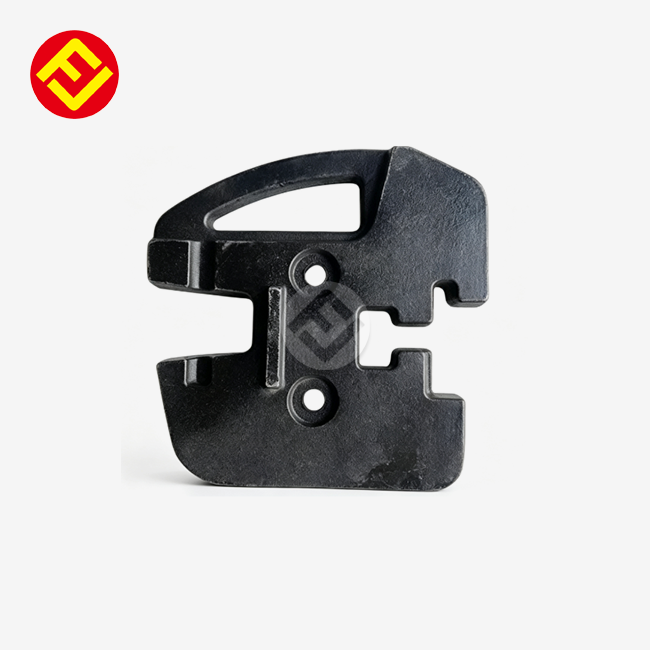
Counterweight For Agricultural Machinery with Custom Mounting and Special-Shaped Parts
Special structures and non-standard sizes get built for machinery, building materials, and other industries. Casting material does not change. Every mounting notch or bolt pattern calls for a new mold. Reverse engineering and 3D scanning let us match the front bracket or wheel rim holes on the target machine.
Help from our technical team runs across the whole order:
- Early stage: This covers mold development and 3D design. Verification comes next, so the part can be reviewed before production.
- Mid stage: The layout gets checked together with you. We also confirm the material, then the performance, and finally the dimensional accuracy.
- Late stage: Production progress updates matched to the delivery schedule.
Stock and Lead Time
About 2,000 tons of Counterweight For Agricultural Machinery inventory support standard orders. Custom special-shaped parts take as little as 7-15 days.
Frequently Asked Questions
Q: How much weight variation is normal?
A: Most parts land within ±2% to ±3% of nominal weight. With precision ballasting the figure drops to ±1%.
Q: Which material should I choose?
A: Gray cast iron sits at about 7.2 g/cm³. So a compact shape can hold a lot of weight. Ductile iron suits parts that take shock loads. Its tensile strength passes 400 MPa. Steel and cast steel are the usual pick for welded or bolted ballast structures. Tell us your space limit and load target, and we match the material to your machine.
Q: How is rust prevented in harsh fields?
A: Pick the E-coat option and the part gets shot blasted to Sa 2.5 first. Next comes an E-coat primer. A high-solid polyurethane topcoat follows. Hot-dip galvanizing and plastic coating are on the list too. Salt spray resistance of 500+ hours (ASTM B117) is what the specification calls for. So name the finish you want when you order.
Q: Can you match my tractor's mounting points?
A: Yes, the mold can be made for your notch or bolt pattern. Reverse engineering and 3D scanning of the target bracket or rim holes are used for fitment. Send your drawings or tractor model to start.
Q: What causes counterweight fracture?
A: Two things can lead to this. One is a high level of phosphorus. The other is porosity inside the part. We keep phosphorus under 0.15%. Ultrasonic testing and low-temperature impact tests are also part of the inspection.
Contact Us
Send your drawings for a Counterweight For Agricultural Machinery to sales@flaindustrial.com. Add the tractor model and the target weight. The material and the finish matter too.
YOU MAY LIKE