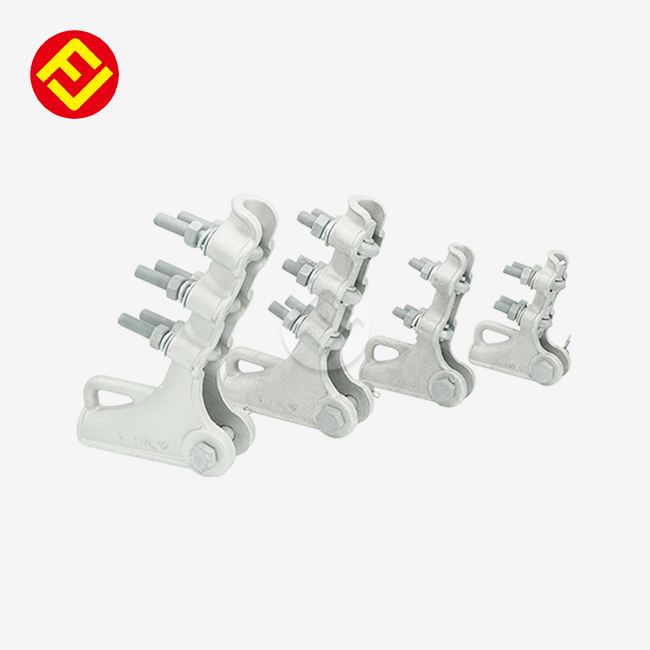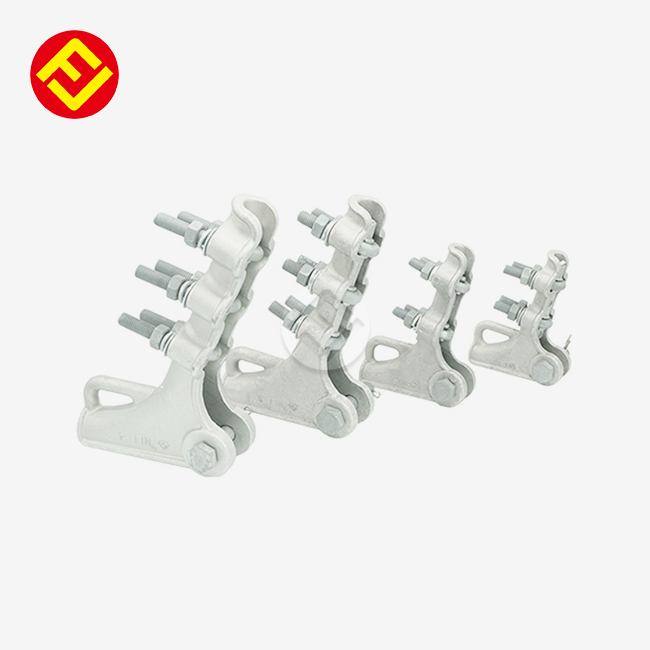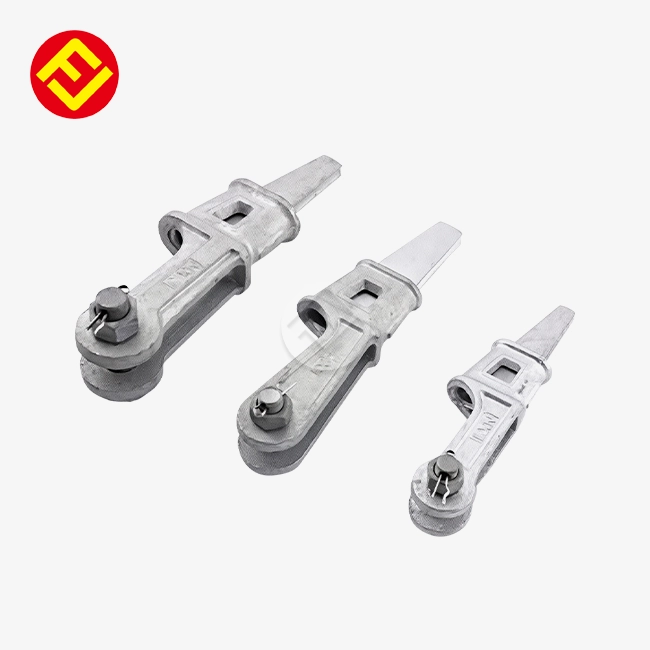
Wedge-Type Clamp


Application: Fixing and connecting conductors in overhead power transmission lines
Finish: Natural Aluminum or Hot-Dip Galvanized Steel
Origin: China
Manufacturing Process: Die Casting, Forging, Machining
Certification: ISO9001, IEC
Wedge-Type Clamp for Overhead Power Lines: Aluminum Alloy or Hot-Dip Galvanized Steel
A cable on an overhead line has to stay at steady tension. The fitting that holds it there cannot slip, and it cannot work loose. FLA Industrial & Trading Co., Ltd. builds the Wedge-Type Clamp for exactly that. Crews use it to anchor and connect conductors on overhead power transmission lines. Pull on the cable becomes radial grip. The wedge does the locking on its own. Bodies come in aluminum alloy or steel. Some are die cast. Others are forged. Machining is part of the process as well. Finish is natural aluminum or hot-dip galvanized steel. Below you will find the specifications on record. Typical uses are listed too. And there is a list of what to send with a quote request.
How the Wedge Design Works
A wedge clamp holds a cable or hangs it on an aerial line. Pull on the clamp. The wedge parts then sit deeper in the shell. Tensile load becomes radial gripping force. A bolted compression clamp does the job differently. Tightened bolts provide the hold there.
Most of the time, This product is used with aerial cable types. ABC is one, and it serves power distribution. ADSS and OPGW are two more, for aerial telecommunications. Check the range before you pick a model. Your cable type and diameter must fall inside that range.
Key Design Features
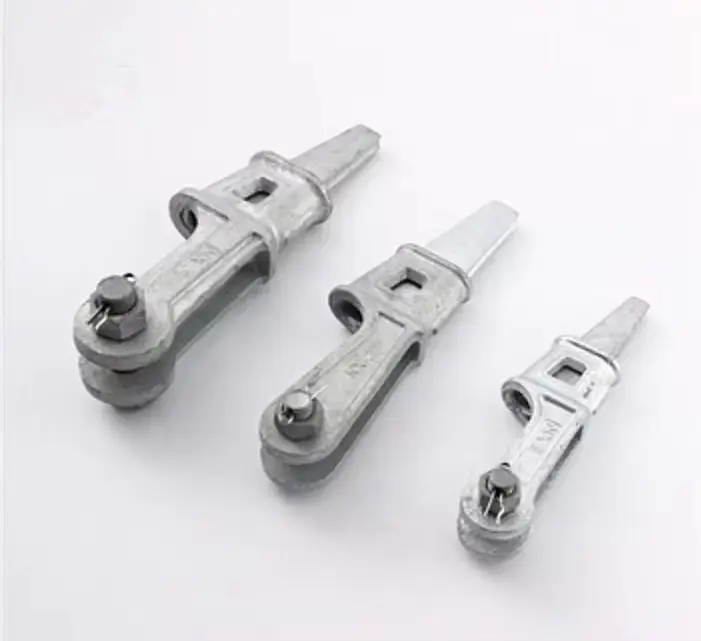
- Grip that follows tension: Cable tension rises, and the grip force rises with it. The clamp stays firm. One single tightened point is not what holds it.
- Load spread over a contact surface: Pressure is spread out. It does not get packed into one spot. That way the stress on the cable stays lower.
- Metal construction: Bodies are made of aluminum alloy or steel. The version you pick decides which one you get.
- Wedge engagement: The wedges slide into place. Tightening then finishes as span tension pulls. Not sure whether your model needs a tool for installation? Ask FLA.
Specifications
| Product Name | Applicable Range | Material Options | Finish |
|---|---|---|---|
| National Standard Hot-dip Galvanized NX-1 (Upper Handle) | 6.6-7.8mm | Steel/Aluminum Alloy | Hot-Dip Galvanized/Natural Aluminum |
| National Standard Hot-dip Galvanized NX-2 (Upper Handle) | 9-11mm | Steel/Aluminum Alloy | Hot-Dip Galvanized/Natural Aluminum |
| National Standard Hot-dip Galvanized NX-3 (Upper Handle) | 13-14mm | Steel/Aluminum Alloy | Hot-Dip Galvanized/Natural Aluminum |
| National Standard Hot-dip Galvanized NX-4 (Upper Handle) | 15-16mm | Steel/Aluminum Alloy | Hot-Dip Galvanized/Natural Aluminum |
The source data has no dimensions. Unit weight is missing too. Cable outer diameter range is absent. So are the maximum working load and the rated breaking strength. Test reports are not there either. That is why none of them show up here. Before you order, ask FLA to confirm the figures for your model.

Materials, Finish and Manufacturing
There are two material routes to choose from. Aluminum alloy parts keep a natural aluminum finish. Steel parts get hot-dip galvanizing. We put the part into molten zinc. That coating protects the metal.
These clamps are made at our works. One process is die casting. Another is forging. The third is machining. Die casting usually turns out complex shapes in repeatable runs. Pressure shapes the metal in forging. Machining brings surfaces to the dimensional accuracy you ask for.
Applications
A Wedge-Type Clamp is typically considered for these situations on overhead lines:
- Dead-ending ABC: You use it at line ends. It also works where an LV/MV distribution line turns a sharp corner. Check the clamp range against the cable diameter. The insulation type matters too.
- Fiber optic lines (ADSS/OPGW): The load spreads over the contact surface. Wind and ice still strike the line. Cable stress stays lower because of that.
- Service drop connections: Linking main distribution lines to subscriber premises.
Buyer Inspection Checklist
Before approving a wedge clamp, procurement teams usually check a few points. This page does not publish test results for the product. Tell FLA which reports your project needs. A team member will then confirm which documents are available.
- Tensile failure load: Find out which load causes the clamp to slip or the shell to crack. Put that number beside the cable's rated breaking strength (RBS).
- Climatic aging: Ask if there are UV and temperature-cycling reports. ASTM G154 is often used as a UV test reference.
- Salt spray exposure: Coastal projects need salt fog results on the metal components. Ask for them, and check the test duration as well.
- Standards: Spec sheets from buyers often name IEC 61284, EN 50483-3 or NFC 33-041. No compliance claim for those standards is made on this page. Ask us to confirm it for the model you plan to use.
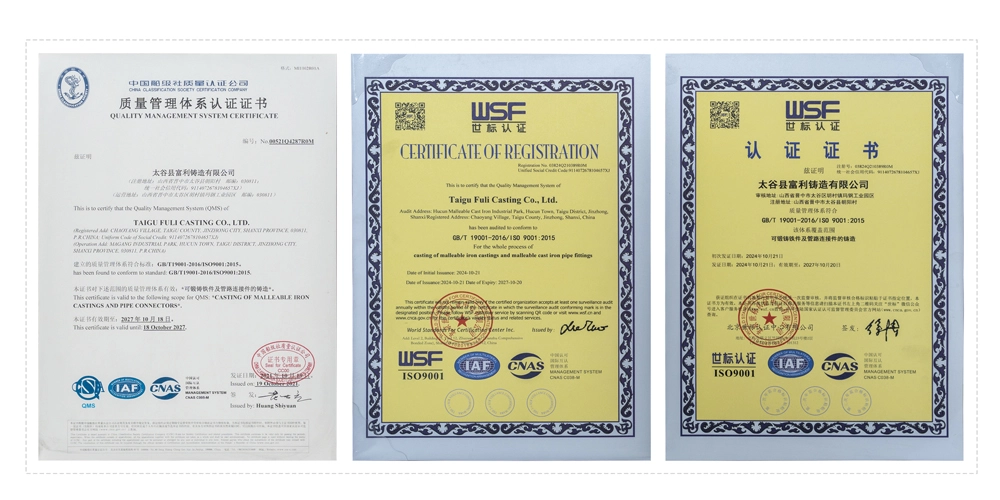
- Certificates: ISO9001 and IEC are listed in the specifications. Ask for copies and the certificate scope.
Wedge-Type Clamp Customization and Technical Support
FLA produces custom special-shaped parts, including non-standard sizes and special structures for machinery, building materials and other industries. If you need this product, send your drawing and requirements early so the team can plan the work.
- Early stage: Mold development for custom parts, plus 3D design and verification so you can confirm the product form.
- Mid stage: Layout refinement and confirmation of material, performance and dimensional accuracy.
- Late stage: Production progress feedback linked to delivery progress.
Supply and Delivery
FLA keeps 2,000 tons of Wedge-Type Clamp stock for standard orders. Special-shaped parts built to your drawing can leave in 7-15 days. Need a price, a unit weight or a 3D design? You get an answer within 24-48 hours. Get in touch with FLA to lock in the quantity and lead time for your own order.
What to Send for a Quote
- Cable type and outer diameter
- Required working load
- Material and finish: aluminum alloy with natural aluminum finish, or hot-dip galvanized steel
- Quantity and delivery destination
- Drawings or special-shape requirements for custom parts
- Test reports or certificates your project requires
FAQ
Q: Once a wedge clamp comes off, can it go back on the line?
A: Most of the time, no. Once the wedges in this product have seated to the cable profile, grip strength can drop on a second use. That also runs against safety requirements.
Q: Can the clamp hurt cable insulation?
A: The jacket is what a wedge clamp holds. Puncturing it is not the job. Matching the clamp range to the cable still decides the result. Ask FLA before ordering whether the clamp fits your cable.
Q: What causes cable slippage?
A: Many slips come from a clamp range that is wrong for the cable diameter. Take your cable outer diameter and load, then compare them with the values FLA confirms for your model.
Q: How do I select the right size?
A: First, find the outer diameter range for your cable. Maximum working load (MWL) comes next. FLA confirms values for your model, and both should match them.
Q: Can FLA make non-standard clamps?
A: Yes. Molds and 3D designs for special-shaped parts are developed by FLA. Custom delivery can take as little as 7-15 days.
Contact Us
Tell FLA your cable type. Include the outer diameter too. Then add the load and finish you want. Pricing, unit weight, and 3D design requests are all fine. A reply comes in 24-48 hours.
Email: Wedge-Type Clamp sales@flaindustrial.com.