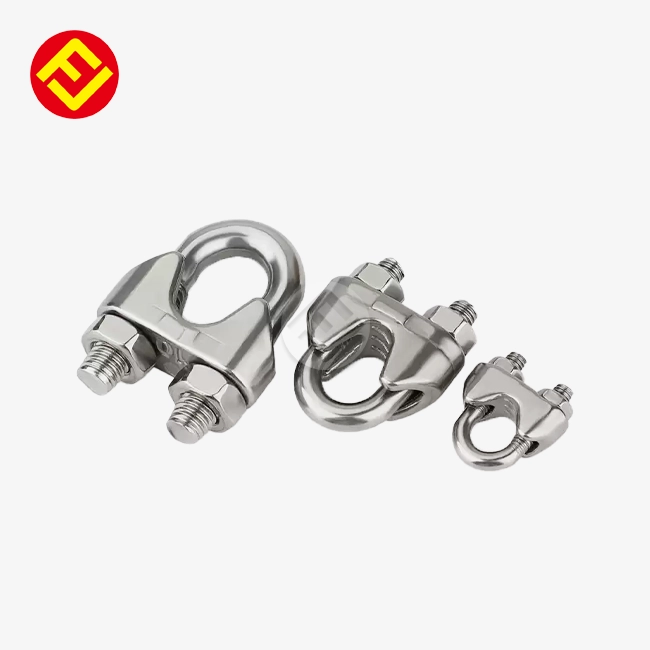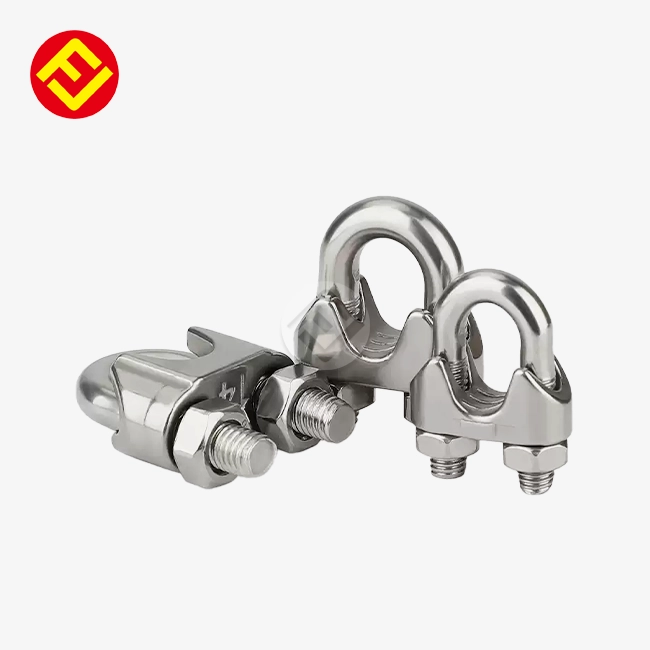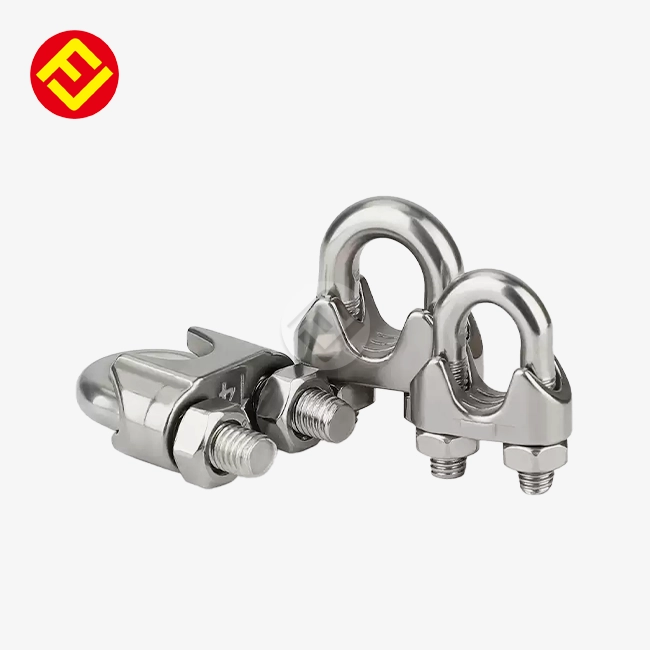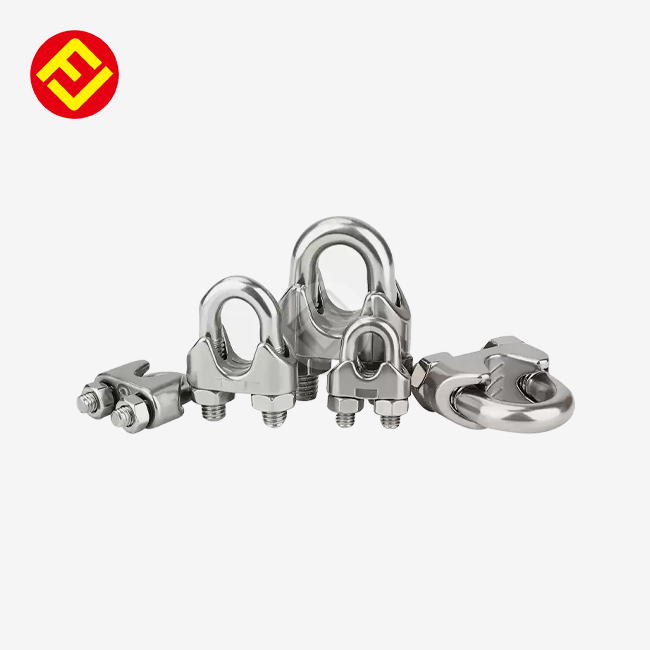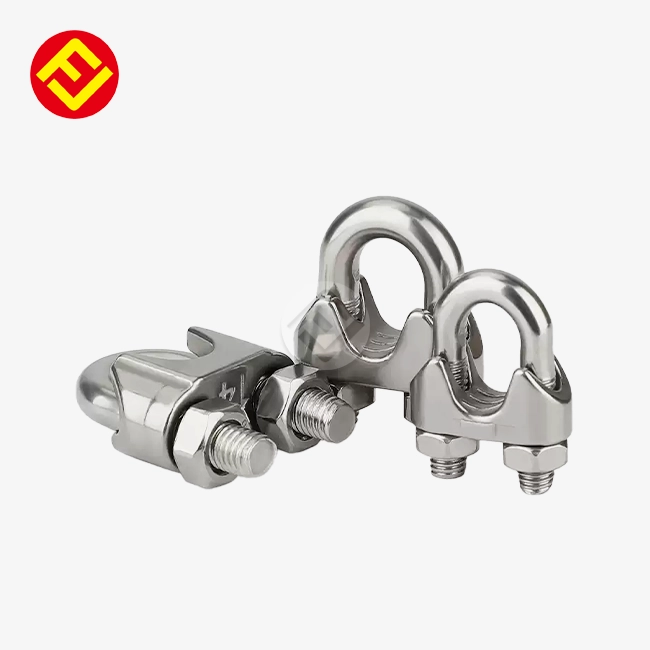
Stainless Steel Wire Rope Fasteners


Application: Used for fastening, connecting, and end termination of wire ropes; widely applied in marine engineering, construction, shipbuilding, and other fields
Appearance: Natural stainless-steel finish, bright surface, corrosion resistant
Place of Origin: China
Manufacturing Process: Precision casting, forging, machining, polishing
Certification: ISO9001, CE
Stainless Steel Wire Rope Fasteners: AISI 304 / 316 Rigging Hardware for Marine, Building and Industrial Use
FLA Industrial & Trading Co., Ltd. produces rigging hardware from AISI 304 and 316 stainless steel. Stainless Steel Wire Rope Fasteners sit on that list. Wire rope is held by them. Joining is part of the job. So is finishing an end. China is where every part is made. Precision casting gets it there. Forging plays a part too. Machining and polishing follow. No coating goes on top. The finish stays bare stainless steel. Salt is normal in this work. Damp air is normal too. So is steady pull. These parts go into marine engineering. Construction is another use. Shipbuilding is a third. Special-shaped parts can be made to your drawing. Custom orders ship in 7-15 days. Send the drawing. Include the grade. The quantity needs to be there too. Pricing and unit weight come back to you in 24-48 hours.
What Are Wire Rope Fasteners?
This product end wire rope and cable. Pulling it tight is one job. Holding it is another. Anchoring comes with that. Wire rope clips (grips) are part of the range. Shackles show up too. Turnbuckles are in the mix. Swage terminals are there as well. Thimbles and eye bolts round it out. Galvanized fittings are the usual pick. These parts are not that. Austenitic stainless steel is what they are built from. Chloride pitting gets slowed by that alloy. Rust run-off stays in check on architectural projects too.
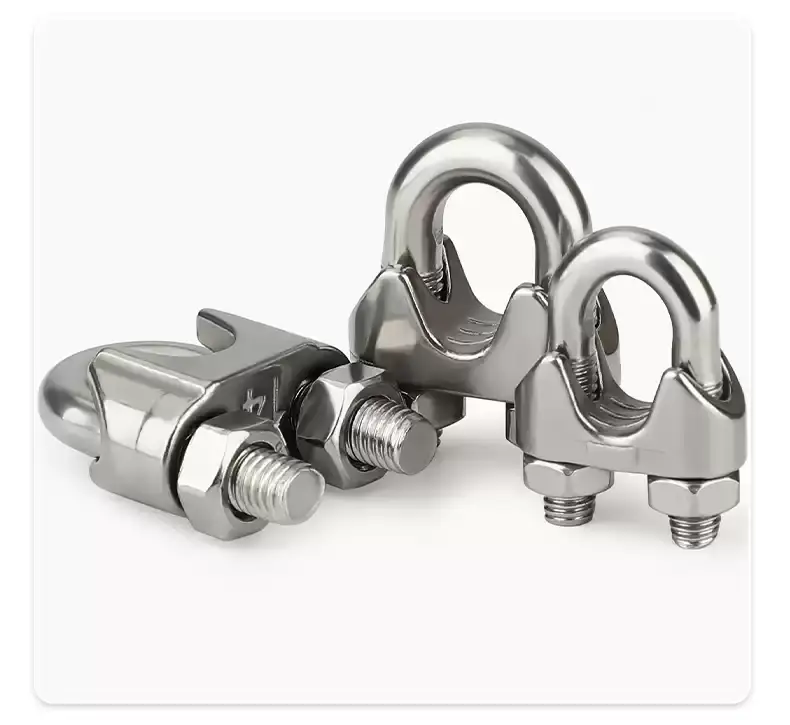
AISI 304 and 316 Material Grades
Both grades get a chromium oxide passivation layer on the surface. Grade 304 (A2) fits inland outdoor work. About 2 to 3 percent molybdenum is in Grade 316 (A4). That makes chlorides less of a problem for it. This grade often goes to coastal sites. Marine work is another use. De-icing salt turns up too. Cold is no issue either. At low temperatures, austenitic stainless steel stays tough. Carbon steel turns brittle in the same cold.
Do you need this product for a job that holds a load? Get the Working Load Limit (WLL) and Minimum Breaking Load (MBL) for that exact part. Ask for the rated figures before you order. Safety factors change by product type. They also change by standard.
Specifications
The table lists the product data available for this product line.
| Specification | Pitch (P) | Total Height (L) (mm) | Hole Diameter (a) (mm) | Screw Diameter (A) (mm) | Shank Diameter (d) (mm) | Clip Height (h1) (mm) | Hexagon Opposite Side (S) (mm) | Applicable Wrench (mm) |
|---|---|---|---|---|---|---|---|---|
| M2 | 0.4 | 17.1 | 4.5 | 3 | 2.5 | 9 | 5.4 | 5.5 |
| M3 | 0.5 | 20.3 | 5.3 | 4 | 3.4 | 8.6 | 6.9 | 7 |
| M4 | 1.25 | 22.7 | 6.6 | 4 | 3.4 | 9.8 | 6.9 | 7 |
| M5 | 0.8 | 26.7 | 7.1 | 5 | 4.3 | 9.4 | 7.8 | 8 |
| M6 | 1 | 32.3 | 7.1 | 6 | 5.2 | 11 | 9.8 | 10 |
| M8 | 1.25 | 34.5 | 10.1 | 6 | 5.2 | 15 | 9.8 | 10 |
| M10 | 1.5 | 44.8 | 10.1 | 8 | 7.1 | 15 | 12.5 | 12.5 |
| M12 | 1.75 | 51.2 | 14.8 | 10 | 8.5 | 18.1 | 15.8 | 16 |
| M14 | 2 | 56.3 | 14.4 | 10 | 8.6 | 21.3 | 15.8 | 16 |
| M16 | 2 | 64.6 | 18.6 | 12 | 10.5 | 24 | 17.8 | 18 |
| M18 | 2.5 | 73.6 | 20.1 | 12 | 10.7 | 29.5 | 17.8 | 18 |
| M20 | 2.5 | 73.9 | 20.5 | 12 | 10.7 | 29.8 | 17.8 | 18 |
| M22 | 2.5 | 76.5 | 25.1 | 12 | 10.7 | 32.5 | 17.8 | 18 |
| M24 | 3 | 79.9 | 27.1 | 12 | 10.7 | 33 | 17.8 | 18 |
| M26 | 3 | 86.6 | 27.8 | 12 | 10.7 | 35.6 | 17.8 | 18 |
| M30 | 3.5 | 100.3 | 33.3 | 16 | 14.1 | 35.6 | 23.8 | 24 |
| M32 | 3.5 | 100.3 | 33.6 | 16 | 14.5 | 35.6 | 23.8 | 24 |
Our product data does not list weight. It also leaves out thread size and dimensions. WLL and MBL are missing too, so ask us for those values on your own item before you buy.
Manufacturing Process and Surface Finish
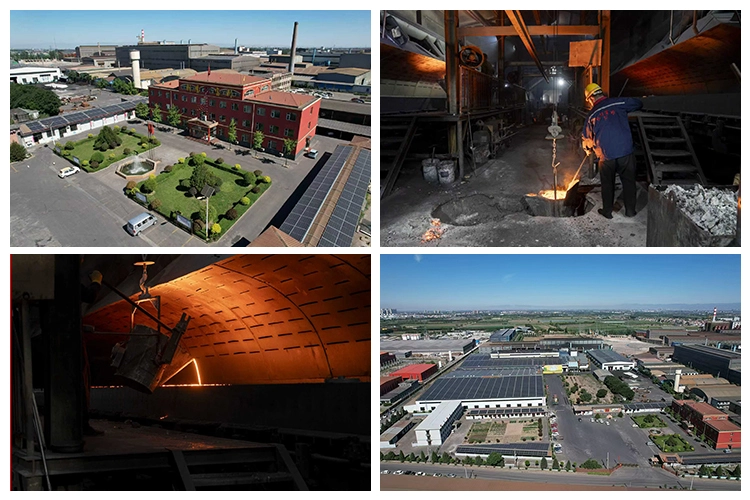
Casting gives you detailed shapes and special profiles. Load-bearing shapes come out of forgings. Machining cuts the threads, and that step sets the final dimensions too. Polishing is what brings up the bright, natural stainless-steel finish. Parts that stay visible on an architectural job take mirror polishing well. When you inquire, tell us which surface option you want, electropolishing or mirror polishing. The thread type needs confirming as well, metric or UNC/UNF.
Applications
- Marine and yacht rigging: Grade 316 fasteners show up again and again on standing rigging, lifelines and balustrades. Down there salt spray hits them. UV does too. Wave impact loads come with the territory as well.
- Architectural façades and green walls: Heavy wind loads push on tensioned cable trellis systems and structural glazing supports. Get the tensioning wrong and it shows. Stainless hardware keeps the finished look clean too.
- Food processing and chemical plants: Overhead conveyors and lifting gear carry hardware that sits in washdown zones. Cleaning chemicals are part of daily life there, so the hardware has to handle them. Check the grade before you buy anything. Take a close look at your cleaning agents as well.
Shipbuilding, construction and general machinery projects use the same hardware for fastening and connecting wire ropes.
Quality Checks to Request
Buyers of Stainless Steel Wire Rope Fasteners look for proof in four areas:
- Material analysis: XRF spectrometry gives the chromium level directly. The same reading shows nickel and molybdenum. With those numbers you can tell whether the steel is genuine AISI 304 or 316.
- Tensile testing: Sample pieces get pulled until they break. That is the whole test. The Minimum Breaking Load either matches the catalog figure or it comes up short.
- Salt spray records: On its own, a claim about corrosion resistance means very little. Proof is what it needs. Neutral salt spray testing gives you that proof. ASTM B117 is one example.
- Thread inspection: Go/No-Go gauges check how the thread fits on metric or UNC/UNF parts. Parts under tension are also less likely to strip.
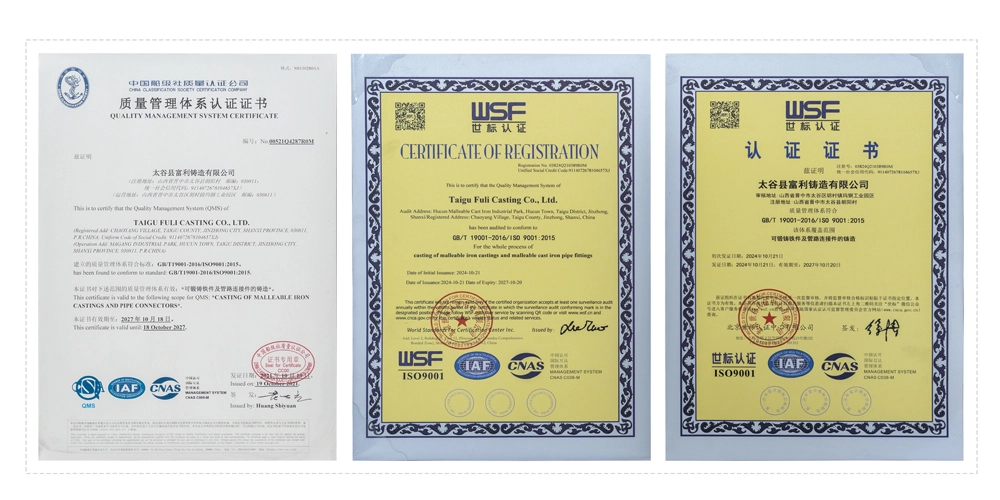
Most of our Products" target="_blank" style="color:blue" >products carry ISO9001 quality management system certification and CE certification. What records does your project need? Tell us, and we will come back to you on what we can supply for your item.
Custom Special-Shaped Parts and Stainless Steel Wire Rope Fasteners
Machinery, building materials, and other sectors come to us for special structures and sizes that are not standard. Three stages cover this product we make:
- Before production: You get mold development and 3D design with verification. That way the form is in your hands for review first.
- During production: Layout optimization and confirmation of material, performance and dimensional accuracy.
- Before delivery: Production progress feedback matched to the delivery schedule.
Supply and Delivery
Our stock holds 2,000 tons of standard products. Customized orders, special-shaped parts included, go out in 7-15 days. Pricing for Stainless Steel Wire Rope Fasteners comes back to you within 24-48 hours. Unit weight and 3D design feedback come with it. When you send an inquiry, confirm stock status and lead time for your item and quantity.
FAQ
Q: Which grade fits a site by the sea?
A: Go with 316. Molybdenum is what gives 316 its better resistance to chlorides. Sea water and de-icing salts both bring chlorides along. Indoors, away from the coast, grade 304 does the job better.
Q: Why does a stainless turnbuckle seize up while you tighten it?
A: Galling is a common problem with stainless threads. Surfaces rub together and the metal cold-welds to itself. Coat the fastener with nickel-based anti-seize lubricant or molybdenum disulfide grease before you tension it.
Q: Could I use these fasteners for overhead lifting?
A: Only when the part is rated and stamped with a Working Load Limit (WLL). Lots of parts sold for general use carry no rating for overhead lifting. DIN 741 clips are one case. Go with lifting-rated shackles or forged eye bolts instead.
Q: How can I spot fatigue in fasteners?
A: Check the thread roots for micro-cracks. Another item to watch is deformation in the eye or hook. Dye penetrant testing brings surface cracks out. On critical rigging, some cracks stay hidden without it.
Q: Are stainless fasteners magnetic?
A: Austenitic stainless steel usually isn't magnetic. Cold work such as threading or swaging can leave a small amount of magnetism behind. That's normal. It doesn't mean the quality is poor.
Q: Can you make non-standard shapes?
A: Yes. Send us your drawing. From it we can build the mold and put together a 3D design you can check before production starts.
Contact Us
Email your drawings, grade and quantity to sales@flaindustrial.com for a price on Stainless Steel Wire Rope Fasteners. You will hear back in 24-48 hours.