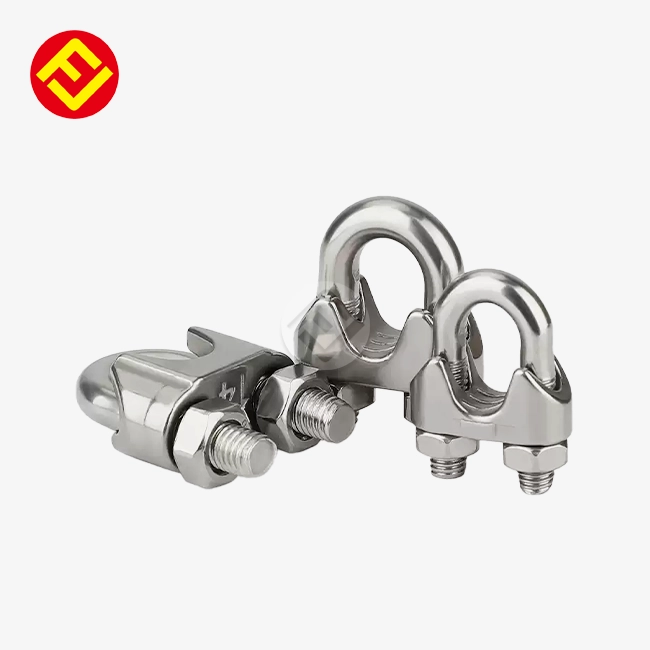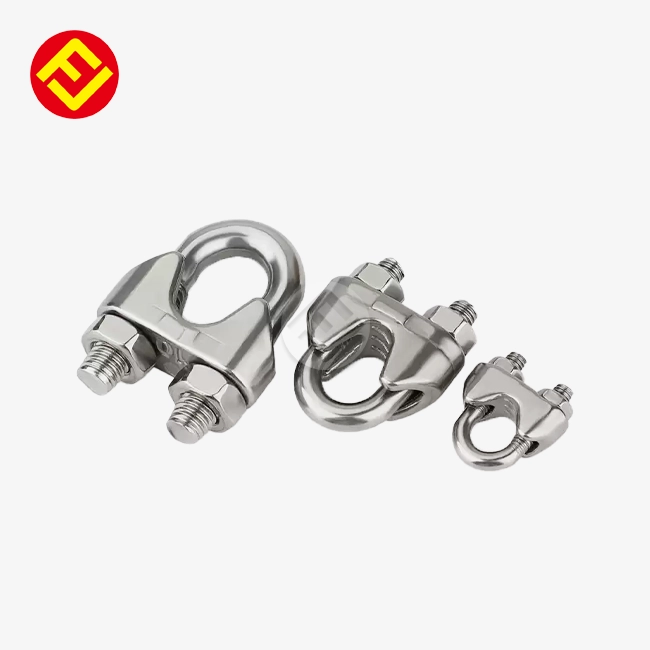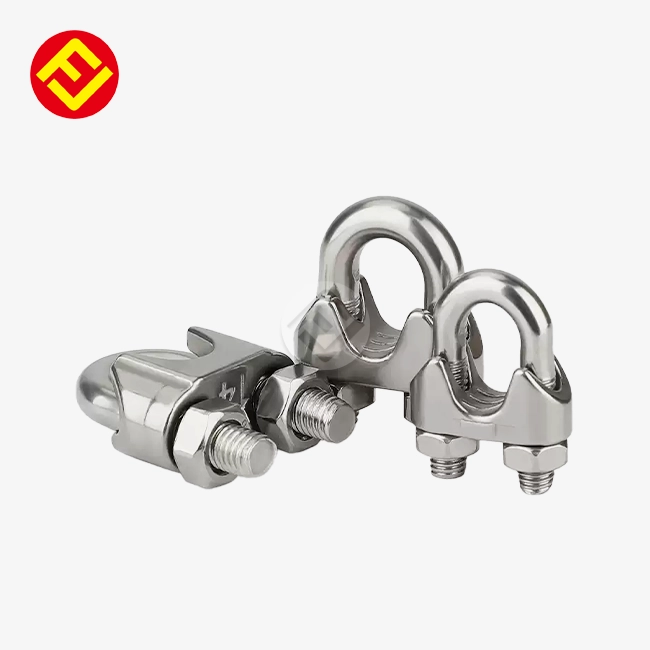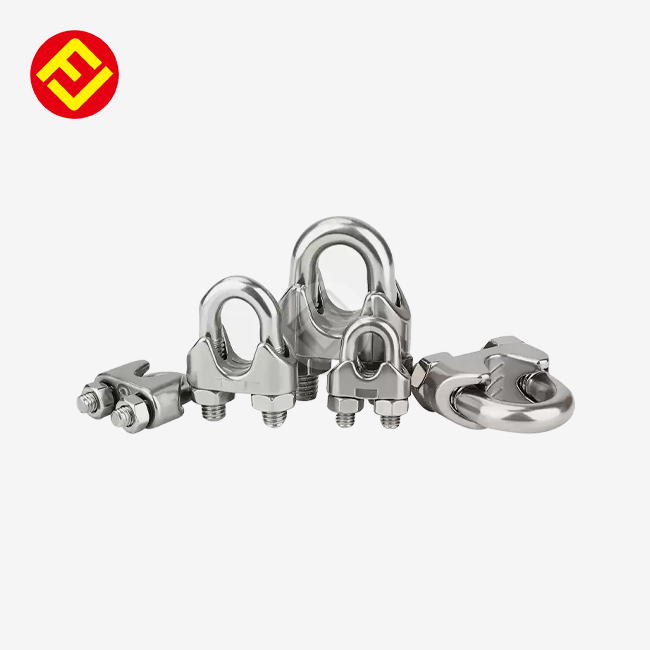
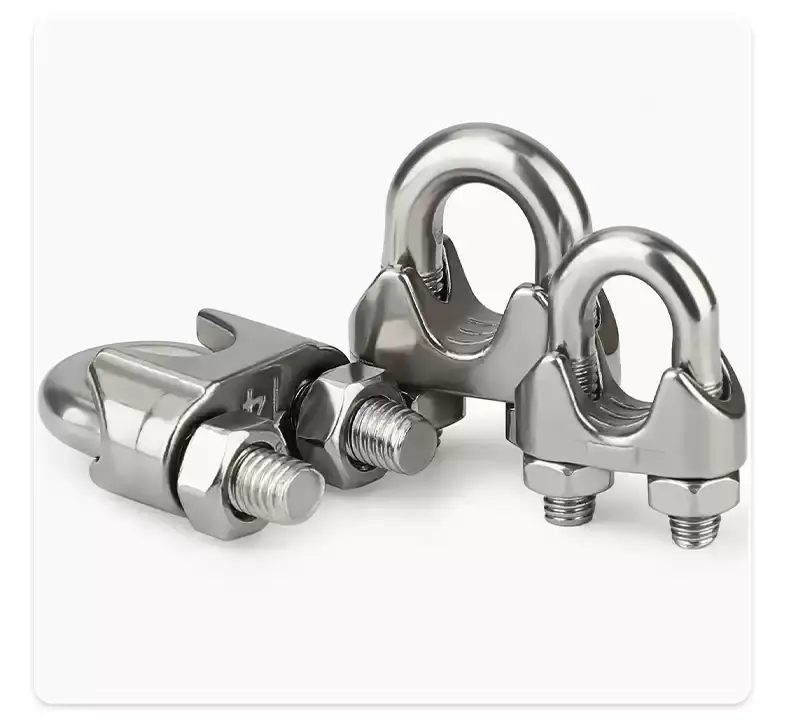
Stainless Rope Clamp


Application: Used for fastening, connecting, and end termination of wire ropes; widely applied in marine engineering, construction, shipbuilding, and other fields
Appearance: Natural stainless-steel finish, bright surface, corrosion resistant
Place of Origin: China
Manufacturing Process: Precision casting, forging, machining, polishing
Certification: ISO9001, CE
Stainless Rope Clamp for Marine and Construction Rigging: 304/316 Wire Rope Clips
FLA Industrial & Trading Co., Ltd. supplies stainless steel fittings for marine and construction rigging. The Stainless Rope Clamp is one of them. It comes in Stainless Steel 304 and 316. Wire rope ends get fastened, connected, or terminated with it. Each set has a U-bolt. A saddle and two nuts are included as well. Production uses precision casting. Forging and machining follow. Polishing gives the part a bright natural stainless-steel finish. On site, the grip can be retightened. FLA also makes custom special-shaped parts. Mold development and 3D design are part of that work. Delivery updates are included too. Custom lead time runs 7–15 days.
What Is a Stainless Steel Wire Rope Clip?
A wire rope clip, also called a grip, secures the loose end of a wire rope loop back against the rope itself. It consists of a U-bolt, a forged or cast saddle, and two nuts. Unlike a swaged sleeve, which is permanent, this this product is semi-permanent, so it can be retightened and adjusted in the field without hydraulic crimping tools. It is made from austenitic stainless steel rather than galvanized iron.
Specifications
The table lists only the data provided in the product specification sheet.
| Specification | Pitch (P) | Total Height (L) (mm) | Hole Diameter (a) (mm) | Screw Diameter (A) (mm) | Shank Diameter (d) (mm) | Clip Height (h1) (mm) | Hexagon Opposite Side (S) (mm) | Applicable Wrench (mm) |
|---|---|---|---|---|---|---|---|---|
| M2 | 0.4 | 17.1 | 4.5 | 3 | 2.5 | 9 | 5.4 | 5.5 |
| M3 | 0.5 | 20.3 | 5.3 | 4 | 3.4 | 8.6 | 6.9 | 7 |
| M4 | 1.25 | 22.7 | 6.6 | 4 | 3.4 | 9.8 | 6.9 | 7 |
| M5 | 0.8 | 26.7 | 7.1 | 5 | 4.3 | 9.4 | 7.8 | 8 |
| M6 | 1 | 32.3 | 7.1 | 6 | 5.2 | 11 | 9.8 | 10 |
| M8 | 1.25 | 34.5 | 10.1 | 6 | 5.2 | 15 | 9.8 | 10 |
| M10 | 1.5 | 44.8 | 10.1 | 8 | 7.1 | 15 | 12.5 | 12.5 |
| M12 | 1.75 | 51.2 | 14.8 | 10 | 8.5 | 18.1 | 15.8 | 16 |
| M14 | 2 | 56.3 | 14.4 | 10 | 8.6 | 21.3 | 15.8 | 16 |
| M16 | 2 | 64.6 | 18.6 | 12 | 10.5 | 24 | 17.8 | 18 |
| M18 | 2.5 | 73.6 | 20.1 | 12 | 10.7 | 29.5 | 17.8 | 18 |
| M20 | 2.5 | 73.9 | 20.5 | 12 | 10.7 | 29.8 | 17.8 | 18 |
| M22 | 2.5 | 76.5 | 25.1 | 12 | 10.7 | 32.5 | 17.8 | 18 |
| M24 | 3 | 79.9 | 27.1 | 12 | 10.7 | 33 | 17.8 | 18 |
| M26 | 3 | 86.6 | 27.8 | 12 | 10.7 | 35.6 | 17.8 | 18 |
| M30 | 3.5 | 100.3 | 33.3 | 16 | 14.1 | 35.6 | 23.8 | 24 |
| M32 | 3.5 | 100.3 | 33.6 | 16 | 14.5 | 35.6 | 23.8 | 24 |
Before purchase, confirm what the certification covers for your order.
Material Grades: 304 vs 316
Grade 316 contains 2–3% molybdenum. This boosts resistance to chloride pitting and crevice corrosion. It works well in coastal areas. Marine and polluted industrial sites are also a good fit.
Indoor jobs are fine with Grade 304. Mild outdoor spots work too. Near the sea, it may develop "tea staining," a brown discoloration on the surface.
Manufacturing Process and Surface Quality
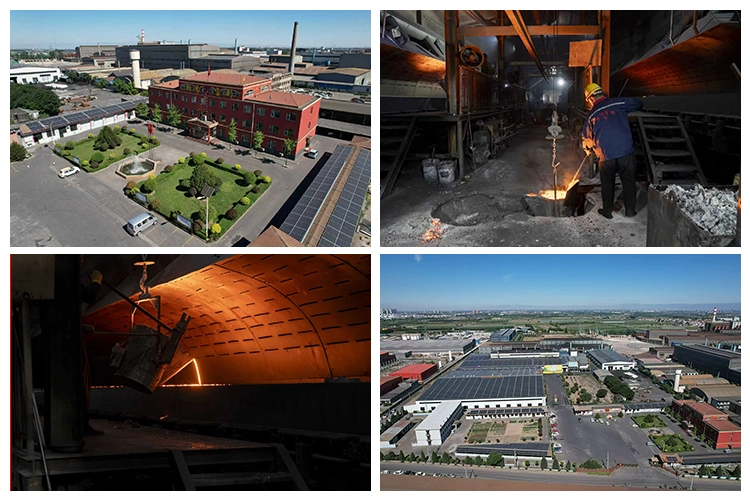
Precision casting or forging forms the saddle first. Machining and polishing come after that. Casting this way aims to keep the rope groove matched to the rope diameter. The strands then are not crushed.
Architectural work often calls for a bright surface. Polishing is how you get it. A clean surface helps as well, since the passive chromium oxide layer that protects the steel depends on it.
Galling can happen when stainless fasteners are tightened. Turn them steadily. Use your project's torque requirement. A correctly installed Stainless Rope Clamp termination gets the listed efficiency: approx. 80–90% of rope Minimum Breaking Load.
Applications
Marine and yacht rigging: The clamp holds safety lifelines, halyards, and standing rigging that face salt and humidity. Grade 316 is normally the better pick here.
Architecture: For static structural loads, the bright, polished finish helps balustrades. Green walls gain the same help. Suspended art installations do too.
Wastewater and chemical plants: Chlorides and corrosive vapors show up in these places. A clamp used there has to hold cables safely. Most of the time grade 316 is the one called for. Check the chemical environment against the grade first, before the clamp goes in.
Stainless Rope Clamp Quality Control and Certifications
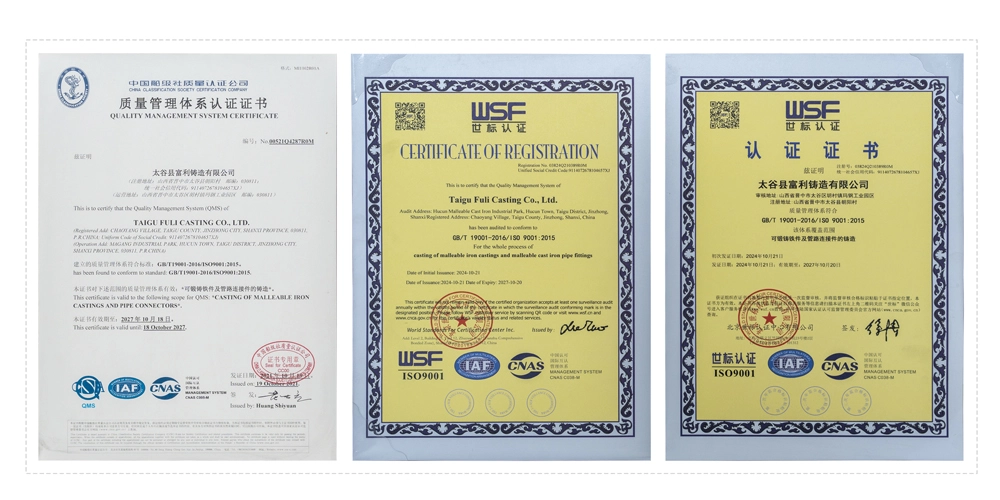
ISO9001 quality management and CE product safety certification are held by most FLA Products" target="_blank" style="color:blue" >products. For this product, quality control centers on three points:
- Material verification: Levels of chromium, nickel, and molybdenum get checked by spectrochemical analysis (XRF). That is how the grade is confirmed.
- Dimensional inspection: The groove on the saddle gets measured. Crushed rope is what a shallow groove leads to. And when the groove is too deep, the grip may fail.
- Slip load sampling: Samples get pulled from a batch. Each one goes through a tensile pull test. That is how the clamp's hold gets checked.
Customization and Technical Support
Custom special-shaped parts are a core strength of FLA. Non-standard versions of the Stainless Rope Clamp, as well as special structures for machinery, building materials, and other industries, can be developed to your requirements.
- Early stage: Mold development for custom parts, plus 3D design and verification so you can review the product form first.
- Mid stage: Layout optimization and confirmation of material, performance, and dimensional accuracy.
- Late stage: Production progress feedback matched to delivery progress.
Supply and Delivery
A 2,000-ton inventory supports shipment of standard products. Custom and special-shaped orders can ship in 7–15 days. Requests for pricing, unit weight, or 3D design receive feedback within 24–48 hours. Please confirm exact timing for your quantity with our sales team.
FAQ
Q: What is the correct orientation for installing a clamp?
A: Go by the rule "Never saddle a dead horse." The saddle sits on the live rope, the one that carries the load. The U-bolt goes over the dead end. Swap them and grip efficiency drops, and the live wire can get crushed.
Q: Can I use it for overhead lifting?
A: Overhead lifting and suspending people are two jobs these clips should not be used for. Hardware rated for lifting is what those jobs need, along with meeting the standards that apply. Static guys, guard rails, and retention lines are a good fit for stainless clamps.
Q: How many clamps does each termination need?
A: Use 3 clamps for 3–6 mm rope and 4 clamps for 8–19 mm rope, as listed in the specifications. Using fewer clamps can reduce holding strength.
Q: Why must I retighten the nuts?
A: Under first tension the rope necks down a little. After that first load, tighten the nuts again so the grip stays secure.
Q: How do 304 and 316 differ?
A: For indoor work and light outdoor conditions, 304 is a good fit. 316 includes molybdenum. It holds up better in coastal areas, marine settings, or polluted industrial sites.
Q: Could you build This product to a non-standard design?
A: Yes. Custom special-shaped parts are a core strength, with mold development and 3D design available. Lead time for custom parts is 7–15 days.
Contact Us
Send your rope size, grade, quantity, or drawings to sales@flaindustrial.com about Stainless Rope Clamp for pricing, unit weight, or 3D design feedback within 24–48 hours.
YOU MAY LIKE