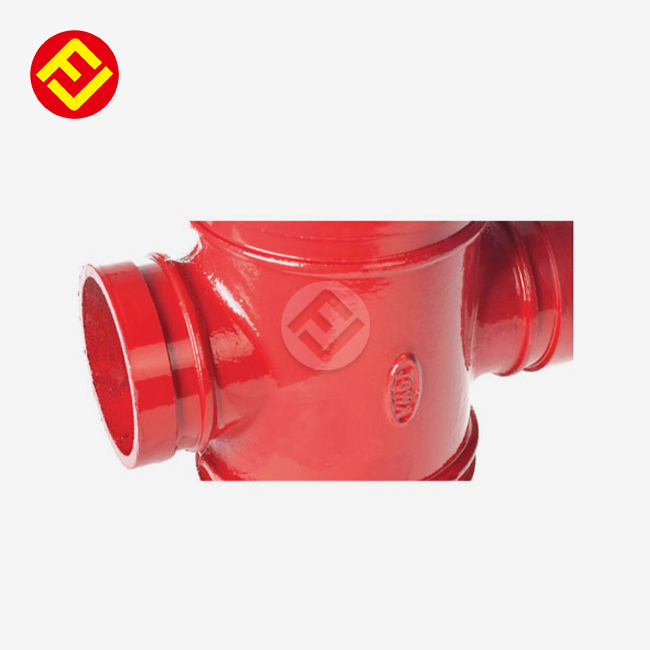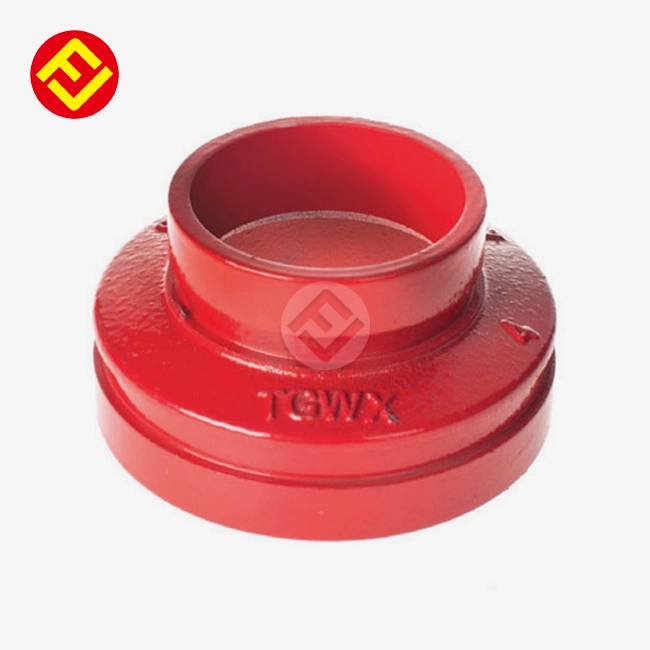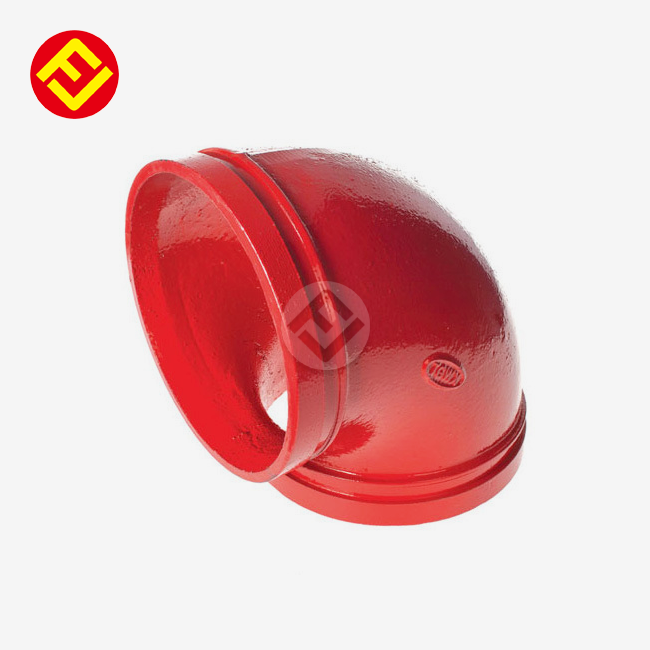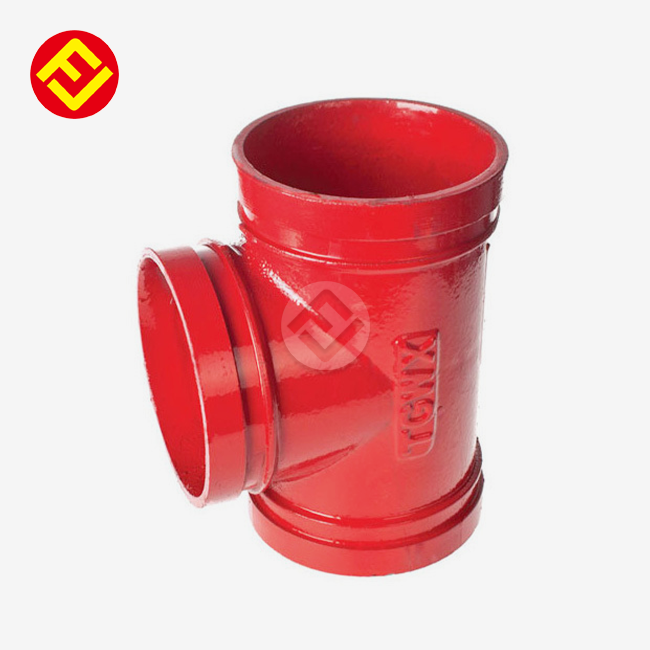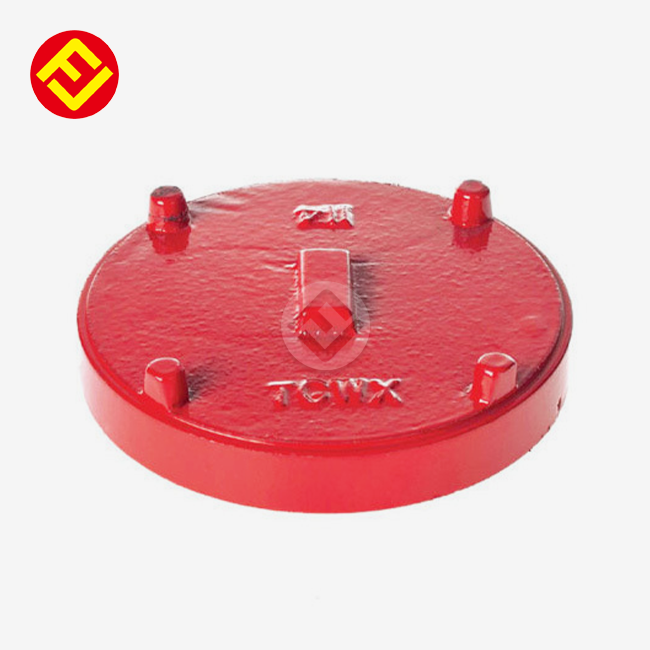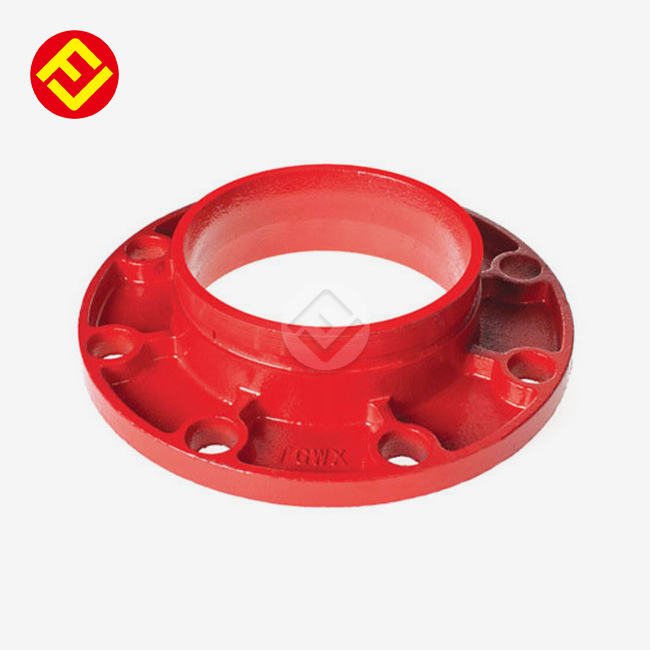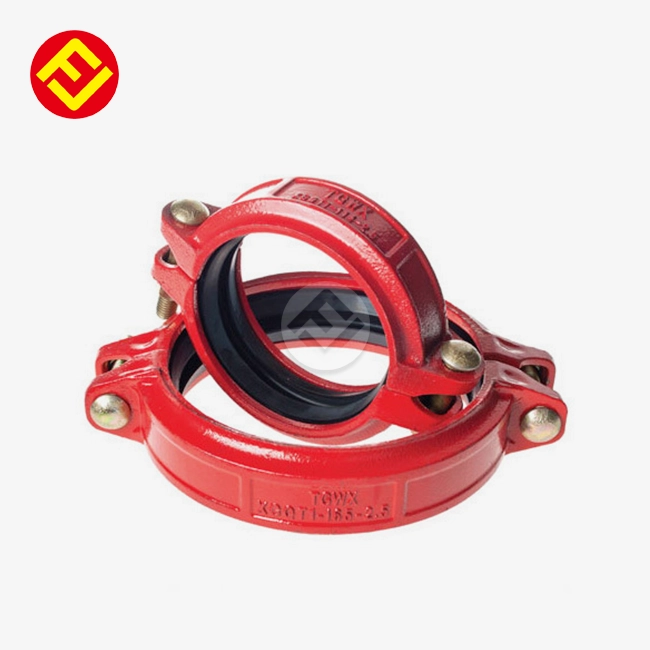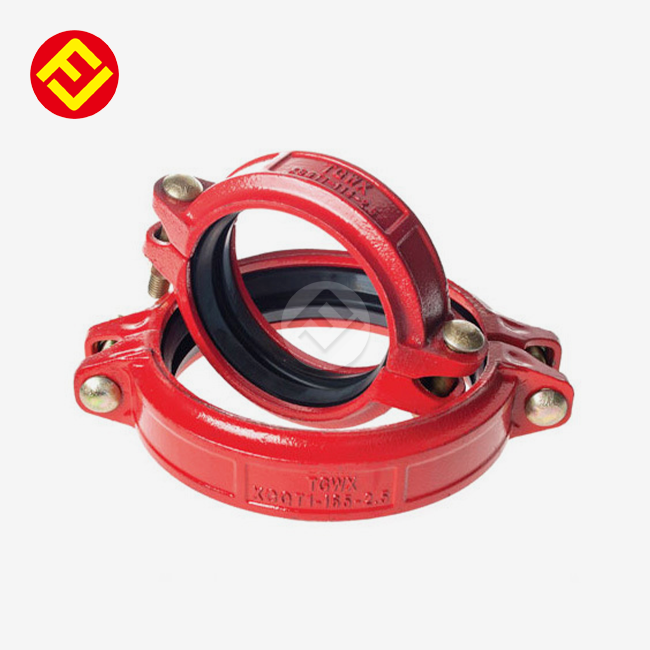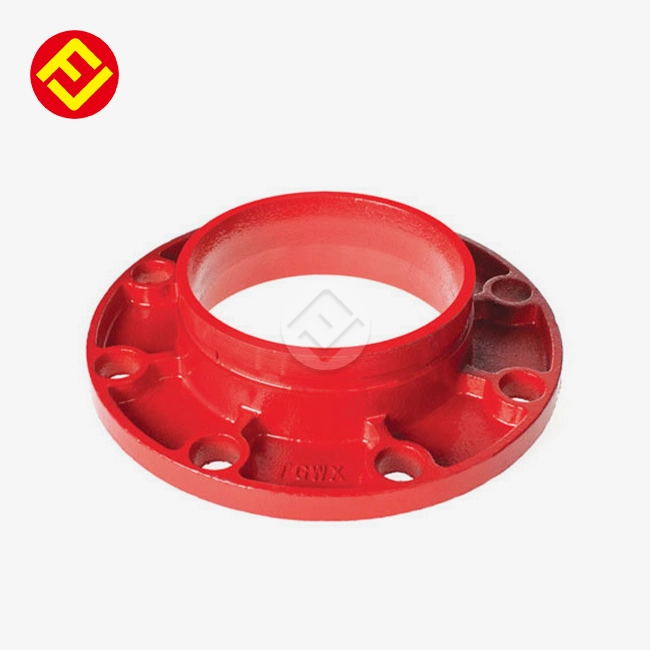
Grooved Reducing Flange


Application: Used for connecting grooved fittings to flanged fittings while providing pipe size transition (large diameter to small diameter).
Appearance: One end with grooved connection and the other with flange face, featuring concentric or eccentric transition section; surface finished with red anti-corrosion epoxy coating or galvanized layer.
Origin: China
Manufacturing Process: Casting / Machining / Assembly / Coating
Certification: ISO9001, UL, FM, CE
Grooved Reducing Flange for HVAC, Fire Protection and Water Systems
A grooved pipe run will hit a pump, valve or strainer with a smaller port at some point. Here a Grooved Reducing Flange does the work, because one part covers both tasks. The grooved line connects to flanged equipment, and the bore drops one step. Body castings from FLA Industrial use ductile iron to ASTM A536 Grade 65-45-12. Minimum tensile strength is 65,000 psi. Pressure ratings go up to 300 psi (20.7 bar). Size and mating flange class set what you get. Unit weights, quotes and 3D drawings reach your inbox in 24–48 hours.
What It Is and How It Works
Two parts are built into one unit here: a concentric reducer and a flange adapter. One end takes a grooved connection. At the other end you find a flange face, and behind it a concentric or eccentric transition section.
With a standard flange adapter the nominal pipe size stays put. This fitting takes the bore from a larger diameter down to a smaller one. Casting, machining, assembly and coating all happen at the FLA Industrial plant in China.

Key Features and Benefits
Fewer pieces sit between the pipe and the unit. A standard run calls for a grooved coupling and a concentric reducer. Add a flange adapter to that. This product cuts two connection points. You get fewer joints to install and check. The assembly is more compact too.
Bolt holes meet up with less trouble. During fabrication, a welded reducing flange holds the bolt-hole position. The flange can turn before the grooved side gets tight. This lets you line up the bolt holes with the mating flange. No twisting of the pipe is needed.
The gasket goes on the grooved side. Vibration transfer at pump suction and discharge connections may drop with an elastomeric gasket. For pumps with tight vibration limits, check separately if flexible connectors are needed.
Specifications
| Type | Model | Pipe Outer Diameter | Material Options | Surface Finish |
|---|---|---|---|---|
| DN65 | Reducing Flange | 76mm | Ductile Iron / Carbon Steel | Epoxy Coated / Galvanized |
| DN80 | Reducing Flange | 89mm | Ductile Iron / Carbon Steel | Epoxy Coated / Galvanized |
| DN100 | Reducing Flange | 114mm | Ductile Iron / Carbon Steel | Epoxy Coated / Galvanized |
| DN125 | Reducing Flange | 140mm | Ductile Iron / Carbon Steel | Epoxy Coated / Galvanized |
| DN150 | Reducing Flange | 165mm | Ductile Iron / Carbon Steel | Epoxy Coated / Galvanized |
| DN200 | Reducing Flange | 219mm | Ductile Iron / Carbon Steel | Epoxy Coated / Galvanized |
Unit weights, dimensions and the size range are left out here. Send us your size. We will come back with the unit weight and a 3D drawing.
Epoxy works for most indoor jobs. On corrosive sites, go with hot-dip galvanizing. Your system rating comes from the weakest part, every time. Before ordering, check the class of the flange or valve it mates with. A fitting rated to 300 psi will not lift the limit of a valve rated lower.
Send your requirements to confirm a size or flange class. We will reply with the data you need.

Applications
HVAC pump connections. Pump flanged ports are usually smaller than the pipe that feeds them. A Grooved Reducing Flange lets a bigger header tie straight into a smaller pump flange. You skip the separate reducer. Flow also moves better through a transition section than through a sudden step down in size.
Fire protection systems. Use it on sprinkler risers and valve stations where a larger feed main steps down to a smaller control valve, such as an alarm check valve. A grooved joint installs without welding. That helps on retrofits. The range lists UL and FM certification, so confirm the listing for your size and project before you specify it for fire service.
Municipal water treatment retrofits. New valves often have more compact face-to-face dimensions. You can step down pipe sizes to match new equipment without welding. That matters where methane in digesters or chemical residues make hot work hazardous.

Quality Checks to Request
Talk to us about what the inspection covers before placing your order. Worth asking for:
- Material: paperwork showing the body grade. For ductile iron that reading should be ASTM A536 Grade 65-45-12.
- Dimensions: groove sizes come from ANSI/AWWA C606. Flange drilling lines up with whichever standard you choose.
- Pressure testing: find out whether the supplier runs a hydrostatic test. If yes, at what pressure.
- Gasket: check the grade and color code. It should be Grade E or Grade T, and it has to suit your media.

Grooved Reducing Flange Customization and Technical Support
Special-shaped parts are our core strength. We develop non-standard sizes and special structures for machinery, building materials and other industries.
Support runs through the whole order:
- Early stage: Mold development for custom parts, plus 3D design and verification.
- Middle stage: Layout review and confirmation of material, performance and dimensional accuracy.
- Late stage: Production progress updates matched to delivery.
Certifications, Stock and Delivery
The range lists ISO9001, UL, FM and CE certification. Ask for the documents that match your Grooved Reducing Flange size and project.
FLA keeps 2,000 tons of stock for standard items. Custom and special-shaped orders ship in as little as 7–15 days, and the lead time for your size is confirmed in the quote.
Frequently Asked Questions
Q: Does it fit wafer-style butterfly valves?
A: Check first. The bolt pattern may match, but the disc can hit the internal bore. Review the valve's disc clearance chart, or add a spacer.
Q: How should the bolts be tightened, in what order?
A: Start with the bolts on the grooved side. Tighten them so the pipe is held in place. After that, work the flange bolts in a star pattern. Doing it that way keeps the gasket compression even. The instructions that came with the product cover the rest, so follow those.
Q: Does the flange face need a gasket?
A: Yes. The grooved side uses the gasket grades listed above. The flange face needs its own flat or ring gasket, selected for the media and flange class.
Q: How does a lower-rated mating flange change the rating?
A: The lowest-rated component sets the limit. Check the class of the mating flange or valve before ordering.
Q: Can it be used for vacuum service?
A: Yes, up to 29.9 in Hg with a standard EPDM gasket. The flange face gasket must also suit vacuum service.
Q: Can you supply this product?
A: Yes. Send your drawings or requirements. Pricing, unit weight and 3D design feedback arrive within 24–48 hours.
Contact Us
Send your size, flange class, operating media and drawings for a Grooved Reducing Flange to sales@flaindustrial.com for a quote.