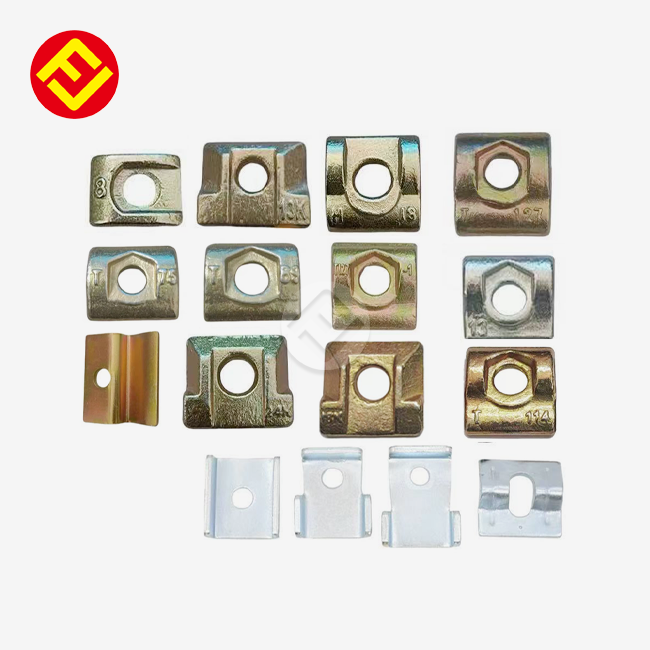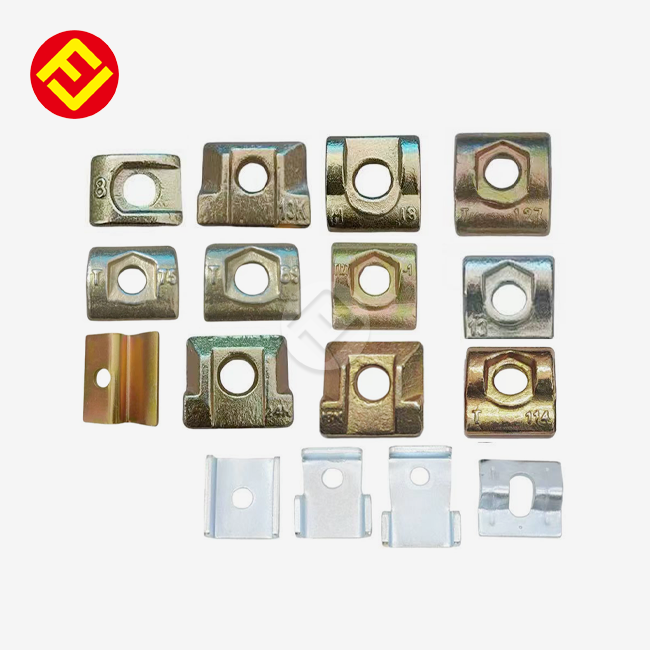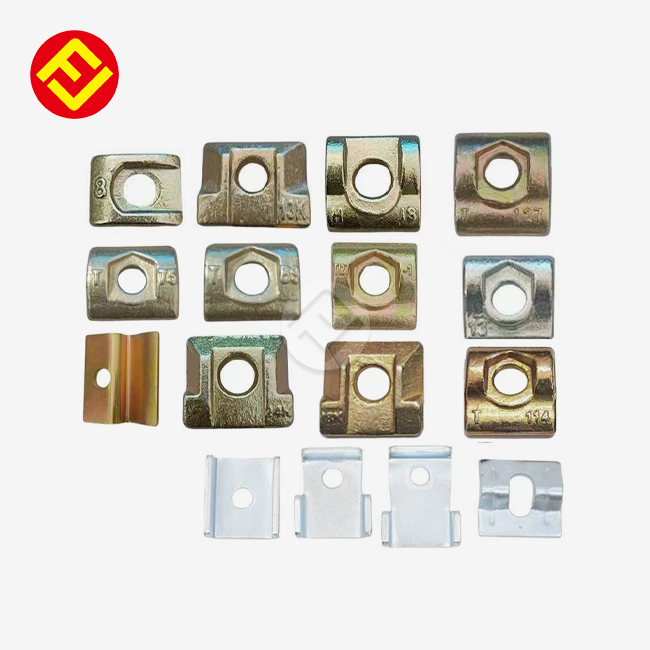
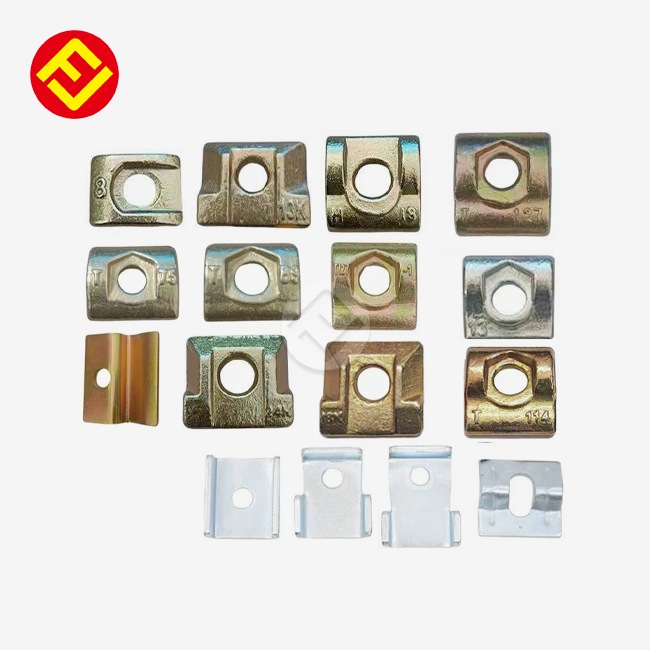
Cast Steel Elevator Guide Rail Clamps


Application: Fixation and support of elevator guide rails
Finish: Hot-Dip Galvanized or Painted
Origin: China
Manufacturing Process: Casting, Machining, Forging
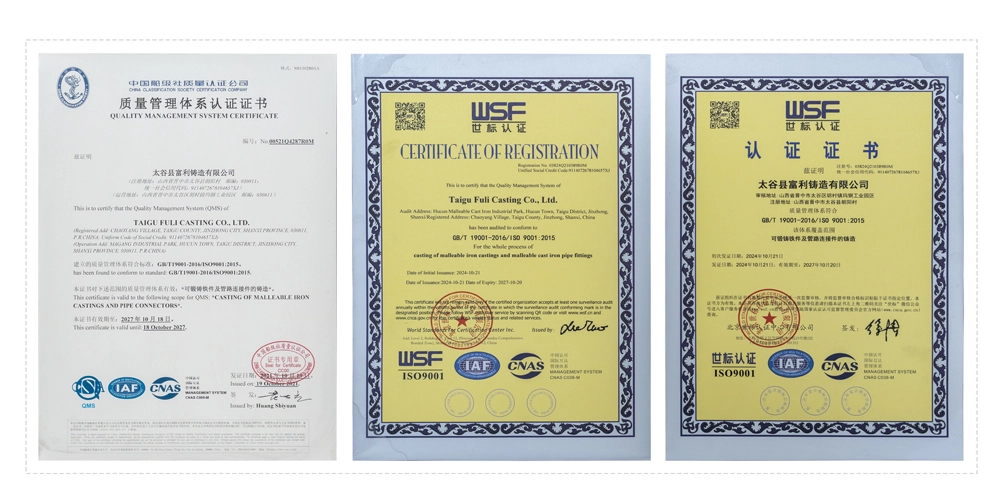
Certification:ISO9001, EN81
T89 T75 13K 8K 18K H18
Cast Steel Elevator Guide Rail Clamps for T75 and T89 Guide Rails
A rail clamp holds each T-profile guide rail on its shaft bracket. The rail stays in line because of that clamp. Cast Steel Elevator Guide Rail Clamps come from FLA Industrial. They are made in carbon steel grades like ASTM A216 WCB and ZG230-450. The jaw is machined to fit the rail flange. Covered profiles are T75, T89, T127, T140, 13K, 8K, 18K and H18. Ask us for a 3D drawing and the unit weight. Send your rail profile and the shaft conditions. We will suggest a finish for your job and confirm the lead time before you order.
What the Clamp Does in the Shaft
Each rail needs a single fixed point at the bracket. This product provide it. The jaw goes around the rail flange. It presses the flange to the bracket face. The rail then stays in line while the safety gear works. With a loose clamp, the rail can drift. Often you see that as vibration or uneven leveling.
Cast steel suits this job. Casting lets the reinforcing ribs follow the load path. Cast iron has less elongation. This grade has more, so the part can take more building movement.
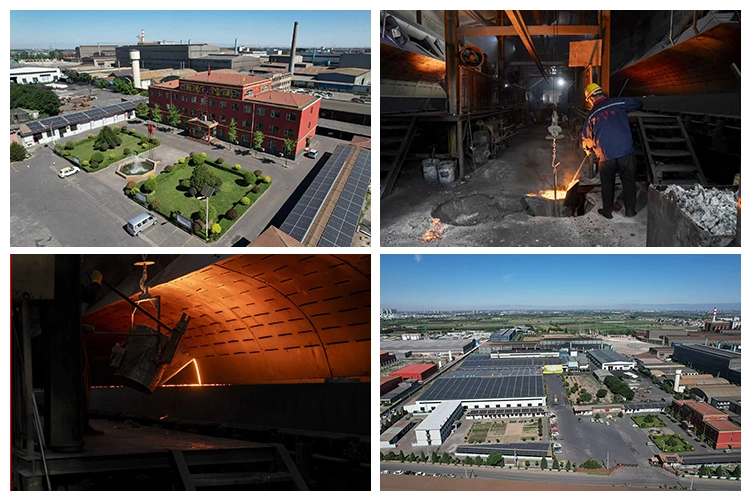
Material and Manufacturing
Clamps are poured in carbon steel grades such as ASTM A216 WCB, ZG230-450 or SCW480, using sand casting or investment casting. The jaw face is then machined so the contact surface meets the rail flange across its width. Forging is also listed as a manufacturing process for shapes that need it.
Mechanical values for the material are listed in the specification table below. Jaw hardness is kept within the stated range so that the machined rail surface is not scored.
Specifications
| Product Specification | Nominal Thread (M) | Nominal Length (mm) |
|---|---|---|
| 8K | 8 | 12-40 |
| 13K | 13 | 12-40 |
| 18K | 18 | 16-50 |
| 24K | 24 | 16-50 |
| 8K (12-40 Screw/Flat/Washer) Complete Set | 8 (12-40 Screw) | (12-40 Screw) |
| 13K (12-40 Screw/Flat/Washer) Complete Set | 13 (12-40 Screw) | (12-40 Screw) |
| 18K (12-40 Screw/Flat/Washer) Complete Set | 18 (16-50 Screw) | (16-50 Screw) |
| 24K (12-40 Screw/Flat/Washer) Complete Set | 24 (16-50 Screw) | (16-50 Screw) |
This table leaves out dimensions, unit weight and load ratings. Check each of them on the drawing for your rail profile before you order.
Where Cast Steel Fits
Cast steel elevator guide rail clamps fit passenger lifts, freight lifts, and vehicle elevators. The clamp must match the rail drawing. That is the one condition. Heavier freight duty often brings uneven lateral force during loading. Confirm the rail profile and the bracket spacing with us. Outdoors, or in a seismic zone, look at the elongation figure in the table. It is a fair point of comparison with cast iron.
Does your car run sliding guide shoes? Tell us the shoe type before you order. We can then check the clamp design against the rail movement you expect.
Finish Options
Raw cast steel will oxidize in a damp shaft. So pick the finish at the quoting stage. For pits and spots where condensation gathers, hot-dip galvanizing works better. Painted clamps fit dry indoor shafts where color matching counts. If the shaft sees standing moisture or coastal air, describe the conditions. We will then go through the finish options with you.
Custom Shapes, Stock and Lead Times
FLA Industrial lists 2,000 tons of stock for standard sizes. Custom and special-shaped clamps take 7–15 days, including mold development when a new profile is needed.
Send an enquiry and the quotation comes back in 24–48 hours, together with unit weight and 3D drawings. A 3D model and a layout drawing are also supplied. That way you can check the fit before production starts.
Documents to Request Before You Order for Cast Steel Elevator Guide Rail Clamps
Cast Steel Elevator Guide Rail Clamps carry structural loads, so ask what inspection documents come with your order. Common requests include:
- Paperwork links the part to its melt. The heat number appears on the material certificate.
- Cracks at the surface get flagged by MPI (magnetic particle inspection) findings.
- Ultrasonic or radiographic results, when internal shrinkage is a concern.
- A dimensional report on the jaw profile to confirm contact with the rail flange.
- Test results for the bolt torque you plan to use, covering torque and pull-out.
What we can supply depends on the order. So when you request a quote, put the documents you need in writing. Sand inclusion and porosity show up often in castings. That is why these checks are worth asking for.
FAQ
Q: Why choose cast steel clamps over forged clips?
A: Reinforcing ribs and more complex shapes are both possible with castings. Forging sits on the process list as well. If your design calls for it, just tell us.
Q: How do you stop shafts from rusting where the air is humid?
A: Pick hot-dip galvanizing for damp areas. For dry indoor shafts, painted clamps are the fit.
Q: Do these clamps work with sliding guide shoes?
A: The design decides this. Tell us the shoe type and rail profile. We will then compare the clamp with the rail movement you expect.
Q: Which defects matter when I inspect cast clamps?
A: Look for sand inclusion and porosity. Material certificates and inspection reports will show whether a batch is good.
Q: Which one fits me: T75, T89, or 13K?
A: Match the clamp to your rail drawing. This product are listed for T75, T89, T127, T140, 13K, 8K, 18K and H18 profiles, and we can confirm the right one from your drawing.
Contact Us
Email sales@flaindustrial.com with your rail profile, shaft conditions and quantity to request a quote for Cast Steel Elevator Guide Rail Clamps.