A Comprehensive Guide to Grooved Couplings for Modern Piping Systems
2026-04-07 11:06:14


Modern plumbing systems in building, industry, and fire protection have been completely changed by grooved couplings, which are a completely new way to join pipes. This way of connecting mechanically uses a carefully designed coupling grooved system to make joins that are safe and won't leak without the need for welding or threading. These systems are becoming more popular because they are easy to maintain, can be set up quickly, and work better in settings that change often, where other link methods often fail.
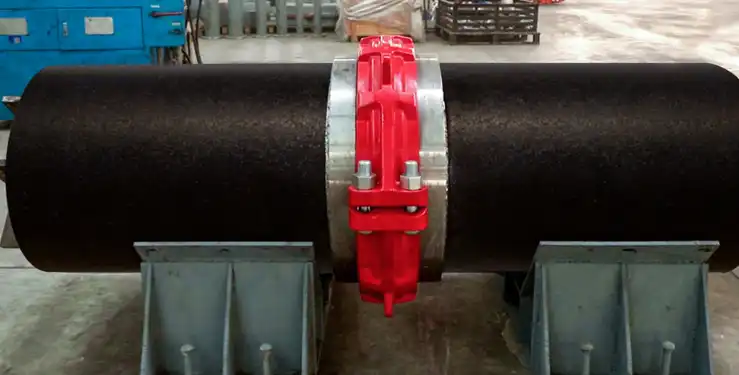
Understanding Grooved Couplings: Basics and Benefits
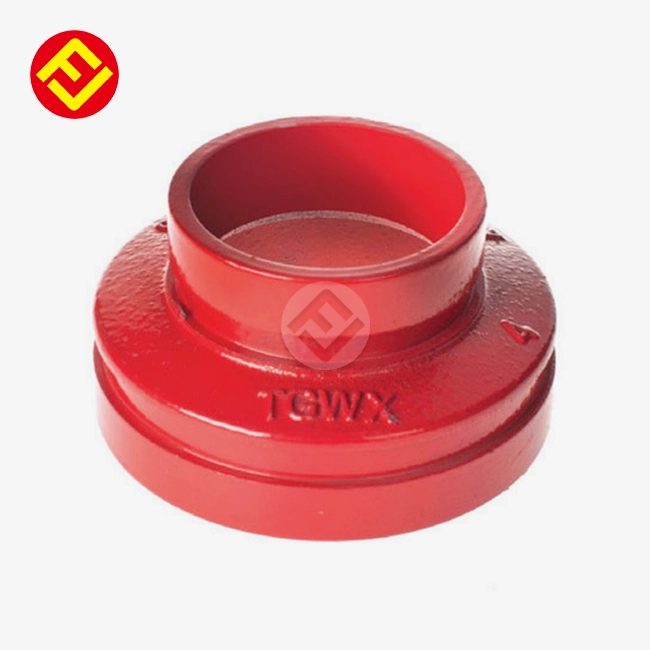
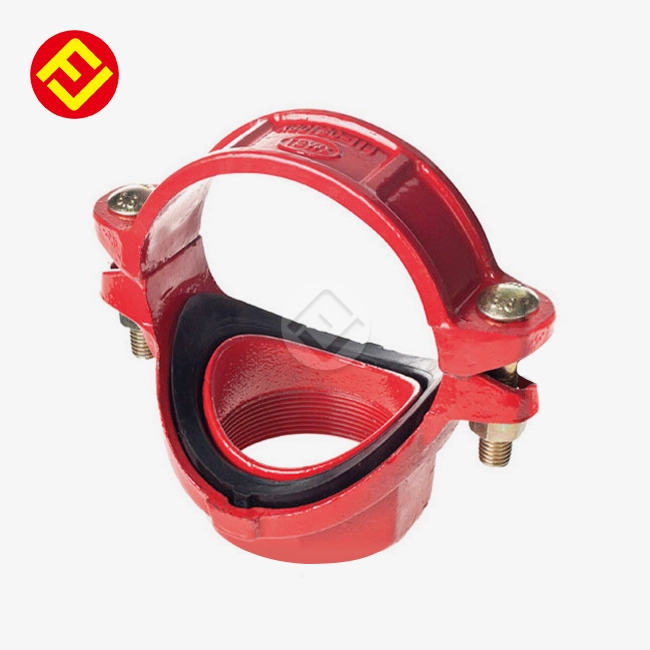
The fundamental design of grooved pipe joints is a great example of how simple can be elegant in engineering. There are four main parts to these systems: a special gasket, a strong coupler case, high-quality bolts, and carefully machined pipe slots. When put together properly, these parts form a mechanical interlock that can handle high pressures while still being flexible enough to allow for temperature changes and system vibrations.
Core Components and Functionality
The gasket is the main part that seals the pipe. It is usually made of EPDM or Nitrile materials that change shape depending on the pressure inside the pipe. When the pressure in the system goes up, the gasket presses against the pipe surface more tightly. This makes a seal that is stronger when it's under stress. The backbone of the structure is the coupler box, which is usually made of ASTM A536 Grade 65-45-12 ductile iron and has a tensile strength of over 65,000 psi.
Modern production methods make sure that measurements are accurate to within 0.001 inches, which is very important for keeping the gasket compressed properly and stopping leaks. The groove sizes are defined according to ANSI/AWWA C606. This makes sure that pipes from different makers will work together while keeping the structure's integrity.
Performance Advantages in Real-World Applications
One of the best things about coupling grooved devices is that they are easy to install. The Mechanical Contractors Association did independent tests that show construction times are 50–70% faster than with traditional flanged connections and 300% faster than with welded joints. This saves a lot of money on work costs, which is especially helpful for contractors who are trying to meet tight project deadlines.
Grooved links are different from fixed ones because they can reduce vibrations. The elastomeric seal acts as a built-in vibration isolator, cutting down on noise transfer and stress buildup that can cause pipes to fail early in pump rooms and areas with mechanical equipment.
Grooved Coupling Design and Installation Guide
The choice of materials for grooved coupling has a direct effect on how long a system lasts and how well it works. Due to its high strength-to-weight ratio and ability to prevent rust when properly coated, ductile iron is still the standard in most industries. Different types of carbon steel are more durable in high-stress situations, and special types of stainless steel are used in chemical processing plants where the climate is toxic.
Material Specifications and Pressure Ratings
For light-duty uses, standard pressure levels start at 300 PSI and go up to 1,000 PSI for heavy-duty industrial systems. These scores take into account safety factors higher than 4:1, which means there are large operational margins even when there is a rise. EPDM seals can work in temperatures ranging from -30°F to +230°F, meeting most needs for fire safety and HVAC.
Surface treatment choices have a big effect on how long something lasts and how well it works with other things in the surroundings. Hot-dip galvanization according to ASTM A153 is the best way to protect outdoor installations from rust. For indoor machinery rooms, electrostatic epoxy powder coating is the best way to protect against chemicals. Paint finishes are useful for a wide range of situations where looks are important but where contact to the environment is low.
Step-by-Step Installation Process
For a proper fitting to start, the pipe must be properly prepared. This includes smoothing out the cut ends and using special tools to check the groove sizes. For regular wall pipes, the groove depth must be 0.250 inches ± 0.010 inches and the groove width must be 0.0625 inches ± 0.005 inches.
When putting in a gasket, you need to pay close attention to how it is positioned and oiled. The lip of the gasket must face the direction of possible pressure flow, and acceptable non-petroleum lubricants must be used to make sure the gasket seats properly without breaking down chemically. There is a certain order to putting together a housing: place both halves of the housing in place, finger-tighten the bolts by hand, and then use the "pad-to-pad" contact method to get the final torque. This makes sure that all of the housing pieces meet.
Procurement Considerations for Grooved Couplings
To make procurement plans work, you need to find a balance between the original cost and the total value over the lifecycle. Even though premium makers charge more per unit, their goods usually last longer and need less maintenance, which more than covers the original costs. Well-known brands like Victaulic, Grinnell, and Tyco keep a lot of testing data and records of how well their Products" target="_blank" style="color:blue" >products work in the field to back up their quality claims.
Supplier Evaluation Criteria
Quality approvals for grooved pipe coupling are a reliable way to tell if a product is made consistently. As part of ISO 9001 quality management systems, methods are written down and ways of improving things are always being looked at. UL and FM approvals prove that a product is safe for use in fire protection situations, and CE marking shows that it meets European safety standards. Manufacturers have put a lot of money into getting these certificates, which shows that they are committed to high standards.
With nearly 40 years of experience making things and relationships with Fortune Global 500 companies, FLA Industrial & Trading Co., Ltd. is a great example of complete quality management. Before they are shipped, their coupling grooved goods go through a lot of tests, such as checking the dimensions, trying the pressure, and getting the material certified. Manufacturing sites follow ISO 9001 guidelines and offer reasonable prices by using efficient production methods.
When planning projects and keeping track of supplies, lead times play a role. Standard goods usually ship within days, but special designs could take up to two weeks to make. Knowing these dates helps keep projects on track and lets you plan your supplies correctly.
Maintenance, Repair, and Longevity of Grooved Couplings
Preventive repair programs make coupling grooved systems last a lot longer and reduce the number of sudden breakdowns. The ability to visually check is a big benefit over hidden connection types because it lets maintenance workers find problems before they become major failures.
Inspection and Maintenance Protocols
Regular inspections should include checking the state of the gaskets, making sure the housing is solid, and making sure the bolts are tight. Surface cracking, stiffening, or obvious distortion are common signs of gasket wear. These signs mean that it's time to replace the building, which usually happens every 15 to 20 years in normal conditions.
When evaluating housing rust, the attention is on measuring metal thickness and the stability of the coating. If you take care of the coatings, the building can last longer than 30 years. If you don't, the surfaces may need to be replaced every 10 to 15 years, based on how they are exposed to the environment. Keeping records of what was found during inspections allows for trend analysis and planning ahead for when to replace things.
Because grooved systems are flexible, it is easy to change parts without having to shut down the whole system. In order to replace a gasket, only that one part needs to be temporarily disconnected. In contrast, replacing a housing can usually be done with little system impact. When compared to welded or flanged alternatives, this ease of access means lower repair costs and higher system uptime.
For example, ultrasonic thickness measurement can be used to check the housing, and infrared thermography can be used to find leaks or damaged gaskets. These non-destructive methods give you objective data that you can use to make choices about upkeep and guarantee claims.
Conclusion
Through better installation speed, upkeep accessibility, and operating reliability, coupling grooved technology has proven its worth in a wide range of piping uses. The mix of mechanical strength and system flexibility solves some of the most important problems that come up in modern factories and building sites. If you choose the right materials, install them correctly, and follow the upkeep instructions, you should be able to get decades of trouble-free service at a much lower cost than with standard connection methods.
FAQ
What pipe sizes work with grooved coupling systems?
Pipes with a diameter of 1/2 inch up to 24 inches can be used with coupling grooved systems. Some makers offer special sizes up to 48 inches. Schedule 10, Schedule 40, and Schedule 80 pipes are all compatible with standard wall thicknesses. However, for certain uses, a technical study may be needed to get the best performance.
How do pressure ratings compare between rigid and flexible grooved couplings?
Depending on the size and weight class of the housing, rigid grooved couplings can handle pressures between 300 PSI and 1,000 PSI. Flexible connections can handle pressures that are similar while still letting you control the movement for vibration separation and heat expansion. Both types have much larger safety gaps than regular threaded links.
Can different manufacturer components be mixed in grooved systems?
The sizes of pipe grooves are common in the industry, but coupling housings and seals are still owned by individual makers. Safety standards and promises are null and void when components are mixed because small changes in size affect how well the seal works. Complete fitting systems should only come from one company.
Partner with FLA Industrial & Trading Co., Ltd. for Superior Grooved Coupling Solutions
When your projects demand reliable piping connections that combine speed, durability, and cost-effectiveness, FLA Industrial & Trading Co., Ltd. delivers comprehensive coupling grooved solutions backed by nearly four decades of manufacturing excellence. Our ductile iron and carbon steel couplings have improved surface processes, such as hot-dip galvanizing and epoxy coating, to make them last longer in harsh settings.
Our engineering team helps with everything, from the initial design advice to installation instructions, making sure that systems work perfectly for industrial, fire protection, and HVAC uses. We have more than 1,000 product specs and over 2,000 tons of inventory. We can ship standard things right away and custom solutions within 7 to 15 working days. Get in touch with our specialists at sales@flaindustrial.com to talk about your coupling grooved supplier requirements and receive competitive pricing for your next project.
References
American Water Works Association. "ANSI/AWWA C606-17 Grooved and Shouldered Joints." Denver: AWWA Standards, 2017.
National Fire Protection Association. "NFPA 13: Standard for the Installation of Sprinkler Systems, 2022 Edition." Quincy: NFPA Publications, 2022.
Mechanical Contractors Association of America. "Labor Efficiency Studies in Piping Installation Methods." Rockville: MCAA Technical Publications, 2021.
American Society for Testing and Materials. "ASTM A536-84(2019)e1 Standard Specification for Ductile Iron Castings." West Conshohocken: ASTM International, 2019.
International Organization for Standardization. "ISO 14692-1:2017 Petroleum and Natural Gas Industries — Glass-reinforced Plastics (GRP) Piping." Geneva: ISO Publications, 2017.
Building Services Research and Information Association. "Pipe Joining Systems Performance and Lifecycle Cost Analysis." Bracknell: BSRIA Technical Reports, 2020.