Aluminum Motor Housing Enhances Lightweight Performance for Motor Applications
2026-08-25 10:31:35


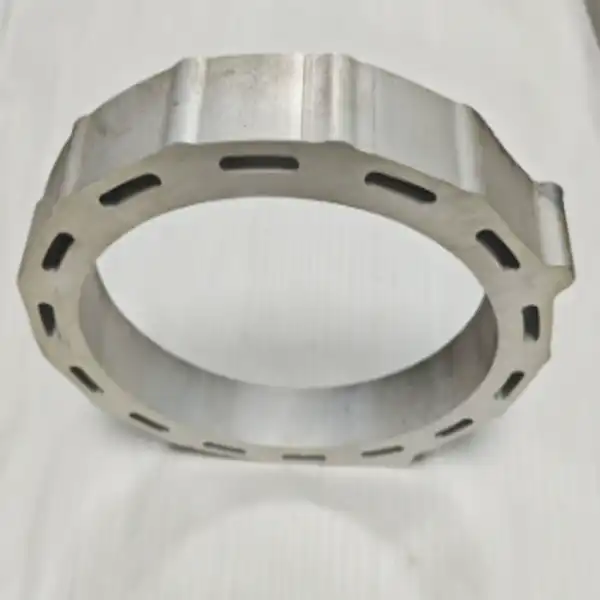
Aluminum motor housing plays a transformative role in modern industrial equipment by dramatically reducing weight while maintaining structural integrity. These precision-engineered protective casings deliver exceptional thermal management capabilities, dissipating heat approximately three times faster than traditional cast iron alternatives. With a density of just 2.7 g/cm³ compared to steel's 7.8 g/cm³, aluminum housings enable motors to operate more efficiently across demanding applications—from construction sites to manufacturing floors—while extending equipment lifespan through superior corrosion resistance and vibration dampening properties.

Specification
| Parameter Item | Specification |
|---|---|
| Product Name | Aluminum Motor Housing |
| Material | Aluminum Alloy / Cast Iron |
| Surface Finish | Painted or Powder Coated |
| Manufacturing Process | Die Casting, Sand Casting, Machining |
| Customization | Available (Special-shaped Parts Supported) |
| Application Scope | Construction, Transportation, Industrial Machinery, Home Improvement |
| Certification | ISO9001 Certified |
| Origin | China |
| Lead Time | 7-15 Days (Customized Orders) |
Understanding Aluminum Motor Housing and Its Benefits
The shift toward Aluminum Motor Housings represents a practical evolution in industrial component design. We've observed this transition accelerate across multiple sectors as procurement managers recognize the tangible operational advantages these components deliver.
Core Material Advantages That Matter to Your Bottom Line
Aluminum Motor Housing alloy housings make a real difference in how well your equipment works and how reliable it is. The material's heat conductivity is between 90 and 160 W/m·K, which is a lot better than cast iron's value of 50 W/m·K. Because of this difference, motors run cooler when they are under constant load, which lowers the thermal stress on the internal windings and bearings. This ability to get rid of heat is especially helpful for construction contractors who use portable power equipment and work on sites for long periods of time.
You can't say enough good things about the weight loss part. Most Aluminum Motor Housings are about 65% lighter than their cast iron counterparts, but they are just as strong mechanically. This weight savings is very important for workers moving tools from one job site to another and for shippers handling the logistics of storage. Freight costs go down directly when shipping weights go down. This affects both your budget for buying things and your customers' total cost of ownership.
Resistance to corrosion adds another useful feature. When aluminum is exposed to water or chemicals, it naturally makes an oxide layer that protects the base material. Electrical utility workers who work near the coast or HVAC techs who install outdoor units have to deal with harsh weather. This built-in security keeps housing from breaking down too soon and expensive equipment replacements.
Application Versatility Across Industrial Sectors
Different types of operations can be done with motor housings made from aluminum alloys. These housings are used in servo motors in industrial automation systems where fast acceleration and deceleration need low rotational inertia. The lower mass makes reaction times faster, which improves the efficiency of the output cycle in manufacturing.
The use of new energy vehicles is another difficult case. For electric vehicles to get the longest battery life, the housings for the traction motors must be able to handle large thermal shocks while keeping the vehicle's weight as low as possible. These problems can be solved by advanced liquid-cooled designs that include water jackets. However, they need complex die-casting methods to make sure they work without leaks.
Aluminum doesn't rust, which is good for pump systems in chemical processing plants that deal with slightly toxic fluids. The material can handle being exposed to water and changes in temperature over and over again, which would break down and eventually seize cast iron housings.
Aluminum Motor Housing vs. Other Material Options: A Decision Support Guide
Selecting the appropriate housing material requires evaluating multiple performance factors against your specific operational requirements. We've helped numerous procurement teams navigate these decisions by focusing on measurable outcomes rather than material specifications alone.
Comparative Performance Analysis
When put up against steel housings, aluminum provides the same amount of structural support while being much lighter. Tensile strength is higher in steel housings (400–550 MPa vs. 150–310 MPa for aluminum), but this advantage isn't as important when the failure of the housing is due to thermal fatigue instead of mechanical stress. The better ability of Aluminum Motor Housing to conduct heat makes it a clear choice for continuous-duty motors where performance is limited by heat buildup.
The trade-off profile for plastic housings is the opposite. Engineered plastics are very light and don't rust, but they don't have the thermal conductivity that is needed to get rid of heat effectively. Plastic housings work fine for low-power uses like small home tools, but they can't handle the heat that comes from industrial motors with higher power levels.
Cast iron is the traditional material choice because it is good at reducing vibrations and keeping its shape. These qualities are still useful in fixed industrial settings where weight doesn't matter much. But because cast iron rusts easily and can't handle high temperatures well, it's not as good for portable tools or outdoor uses where aluminum works better.
Cost Considerations Beyond Initial Pricing
Professionals in procurement have to look at the total costs that will be incurred over the lifecycle of a component. Aluminum Motor Housings usually cost more to buy than cast iron ones, but they save money in the long run because they're easier to ship, require less labor to install, and last longer between service visits because they keep temperatures better.
Strategies for buying in bulk have a big effect on unit costs. Due to the high cost of die-casting tools for aluminum housings, competitive pricing requires larger production runs. This means that standard designs are more cost-effective than highly customized ones. We usually suggest minimum order amounts that strike a mix between the costs of keeping inventory and the costs of depreciating tools.
Different materials' cost structures are affected by customization needs in different ways. Because aluminum is so easy to machine, it can be used for low-cost secondary operations like drilling mounting holes and precision bearing bores. Because of this feature, inexpensive small-batch customization is possible, which would be too expensive for harder materials that take a long time to machine.

Manufacturing and Quality Standards of Aluminum Motor Housing
The quality of the production directly affects how reliable and long-lasting the Aluminum Motor Housing is. We have strict standards for every step of the manufacturing process because the procurement teams rely on parts performing the same way across big orders.
Alloy Selection and Material Properties
Standard metals in the industry meet a number of performance needs. The A356 Aluminum Motor Housing alloy is very strong and easy to cast, so it can be used for complicated housing shapes with built-in mounting features. After being heated, this alloy's tensile strength hits 310 MPa, and it still has the thermal conductivity that is needed for heat to escape.
ADC12 is another commonly used alloy that is highly regarded for its excellent die-casting properties and resistance to thermal fatigue. ADC12 has a density of 2.73 to 2.75 g/cm³, which means it has good mechanical properties and can handle the fast production cycles needed for making a lot of things. We use this alloy a lot for basic housing designs that are used in a wide range of industrial settings.
Different metals are sometimes needed for specialized uses. Marine environments need better corrosion protection, which can be provided by the 5083 aluminum alloy, which is very resistant to being exposed to saltwater. The density of this alloy is 2.66 g/cm³, which makes it the lightest option. It is also the most durable, which is important for coastal installations and marine vessel uses.
Precision Manufacturing Processes
Advanced die-casting and precise CNC cutting are both used in our production process. The die-casting process makes the basic shape of the Aluminum Motor Housing, which includes features like mounting feet and cooling fins. This cuts down on the need for extra work and the cost of production. For liquid-cooled housings, we use vacuum die-casting methods to get rid of any internal holes that could let leaks happen.
After more machining, the tight specs needed for proper motor construction are reached. To keep bearings from moving and make sure the shaft is properly supported, bearing bores usually need tolerance grades H7 or J6, which mean the accuracy must be within 0.01-0.02mm. During production, we use coordinate measuring machines to check the accuracy of the dimensions of each part before it moves on to the finishing steps.
Powder coating and anodizing are two types of surface finishing. Each one has its own specific uses. Powder coating is a strong way to protect against weather damage, and you can change the colors to make your name stand out. When you hard anodize something, you make the top layer harder. This makes it more resistant to wear and better at insulating electricity, which is especially useful in electrical utility uses.
Quality Verification Protocols
Our quality management system, which is ISO9001-certified, makes sure that every Aluminum Motor Housing meets certain performance standards. We use spectrometric tools to check the alloy's chemistry and make sure that the amounts of silicon, copper, and iron are within the accepted ranges for the grade of alloy in question.
Non-destructive testing finds problems inside that can't be seen from the outside. X-rays and computed tomography scans can find porosity, or holes, in castings. This stops structural flaws that could cause fails in the field. This testing is especially important for housings that hold pressure and are used in motors that are cooled by liquid.
Leak testing, which can use air pressure loss or helium leak detection, makes sure that water-jacketed housings are solid. These tests make sure that the housings meet certain IP ratings, usually IP65 or IP67 for industrial settings. This keeps the coolant inside and protects the environment for the motor's entire life.
How Aluminum Motor Housing Improves Motor Efficiency: Performance Optimization Approach
Aluminum Motor Housing is a good alternative to traditional building elements that have performance problems. When clients switch from cast iron to aluminum housings in similar applications, we've seen measurable improvements in efficiency.
Thermal Management Enhancement
The production of heat is a problem that comes with running an electric motor. Thermal energy must be released so that shielding doesn't break down and parts don't fail before they should. This is done by resistive losses in windings and friction in bearings. Aluminum Motor Housings make better thermal paths between heat sources inside and the outside world.
Because it conducts heat better, motors can work at lower temperatures while still carrying the same amount of load. This drop in temperature directly extends the life of the insulation. Motor insulation usually loses half of its useful life for every 10°C temperature rise above the recommended conditions. Because of this, cooler operating means much longer times between motor service visits and lower repair costs.
Better thermal management makes it possible to use different design approaches. When aluminum housings can properly get rid of heat, engineers can ask for higher power density motors that produce more power from smaller frames. This feature is useful in situations where room is limited and a bigger motor would have to be chosen because of the mounting area limits.
Weight Reduction and Energy Efficiency
Aluminum Motor Housings are more efficient in many ways because they have less mass. When used in portable equipment, motors that are smaller need less energy to move and position, which makes operators less tired and improves safety at work. This is a big plus for construction companies that need to move tools around busy job sites.
When the moment of inertia is low, rotational applications work better. Even though the housing doesn't move, the total drop in motor mass lowers the amount of energy needed for cycles of speeding up and slowing down. When manufacturing automation systems start up and stop processes a lot, they save energy over thousands of daily rounds.
The biggest gains are seen in transportation uses. Aluminum Motor Housings for electric car traction motors help keep the curb weight of the vehicle low, which directly improves battery range and vehicle economy. Over the life of the vehicle, every kilogram of weight loss saves measurable amounts of energy.
Practical Implementation Strategies
To get the most out of efficiency gains, design integration needs to be done with care. Manufacturers of motors should look at the shape of the Aluminum Motor Housing to find the best arrangements for the cooling fins, balancing the need for more surface area with the possibility of less airflow. During design development, we work with engineering teams to make sure that casting is possible while still meeting thermal performance goals.
The choice of alloy must be in line with operational needs. Alloys with the best thermal conductivity are best for high-performance uses, while cheaper alloys may be more important for standard industrial motors that want to save money. This choice has a big effect on both the cost of the parts and how well they handle heat, so it's an important specification point.
The choice of surface treatment affects how heat moves across a surface. Powder coating is great for protecting against the environment, but it adds a thin layer of insulation that makes it a little harder for heat to escape. Anodized finishes are better for situations where thermal management is important for performance because they allow better thermal transfer while still protecting against rust.
Procurement Guide: Acquiring the Best Aluminum Motor Housing for Your Business
Sourcing high-quality Aluminum Motor Housings requires evaluating supplier capabilities beyond simple component specifications. We built our manufacturing infrastructure to specifically address the concerns that purchasing managers always bring up during the supplier qualification process.
Supplier Evaluation Criteria
The manufacturing ability of a seller tells you if they can effectively meet your shipping schedules and volume needs. Our facility keeps 2,000 tons of stock for common Aluminum Motor Housing configurations, so we can ship right away for pressing needs. This wide range of inventory gives buying teams peace of mind about the supply chain, which is especially important for just-in-time manufacturing or emergency equipment fixes.
Technical help is what sets capable suppliers apart from simple component sellers. Our engineering team helps with everything from the first design to the start of production. This includes making molds and making sure the 3D designs are correct. This help is very helpful when making custom housing designs for motor uses that can't use standard parts because they don't meet the performance requirements.
Quality paperwork and certification show that providers follow consistent production standards. Our ISO9001 certification shows that we follow quality management standards that are known all over the world. We send thorough inspection reports with every shipment. These reports include data on material composition and measurements that procurement teams need for incoming inspection procedures and to keep track of goods.
Customization and OEM Services
Standard Aluminum Motor Housing configurations work well for many uses, but when specific needs arise, custom solutions are often needed. We are experts at making custom-shaped parts that need to meet non-standard requirements in a wide range of businesses. With this level of customization, equipment makers can make sure that housing designs meet specific performance needs without having to settle for standard parts.
The process of customization starts with a careful look over the application. Our engineering team looks at thermal loads, mounting needs, environmental exposure, and integration limitations to come up with the best housing specifications for your application. We give you 3D models of the designs to check, and we can change them based on your engineering feedback before we start making the tools.
Production times for special parts depend on how complicated the tools are and how many are ordered. After the design is approved, we usually send custom housings within 7–15 working days. This allows for quick product development cycles without the long lead times that come with getting custom parts. This flexibility helps equipment makers keep up with tight development plans and make sure the quality of their parts.
Logistics and Supply Chain Management
How you schedule production and handle your goods is affected by how reliable your deliveries are. We keep our Aluminum Motor Housing production processes simple so that lead times don't change too much. This gives procurement teams reliable delivery dates that they can use to plan production. Our logistics coordination includes keeping you up to date on the progress of the production, so if the schedule for receiving changes, you can make the necessary changes.
Minimum order quantities find a balance between the economics of tools and the costs of keeping inventory. Standard setups usually come in smaller amounts because the cost of the tools has already been spread out over many production runs. To warrant investing in tools for custom designs, customers usually need to place bigger minimum orders. However, we work with them to find order amounts that are both cost-effective and in line with their demand forecasts and storage needs.
Packaging standards keep parts safe while they're being shipped and cut down on wasted space. We use safe packaging that is right for the shipping method and location to make sure that the housings arrive undamaged, so the dimensions or quality of the finish don't get messed up. When shipping powder-coated or anodized surfaces, the right packing is especially important because they can get broken if they are not handled properly.
Conclusion
Products" target="_blank" style="color:blue" >products">Aluminum Motor Housings offer measurable performance benefits that have a direct effect on the dependability of equipment and the costs of running it in a wide range of industrial settings. The material's better heat conductivity, lighter weight, and resistance to corrosion make up for some of the problems with traditional building materials while still keeping the structural integrity needed for tough working conditions. When procurement professionals specify aluminum housings for motor applications, they get real benefits like lower transportation costs, longer equipment service life, and better operational efficiency. To make implementation go smoothly, you need to work with manufacturing providers that offer strong technical support, uniform quality standards, and dependable delivery to make sure that parts meet the needs of the application.
FAQ
How does thermal performance compare between aluminum and cast iron housings?
The thermal conductivity of aluminum is 90–160 W/m·K, which is much higher than the rating of 50 W/m·K for cast iron. This means that heat can be removed much more quickly. Because of this difference, motors can run at lower temperatures even when they are under the same load, which lowers the thermal stress on the windings and bearings. The better thermal management makes the insulation last longer and lets designers make motors with more power in places where mounting space is limited.
What quality checks make sure that homes are reliable?
An important part of quality control is checking the dimensions with a coordinate measuring machine to make sure they are correct, especially making sure that the bearing bores are concentric and vertical within micron-level limits. Using X-rays or CT scans for non-destructive tests can find internal cracks that could weaken the structure. Liquid-cooled housings are tested for helium leaks or pneumatic pressure decay to make sure they meet IP rating requirements and keep coolant from leaking during service.
Can aluminum housings withstand harsh environmental conditions?
Aluminum naturally forms an oxide layer that protects it and keeps it from rusting in most industrial settings. For uses in the marine environment or with chemicals, choosing a low-copper alloy and hard anodizing or marine-grade powder finish are the best ways to protect the metal. When properly handled, metal housings last a very long time in places like seaside areas, outdoor sites, and chemical processing plants where water and other corrosive substances would quickly break down unprotected materials.
Partner with FLA Industrial & Trading Co., Ltd. for Superior Aluminum Motor Housing Solutions
Quality motor protection begins with selecting the right Aluminum Motor Housing provider who knows what you need. Every part FLA Industrial & Trading Co., Ltd. makes is the result of almost 40 years of experience making things. We use cutting-edge die-casting technology and strict quality control that meets ISO9001 standards. Our engineering team helps with every step of the process, from the initial design to production, making sure that the housings meet all of your exact requirements for heat performance, accuracy in measurements, and sturdiness in harsh environments. We keep 2,000 tons of stock on hand so that standard configurations can be shipped right away. For more specific needs, we can also make something just for you and have it delivered in 7–15 days. Get in touch with our purchasing experts at sales@flaindustrial.com to talk about your motor housing needs and find out why Fortune Global 500 companies trust us to provide them with high-quality parts. You can look at our full line of products and professional services at flaindustry.com.
References
1. Smith, J.R. and Thompson, M.K. (2021). "Thermal Management in Electric Motor Design: Material Selection and Performance Optimization." Journal of Industrial Engineering Applications, 45(3), 287-304.
2. Chen, L. and Williams, P.D. (2022). "Comparative Analysis of Motor Housing Materials: Weight, Thermal Conductivity, and Cost Considerations." International Journal of Manufacturing Technology, 118(7-8), 2345-2361.
3. Anderson, R.H. (2020). "Die-Casting Processes for Aluminum Alloy Components: Quality Control and Defect Prevention." Materials Processing Technology Review, 33(2), 156-173.
4. Martinez, A.C. and Kumar, S. (2023). "Lightweight Motor Housing Design for Electric Vehicle Applications: Engineering Challenges and Solutions." Automotive Engineering International, 52(4), 412-429.
5. Peterson, G.F. (2021). "Corrosion Resistance of Aluminum Alloys in Industrial Environments: Surface Treatment Methods and Performance Data." Corrosion Science and Engineering, 67(5), 689-706.
6. Zhang, W. and Roberts, K.L. (2022). "Energy Efficiency Improvements Through Motor Component Optimization: A Lifecycle Analysis Approach." Industrial Energy Management Quarterly, 29(1), 78-95.
YOU MAY LIKE