How to Design Custom C-Clamp Jaws for Specific Projects?
2026-04-28 11:35:04


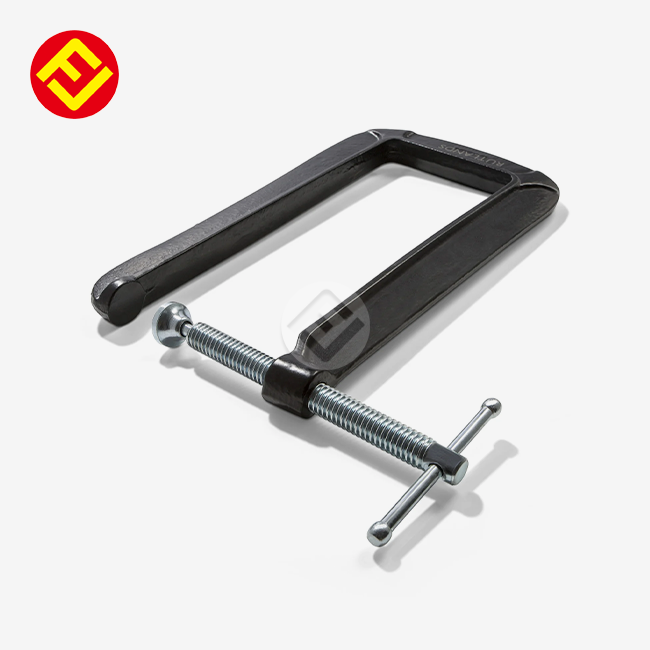
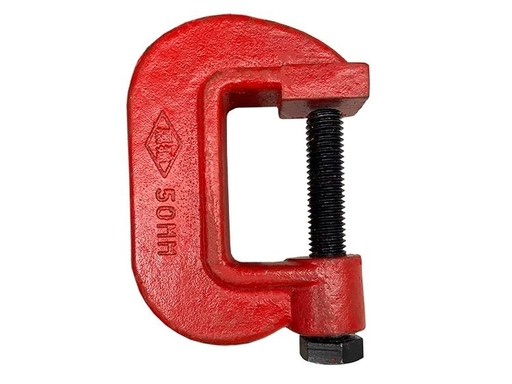
By designing custom c-clamp jaws, normal tools can be turned into precise instruments that solve specific problems in the workplace. A customized c-clamp with designed jaws is necessary when projects call for grip patterns, pressure distribution, or material suitability that aren't available in off-the-shelf Products" target="_blank" style="color:blue" >products. The design process includes looking at the shape of the part, choosing the right jaw material, figuring out the best contact surface shapes, and choosing coatings or pads that keep the holding force while protecting delicate substrates. Custom jaw solutions fill the gap between general-purpose tools and specific holding needs in building, metal production, crafts, and assembly.
Understanding the Core Challenges in Designing Custom C-Clamp Jaws
Why Standard Jaws Often Fall Short in Industrial Settings?
Standard clamp teeth work well for flat, parallel surfaces, but they get in the way when working with sensitive materials or projects with odd shapes. Construction companies' purchasing managers often have to deal with cases where standard jaws put a lot of pressure on small contact areas, damaging the surface of metal extrusions or composite panels. When making furniture, plant managers see how standard flat jaws can slip on curved chair rails or cabinet parts, throwing off the position of the pieces during the glue-up process. It's clear what the limits are when workpieces move during important processes, which costs money and causes production delays.
Another big problem is that different materials don't work well together. When finished wood is directly touched by steel jaws, it leaves marks that need a lot of cleaning. When hard metal jaws hit soft brass parts, burrs are made that change the tolerances of the system. Temperature-sensitive plastics change shape when they are clamped down hard on narrow mouth surfaces. These examples show how standard designs don't take into account the different qualities of materials used in different fields, such as hardwoods with different densities and aerospace-grade metals that need specific surface treatments.
Industry-Specific Demands That Drive Customization
When working with wood, you need teeth that spread pressure over a larger area so that you don't crush softwood fibers or dent oak surfaces. Production engineers ask for special jaw pads made of cork, leather, or polyurethane that can fit the shape of the part and still provide enough friction. Different widths of stock must be able to fit in the throat depth and jaw opening capacity without having to use different clamp sizes. This makes the work flow more efficient in woodwork shops.
The conditions needed for metal production are very different from one another. For welding, you need jaws with copper-beryllium alloy pieces that keep spatter from sticking and carry electricity for grounding reasons. For machining sets, serrated jaw surfaces hold onto oily steel bar stock without slipping, and V-grooved jaws keep round tubes stable while cutting. When building companies install pipes, site managers ask for jaws with protective rubber coatings that keep chrome-plated or painted pipes from getting scratched. This keeps installations looking good for people to see with a customized c-clamp.
Step-by-Step Approach to Designing Custom C-Clamp Jaws
Assessing Functional Requirements and Dimensional Specifications
The planning process starts with making detailed notes about the features of the project. Setting standard guidelines means measuring the exact sizes, shapes, and finishes needed on the surface. Heads of procurement should write down whether the job involves clamping flat panels, circular pipes, tapered parts, or casts that aren't round. By writing down the binding force needed in pounds or the exact pressure distribution, you can avoid over-engineering or under-specification.
Environmental factors have a big impact on choices about jaw shape. Outdoor building sites subject clamps to water, so they need jaw materials or finishes that don't rust. When welding at high temperatures, you need jaw plugs that can handle the heat and keep their shape. Jaws used in chemical processing plants need to be made of stainless steel or special plastics that don't rust. The working temperature ranges, contact to chemicals or solvents, and whether the clamps are sterilized or cleaned should all be written down for the custom c clamp.
Material Selection Strategies for Optimal Performance
How long the jaws last, how well they clamp, and how safe the item is are all directly affected by the material they are made of. Cast iron and steel are very strong and don't wear down easily, making them ideal for heavy-duty industrial uses. These materials can handle strong binding forces without deforming, which makes them good for places like metalworking and building where tools are handled roughly. Steel jaws can have different finishes put on them, such as electroplating to protect them from rust or powder coating to make them easier to hold and last longer.
Aluminum jaws are a smaller option that keeps operators from getting tired after long periods of use while still being strong enough for woodworking and light assembly tasks. When compared to polished steel, the softer surface of aluminum does less damage to workpieces. However, aluminum itself runs out faster when used over and over again under high pressure. Brass or bronze jaw inserts are used for specific tasks. They keep sparks from starting, which is important in places where there are explosives, or they can be used as protective areas for more expensive workpiece materials.
Polymer-based jaw materials, like nylon, polyurethane, and strengthened plastics, are great at keeping finished surfaces safe. These materials reduce the force of binding, spread pressure more evenly, and keep painted, polished, or metal workpieces from getting damaged. The hardness of polymer pads is measured by durometers. Softer materials are better at conforming to uneven surfaces, while harder formulas are better at resisting wear. At FLA Industrial & Trading Co., Ltd., we design unique jaw solutions using materials that are best for each purpose.
Jaw Shape and Ergonomic Design Considerations
The shape of the jaws affects how well they touch and how the pressure is distributed. Flat jaws work best with flat surfaces because they have the most touch area and spread pressure evenly across flat workpieces. Jaws that are contoured fit certain forms of workpieces, like curved surfaces that fit around cylinder pipes or convex shapes that fit into hollow parts. Point loading is bad for materials, but these special shapes stop it. They also make grips more stable by increasing the real contact area.
Swivel jaw designs have movable pads that can automatically change to surfaces that are not straight or at an angle. The floating action makes sure that there is full touch even when the faces of the workpieces are slightly tilted relative to each other. This makes up for irregularities in the material or deliberate tapers. Ball-and-socket swivel systems allow for multi-axis adjustment, which is useful for working with complex shapes like those found in sculptural woodworking or asymmetric metal production. Electrical engineers use fixed-angle jaws when they need to do repeated jobs with the same workpiece orientation every time.
Prototyping and Performance Validation Through Testing
For custom jaw development to work well, it needs to include prototyping steps that test design ideas before the jaw is made in full. Using 3D-printed models for rapid development lets you quickly check the jaw shape against real workpieces, showing any interference or contact issues that design plans might miss. Machining sample jaws from softer materials like aluminum lets you try them with real gripping forces and keeps the costs low in case you need to make changes to the design.
When checking performance, real-life working situations should be used as a guide. By measuring the displacement or surface writing of a workpiece while applying certain clamping forces, you can see if the pressure distribution meets the requirements. Cycle testing checks for wear patterns and jaw life, which shows if the choice of material is good for stability. Load testing until failure finds safety gaps and confirms that the jaw attachment points can handle forces above their normal working ranges.
Comparison: Customized vs Standard C-Clamp Jaws in Industrial Applications
Performance Advantages That Justify Custom Solutions
When compared to normal configurations, custom jaw designs show real performance gains. Woodworking shops say that using curved jaws with cork padding instead of normal metal jaws causes less damage to the surface, so they don't have to sand as much, which saves a lot of time in the finishing process. Custom jaws' bigger touch surfaces spread clamping pressure over larger areas, protecting softwoods from the damage that standard narrow jaws often cause by compressing them.
Improving grip stability leads straight to better results. Metal shops that use custom sharpened jaws on oily steel stock have less workpiece slipping during cutting operations than those that use smooth standard jaws, which lose their grip when they get dirty. When working with PVC pipes, construction teams say that custom jaws filled with rubber keep holds securely without the breaking problems that regular metal jaws cause when stress builds up. These improvements in performance cut down on mistakes and the costs of redoing work for each custom c clamp.
Cost-Benefit Analysis for B2B Procurement Decisions
Before investing in a unique jaw, you need to weigh the initial costs against the practical savings that will be achieved over time. When you buy standard clamps in bulk, you save money at first, but when the same piece of work gets damaged over and over, you have to pay for inspections, repairs, and trash materials, which add up over the course of a production cycle. Managers of procurement should compare the yearly cost of damage-related losses to the cost of custom jaw options that get rid of those problems over time. When a factory has more than one shift, custom jaws often pay for themselves in just a few months.
The total cost of ownership includes the time it takes to do repairs and replace things. When standard jaws are used in the wrong way and wear out quickly, they need to be replaced often, which costs a lot and causes the tool to stop working. Custom jaws that are made to fit the needs of a particular job usually last longer, so they don't need to be replaced as often. Custom solutions that are properly defined have better long-term value, even though they cost more at first. This is because they last longer thanks to things like the right material hardness, protective coatings, or improved shape.
Best Practices for Maintaining and Ordering Custom C-Clamp Jaws
Routine Maintenance Protocols That Extend Service Life
With proper upkeep, custom jaws will keep working well and your investment in specialized tools will be safe. Sawdust, metal chips, welding spray, and other debris that get in the way of proper jaw fitting can be removed by cleaning it regularly. In woodworking settings, resin buildup that forms on jaw surfaces and makes gripping harder needs to be removed often. In places where metal is worked on, cutting fluids and grinding leftovers that cause rust or get in the way of jaw contact surfaces need to be cleaned thoroughly.
Schedules for lubrication should include parts that move in swivel jaw systems. Using the right oils on pivot points keeps them from stopping and keeps the adjustment action smooth. Anti-seize chemicals on the threaded connection points keep the jaws from sticking when they need to be replaced or serviced. Maintenance supervisors should not use too much oil because it can attract dirt or move to the jaw contact surfaces, making them less secure and reducing friction on the custom c clamp.
Communicating Precise Specifications to Manufacturers
To effectively buy a handmade jaw, you need to communicate clear specifications that leave no room for confusion. Dimensional models should show all the important measures, like the length, width, and thickness of the jaws, as well as the locations of the mounting holes and any required contour circles or angles. It's important to be clear about the tolerances, especially for sizes that might not fit with current clamp bodies or workpiece contact areas. Procurement managers should give manufacturers both the standard measurements and the allowed variation ranges.
Material specifications need more than just general terms. Instead of asking for "steel jaws," specs should list particular alloys, how they need to be heated, and the ranges of hardness they need to be. Specifications for coatings should list specific processes, such as powder coating, electroplating, and anodizing, along with desired thickness and color. For polymer parts, giving grades for durometers, temperature resistance, and chemical compatibility makes sure that the goods provided meet the needs of the application.
Evaluating Suppliers and Ensuring Quality Delivery
Choosing the right supplier has a big effect on the quality of the custom jaw and the success of the purchase. Manufacturing certifications, such as ISO9001, show that quality control systems have been in place for a while and help keep production standards uniform. Having experience as an OEM shows that you can turn customer needs into useful goods. Heads of procurement should make sure that possible suppliers have the right tools, like precision machining centers for metal jaws and injection molding capabilities for polymer parts.
Project planning is affected by how clear and reliable lead times are. Custom makers with a lot of experience give reasonable deadlines that take into account things like design proof, prototype approval, tooling preparation, and production runs. Knowing whether stated lead times include shipping or not and whether there are fast choices for urgent needs keeps schedules from getting thrown off. If a supplier offers digital design verification through CAD modeling or 3D rendering, you can check the specifications before the actual production starts.
Future Trends and Innovations in Custom C-Clamp Jaw Design
Advanced Materials and Coating Technologies
New developments in material science keep making custom jaws possible. Advanced composite materials that use polymer matrices and fiber supports have great strength-to-weight ratios, which means they keep their clamping capacity while cutting user stress. Carbon fiber reinforced jaws are stiff like steel but only a fraction of the weight. This is especially useful in aircraft uses where tool weight affects how well an assembly is done. Additionally, these materials have thermal insulation qualities that keep workers and workpieces safe during processes that depend on temperature.
New developments in surface coatings improve both efficiency and durability. Nano-ceramic layers put on using physical vapor deposition make surfaces that are very hard and have low friction. These surfaces don't wear down and don't let workpieces stick to them. Compared to traditional finishes, these coatings make jaws last a lot longer, which means they don't need to be replaced as often and the removal of tools has less of an effect on the environment for each customized c-clamp.
Smart Integration and Industry 4.0 Capabilities
New smart tool technologies add sensors to custom jaw designs, which lets tightening conditions be monitored in real time. Embedded force sensors measure the real clamping pressure. This input stops both too little grip and too much force, which damages the workpieces. Clamping data is sent to quality control systems wirelessly, making lasting records that show assemblies met certain clamping parameters. This digital proof is especially useful in industries like aircraft, medical devices, and automaking.
Custom jaws have temperature tracking built in to let operators know when temperatures are too high or too low, which could affect the safety of workers or the quality of the assembly. When welding, jaws with built-in thermocouples keep nearby parts from getting damaged by heat by sending signals when temperatures rise above safe levels. When working with composites, jaws that watch cure temperatures are helpful because they make sure that bonds hit the right activation temperatures during the clamping period. With these smart systems, simple mechanical tools can be turned into active process control parts.
Conclusion
To make custom c-clamp jaws, you have to carefully look at the features of the part, choose the right material, and make sure that the shape is optimized to solve specific holding problems. The performance advantages over normal solutions—better pressure distribution, better grip, and less damage—deliver real benefits that support the initial investment through higher quality and more efficient operations. For custom jaw procurement to go well, there needs to be clear sharing of requirements, seller evaluations that focus on manufacturing capability and quality systems, and upkeep methods that keep specialized tooling working well for a long time.
FAQ
What materials work best for custom c-clamp jaws in metalworking environments?
When working with metal, hardened steel is very durable and doesn't wear down easily, especially when the jaws touch hardened workpieces or rough materials. Serrated steel surfaces make it easier to hold on to metal stock that is oily or dirty. Polyurethane plugs with hardness values between 70A and 90A durometer protect finished metal surfaces while keeping enough clamping force to keep plated, painted, or polished parts from getting scratched. Copper-beryllium metal plugs are used in certain types of welding that need to conduct electricity and stop sparks.
Can manufacturers accommodate specific pressure ratings in custom jaw designs?
By choosing the right material and optimizing the shape, custom jaw designs can easily meet specific pressure needs. By telling makers the desired clamping force in pounds and the area of touch with the workpiece in square inches, they can design the right jaw width, support structures, and connection methods. For sensitive materials, wider jaw sides spread force over larger areas, which lowers the pressure per unit area. On the other hand, surfaces that are close together and made of harder materials create higher forces that make it easier to hold on to difficult workpieces.
What lead times should procurement managers expect for custom c-clamp jaws?
Custom jaws usually take between two and six weeks to make, but this depends on how complicated the design is and how many are ordered. Simple changes to the shape of current jaw models can usually be shipped within two weeks. On the other hand, it can take up to six weeks to ship completely new designs that need tooling development. Suppliers who do their own cutting and finishing usually have faster turn-around times than those who outsource these steps. We can make custom solutions in 7–15 days thanks to our integrated production skills and large store of materials.
Partner with FLA Industrial & Trading Co., Ltd. for Custom C-Clamp Solutions
Your specific tightening problems should have custom answers, not tools that aren't up to par. We are a top maker of customized c-clamps with almost 40 years of experience. Our precision jaw designs make your specific uses in woodworking, metal fabrication, building, and industrial assembly more efficient. Our production methods are ISO9001-certified, we offer a wide range of materials (including cast iron, steel, and specialized finishes), and we can make changes quickly to make sure you get reliable solutions within 7–15 days. To talk about your needs, email our expert team at sales@flaindustrial.com. Within 24 to 48 hours, we give pricing and technical feedback that helps with procurement choices. Our knowledge has won the trust of Fortune Global 500 partners around the world.
References
Anderson, M. (2019). Industrial Clamping Systems: Design Principles and Applications. Manufacturing Technology Press.
Chen, L., & Rodriguez, P. (2021). "Material Selection for Custom Tool Jaw Design in Multi-Industry Applications." Journal of Manufacturing Engineering, 48(3), 234-251.
International Organization for Standardization. (2020). Metalworking Clamps and Fixtures: Specification Guidelines. ISO Technical Report 8549.
Nakamura, T. (2018). Precision Workholding: Advanced Techniques for Modern Manufacturing. Industrial Press Inc.
Peterson, K. (2022). "Cost-Benefit Analysis of Custom versus Standard Tooling in Production Environments." Manufacturing Economics Quarterly, 15(2), 112-128.
Williams, R., & Thompson, J. (2020). Surface Protection in Industrial Clamping: Materials and Methods. Technical Publishing International.