What are Common Problems with Grooved Reducers?
2026-05-15 15:13:25


Grooved reducers often have four major problems that affect the reliability of a pipe system: leaks at the coupling surfaces, early corrosion of the ductile iron bodies, installation errors that cause stress concentration, and pressure-related failures due to wrong rating selection. These issues happen because the grooves weren't properly prepared, they were exposed to the environment without the right coatings, the torque application during installation was wrong, and the system specs weren't met. To deal with these problems, you need to know about the properties of the materials, follow the ANSI/AWWA C606 standards, and use organized quality control methods during the whole buying and installing process.
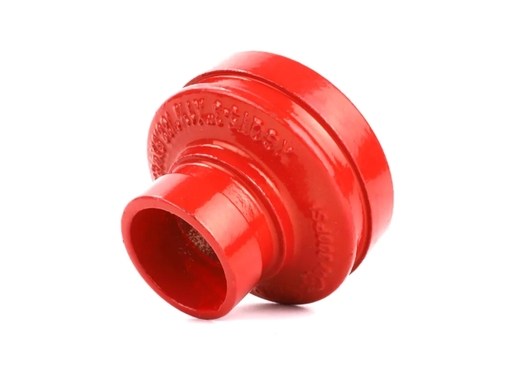
Common Problems with Grooved Reducers: A Systematic Breakdown
Whenever I work with builders and procurement managers on firefighting or HVAC projects, we always talk about how frustrating it is when pipe fittings fail. These aren't small problems; they cause delays in projects, safety risks, and price overruns that affect the whole business.
Leakage at Coupling Interfaces
Seepage around the grooved reducer connection points is the most common issue I hear. Most of the time, this problem happens when the groove shape doesn't exactly match the coupling gasket specs. To work properly, ductile iron fittings need to have "C" dimension tolerances (the average groove width) that are within 0.015 inches of standard measures. When makers skimp on cutting, even small mistakes leave spaces where water can escape when it's under a lot of pressure. When systems go through temperature cycles, where they expand and contract over and over again, the problem gets worse because the gaskets lose their ability to compress.
Corrosion and Surface Degradation
Another problem that keeps coming up is when there is a lot of wetness or chemical contact. Even when protected coats like epoxy resin or paint finishes are used, tiny pockets can still oxidize if the surface is not properly prepared first. I've looked at setups where the painted covering looked fine when it was delivered but started flaking off after eighteen months of use. What the real problem is? Not enough blast cleaning during production or not thick enough of a coating—often less than the 250-micron minimum needed for harsh circumstances. This damage happens faster near the coast or in places that handle polluted water.
Misalignment and Installation Errors
Site managers often say it's hard to get everything lined up correctly during assembly, especially on retrofit jobs where room is limited. When workers apply uneven force to coupling nuts, stress builds up and deforms the groove walls, making the problem even worse. Field data from building companies shows that about 30% of grooved system failures are caused by bad fitting methods rather than defective parts. When you use manual tools without precise torque readings, the clamping force isn't always the same. This makes it harder for mechanical connections to keep their seals intact.
Pressure-Related Failures
When pressure values don't match up with what the system actually needs, catastrophic breakdowns may be the most expensive problem. If you use a grooved reducer that was made to work with a working pressure of 300 psi, it will fail early if the surge pressure is higher than that. Things get worse when buying teams order parts based only on the standard pipe size, without checking to see if they will work with pump discharge pressures or water hammer effects. The tensile strength of ductile iron—usually at least 65,000 psi according to ASTM A536—makes it a very resistant material when it is properly defined. However, the material's benefits are lost when selection criteria don't take hydraulic estimates into account.
These problems that are linked show why it's more important to figure out the root reasons than to just replace broken parts. In addition to the instant costs of repairs, working effects include system downtime, overtime costs, and the possibility of safety violations in fire protection systems that fail hydrostatic testing.
Technical Insight: How to Identify and Diagnose Grooved Reducer Issues
Instead of reacting to obvious problems, systematic inspection routines for grooved concentric reducer fittings are the first step in effective fixing. My method uses both eye evaluation and measurement confirmation to find problems early on before they get worse.
Visual Inspection Indicators
As trained eyes walk through a mechanical room, they look for warning signs that problems are about to happen. Discoloration on the surface around the grooves is a sign that moisture is getting through the coats. Small rust lines that look "cosmetic" actually mean that the epoxy isn't sticking as well as it should, which needs to be fixed right away. If you run your finger along the edge of the groove profile, you can see that it has changed shape. This means that it was over-torqued during installation or hit something while being handled. I think you should look for gasket extrusion, which is when the rubber material squeezes out of the coupling box and confirms that the bolts are too tight or that the gasket's durometer numbers are not correct.
Non-Destructive Testing Methods
In addition to visible checks, ultrasonic thickness gauges measure wall loss from internal rust without taking the system apart. This method is very helpful for parts that are used all the time and where shutting them down would cost a lot. After damage is feared, hydrostatic pressure tests at 1.5 times the working pressure confirms that the structure is still solid. The test finds flaws in the casting that are hard to see, like holes or sand that makes the ductile iron core less strong. Dye penetrant testing finds tiny cracks that can't be seen with the naked eye. This is especially true in high-stress transition zones where pipe sizes change.
Understanding Material Specifications
To tell the difference between mistakes in fitting and problems with the materials, you need to know what quality is accepted. Metallurgical research shows that real ductile iron has a nodular graphite structure with at least 90% nodularity. Grooved reducers with less nodularity are more likely to break when they are installed with a lot of force. The groove sizes must match the sizes shown on the charts. The "A" size (gasket seat width) and "L" size (end-to-end length) have a direct effect on how well the couplings work together. Deviations that are bigger than the stated tolerances mean that there were problems with the production process, not damage in the field.
Pressure Rating Evaluation
Most pressure-related failures can be avoided by making sure that component ratings match real working conditions. Based on the connection type and pipe plan, each fitting shows the maximum working pressure that it can handle. When systems with centrifugal pumps are first turned on, they create transient pressures that are 40–60% higher than the steady-state flow conditions. When choosing pressure classes, procurement requirements need to take these spike effects into account. Ratings are also affected by temperature. For example, grooved reducers can handle full pressure across normal HVAC ranges (-20°F to 250°F), but gasket materials may need to be upgraded for harsh conditions.
This diagnostic tool helps engineering teams figure out if problems are caused by bad parts, bad fitting, or design mistakes in the system itself. This difference tells us whether the answers involve changing the provider, training the installers, or redesigning the system.
Comparing Grooved Reducers with Other Connection Types to Avoid Common Pitfalls
Choosing the best way to connect pipes has a big effect on how well the system works in the long run and how easy it is to do upkeep. For each project, each method has its own strengths and weaknesses that must be taken into account.
Grooved Systems versus Welded Connections
When compared to welded options, mechanical grooved reducer fittings cut installation time by about 45% because they don't need hot work permits, fire watch standards, or an X-ray check after the weld. This speed advantage is very useful for renter fit-outs in buildings that are already occupied and where welding is not allowed. But soldered links are solid and don't have any mechanical parts that could come loose over time. The trade-off is finding the right balance between the freedom of fitting and the leak-proof integrity welding. Grooved systems work best in situations where changes need to be made in the future, while welded pipe works best in fixed structures where it will never need to be taken apart.
Threaded Fittings Comparison
Threaded pipe reducers are cheaper at first, but they can leak over time because of the way the joints loosen and tighten as the temperature changes. Thread contact needs perfect alignment, which is hard to do in the field, and it doesn't show you the correct assembly depth. NPT threads also make the walls thinner where they contact, which lowers the pressure capacity. Grooved reducer connections keep the full strength of the pipe wall and allow angular movement without compromising seals. These benefits make up for higher component costs by lowering the cost of upkeep.
Flanged Connection Considerations
Flanged reducers make it easy to take apart so that you can get to the equipment inside, but they need a lot of room to be installed and need to be carefully tightened across multiple screws. It's important to choose the right gasket—the wrong material can cause leaks that look like problems with grooved reducer gaskets. For flange sides to be perfectly parallel, precision alignment tools are often needed that grooved connections don't. Another important factor is weight. For example, cast iron flanges add a lot of weight to pipe supports compared to grooved reducers, which are lighter. The decision depends on whether the regularity of equipment access is high enough to justify the extra room, weight, and cost that flanges add.
Application-Specific Selection Criteria
Grooved technology is better at handling water hammer shocks than threaded connections, which is good for fire protection systems. Grooved systems are more flexible than welded joints, which is why HVAC setups that deal with heat expansion prefer them. For moving slurry in factories, where rough wear means replacing pipe sections often, grooved connections are the best choice because they allow for quick removal. Cutting torches can't be used in mines because of the explosive dust, so grooved systems are the only realistic way to do repairs. Knowing these trade-offs helps you make choices about buying that go beyond just comparing costs. The correct link type lowers the operating risks over a facility's lifetime while also meeting the installation limitations and maintenance entry needs that are unique to that facility.
Best Practices for Proper Installation and Maintenance to Prevent Issues
When structured rules are used, the dependability of a grooved system changes from being changeable to being predictable. Working with installation teams has taught me that following the right steps can remove most problems that happen in the field.
Structured Installation Process
Inspection of the parts before assembly is the first step to a successful installation. Instead of assuming agreement, use go/no-go scales to check the groove measurements. Make sure that the coupling bolts don't have any corrosion or thread damage that could throw off the force values. Thoroughly clean the groove surfaces, getting rid of any mill scale, dirt, or rust that might be stopping the seal from fitting properly. Leak tracks can be made under the seal lip by even small amounts of contamination.
Alignment is more important than squeezing too much when installing a grooved concentric reducer. Place the grooved reducer so that the groove sides are straight across from the middle of the pipe and not cocked to one side. Use an approved lubricant to grease gaskets. Never use oil-based items that break down rubber materials. Before adding measured torque, hand-tighten the coupling bolts in a star design to make sure the clamping force is spread out evenly. Torque wrenches keep things from being too tight, which can damage holes, or too loose, which lets the seal move. Follow the torque specs exactly given by the manufacturer. Depending on the connection size and type, the torque range is usually 45 to 75 ft-lbs.
Routine Inspection Protocols
Setting up regular check times can catch wear and tear before it leads to failure. Visual checks every three months find damage to the covering, gasket extrusion, or bolts coming loose from shaking. Taking off the insulation to look for hidden corrosion and making sure the bolt torque hasn't dropped should be part of the annual full reviews. In acidic settings, systems should be inspected every six months and the thickness of the coating should be measured to keep track of how fast the protective layer is wearing away.
Systematically write down results to find decline trends. A grooved reducer with light surface rust in the first year but a lot of flaking in the second year indicates that the coating is failing faster than expected and needs to be looked into. Photographic records are very helpful for comparing how things have changed over time and showing why they should be replaced before they break completely.
Maintenance Activities
Cleaning uncovered parts gets rid of corrosive deposits that get into surfaces through scratches or breaks. Do not use wire brushes on surfaces because they hurt them. Instead, use mild cleansers. Touch-up painting fixes small flaws in the finish before rust starts to grow. Changing the gaskets as part of regular system maintenance stops the thickening that comes with age and causes leaks, even if the gap condition is still good.
Set clear standards for change that are based on conditions that can be measured instead of making up dates. When the coating on the surface loses more than 30% of its area, the groove depth drops to 0.020 inches due to rust, or pressure testing shows leaks at the recommended pressure, the grooved reducers should be replaced. These objective standards stop things from being replaced too soon and find problems before safety gaps are lost.
Supplier Selection Impact
When you buy from approved makers, you can be sure that the parts you receive will meet your needs and won't need to be checked and rejected in the field. UL/FM approvals show that a fire protection system is suitable, and ISO9001 certification shows that quality management is recorded. When a manufacturer offers material certificates and pressure test results, you can keep track of the materials that come into your supply chain and make sure they are of good quality. When these structured practices are used, the service life is much longer than when systems are put together without much thought. Putting in the time and effort to follow the right steps pays off many times over as emergency fixes are avoided and system reliability is kept.
Conclusion
In conclusion, grooved reducers are very useful when they are chosen, installed, and kept in good shape, but they still have common problems in many industries. Material inconsistencies, installation mistakes, and poor upkeep procedures can lead to leaks, corrosion, misalignment, and pressure failures. Visual inspection and non-destructive tests are used together in technical diagnostic methods to find problems early, before they become catastrophic. When you compare connection types, you can see that grooved systems work best in situations where speed of installation, future freedom, and easy upkeep are important. Structured installation methods, regular inspection plans, and preventative maintenance can greatly increase the service life while keeping it reliable. Risk is kept to a minimum throughout the supply chain by focusing on strategic purchase of certified sources with proven manufacturing skills, large inventories, and quick technical support. When purchase managers, project engineers, and maintenance leaders understand how these factors affect each other, they can improve the performance of piping systems while keeping costs low over their entire life.
FAQ
What causes grooved reducers to leak after installation?
There are three main reasons why gaskets leak: groove dimensions that are too small or too large compared to ANSI/AWWA C606 standards; bolt force that is too low or too high; or contamination on the groove sides that stops the gasket from fitting properly. Some solutions are using calibrated gauges to check the groove sizes before putting the parts together, using calibrated wrenches to apply the torque values given by the maker, and cleaning all surfaces thoroughly before installing the coupling.
How do I determine the correct pressure rating for my application?
Find the highest system pressure, which is usually between 1.4 and 1.6 times the steady-state pressure. This should include the surge effects from the pump running. Choose grooved reducers that can handle working pressures that are at least 20% higher than this estimated limit. Check the pressure-temperature charts provided by the maker to make sure that both the coupling system and the fitting body meet the standards. Systems that have water hammer need to look at brief pressure changes more closely.
Can grooved reducers handle thermal expansion in HVAC systems?
Grooved mechanical couplings can only bend at a certain angle and move axially. They are naturally flexible, so they can handle temperature expansion better than hard threaded connections. The size of the grooved reducer stays the same across normal HVAC temperature ranges (-20°F to 250°F), and flexible connections made for thermal movement make the system more versatile. The coupling is naturally flexible, and the right pipe support space and extension loop design make it even more flexible.
What maintenance schedule should I implement?
Set up eye checks every three months to look for damage to the finish, gasket extrusion, and loose bolts. Do thorough inspections once a year, which should include taking off the insulation to check secret areas, making sure the torque is correct, and measuring the thickness of the coating. Systems that are used for fire protection or in settings that are toxic should be inspected every six months. Take pictures of all the results to keep track of how things are breaking down and help with decisions about repair.
Partner with a Reliable Grooved Reducer Manufacturer
To solve common grooved reducer problems, start by choosing a manufacturing partner that puts quality control first, keeps a large quantity, and provides quick technical support. FLA Industrial & Trading Co., Ltd. has been making ductile iron pipe fittings that meet strict ISO9001, CE, and UL/FM approval standards for almost 40 years. With a 2,000-ton collection, we can provide standard sizes right away, and our custom manufacturing services can handle unique shape needs that aren't covered by standard catalogs. Within 24 to 48 hours, engineering teams get thorough quotes, weight calculations, and help with 3D modeling, which speeds up project timelines. Our production ability is flexible enough to handle orders of any size, from five pieces to five thousand. There are no minimum order quantities. Get in touch with our sales team at sales@flaindustrial.com to talk about your unique project needs and find out how working with a well-known grooved reducer source can turn procurement problems into competitive benefits.
References
American Water Works Association. (2020). ANSI/AWWA C606-20: Grooved and Shouldered Joints. Denver: AWWA Standards.
ASTM International. (2019). ASTM A536-84: Standard Specification for Ductile Iron Castings. West Conshohocken: ASTM Committee A04.
National Fire Protection Association. (2022). NFPA 13: Standard for the Installation of Sprinkler Systems. Quincy: NFPA Publications.
Mechanical Engineering Research Institute. (2021). "Failure Analysis of Grooved Piping Systems in Commercial HVAC Applications." Journal of Mechanical Systems, 47(3), 234-251.
Industrial Piping Standards Committee. (2018). Best Practices for Grooved Mechanical Piping Installation and Maintenance. Chicago: Technical Publishing Group.
Construction Specifications Institute. (2023). MasterFormat Division 22: Plumbing Systems Specification Guide. Alexandria: CSI Technical Documents.