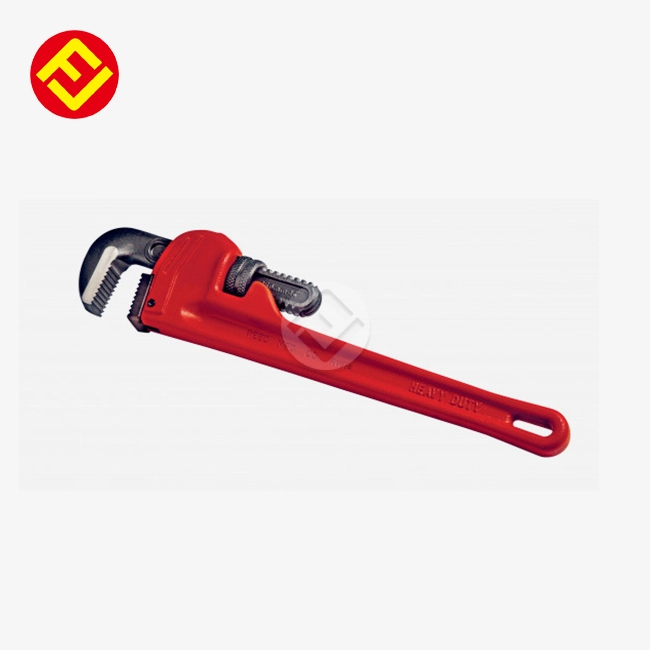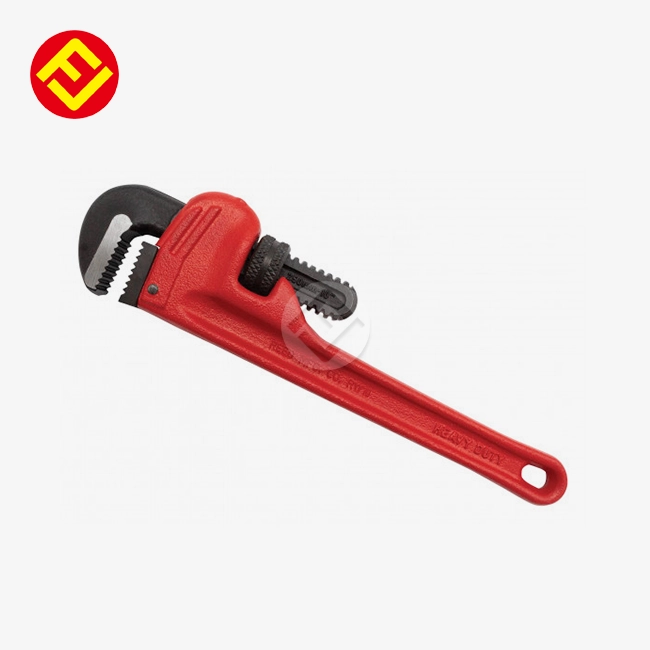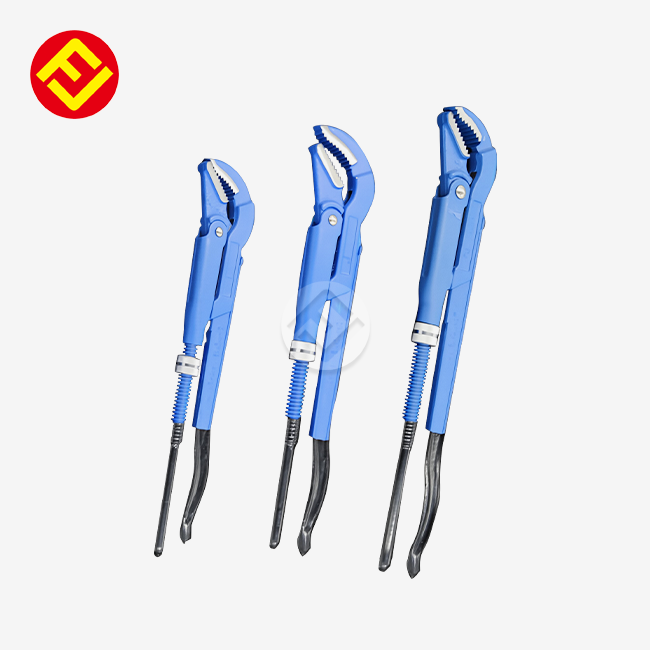
Double-Handle Pipe Wrench


Application: Designed to increase torque, convenient for pipeline operations in narrow spaces or requiring two-handed force
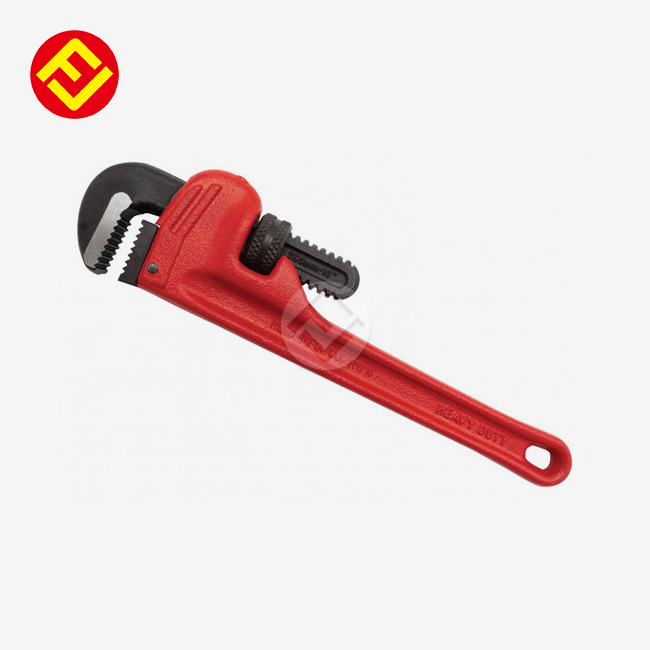
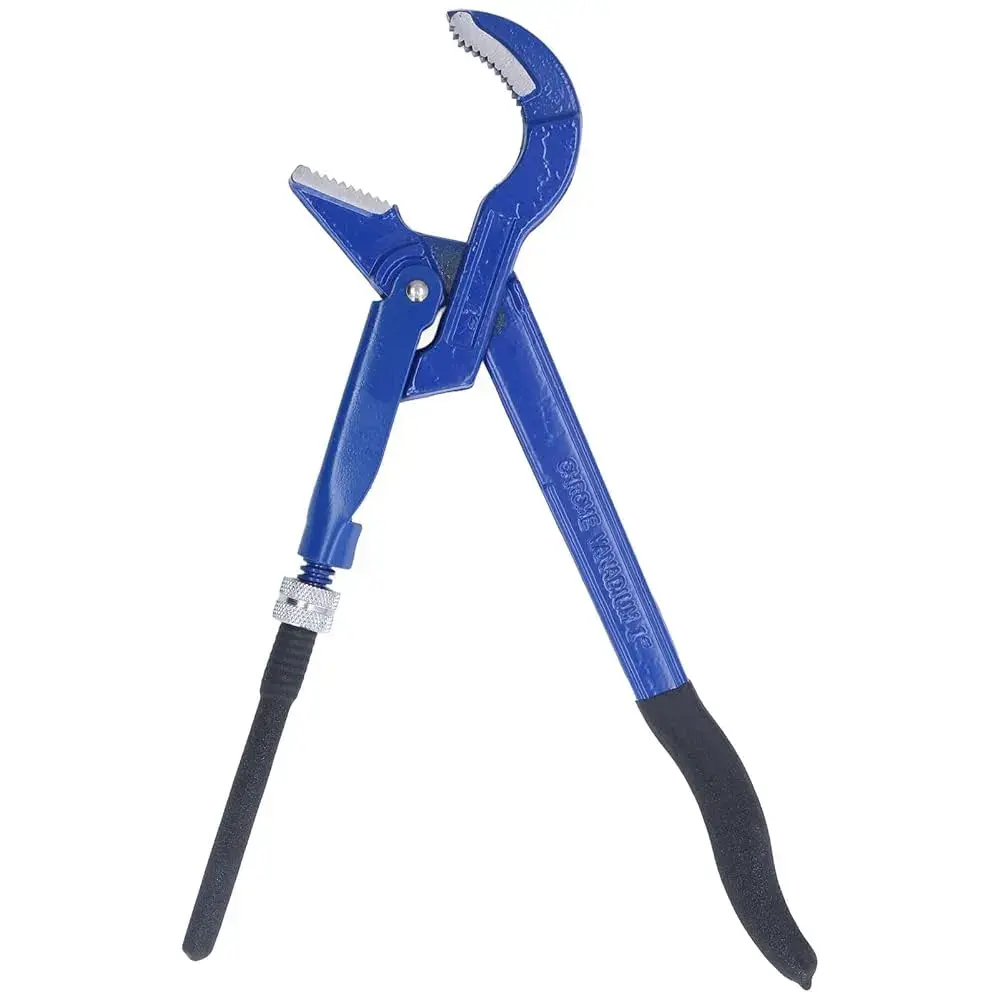
Appearance: Dual-handle design, adjustable jaws, robust structure
Place of Origin: China
Manufacturing Process: Forging, machining, heat treatment
Certification: ISO9001, CE
Double-Handle Pipe Wrench: Forged S-Type Series for Tight Spaces and High-Torque Pipe Work
FLA Industrial & Trading Co., Ltd. supplies forged hand tools for pipe and plumbing work. The Double-Handle Pipe Wrench is one of them. This S-type model comes in alloy steel or carbon steel. Tight spots and two-handed torque jobs are where it works. Its body is made in China by forging, machining and heat treatment. Induction hardening brings the jaw teeth to 55-60 HRC. Pipefitters, HVAC technicians and maintenance teams rely on it for a firm grip on round metal pipe. Send us your requirements for pricing, unit weight or 3D design feedback. We reply within 24-48 hours.
What Is Wrench?
Other names for This product are the Swedish-pattern wrench and the S-type pipe wrench. It has two handles. An S-shaped jaw profile is part of the design. The tool is used for heavy-duty plumbing and hydraulic work.
Three points of contact with round pipe come from the jaw shape. Add force, and the grip gets tighter. Two-point contact is what a standard Stillson wrench uses. It also has a bulkier housing.
The S-type design addresses these common problems:
- Slippage on round, smooth surfaces
- Limited access to confined corners
- Torque loss or deformation on thin-walled pipe
Specifications
The table lists only the parameters provided for this product.
| Model | Total Length (mm) | System | Applicable Pipe Diameter (mm) |
|---|---|---|---|
| 1" | 320 | Chinese Style | Consult |
| 1.5" | 420 | Chinese Style | Consult |
| 2" | 550 | Chinese Style | Consult |
The data we have does not give the size range or the overall length. Jaw capacity, weight, torque rating and the certification for each model are missing too. Ask us for the datasheet, or check these details with our team before you order.
Key Features
Nuts and pipes that sit close to a wall or tucked in a corner are awkward for a straight wrench. It often cannot angle in at all. That is the job the offset S-shaped jaw was built for. Its body is slimmer as well, so it slides into gaps where a Stillson is just too bulky.
In a tight spot you can put both hands on the two handles and push. The adjusting nut sits on the lower handle. That way one hand sets the jaw while the tool stays put on the pipe. Under load the captive nut is meant to stop it spinning loose. Because of that, This product holds steady through stroke after stroke.

Materials and Manufacturing Process
Alloy steel or carbon steel goes into the body. Forging gives it a dense structure. Jaw and thread dimensions come from machining.
Next comes heat treatment, which sets the working hardness. Induction hardening brings the jaw teeth to 55-60 HRC. Handles get tempered, so brittle fracture is less likely when heavy torque is applied.
We can supply phosphated or powder-coated finishes. Say which one you want at the time of ordering. A specific steel grade should be written into your request.
Applications
A small space still calls for high torque. That is where the Double-Handle Pipe Wrench comes in. Common jobs include:
- Hydraulic and machinery piping: Lines and fittings that sit deep in a recess. A straight wrench has no way to angle in there.
- HVAC and boiler retrofitting: Tight piping near walls and corners. Older pipes are part of this too, and they need a firm grip.
- Plumbing and maintenance repair: Nuts that have rounded off, plus odd shapes like rusted fittings under a sink. An open-end wrench usually slips on those.
Metal is what this wrench is built for. Plastic pipe, PVC included, calls for a strap wrench instead.
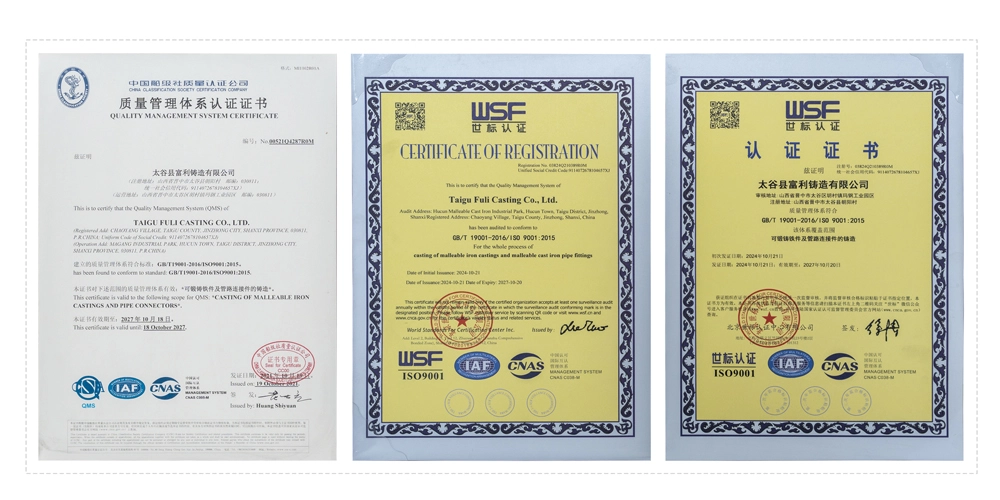
Certifications and Inspection Points for Double-Handle Pipe Wrench
According to FLA, most of its Products" target="_blank" style="color:blue" >products carry ISO9001 quality management system certification and CE product safety certification. Ask us for the paperwork. Then check that this model is covered by it.
Buyers of this tool type usually check the following before accepting an order:
- Load performance: Put the tool under load. A permanent bend in the handle is a fail, and the jaw has to hold.
- Hardness: Jaw teeth need to hit the stated 55-60 HRC.
- Play and tolerance: Wobble at the adjusting nut should stay tiny. That way the moving jaw bites down right away.
- Surface finish: The phosphating or powder coating needs to be even.
- Teeth geometry: Teeth need to be sharp and lined up. Blunt or crooked teeth will slip.
Tell us your acceptance criteria before production starts. We will go through them with you and confirm.
Customization and Technical Support
Machinery, building materials and other industries come to FLA for special-shaped parts made to order. Non-standard sizes are no problem. Neither are special structures.
Support covers each stage of the order:
- Early stage: Mold development for custom items, plus 3D design and verification so you can review the product form first.
- Middle stage: Layout optimization and confirmation of material, performance and dimensional accuracy.
- Late stage: Production progress updates tied to delivery, so you know your order status.
Supply and Delivery
Standard products sit in stock at 2,000 tons, FLA reports. On customized special-shaped parts, delivery can take as little as 7-15 days. When you inquire, please confirm stock and lead time for your specific model.
Ask for pricing, unit weight or a 3D design. You will get feedback on the Double-Handle Pipe Wrench within 24-48 hours.
FAQ
Q: What makes This product different from a Stillson wrench?
A: The S-type uses three-point contact and a slimmer profile that fits corners and tight spaces. The Stillson uses two-point contact and is bulkier, but it suits open areas.
Q: Can I use it on PVC pipe?
A: Generally, no. The hardened steel teeth bite into metal and will gouge plastic. Use a strap wrench for PVC.
Q: What hardness are the jaw teeth?
A: The jaw teeth are induction hardened to 55-60 HRC.
Q: Why is the adjusting nut on the lower handle?
A: You can adjust the jaw with one hand while the tool is on the pipe. The captive nut is designed to stay in place during use.
Q: Does the wrench follow DIN standards?
A: We use DIN 5234 as our reference. Form A is 90° and form B is 45°. Form C has an S-shape. Let us know the form you need.
Q: Can you make non-standard sizes?
A: Yes. We make special-shaped parts and offer mold development and 3D design. Delivery can be as short as 7-15 days.
Contact Us
Email sales@flaindustrial.com with your drawings, quantity and required finish for the Double-Handle Pipe Wrench. We will reply within 24-48 hours.