5 Essential Tips for Choosing the Right Small Hydraulic Jack for Your Workshop
2026-04-20 16:29:45


You can't just pick the first jack you see online as the right lifting tools for your business. The lifting tools you choose have a direct effect on worker safety, working efficiency, and your bottom line, whether you're in charge of a building site, a car repair shop, or an industrial production line. When looking at small lifting options, it's important to know the differences between hydraulic and gas methods. When compared to hand hydraulic options, a small pneumatic jack that uses compressed air technology can lift things more quickly and with less stress on the person. On the other hand, hydraulic jacks can hold more weight and are better for heavy-duty jobs. This guide goes over five important things that buying managers, site workers, and workshop owners need to think about in order to make choices that meet their business needs and safety standards.
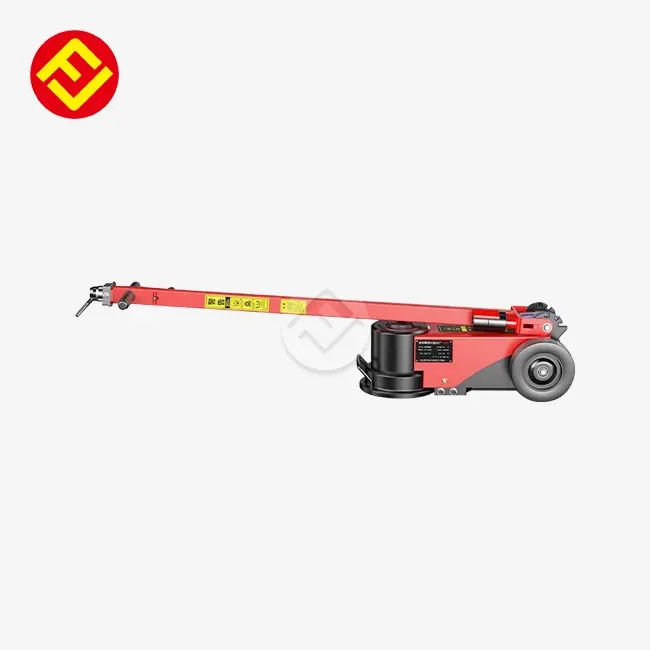
Tip 1 – Understand the Different Types of Small Jacks and Their Applications
Before choosing moving tools, it's important to know how different types of jacks work and where they do best. Hydraulic jacks and air-powered pneumatic jacks are the two main types used in industrial and car workshops. Each has its own way of working and best situations for use.
Core Operating Principles of Pneumatic vs. Hydraulic Jacks
Hydraulic jacks use the pressure of fluids that can't be compressed to lift things. Hydraulic oil moves through a cylinder when you pump the handle. This moves a piston up to lift the load. This system works great for jobs that need a lot of lifting power and a high weight limit, like fixing big vehicles or maintaining building equipment. Workshops that work with cars, buses, and industrial gear often use hydraulic bottle jacks and floor jacks.
When it comes to how they work, pneumatic jacks are very different. These things connect to a source of compressed air, usually an 85-115 PSI shop air generator. A common pipe contact lets air in, which either inflates a strengthened rubber bag or powers a piston device that quickly stretches. Because they don't need to be pumped by hand, hydraulic jacks are perfect for jobs that need to be done over and over, like changing tires in busy service bays or placing on an assembly line, where speed is more important than maximum load capacity.
Practical Applications Across Industries
A lot of construction companies like hydraulic jacks because they can easily install heavy structural parts and pipe fittings in places where there is constant pressure and loads of 5 tonnes or more. Because they are long-lasting, hydraulic systems can handle dirty, wet, and temperature-changing situations on the job site.
Auto repair shops and tyre shops are using gas moving devices more and more because they are faster. A normal air jack can fully extend in 3 to 5 seconds, while it takes 15 to 20 seconds to manually pump hydraulics. When you service 30 to 40 cars every day, this time saves adds up quickly. The less physical stress also makes technicians less tired, which improves balance and lowers the risk of harm.
Specialised gas placement tools are used for precise assembly work in woodworking and furniture factories. The variable pressure control lets you fine-tune the lift height to within a millimetre, which is very important when arranging big cabinet sections or putting machine parts in the right place for maintenance.
Critical Safety Considerations for Each Type
Fluid leaks in hydraulic systems make them less capable of moving things and make them more likely to slip. Bleeding air out of hydraulic lines on a regular basis keeps performance stable. Operators should never go over the rated limit, because fatal hydraulic breakdowns can happen when they do.
When it comes to safety, pneumatic jacks need different rules. During the rising process, the air flow must stay steady. Professional-grade units have check valves that hold air if the supply line breaks. This keeps the load from dropping quickly. Pneumatic pumps, on the other hand, are not meant to hold steady loads for long periods of time. Before working under it, the load must be secured with mechanical locks or jack stands. This is because air is compressible, meaning that it can slowly lose its shape or collapse when pressure is kept on it.
Tip 2 – Assess Load Capacity and Operational Efficiency Requirements
Finding the right load capacity for a mini air jack shields both the investment in tools and the safety of the workers. Jacks that are too small pose a catastrophic failure risk, while units that are too big waste money and store room.
Analyzing Workshop Weight Requirements
First, make a list of the biggest things that your workshop usually works on. Instead of curb weights, auto shops should look at how much a fully loaded car weighs. If you load tools and materials into a pickup truck that is rated for 5,000 pounds curb weight, it might weigh 7,500 pounds. Construction teams have to think about the weight of both machinery parts and hanging tools.
The best practice in the industry calls for a safety cushion of 20 to 30 percent more than the maximum expected load. If your biggest normal lift weighs 2,500 pounds, you should get jacks that can hold at least 3,000 to 3,250 pounds. This buffer can handle changes in the weight distribution and sudden shifts in the load.
The makeup of a material directly affects how long it will last under estimated loads. High-end air jacks are made of carbon steel or alloy steel and have chrome-plated cylinder innards that keep them from rusting or cutting. Some versions made of aluminium metal are lighter for portable uses, but steel construction lasts longer in harsh industrial settings. Different types of seal materials work better in different situations. For example, fluororubber seals work better in high-temperature situations or where they are regularly exposed to petroleum Products" target="_blank" style="color:blue" >products.
Operational Efficiency Factors
Lifting speed has a huge effect on how efficiently work gets done. By changing the air pressure between 0.4 and 0.8 MPa, pneumatic devices can lift things at different speeds. Because it is controlled, operators can slow the fall for careful placement jobs or speed it up for normal lifts. When it comes to speed, hydraulic jacks are slower but more stable.
Portability is very important in workshops with multiple bays or on job sites where equipment needs to be moved around. Because they don't have heavy fluid tanks, compact air jacks usually weigh 15 to 25 percent less than hydraulic floor jacks of the same size. This weight advantage keeps handlers from getting tired when they have to move tools several times a day.
User-friendliness affects how many people accept and follow safety rules. When techs do dozens of lifts a week, they hurt their shoulders and backs from pumping tools over and over again. Air-powered tools get rid of this problem. Because of the practical benefits, there are fewer reports of injuries at work and better health for workers in the long run.
Maintenance Protocols for Maximum Uptime
When it comes to upkeep, pneumatic jacks are different from hydraulic equipment. The air hose contact is checked for leaks, the exhaust silencer works to lower noise, and the safety valve works as part of a regular checkup. The strengthened rubber bladder or seals need to be looked at to see if they are cracked, cut, or breaking down from being around chemicals like brake fluid. Most makers say that seals should be replaced every 18 to 24 months in places that get a lot of use.
Proper keeping greatly increases the useful life of an item. To keep the rubber from stretching, pneumatic jacks should be kept with the legs folded down. Operating temperatures are usually between -20°C and +80°C, but being exposed to temperature changes for a long time speeds up the wear and tear on seals. Climate control in the workshop saves the investment in tools.
Troubleshooting common problems keeps things from going down. A slow lifting speed is generally a sign of a problem with the air flow, like clogged inlet filters or not enough compressor pressure. If the lift doesn't work at all, it means that the seal or check valve is broken. Having extra seal kits and filters on hand lets you fix things quickly without having to wait for parts to be shipped.
Tip 3 – Compare Popular Small Pneumatic Jack Brands and Models for Reliability and Cost-Effectiveness
There are many choices in the global market for small pneumatic jack lifting equipment, with varying levels of quality, certification requirements, and total cost of ownership. To make smart comparisons, you need to look at more than just the original buy price.
Assessing Brand Reputation and Certifications
Top makers have quality control systems that are very strict and are approved to ISO9001 standards. This license shows a dedication to regular production methods, tracking, and ongoing growth. ATEX approval is needed for air jacks that are used in places that could be dangerous, like chemical plants or mines. This makes sure that the equipment meets the standards for explosion-proof design.
If something has a CE mark on it, it means it meets European standards for health, safety, and the environment. For business-to-business buyers who do business with other countries, CE approval makes clearing customs easier and shows that the company is following the rules. Following the Pressure Equipment Directive (PED) and Chinese GB guidelines adds another level of quality guarantee.
Warranty terms show that the company that made the product is confident in its longevity. Standard guarantees last for 12 months, but for structural parts, top providers offer promises that last for 24 to 36 months. It's just as important to check the warranty's breadth as its length. Make sure that it covers seals and wear parts as well as structural breakdowns. Manufacturers that offer advance replacement programs cut down on downtime by sending out new units before they get back units that are broken.
Evaluating Total Cost of Ownership
The initial price is only one part of figuring out how much something will cost in the long run. A cheaper air jack that needs a new seal every six months ends up costing more than a more expensive one with a seal that lasts 24 months. Find out how much it costs each year for upkeep, including new parts, labour hours, and time when the machine isn't working.
When wholesalers and big companies buy in bulk, they can save a lot of money. Manufacturers usually give discounts of 10–15% on orders of 50 or more units, and the discounts get bigger for orders of 100 or more units. OEM partnership deals offer extra benefits like custom branding, priority schedule for production, and dedicated technical support.
Access to after-sales help protects the continuation of operations. Suppliers with authorised repair networks or service centers in the area keep device downtime to a minimum. How quickly a problem is solved depends on how quickly technical questions are answered. Premium providers promise response times of 24 to 48 hours, with expert help for tough problems.
Comparative Model Analysis
Pneumatic jacks work best in certain situations where speed and less work for the person make the need for compressed air equipment worthwhile. Service bays for cars that already have air compressor systems get instant benefits without having to spend more money on equipment. The quick lift cycle of 3 to 5 seconds greatly speeds up work in tyre shops that do a lot of it.
Electric jacks are easier to move around when compressed air isn't available, but they lift less quickly and usually cost 30 to 40 percent more than gas jacks of the same size. While bottle jacks can hold the most weight and take up the least space, they need to be pumped by hand, which makes them less useful for situations where they will be used over and over again.
Tip 4 – Understand Procurement Considerations: From Purchase to Delivery
By carefully choosing suppliers and negotiating contracts, efficient buying processes cut down on wait times, guarantee product quality, and protect capital investments.
Selecting Authorized Suppliers with Reliable Logistics
Verifying the supplier for mini air jack keeps expensive quality problems and shipping delays from happening. Companies that have been in the business for 30 to 40 years usually have stable production capacities and well-developed quality control systems. This level of production development is shown by FLA Industrial & Trading Co., Ltd., which has been in business for almost 40 years and has over 1,000 product specs. These providers work with Fortune Global 500 companies, which shows that they can meet strict quality standards and shipping deadlines.
Lead times are greatly affected by global delivery networks. Shipping partners that suppliers already have in place can guarantee safe delivery times to markets in North America, Europe, and Australia. Smaller sales can save money on shipping costs by using container consolidation services. While it usually adds 8–12% to unit costs, domestic warehousing in target countries speeds up delivery for urgent needs.
Correct customs paperwork keeps the border from being backed up. Exporters with a lot of experience give full business bills, packing lists, and certificates of origin that meet customs requirements. When shipping specialised equipment like ATEX-certified air jacks, the right certification paperwork must be included so that it doesn't get turned away at the border.
Warranty Terms and After-Sales Support
A full guarantee should cover both problems with the materials and problems with the work. Standard terms usually cover structural parts for 12 to 24 months after delivery. Wear items like seals and valves are covered for less time. Find out if guarantee service needs sending the equipment back to the maker or if there is mobile service available.
Total value is affected by how easy it is to get technical help when choosing tools and while owning it. Suppliers who give 3D design proof, help with optimising parameters, and real-time production reports during production build trust in difficult buying projects by being open and honest. This level of support is especially useful when you need to describe custom setups or mounting connections that aren't standard.
The long-term usefulness of tools depends on how easy it is to get service parts. Manufacturers who promise parts will be available for 10 years or more can extend the life of equipment, saving the investment. Suppliers who keep complete parts catalogues and online buying tools make repair work easier.
Negotiating Bulk Purchase Agreements
Promises to buy in bulk open the door to better prices and contract terms. Set basic prices for different order sizes, like 10, 50, and 100 or more units, so you can see how big discounts work. With annual buy deals and regular releases, prices stay stable and delivery of tools is timed to fit project needs.
Terms of payment affect how cash flows are managed. Standard foreign terms call for a 30% fee and the remaining 70% to be paid before the shipment. If you have a history of paying your bills on time, you may be able to get net-30 or net-60 terms after your first few orders. With a letter of credit, both parties are protected when they make big purchases.
Quality checking rules protect against packages that aren't up to par. Third-party testing services, such as SGS or Bureau Veritas, check the quality, amounts, and specs of goods before they are shipped. Detailed acceptance criteria in buy orders set clear standards for review, which makes it easier to agree on what the product is supposed to do.
Tip 5 – Ensure Safety and Compliance with Industry Standards
Safety rules and equipment compliance standards for small pneumatic jack at work protect workers and keep employers from being sued. Accident rates at work are directly affected by how well moving equipment is chosen, used, and maintained.
Essential Safety Protocols and Regulatory Compliance
In the United States, OSHA rules say that lifting equipment has to meet certain standards. Standard 1926.305 talks about jacking operations and says that tools must be inspected before each use, workers must be in the right place on stable surfaces, and jack stands must be used to block the work area before anyone can work under loads. Safety valves and exhaust mufflers must be built into pneumatic jacks to keep them from over-pressurizing and making too much noise.
The European Union's guidelines give us more information. EN 1494 lists the standards for mobile lifting equipment, such as markings for load capacities, factors for steadiness, and directions for operators. When sold in EU countries, equipment must have a CE mark on it to show that it follows the rules.
Accidents are much less likely to happen when operators are trained. In training programs, people should learn how to properly place jacks for different types of vehicles or equipment, how to tell when a load is too much, and what to do if an item breaks down in an emergency. Proof that training was completed meets legal needs and shows that care was taken in case of responsibility.
Routine Maintenance and Inspection Requirements
Maintenance that stops problems before they happen extends the life of tools and finds problems before they become accidents. Before each use, the jack should be inspected every day to make sure the air hose is intact, the jack body or cylinder is not damaged, and the safety valve works. As part of the weekly checks, the load is tested at 25% capacity to make sure everything is working normally and connections are checked for air leaks.
Every month, thorough checks are done on the seal to look for cracks, thickening, or swelling that could mean chemical breakdown. Chrome-plated cylinder sides need to be checked for rust or cutting that could damage seals and let air leak out. The state of the exhaust silencer affects the noise level, and it should be changed if it gets clogged or broken.
An annual approval by trained techs gives a full review. Testing the structure under pressure at 125 to 150% of its maximum capacity makes sure it is solid. Validation of burst pressure on sample units keeps safety gaps at a good level. By modelling more than 5,000 lift/release actions, wear problems are found during cycle testing before they lead to failures in the field.
Proactive Troubleshooting to Minimize Downtime
Common problems with air jacks can be traced back to their causes and fixed. A slow lifting speed is usually caused by not enough air pressure, a hose width that is too small, or inlet filters that are clogged. Make sure the output pressure of the compressor is between 85 and 115 PSI and that the hose's internal width meets the manufacturer's requirements, which are usually at least 3/8 inch.
If you can't keep the lift height, it means that the seal is leaking or the check valve isn't working right. Inflate the jack and cut off the air flow. A good check valve should keep the pressure forever. Slow decline over minutes is a sign that the seal needs to be replaced because it is worn out. Immediate fall means the check valve has failed and needs to be fixed right away.
Strange noises during function can be a sign of a number of problems. Loud exhaust noise could mean that the silencer is damaged or missing parts. If the lift hisses, it means that air is leaking from the hose joints or the covers on the cylinder. If you take care of noise problems right away, small problems won't get worse and need major fixes.
Conclusion
When choosing the right lifting tools for your business, you need to think carefully about how it will be used, how safe it is, and how much it will cost in the long run. When it comes to speed and comfort, small pneumatic jacks are clearly better for high-frequency pulling tasks, while hydraulic systems are better for heavy-duty industrial work. When buying something, it's important to find the right mix between load capacity needs and working efficiency. You should also look at how reliable the provider is and their approval standards, and you should put in place strict safety rules. By following these five important tips—knowing the different types of jacks and how they can be used, figuring out the capacity and efficiency needs, systematically comparing brands, planning your purchases, and putting safety first—procurement managers and workshop supervisors can make sure that the equipment they buy increases productivity, protects workers, and delivers long-term value.
FAQ
What are the benefits of air jacks over hydraulic ones?
Manual pushing is not needed with pneumatic jacks, so operators don't get tired when they have to do the same pulling jobs over and over again. The normal lift cycle time of 3 to 5 seconds is a lot faster than hydraulic jacks, which need to be pumped by hand for 15 to 20 seconds. This speed edge makes it possible to measureably more productive in places with a lot of people, like tyre service shops. Pneumatic systems are also lighter than hydraulic ones because they don't need big fluid tanks. This makes them easier to move from one workshop site to another.
How do I figure out what load limit is best for my workshop?
Figure out the heaviest car or piece of equipment that you usually repair and then add 20 to 30 percent as a safety limit. Take into account weights that are fully loaded instead of weights that are just sitting there. When construction teams do their maths, they should include the weight of the hanging tools. Make sure that the jack's listed capacity takes into account uneven weight distribution, which can put more than half of the total load on a single lift point.
What kind of upkeep does a mechanical jack need?
Daily eye checks should be made to make sure the air hoses are in good shape and there is no damage to the jack body that can be seen. During weekly checks, the safety valve is tested to make sure it works and links are checked for air leaks. As part of the monthly upkeep, the seals must be checked for cracks or chemical damage, and the chrome-plated surfaces must be kept smooth and free of rust. Professional approval every year with pressure testing makes sure that the process stays safe.
Partner with FLA Industrial & Trading Co., Ltd. for Reliable Pneumatic Lifting Solutions
Your business should have lifting tools that works the same way every time, even after thousands of lifts. Every small pneumatic jack that FLA Industrial & Trading Co., Ltd. makes is the result of almost 40 years of experience making things. Our manufacturing sites are ISO9001 and CE approved, and they work with Fortune Global 500 partners all over the world to meet the needs of challenging markets like the US, Germany, and Australia. We keep track of more than 1,000 product specs and can make unique setups to meet your exact operating needs. Our engineering team offers full help from the first design to delivery, and they respond to technical questions within 24 to 48 hours. Talk to our team at sales@flaindustrial.com about what you need for your workshop and get full specs from a reputable small pneumatic jack maker.
References
American Society of Mechanical Engineers (ASME). (2019). Safety Standard for Portable Automotive Lifting Devices. ASME PALD-1.
Occupational Safety and Health Administration. (2020). Jacking Operations and Equipment Standards for Construction. OSHA Standard 1926.305.
European Committee for Standardization. (2018). Mobile Lifting Equipment: Design Requirements and Safety Specifications. EN 1494.
National Institute for Occupational Safety and Health. (2021). Ergonomic Guidelines for Manual Material Handling and Lifting Equipment Selection. NIOSH Publication No. 2021-156.
Society of Automotive Engineers International. (2020). Performance Requirements for Pneumatic and Hydraulic Lifting Devices. SAE J2184.
International Organization for Standardization. (2017). Quality Management Systems for Industrial Equipment Manufacturing. ISO 9001:2015.