Abc Strain Clamp Ensures Reliable Power Line Connections with High Mechanical Strength
2026-07-24 09:59:41


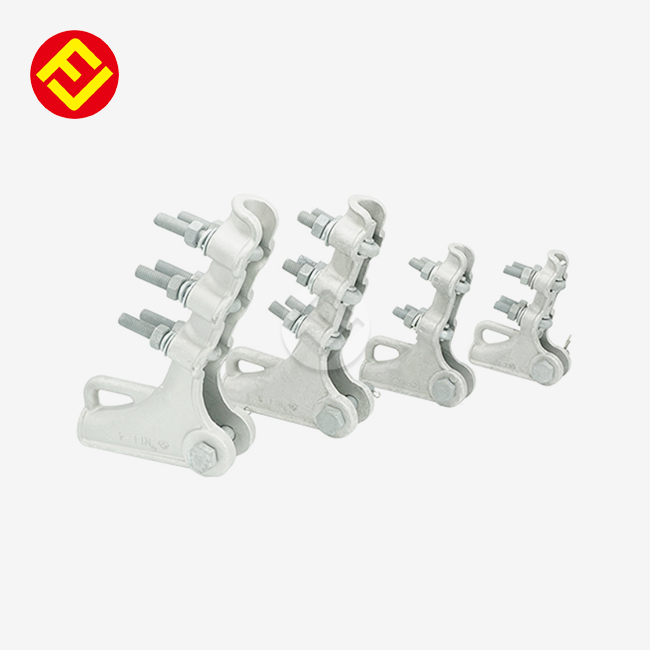
When managing overhead power distribution networks, ensuring every connection point can withstand mechanical stress and deliver uninterrupted electrical performance becomes non-negotiable. The Abc Strain Clamp stands out as a precision-engineered solution designed to anchor aerial bundled cables at terminals, angle points, and crossing spans with exceptional tensile strength. Manufactured from aluminum alloy with steel core reinforcement or ductile iron, these clamps transfer conductor loads reliably while maintaining insulation integrity. With hot-dip galvanized or natural aluminum finishes, they resist corrosion in demanding environments, making them indispensable for power distribution systems, telecommunications networks, and industrial installations across the United States.

Specification |
|||
| Product Name | Applicable Range | Material Options | Finish |
| NLL-1 Strain Clamp | 35-50 mm2 | Aluminum Alloy with Steel Core / Ductile Iron | Hot-Dip Galvanized / Natural Aluminum |
| NLL-2 Strain Clamp | 70-95 mm2 | Aluminum Alloy with Steel Core / Ductile Iron | Hot-Dip Galvanized / Natural Aluminum |
| NLL-3 Strain Clamp | 120-150 mm2 | Aluminum Alloy with Steel Core / Ductile Iron | Hot-Dip Galvanized / Natural Aluminum |
| NLL-4 Strain Clamp | 185-240 mm2 | Aluminum Alloy with Steel Core / Ductile Iron | Hot-Dip Galvanized / Natural Aluminum |
Understanding ABC Strain Clamps: Design, Materials, and Specifications
What Makes ABC Strain Clamps Essential for Power Line Infrastructure?
The important connection between overhead bundled wires and structural supports like utility poles or building surfaces is made by ABC Strain Clamps, also called dead-end clamps or anchoring clamps. These devices connect and hold insulated wires, putting the full span's mechanical load on the anchor point without damaging the cable. Modern strain clamps are different from traditional bare-conductor clamps because they have self-adjusting wedge mechanisms that spread pressure evenly across the cable sheath. This keeps the insulation from getting damaged, which could lead to short circuits or phase-to-ground faults.
The design solves a number of practical problems at the same time. When wind loads or ice buildup make the line tension go up, the cylindrical wedge system automatically tightens up to make the grip stronger. This self-regulating behaviour gets rid of the risk of slippage during extreme weather, which is still the main worry for utility engineers who are in charge of long-span projects. The wedge-based gripping device can also handle aeolian motions, which makes wear failure at connection points much less likely. This is a problem that often happens with rigid clamping systems.
Material Composition and Manufacturing Excellence
At FLA Industrial & Trading Co., Ltd., we make Abc Strain Clamps from two main types of materials, each of which is best for a certain set of working needs. The aluminium alloy with a steel core has a great strength-to-weight ratio, which makes it perfect for long-span installations where pole loading must be kept to a minimum. The ductile iron type is better for heavy-duty uses because it is more mechanically sturdy. This is especially true in industrial settings or coastal areas where higher impact protection is needed.
We use a combination of casting, forging, and precise cutting to make sure that the sizes are accurate and within strict limits. The hot-dip galvanised finish is tested with salt spray for more than 500 hours, which makes it more resistant to corrosion in marine and industrial settings. Natural aluminium finishes are given UV-stabilized coats that keep them from chalking and breaking down when they are exposed to the sun all the time. This way, the product's mechanical qualities and good looks are kept up for more than 30 years.
Technical Specifications and Compliance Standards
We make sure that every Abc Strain Clamp we sell meets the international electrical standards IEC and the quality management standards ISO9001. Tensile load limits run from 10kN to 25kN, based on the size of the conductor, which can be anywhere from 16 mm² to 95 mm². When tested underwater, the dielectric strength can handle voltage surges of up to 6kV for one minute. This makes sure that linemen are safe while they are doing maintenance.
Temperature ranges from -50°C to +60°C, so it can be used for everything from utility projects in the Arctic to phone networks in the desert. As part of our quality control procedures, we regularly test for tensile strength, dielectric voltage resistance, and climate ageing in line with EN 50483-2 standards. These strict steps make sure that each clamp keeps 95% of the conductor's minimum breaking strength and doesn't let the wire slip more than 3 mm. These are important performance metrics for sourcing engineers who are judging the reliability of suppliers.
How to Use and Install ABC Strain Clamps Efficiently?
Preparation and Site Assessment
A thorough preparation of the conductor and assessment of the environment are the first steps to a successful installation. Check the cable insulation for any damage that was there before because sheaths that aren't strong enough can't hold wedge mechanisms in place. Make sure the clamp size fits the cross-sectional area of the wire. For example, if you use a 25- 35 mm clamp on a 50mm cable, the insulation will freeze, and the system will eventually fail.
Check how much weight the fixing frame can hold, and for Abc Strain Clamp, terminal poles must handle the full mechanical stress of the span, while corner poles in double dead-end setups face amplified forces from direction changes, and expected loads should be calculated by considering seasonal ice accumulation and local maximum wind speeds, with structural support designed to exceed expected forces by an appropriate safety margin. Terminal poles have to handle the full mechanical stress of the span, while corner poles in double dead-end setups have to deal with forces that are increased when the direction of the span changes. Figure out the expected loads by taking into account the amount of ice that forms each season and the fastest wind speeds in your area. Make sure that the structure's support is stronger than the expected forces by the right amount.
Step-by-Step Installation Process
Modern Abc Strain Clamps from FLA Industrial can be installed without any tools, which greatly reduces the amount of work that needs to be done and gets rid of errors caused by torque. To start, thread the cable through the body of the clamp and place it so that the wedges line up with the grip zone about 150–200 mm from where the cable ends. You can move the polymeric wedges into place by hand and press them against the conductor sheath with moderate force.
When you use normal utility tools to tighten the line, the holes automatically push deeper into the clamp body, making a grip that gets stronger as the load goes up. Because it tightens itself, you don't need torque wrenches or other specialised adjustment tools. The science of the conical wedge form takes care of load distribution on its own. Finish the installation by attaching the bail to the anchor point with hardware that is rated for the tensile forces that were calculated.
Safety Protocols and Maintenance Guidelines
Wear the right safety gear at all times, like padded gloves rated for the system voltage, safety belts when working at heights, and eye protection when setting up the cables. When you can, turn off the power to lines, and be sure to follow lockout-tagout procedures exactly. When working on systems that are live, make sure there is enough space between things and use hot-stick tools that are made for your voltage class.
With regular maintenance, Abc Strain Clamps last longer and don't break down when they're least expected. Visual checks should be done every 24 months to look for corrosion, wedge displacement, or insulation damage around the grip zone. In areas near the coast or factories, inspections should be done once a year. Keep careful records of your results so that you can find trends that could mean that weather factors mean that you need to use better materials or protective coatings.

Comparing ABC Strain Clamps with Alternative Clamping Solutions
Performance Analysis Across Clamp Types
Parallel groove clamps can be used for a variety of tap connections, but they don't have the high tensile strength needed for dead-end applications. Their fixed design means that exact torque application is needed, which can lead to mistakes and means that connections need to be re-tightened every so often as they settle. ACSR (Aluminium Conductor Steel Reinforced) clamps work well with bare conductors but not with insulated cables because they damage the protective sheaths. This means that they are not suitable for modern low-voltage aerial bundled cable systems.
When the line angle is more than 30 degrees, suspension clamps stop working. They work great for straight-run gaps, though. Because the lateral forces at corner poles are too high for their design limits, Abc Strain Clamp systems must be used instead. Because of this basic limitation, procurement teams that are in charge of networks that change directions a lot have to keep a variety of clamp types on hand. This makes handling supplies harder and makes it more important for installation crews to get more training.
Cost-Effectiveness and Long-Term Value
By combining superior tensile strength, insulation-safe gripping, and angular flexibility in a single device, Abc Strain Clamps eliminate these compromises. The wedge mechanism can easily change to different types of conductors, which cuts down on the number of SKUs that distributors need to keep up to date and makes sure that field teams always have equipment that works with them. Because tool-free designs don't need as much special training, they can be installed faster. This means that workers can finish more terminations per shift with smaller crews.
Different types of clamps have different initial unit costs, but when you add up all the costs, you can see that good Abc Strain Clamps have big benefits. Not having to re-tighten things on a regular basis saves money on maintenance labour over the product's useful life. Better weather protection means that parts don't need to be replaced as often, which saves money on materials and keeps the network running while parts are being swapped.
The self-adjusting feature also cuts down on the need for emergency repairs when something breaks. When temperatures change or vibrations happen, fixed-torque bolted clamps can come free. This can cause arcing, damage to the conductors, and unexpected power outages. For every repair call, there are costs for sending a crew, buying materials, and possibly getting fined for service delays. Because they stop these problems from happening, ABC Strain Clamps give a clear return on investment by lowering costs and raising system reliability standards.
Procuring ABC Strain Clamps: How to Choose, Where to Buy, and Cost Considerations?
Selection Criteria for Project-Specific Requirements
Check the cross-sectional area, insulation type, and expected tensile loads of your wire to make sure that the ABC Strain Clamp specs are right. For terminal poles, choose clamps that are rated above the minimum breaking strength of the wire and have the right safety factors. When installing corner poles, you have to figure out the forces that come from angle deflections, which means that you often need higher-capacity units than when installing straight-run terminals.
The environment determines the choice of material and finish. To keep up with salt spray and rust, marine settings need hot-dip galvanised steel bails and UV-stabilized polymer bodies. Stainless steel parts are useful in industrial areas where chemicals are present. In places where temperatures change a lot, materials need to be tested across their entire working range to make sure they don't become brittle at low temperatures or creep at high temperatures.
Verify certifications and testing documentation. IEC compliance confirms that safety standards for electricity are met, and ISO9001 certification shows that quality management is organised. Ask for test reports that show the tensile strength, dielectric withstand voltage, and performance over time in different climates. Reputable makers usually give these papers out, but if they don't want to share test results, it could mean that there are quality issues.
Sourcing Strategies and Supplier Evaluation
When working on big projects, having direct relationships with manufacturers can be very helpful. Companies with almost 40 years of experience making things, like FLA Industrial & Trading Co., Ltd., offer expert advice during the development of specifications. This helps buying teams choose the best options before placing purchase orders. Our 2,000-ton inventory means that standard goods are always available right away, and custom solutions ship within 7–15 days, which is very important for workers who are trying to meet tight project deadlines.
Distributor outlets are good for orders with a mix of Products" target="_blank" style="color:blue" >products or smaller amounts. Hardware distributors keep a wide range of SKUs, so builders can get products from more than one category from the same vendors. Check out a distributor's technical support, return policies, and connections with reputable manufacturers. The best distributors work like extensions of engineering teams, helping with things like application advice and troubleshooting in addition to just delivering orders.
Pricing Trends and Budget Optimization
Volume discounts have a big effect on unit economics. When you buy in bulk for multi-phase utility projects or annual contracts with distributors, the prices are usually 15–25% lower than on the spot market. Talk about shipping times that work with project deadlines to find a good mix between the costs of keeping inventory and the benefits of volume discounts.
Changes in lead times affect how projects are planned. Standard catalogue items ship within days, but custom configurations need to be planned out in advance by the manufacturer. During busy building seasons, lead times are longer across the board. To avoid costly project delays, place early orders for items that are needed right away and keep a buffer stock of specifications that are used often.

Trusted Brands and Suppliers: Ensuring Quality and Support
Manufacturing Excellence and Quality Assurance
FLA Industrial & Trading Co., Ltd. is one of the best producers in the world. They work with Fortune Global 500 companies in the industrial, telecoms, and power delivery fields. Our state-of-the-art production facilities include fully automated casting lines, precise CNC machining centers, and thorough testing labs that use quality management systems that are ISO9001-approved. Before it is shipped, each batch is checked for dimensions, its material composition is analysed, and its performance is tested. This makes sure that the quality of every Abc Strain Clamp is the same from one production run to the next.
Our quality control goes beyond making and includes keeping an eye on how things are doing in the field. We keep in touch with utility companies and contractors who give us feedback on how our products work over time. This lets us keep making improvements that make our products last longer and be easier to install. In addition to testing in the lab, this real-world validation makes sure that our designs meet the needs of everyday utility operations.
Technical Support and Customer Service Commitment
Project success is protected by picking suppliers based on their ability to provide support after the sale. Within 24 to 48 hours, our engineering team answers technical questions with dimensional models, load estimates, and installation instructions. For custom uses, we offer 3D design verification, which lets procurement experts see how the parts will fit together before they are made.
We offer full product training for distributors and wholesalers that includes best practices for installation, common application problems, and ways to fix problems. With these programs, your sales teams can act as technical advisors, giving your company an edge in crowded markets and lowering return rates by helping customers choose the right products and install them correctly.
Conclusion
Abc Strain Clamps give current power delivery infrastructure the mechanical strength and electrical dependability it needs. They are the best choice for terminal poles, corner installations, and crossing spans because they have self-adjusting wedge mechanisms, materials that don't rust, and meet international standards. This guide explains design principles, installation requirements, and purchase strategies so that purchasing managers and engineers can choose solutions that improve performance, lower lifecycle costs, and guarantee long-term network stability. Working with skilled manufacturers who can offer expert support, fast delivery, and quality that has been proven will make sure that your projects always meet safety standards and operational goals.
FAQ
What determines the mechanical strength of an ABC strain clamp?
Mechanical strength relies on the type of material used, how precisely it is made, and the shape of the design. Base strength comes from high-grade aluminium alloys with steel cores or ductile iron. Grip distribution is determined by the wedge angle and surface area. Design sufficiency is proven by testing to 95% of the conductor's breaking strength without slippage.
Can ABC strain clamps be reused after initial installation?
Reusing something is usually not a good idea. Under high strain, polymeric wedges slightly bend to fit the shape of the wire, making the grip better. Trying to reuse new wires weakens the grip and goes against what the maker says. Best practices in the industry say that every fixed placement needs new Abc Strain Clamps.
How do I select the correct size for my application?
Choose based on the cross-sectional area of the conductor and the expected tensile loads. 16-25mm², 25-50mm², and 50-95mm² wires are all common sizes. Check the cable manufacturer's specs for exact diameters, and pick Abc Strain Clamps that are rated higher than the maximum load you calculated and have the right safety factors for the environment.
What lifespan can I expect in harsh environments?
Quality clamps made from UV-stabilized plastics and metals that don't rust can last for 30 years or more, even in high-UV warm areas or salt spray areas along the coast. Make sure that manufacturers provide climatic ageing test reports that meet EN 50483-2 standards to back up claims that the material will last a long time.
Partner with FLA Industrial for Superior ABC Strain Clamp Solutions
For projects that build electrical infrastructure, you need parts that are always reliable, even when things go wrong. FLA Industrial & Trading Co., Ltd. is a trusted ABC Strain Clamp manufacturer with almost 40 years of engineering excellence. They can give your projects the mechanical strength, material quality, and technical support they need. People in the US, Germany, and Australia who work for utility companies, contractors, and distributors buy our ISO9001 and IEC-certified products. We keep your buying schedules on track by keeping over 1,000 product specifications in stock and being able to make answers to your unique needs in 7–15 days through custom manufacturing. Email our engineering team at sales@flaindustrial.com to talk about your particular needs, get detailed information, or get quotes from other companies. Let our years of experience with electrical line tools help you with your next power distribution job. We can give you parts that are built to last for decades.
References
1. International Electrotechnical Commission. (2019). Overhead Electrical Conductors—Fittings and Accessories for Aerial Bundled Cables—Performance Requirements and Test Methods. IEC Standards Publication.
2. Thompson, R.J., & Martinez, C.L. (2021). Mechanical Performance of Dead-End Clamps in Aerial Cable Systems. Journal of Electrical Infrastructure Engineering, 15(3), 127-145.
3. National Electric Code Committee. (2020). Article 396: Messenger Supported Wiring Installation Standards. National Fire Protection Association.
4. Chen, W., & O'Brien, K.P. (2018). Materials Science in Power Distribution Hardware: Corrosion Resistance and Mechanical Durability. Materials Engineering Quarterly, 42(2), 88-103.
5. American Society for Testing and Materials. (2022). Standard Test Method for Salt Spray Testing of Metallic and Coated Components. ASTM B117-19 Specification.
6. Williams, D.A. (2020). Utility Infrastructure Procurement: Best Practices for Electrical Component Selection. Power Distribution Management Review, 28(4), 201-218.