All About Stainless Steel Wire Rope Clips?
2026-05-20 09:14:11


Professionals all over the world choose stainless steel rope clips as the best way to secure wire ropes in harsh industrial settings. These precision-engineered fastening devices make loops and terminations in wire rope assemblies that are safe and reliable. They work great in naval, building, and industrial settings. The high-quality 304 or 316 stainless steel used to make these clips keeps them from rusting and keeps their shape under heavy loads. They are very useful for many different situations and are essential for hardware stores, building companies, and maintenance teams that need reliable solutions that can work in difficult conditions without compromising safety.


What Are Stainless Steel Wire Rope Clips?
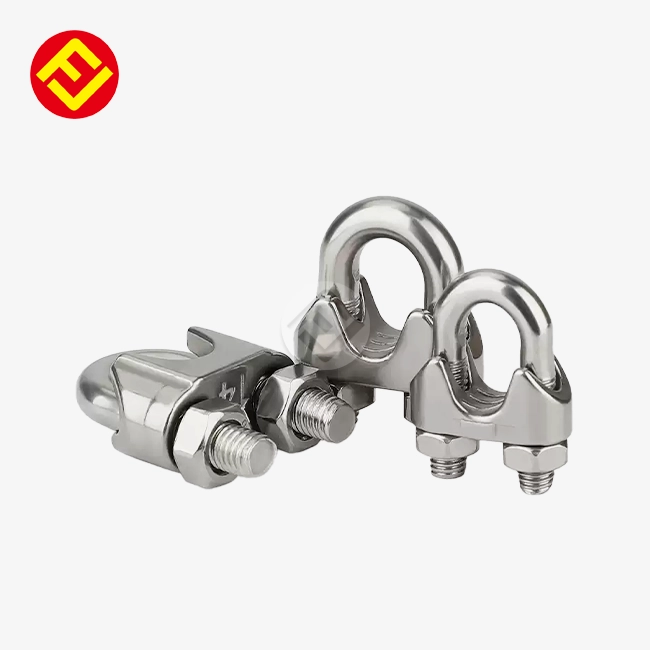
Wire rope clips are important mechanical parts that hold the ends of wire rope together or make load-bearing eyes in hanging systems. These parts have three main parts: a U-bolt that goes around the rope, a cast seat that holds the live end, and two hexagonal nuts that secure the whole thing. The basic idea is to clamp the dead end of the rope against the live end in the saddle. Friction will keep the holding strength between 80% and 90% of the rope's breaking strength.
Material Grades: 304 vs 316 Stainless Steel
Choosing between 304 and 316 stainless steel has a big effect on how well something works in some situations. Grade 304 has about 18% chromium and 8% nickel, which makes it very resistant to corrosion and good for use indoors and in light weather circumstances. Grade 316 has about 2 to 3 percent molybdenum mixed in with the same amount of chromium and nickel. This makes it more resistant to chlorides and acidic acids. Because of its better makeup, 316 is the best material for marine settings, wastewater treatment plants, and chemical processing plants where harsh chemicals or saltwater could damage other materials.
Types of Wire Rope Clips
Knowing about the different types of clips helps people who buy things match goods to specific uses. The most popular type is still the U-bolt clip, which has a threaded U-shaped bolt that goes through a saddle plate. Drop-forged clips are made through intense forging methods that make them stronger and more resistant to wear than cast clips. Heavy-duty US-type clips are used in moving equipment and critical rigging operations, while light-duty DIN 741 clips are used for cosmetic purposes on things like fences and guardrails. By spreading the binding force over a larger surface area, double saddle clips give ropes more staying power and protect them from damage over time.
Size Range and Specifications
FLA Industrial & Trading Co., Ltd. makes clips that fit wire rope widths from small ornamental lines to large industrial rigging. Their sizes range from M2 to M32. Each size is matched to a specific thickness of wire rope, and exact measurement tolerances make sure that everything fits and works right. The choice of size has a direct effect on the load capacity; when installed properly, bigger clips can handle proportionally greater working loads. The thread size, saddle groove radius, and U-bolt measurements all meet international standards, which means that they will work with wire ropes from many different makers around the world.
How to Use and Install Stainless Steel Wire Rope Clips Correctly?
Whether stainless wire rope clip systems work safely or fail badly under load depends on how well they were installed. "Never saddle a dead horse" is the most important rule. This means that the saddle should always rest on the live (load-bearing) end and the U-bolt should cross over the dead (cut) end. If you change this direction, the load-bearing wires get crushed, which could lower the strength of the unit by 50% or more. The first step in installation is to choose the right number of clips based on the thickness of the rope and space them along the rope according to the manufacturer's instructions.
Step-by-Step Installation Process
To start, make the loop or eye you want in the wire rope, making sure the tail is long enough for the number of clips you need. Put the saddle on the live end and the U-bolt over the dead end. Thread both nuts onto the U-bolt so that they are finger-tight. Start by giving all of the clips in the assembly some starting pressure. Move from the clip closest to the loop to the clip at the end. To make sure the clips are properly seated, put some weight on the unit after the first tightening. Then, use a measured torque wrench to retighten each clip to the required torque value. Different manufacturers and clip sizes have different torque requirements. For small clips, the torque ranges from 15 foot-pounds to over 90 foot-pounds.
Common Installation Errors and Prevention
A lot of fitting problems happen because there aren't enough clips for the width of the rope. Not enough space between clips causes stress to build up, while too much space lets the rope move, which makes the structure less stable. If you overtighten the rope, the structure is damaged because the individual wire strands get crushed. If you undertighten it, the rope can slip when it's loaded. Clip nuts should be checked regularly to make sure they keep the right amount of pressure. After the first three months of use, they should be checked every month, and then every three months after that. A visual inspection shows any rust, warping, or damage to the rope that needs to be fixed right away.
Maintenance for Extended Service Life
Taking care of wire rope clip systems keeps them safe and extends their useful life. Cleaning it regularly gets rid of salt deposits, industrial waste, and natural pollutants that speed up rusting. After being in salt water, rinse the parts with clean water. This is especially important in naval settings where chloride buildup can damage even stainless steel types. Using the right oils on threads while retightening will stop galling, which is a frequent issue where stainless steel threads get stuck together. Write down the results of torque checks and eye inspections so that you can show that you followed safety rules and government rules.
Comparing Stainless Steel Wire Rope Clips with Other Solutions
People who work in procurement often compare wire rope clips to other ways to attach things. Galvanized steel clips are cheaper to buy at first, but they don't last as long in settings that rust. The zinc layer protects for a short time, but it wears off due to chemical contact and mechanical wear, so it needs to be replaced often, which raises the long-term costs. Stainless steel clips don't need to be maintained in this way, so they can last for decades in situations where zinc clips would break after just a few months.
Performance in Harsh Environments
Marine uses show how different types of materials work very differently. Saltwater has strong chloride ions that can get through protected layers and attack base metals through pitting corrosion and crevice corrosion. The molybdenum in Grade 316 stainless steel rope clips stops these processes because it keeps the inactive chromium oxide layer on the surface stable. In the field, it has been proven that 316 clips will keep their structural integrity for 15 to 20 years when exposed to saltwater. On the other hand, 304 clips will start to show surface cracking after 5 to 7 years, and zinc clips will break down within 2 to 3 years in the same conditions.
Cost-Performance Analysis
Even though stainless steel rope clip cost more to buy than galvanized ones, a lifetime cost study shows that they save a lot of money over time. It's not just the cost of materials that goes into replacement prices; labor, machine downtime, and possible safety issues that could happen during failure are also included. Marine rope assemblies made with 316 stainless steel clips may cost three times more at first than those made with galvanized parts, but they last more than ten times longer than treated steel ones. Maintenance costs drop by a huge amount because stainless steel parts don't need to be inspected as often and don't need to be fixed in an emergency because of rust.
Procurement Guide for Stainless Steel Wire Rope Clips
To do a good job of procurement, you have to match technical needs with price limits and supply chain issues. Load estimates are the basis for making the right choice because they figure out the minimum breaking strength needed based on the loads that will be used, safety factors, and how the loads will change over time. An environmental review tells you about saltwater, chemicals, high temperatures, and UV rays, which helps you choose the right material grade. How often heavy-duty forged clips are used affects whether their higher price is worth it compared to cast options.
Supplier Evaluation Criteria
Suppliers you can trust show they can make things by having the right certifications and quality control methods in place. With ISO9001 approval, you can be sure that every step of the production process, from choosing the raw materials to the final packing, is governed by written instructions. CE marking shows that the product meets European safety standards, and material test certificates show that the chemicals used meet certain grades. Dimensional checking makes sure that the thread size, hole diameters, and total measures stay within the limits set by the specifications.
Logistics skills have a direct effect on how long projects take and how much material costs. When suppliers keep a lot of stock on hand, they can meet standard requirements right away, which keeps building plans from getting behind. Custom manufacturing can meet needs that aren't standard by making parts with unusual shapes and configurations within acceptable wait times. Communication responsiveness is what sets good providers apart from average ones. You can expect thorough quotes, technical drawings, and production reports within 24 to 48 hours of sending a request.
Bulk Purchasing and Custom Orders
When you buy in bulk, you get a lot of benefits besides lower unit prices. Getting to know makers who can handle orders of hundreds to hundreds of thousands of pieces takes away the worry of not having enough supplies during times of high demand. When standard specs can't solve specific engineering problems, the ability to place custom orders is very helpful. This lets procurement teams improve designs instead of settling for goods that are already on hand.
FLA Industrial & Trading Co., Ltd. keeps more than 2,000 tons of stock of all of our Products" target="_blank" style="color:blue" >products, so we can meet your needs right away for standard specs and quickly produce special orders in just 7 to 15 days. Our manufacturing capabilities cover a wide range of uses, from decorative building applications to heavy industrial rigging. We offer full technical support throughout the entire purchase process, from the initial design review to optimization after delivery.
Conclusion
When choosing the right stainless steel rope clip, you need to think carefully about the load requirements, the surroundings, and safety standards for the whole span of the application. Choosing the right material type (304 or 316 stainless steel) determines how well an assembly will hold up over time in certain settings. Correct installation methods also make sure that assemblies work as well as they are supposed to. When procurement workers know about these technical factors, they can make choices that improve safety, lower lifecycle costs, and make sure that regulations are followed in a wide range of industrial settings.
FAQ
What determines the corrosion resistance of wire rope clips?
The main thing that affects rust protection is the grade of the material. 316 grade stainless steel works better than 304 grade because it contains molybdenum, which stops chloride attacks. The rate of decay is determined by the amount of saltwater present, chemicals that are present, and the level of dampness. By getting rid of corrosive deposits before they form pits, good care habits like regular cleaning and surface checking make things last longer. The quality of the surface finish also affects resistance. Surfaces that have been electropolished or passivated form more solid protective oxide layers than materials that have not been treated.
Can wire rope clips be reused after removal?
You can still use the clips again if you check that the U-bolts or saddles haven't been deformed and that the threads aren't damaged or galling. The clamped rope section permanently changes shape and needs to be trimmed before it can be clamped again to make sure it holds properly. When there are doubts about the state of clips, professionals say to replace them. The small cost of doing so is a smart way to protect against the assembly failing under load.
How many clips does each wire rope termination require?
The minimum number of clips needed to meet the rating safety efficiency is based on the width of the rope. Usually, ropes up to 5/16 inch (8mm) wide need at least two clips. Ropes with a wider width need three to four clips spaced out properly along the dead end. Manufacturer data sheets give detailed advice on how many clips to use, how far apart they should be, and how much torque to use to make sure that systems meet safety standards in the industry. For extra safety, critical lifting uses often call for more clips than the minimum standards.
Partner with FLA Industrial & Trading Co., Ltd. for Superior Stainless Steel Rope Clip Solutions
With almost 40 years of experience making things, you can trust us to give you high-quality stainless steel rope clips for tough industrial uses. Precision casting, forging, machining, and polishing are some of the methods we use to make parts that meet ISO9001 and CE approval standards. When you ask about specs, load estimates, or custom configurations, our technical team replies within 24 to 48 hours. This makes it much easier for you to make a choice. We have the flexibility and dependability that your projects need, whether you need instant fulfillment from our large inventory or custom-engineered solutions shipped within 7–15 days. Email our team at sales@flaindustrial.com to talk about your unique needs and get quotes that are suited to your buying needs.
References
American Society of Mechanical Engineers. (2021). Wire Rope Users Manual: Standards and Guidelines for Proper Selection and Use. New York: ASME Press.
Bureau of Labor Statistics, U.S. Department of Labor. (2020). Safety Protocols for Rigging Equipment in Construction and Marine Industries. Washington, D.C.: Government Printing Office.
International Organization for Standardization. (2019). ISO 2408: Steel Wire Ropes for General Purposes - Minimum Requirements. Geneva: ISO Standards.
National Association of Corrosion Engineers. (2022). Corrosion Resistance of Stainless Steel Alloys in Marine Environments: Technical Report. Houston: NACE International.
Occupational Safety and Health Administration. (2018). Rigging Equipment for Material Handling: Safety and Health Information Bulletin. Washington, D.C.: OSHA Publications.
Wire Rope Technical Board. (2020). Guidelines for Wire Rope Termination Methods: Industry Best Practices for Safety-Critical Applications. Rockville: Wire Rope Technical Board.