Boost Efficiency with Fast-Acting Ratchet F-Clamps for Carpentry
2026-06-18 15:41:45


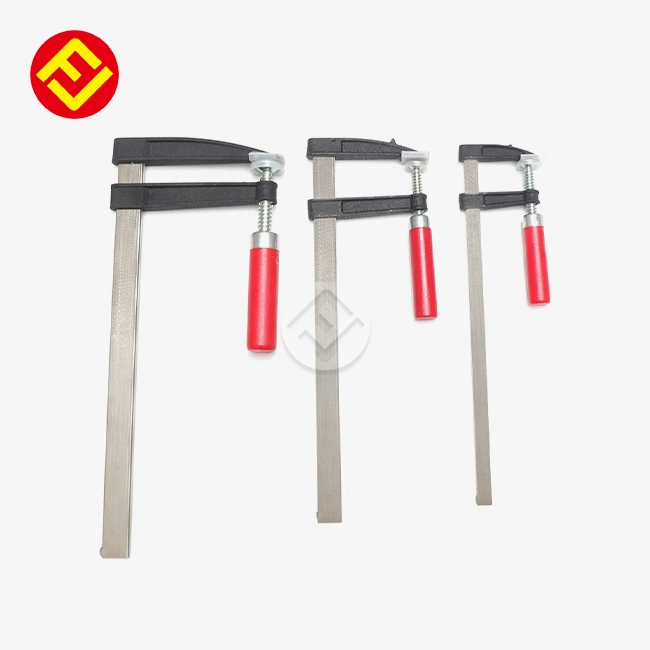
Professional carpenters know that every second counts when time is out and output goals are looming. The F-Clamps/ratchet-f-clamp">ratchet f-clamp is a game-changing answer for workshops that are tired of having to use slow, labor-intensive methods to hold things in place. Traditional screw-driven clamps need to be turned by hand all the time and worked with two hands. These quick-action tools, on the other hand, use trigger-operated systems to apply consistent, reliable pressure in seconds instead of minutes. This huge improvement in efficiency directly leads to measured productivity gains for building teams, furniture makers, and cabinet shops that have to meet tight deadlines and keep their profit margins low.

Specification |
|||
| Model | Overall Length (mm) | Shearing Capacity (mm) | Pier Handle Length (mm) |
| Track Ratchet F-Clamp 120×60 | 160 | 110 | 150 |
| Track Ratchet F-Clamp 160×60 | 210 | 160 | 150 |
| Track Ratchet F-Clamp 200×60 | 250 | 200 | 150 |
| Track Ratchet F-Clamp 300×60 | 350 | 300 | 150 |
Understanding Ratchet F-Clamps: Features and BenefitsHow the Ratchet Mechanism Works?
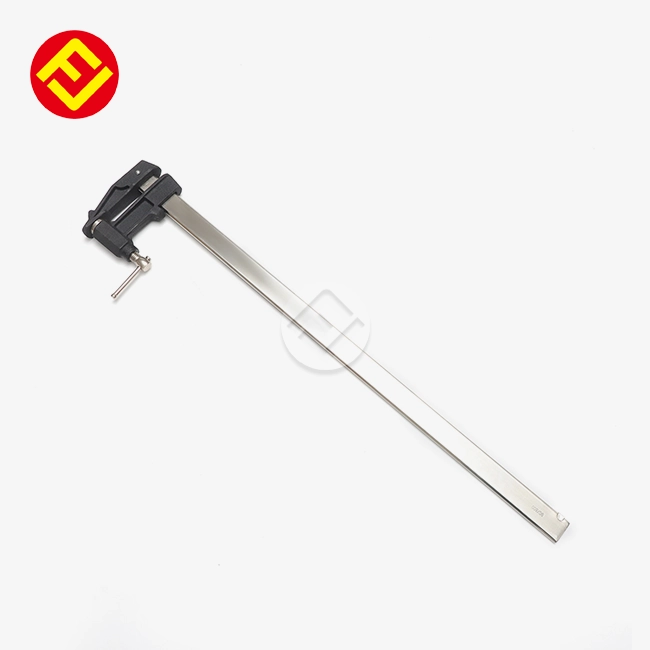
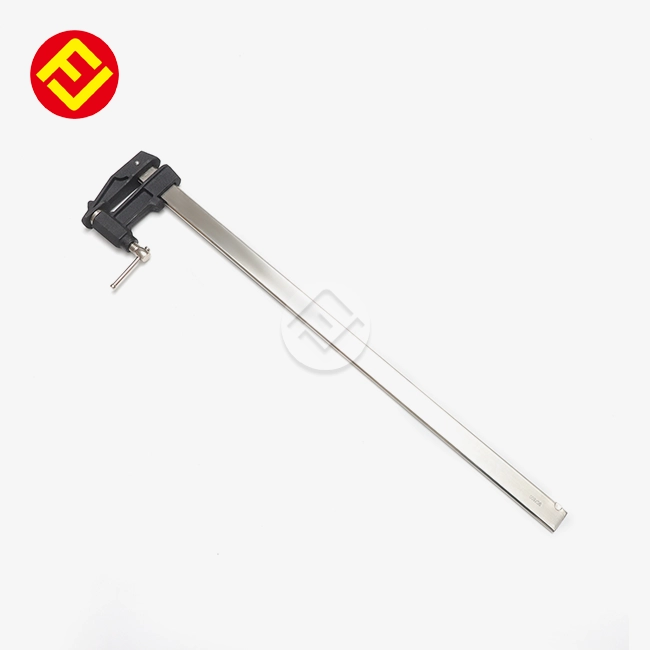
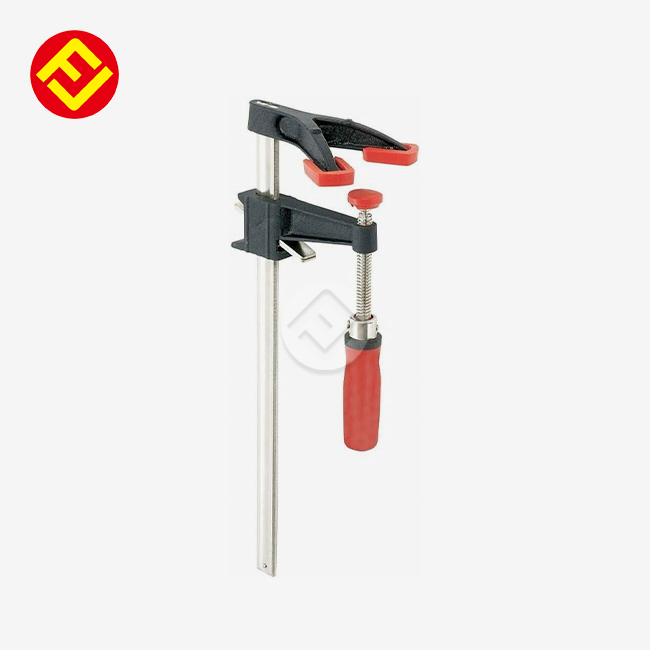
To make ratchet f-clamp style clamping work, the design mixes technical benefit with ease of use. When the user squeezes the trigger handle, serrated teeth machined into the steel bar connect with pawls inside the gun. When the jaw is in place, this engagement lets it slide easily, and when it's loaded, it locks tightly without needing constant hand pressure. Just as quickly, the ratchet f-clamp can be released by pressing a button with your thumb that stops the pawl system from working.
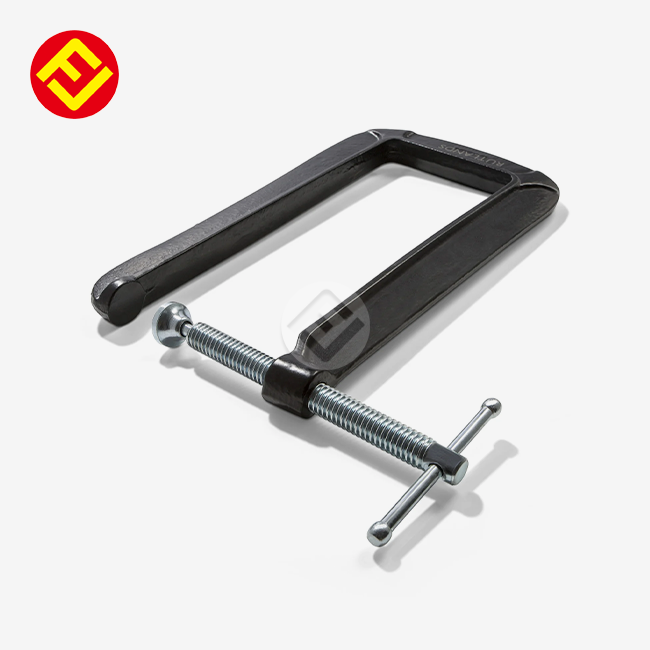
To apply enough pressure with a traditional F-clamp, users have to turn a threaded handle dozens of times. This move is done over and over, which makes your hands tired after a while of work and greatly slows down the building process. Ratchet f-clamp systems get rid of this problem completely, cutting the time it takes to clamp from 30 to 45 seconds to 3 to 5 seconds per application.
Core Components and Material Considerations
Professional-grade ratchet f-clamps are made up of several carefully designed parts that work together. The main bar, which is usually made of medium-carbon steel, is what holds the structure together. High-quality units have zinc-plated finishes and surfaces that have been heated to protect them from corrosion in humid workplace spaces or on building sites outside.
Cast iron parts that can be shaped are often used in the fixed and moving teeth. Compared to metal alternatives, this material choice has better impact protection while still being an acceptable weight. Malleable iron can handle the shock loads that are common in metalworking and doesn't change shape when high pressure is applied for a long time.
A big part of total efficiency that is often overlooked is the design of the handle. When holding things over and over, ergonomic grips covered in thermoplastic rubber make it easier on the hands. Leverage ratios are changed by the position of the grip. Well-designed tools let users apply a lot of binding force with little hand strength.
Measurable Benefits for Production Environments
Obviously, the most clear benefit is faster travel times. By moving from standard screw clamps to ratchet f-clamp operated ones, shops that put together a lot of cabinets can do 40 to 60 percent more units per shift. This rise in output happens without adding more workers or making work hours longer.
Controlling the pressure is also useful. The ratchet f-clamp teeth can be engaged gradually, which lets workers apply the right amount of binding force without over-tightening. Care must be taken when applying pressure to veneers, pre-finished surfaces, and composite materials that are easily damaged by too much force, glue squeeze-out issues, or joint misalignment. Ratchet f-clamp mechanisms give tactile feedback that helps experienced workers get better at using the same method over and over again.
When working in a skilled workshop, safety is important. Traditional clamps can slip while being used, which could hurt your hands or damage the object. Ratchet f-clamp systems have a strong locking action that keeps the pressure on even if the user lets go of the handle. This lowers the risk of an accident happening during complicated multi-clamp assemblies.
Comparing Ratchet F-Clamps with Alternative Clamping Solutions
Performance Against Traditional F-Clamps
Standard F-clamps are still used because they are easy to use and don't cost much, but they take a long time to set up. A factory that puts together 50 cabinet frames every day might spend an extra 25 to 30 minutes each shift just tightening and removing standard screws. When added up over a year, this wasteful behavior costs dozens of hours of work.
In classic designs, the screw-driven mechanism also makes the pressure spread uneven. As the handle is turned, the tightening force gradually builds up, and small misalignments can add up to big joint gaps. Ratchet f-clamp put pressure on the bar more evenly along its length, which makes the assembly tighter and more regular.
Quick-Release Clamps and Pipe Clamps
Like ratchet f-clamp designs, quick-release clamps offer speed benefits, but they usually come at the cost of gripping force. Their spring-loaded mechanisms are good for holding light things, like briefly attaching trim pieces or positioning templates, but they don't provide enough steady pressure for glue-ups or welding fixtures.
Pipe Clamps are great for working with very wide pieces of work, like tabletops or door parts. They are useful because the length can be changed, but they take longer to set up than specialized ratchet f-clamps. The threaded pipe pieces make the whole thing heavier, which makes it harder to move around on building sites.
Brand Considerations for B2B Procurement
Well-known names in North America, such as DeWalt, Bessey, and Bosch, control the market thanks to their large distribution networks and strong brand recall. These companies put a lot of money into developing new Products" target="_blank" style="color:blue" >products, which leads to small improvements in things like grip comfort, release systems, and resistance to rust.
People who work in procurement should judge sellers based on more than just the value of their brand. Lead times for big orders, the ability to customize, and how quickly technical support can help customers are often more important than small differences in how well two top-tier goods work. A provider that can turn around quotes in 24 to 48 hours and offer technical advice is worth considering during the buying process and for the lifecycle of the product afterward.
How to Use Ratchet F-Clamps Effectively to Boost Efficiency?
Proper Setup and Application Technique
Preparing the workpiece correctly is the first step to successful clamping. The quality of the grip is affected by how clean the surface is. If there is sawdust, oil residue, or other waste between the jaw and the material, it can slip. Protective pads keep finished surfaces from getting scratched and spread pressure over larger touch areas.
Putting clamps so they are perpendicular to the joint lines makes sure that the force is spread out evenly. When you place something at an angle, shear forces are created that can bend parts or cause the jaws to slowly move as the glue cures. When using more than one clamp to hold something in place on a single piece of work, workers should tighten each one in turn instead of finishing one side and then going on to the next. This method keeps internal pressures in check and stops the structure from twisting.
The ratchet f-clamp system doesn't need much care, but it does benefit from being checked every so often. Service life is greatly increased by checking that the pawls are engaged, cleaning dirt from the toothed tracks, and lightly lubricating the moving parts. A simple repair schedule done once a month keeps unexpected problems from happening during important production runs.
Common Mistakes and Prevention Strategies
Over-tightening is one of the most common mistakes people make. Ratchet f-clamps can put out a lot of force, but if you push the material too far, it will break, especially if it's softwood like pine or cedar. Operators should press down on parts until they make hard contact, then add one or two more clicks, but not the maximum force.
When throat depth standards aren't met, clamping setups become unsteady. To make sure there is enough support, the throat depth must be at least 25 mm deeper than the distance from the clamping surface to the edge of the workpiece. When the neck depth isn't deep enough, materials can turn or twist when they are under pressure.
Real-World Efficiency Data
A mid-sized furniture company in North Carolina wrote about their experience switching their assembly department from standard screw clamps to ratchet f-clamp types. During the six months of testing, the average tightening time per unit went down by 47%. Because they were more efficient, they were able to take on more contract work without having to buy new tools or make their building bigger.
When installing cabinets, construction workers say the same things are helpful with a ratchet f-clamp. Site managers said that being able to operate something with just one hand was especially helpful when working in tight areas or up high, where you need to use one hand to keep your balance.
Procurement Insights: Buying the Right Ratchet F-Clamps for Your Business
Key Decision Criteria for Bulk Purchasing
Buyers who buy in bulk should put more importance on a supplier's skills than on unit price. Small saves per piece are less important than quality that stays the same over long production runs. Changes from batch to batch in tightening force, jaw alignment, or finish quality cause problems in the workplace that cancel out any cost savings that were made at first.
Warranty terms and customer service after the sale are what set trusted sellers apart from transactional ones. Full coverage for production flaws, quick expert support, and clear steps for handling claims show that the provider is committed to long-term relationships.
Customization and OEM Opportunities
Standard catalog items work well for many uses, but for specialized tasks, the specs often need to be changed. Tools can fit perfectly into specialized workstations or automatic assembly systems if they have custom throat depths, larger opening capacities, or special mounting features.
FLA Industrial & Trading Co., Ltd. has its own tech team that can handle full customization processes. Our process includes checking the 3D design, getting help choosing the right materials, and trying the performance before going into mass production. This method makes sure that custom solutions meet all of the requirements while still meeting the high quality standards that come from using ISO9001-certified manufacturing processes.
Evaluating Total Cost of Ownership
The purchase price is only one part of the total costs of owning. The full financial picture is made up of how long the tool lasts, how easy it is to get new parts, and how much output changes over the service life. A ratchet f-clamp that costs 20% more but lasts twice as long and needs half as much upkeep is a better deal.
Purchasing teams should also think about how much it costs to keep goods on hand. When suppliers offer a wide range of SKUs with short lead times, they free up capital that would otherwise be stuck in warehouse stock and make sure that products are available when production needs change at the last minute.
Maximizing ROI: Maintaining and Upgrading Your Ratchet F-Clamp Inventory
Extending Service Life Through Proper Care
Making things last longer by taking good care of them. Regular inspections find problems as they start to happen before they get bad enough to break the tool. Visual checks once a week find broken ratchet f-clamp teeth, cracked jaws, or bent bars. Function testing should be part of monthly thorough checks to make sure the jaws move smoothly, the locking mechanism works properly, and the release mechanism works properly.
Whether a broken ratchet f-clamp should be thrown away or fixed depends on how easy it is to get replacement parts. Suppliers who keep large stocks of parts make fixes cheap and help tools last for years longer. The original investment is safe because it is possible to repair worn pawls, broken handles, or bent bars at a fair cost.
Future Trends in Clamping Technology
As material science progresses, ratchet f-clamp performance traits keep getting better. In some situations, especially when mobility is important, composite materials with better strength-to-weight ratios may be used instead of standard malleable iron. These lighter options would help building workers who have to go from job site to job site a lot.
Ergonomic study is always leading to better handle designs. Next-generation goods that keep operators from getting tired after long periods of use are based on research that looks at grip angles, trigger force requirements, and preventing repetitive strain injuries. Based on biomechanical research, some makers now use padded release handles and shaped grips.
Premium ratchet f-clamp types are starting to include digital force measurement as a new feature. Built-in sensors give real-time readings of the pressure, which lets workers get the exact same clamping force on all parts. This technology really helps quality-sensitive tasks where applying the right amount of pressure is important for keeping the joint's integrity.
Conclusion
When you switch from traditional clamping methods to ratchet f-clamp systems, you get measured benefits like faster production processes, better assembly quality, and less fatigue for the operators. Hardware stores that sell to professionals can stay competitive by keeping a wide range of ratchet f-clamp types in stock to meet the needs of all their customers. Construction companies and woodworking shops can boost output right away without having to teach employees or change the way they do things. When buying something, people should look at the supplier's skills, the ways it can be customized, and the total cost of ownership along with the unit price. Quality tools from well-known companies like FLA Industrial & Trading Co., Ltd. give professional tasks the dependability and regularity they need.
FAQ
What clamp size should I choose for standard cabinet assembly?
Cabinet work usually needs an opening size of 300 to 600 mm and a throat depth of 80 to 120 mm. Smaller clamps hold the face frame together, while bigger clamps hold the case parts in place while they are glued together. Keeping a range of items in this range will cover most building needs without requiring too much inventory input.
Can ratchet F-clamps handle metalworking applications?
Of course. The strong design, which includes steel and cast iron parts that can be shaped, can handle the heat and demands of metal production. A lot of metal shops like to use ratchet f-clamps to hold pieces in place temporarily while they are being cut, drilled, or tack welded. When you need to move things around a lot, the quick-release feature comes in handy.
Do these clamps offer safety improvements over traditional designs?
The positive locking device stops the pressure loss that can happen over time when screw threads are worn. Keeping the pressure on the workpiece while the glue cures or for long amounts of time lowers the risk that it will shift. The one-handed process also helps workers keep better control during complicated setups that need to place multiple clamps.
Partner with a Trusted Ratchet F-Clamp Manufacturer
We at FLA Industrial & Trading Co., Ltd. have been making high-quality ratchet f-clamp solutions for almost 40 years. Our ISO9001-certified factories make more than 1,000 different types of products for Fortune Global 500 businesses in North America, Europe, and Australia. Our technical team is here to help you from the beginning of the planning process all the way through delivery, whether you need regular catalog items or solutions that are specifically designed for your needs. We reply to requests for quotes within 24 to 48 hours, and our production methods are flexible enough to handle both large orders and specific small batches. Contact our team at sales@flaindustrial.com to talk about your unique clamping needs and find out how our experience as a ratchet f-clamp provider can help your business run more smoothly.
References
Woodworking Industry Association. (2022). "Tool Efficiency Standards in Modern Cabinet Manufacturing." Journal of Industrial Woodworking Technology, Vol. 18, pp. 45-62.
Manufacturing Productivity Institute. (2023). "Ergonomic Tool Design and Workplace Safety Outcomes." Professional Safety Engineering Quarterly, Issue 3, pp. 112-128.
Construction Equipment Research Council. (2021). "Comparative Analysis of Clamping Technologies in Field Applications." Building Trades Technical Review, Vol. 34, pp. 89-104.
Industrial Materials Engineering Society. (2023). "Material Selection Criteria for Heavy-Duty Hand Tools." Metallurgy and Manufacturing Proceedings, Vol. 27, pp. 203-219.
Professional Carpentry Standards Board. (2022). "Best Practices for Assembly Fixtures in High-Volume Production Environments." Woodworking Methods and Standards, Vol. 15, pp. 67-83.
Quality Management Association. (2023). "ISO9001 Implementation in Tool Manufacturing: Case Studies and Outcomes." International Quality Assurance Review, Vol. 41, pp. 145-167.