Grooved Couplings: Types, Uses & Benefits Guide 2026
2026-04-17 14:29:46


The coupling grooved system is a mechanical joining method that has changed the way modern industrial setups are set up. It is a good way to connect pipes. With this technology, the ends of the pipes have a gap that fits perfectly with a housing assembly and a gasket that reacts to pressure. This makes a solid seal that doesn't leak. Welding needs hot work permits and specialised workers, and flanging needs precise alignment and multiple bolts. Grooved mechanical connections, on the other hand, are fast, safe, and flexible enough to be used in fire protection, HVAC, municipal water, and industrial process uses.

Understanding Grooved Couplings: Definition, Types & Design Standards
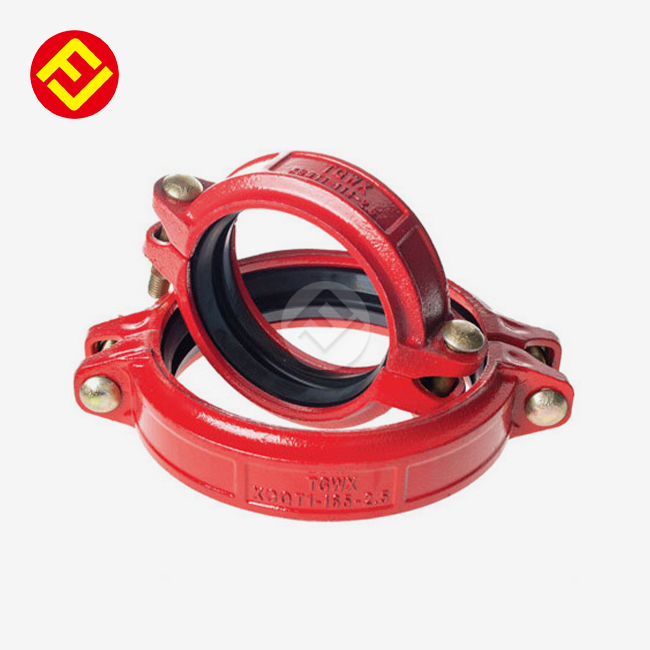
The idea behind grooved pipe joints is that they should connect mechanically instead of joining or fitting. Either a groove is rolled into the pipe end or it is cut out. This gives the coupling housing a solid place to sit. The rubber gasket fits between the ends of the pipes. When the housing segments are bolted together, the holes in the housing segments press against the gasket to make a pressure-tight seal.
Rigid vs. Flexible Coupling Configurations
With a tongue-and-groove housing design, rigid couplings hold pipe pieces in place, just like soldered joints do but without using heat. These units stop movement in any direction, so pipes stay in place in situations where system stability is important. On the other hand, flexible connections let you control how much something expands or contracts linearly and how much it bends at an angle. This adaptability handles changes in temperature, building movement, and earthquakes by acting as built-in expansion joints that keep the system's integrity.
Figuring out which setup is best for your project depends on whether the system needs to be completely fixed or able to handle movement. Rigid links work best for short, straight runs where temperatures don't change much, while flexible choices are essential for long distribution systems where temperatures change a lot.
Material Selection and Performance Impact
The minimum tensile strength for high-pressure uses is 65,000 psi, and the minimum yield strength is 45,000 psi for ductile iron housings made to ASTM A536 Grade 65-45-12 standards. Alternatives to carbon steel are stronger and can be used in certain manufacturing settings. The choice of gasket material also affects efficiency. EPDM gaskets work in water from -30°F to +230°F, while Nitrile gaskets work in oil from -20°F to +180°F.
Our coupling grooved goods at FLA Industrial & Trading are made from high-quality ductile iron and carbon steel that is designed to withstand tough fire protection and water supply setups. Precision casting, CNC cutting, and controlled surface treatments like hot-dip galvanisation according to ASTM A153 standards or epoxy powder coating are used in the production process. This makes sure that the parts are resistant to rust, which increases their useful life in difficult environments.
Compliance With International Standards
Following well-known design standards will protect your investment and make sure you follow the rules. Astm guidelines set the rules for what materials can be used and how much room there is between them. UL and FM approvals make sure that goods can be used in fire protection systems. DIN guidelines make sure that foreign projects can be sold in Europe. These approvals show that coupler systems have been put through a lot of tests to make sure they can handle pressure, change temperatures, and work reliably over time.
Our factories use ISO 9001 quality control systems, and every batch goes through metallurgy analysis, hydraulic pressure tests at 1.5 times the maximum working pressure, and measurement checking to make sure the materials are correct. This thorough quality control gets rid of casts that aren't up to par and put system safety at risk.
Applications and Benefits of Grooved Couplings in Industrial Piping
Because grooved mechanical joints can be used in many different situations, they are the most popular way to connect parts in many different industries. Their ability to make installation easier while keeping the structure's stability solves some of the most difficult problems in modern building and upkeep.
Fire Protection and Life Safety Systems
Wet and dry sprinkler systems are used in high-rise buildings where failure is not a choice. Grooved coupling technology meets the standards of NFPA 13 and can handle the high standing head pressures that come up in buildings. Welding sparks and fumes are eliminated by the mechanical link, which means that installation can happen in buildings that are already occupied without the need for fire watchers or removal. When upgrading current fire safety systems, work can be done during business hours so as not to affect how the building works.
During emergency fixes, the ability to quickly put things together is very useful. Instead of cutting and rewelding, which takes hours, maintenance teams can quickly separate a broken piece, remove the connection, rotate or replace the pipe segment, and get the system back up and running.
HVAC and Chiller Plant Operations
In mechanical rooms with rotary pumps and industrial chillers, there is a lot of vibration that hard pipes can't handle without expensive equipment that isolates vibration. When placed at equipment links, flexible grooved couplings act as vibration isolators, reducing the amount of energy that travels through the pipe network while keeping everything in the right place. Because it can do two things at once, there is no need for separate rubber expansion joints at the pump's suction and release points. This cuts down on the number of parts and possible leak spots.
Flexible joints are helpful for commercial buildings with cooling and heating systems because they allow for thermal growth. Changes in temperature throughout the year cause pipes to move a lot, and their natural flexibility keeps stress from building up and breaking joints or pipes.
Municipal Water Distribution
Connections between water treatment plants and transportation networks need to be able to handle constant pressure and rust from the chemicals in cleaned water. Our painted, epoxy-coated, and hot-dip galvanised finishes protect against external factors. The choice of treatment is based on the water quality and fitting conditions. The visual inspection feature lets maintenance teams check the stability of joints without taking them apart, and the design that makes it easy to remove and replace valves or change the layout of the system without damaging it.
These useful benefits lead to measured changes in how things work. Three to five times less time is needed for installation than with welding, and labour costs are much lower. Getting rid of hot work permits speeds up project timelines and takes away worries about fire hazards in sensitive areas. Because removing and reinstalling couplings only takes minutes instead of cutting and re-joining, system downtime for repair is cut down. Vibration absorption makes tools last longer by lowering the number of failures caused by stress.
Best practices for routine inspection include visually checking that the pads on the housing pieces touch each other, looking for damaged or extruded gaskets, and making sure the bolts are tight. These easy checks stop most operating problems before they happen and extend the life of equipment in harsh industrial settings.
Installation Guide and Best Practices for Grooved Couplings
Whether grooved systems work as well and reliably as they say they will depends on how well they are installed. Following set steps keeps joints in good shape and keeps you from making common mistakes that hurt system operation.
Required Tools and Preparation
For installation, you'll need basic hand tools like wrenches or impact drivers to tighten the bolts and measure tools to make sure the pipe cuts are the right length and the grooves are the right size. The groove sizes must meet ANSI/AWWA C606 standards. For normal wall pipes, roll grooving is best because it doesn't take any metal and keeps the full power of the pipe. Cut grooving works well for pipes with thick walls or that are lined on the inside, where metal growth is not possible.
Pipe ends for coupling grooved must be clean and free of burrs, dirt, or damage to the coating that would make it hard for the gasket to close. A check of the gasket makes sure there are no cuts, nicks or dirt that could cause leaks. Using non-petroleum oils that are recommended by the maker on gaskets makes fitting easier and prevents chemical breakdown. Petroleum-based Products" target="_blank" style="color:blue" >products damage EPDM gaskets and cause the system to fail.
Step-by-Step Assembly Process
Place the seal over one end of the pipe and make sure it fits perfectly in the groove, not twisted or out of place. Align the second pipe to the right distance apart and make sure that both holes are ready. As you put the housing pieces around the joint, make sure that the housing keys fit into the pipe holes on both sides. To make sure the seal is compressed evenly, install bolts through the housing bolt pads and tighten them gradually in a cross pattern, like wheel lug nuts.
Pad-to-pad contact, which means that the pads on the housing bolts must touch all the way around the joint, is the usual way to put something. This clear sign makes sure the setup is correct without the need for torque tools in most cases. When installing high-pressure speciality models, the exact force values that must be measured and written down must be followed.
Common Installation Errors and Prevention
The most common assembly mistake is misalignment. Pipes must be properly supported so that they don't move during building because of gravity. If you use too much force during alignment, there is a problem that needs to be fixed before you can move on. Never force lines that aren't lined up correctly together, as this ruins seals and makes leak tracks.
Damage to the gasket happens when it is installed without enough grease or when dirt gets on the surface of the gasket. Always check seals before installing them, and if you see any obvious flaws, replace them instead of trying to use broken parts.
Joint stability is compromised when bolts are tightened incorrectly, either too little or too much. If you don't tighten them enough, the pads won't touch, leaving gaps that let the joint separate under pressure. When using impact tools set to high torque, overtightening can crack housings or bend bolt pads. Progressive cross-pattern tightening stops these problems by spreading the load out equally.
Personal protective equipment, fall protection when working at heights, and lockout-tagout processes when linking to existing pressurised systems are all safety rules that must be followed during installation. Workplace safety regulations, like OSHA guidelines, keep workers safe and keep the installation area safe.
How to Source and Purchase Grooved Couplings: A B2B Buyer's Guide?
When buying grooved pipe fittings, procurement teams have to look at sellers in a number of different ways to make sure that the quality of the products, the trustworthiness of delivery, and the expert help available meet the needs of the project.
Evaluating Suppliers and Product Quality
Established names for grooved coupling are known in the industry for consistently high quality and performance. However, new makers with low prices should also be considered as long as they can show they have the right certifications and testing capabilities. Checking for certification should include ISO 9001 quality management, UL/FM approval for fire safety uses, and CE marks for global projects.
Warranty terms show that the company that made the product is confident in its longevity. Comprehensive guarantees that cover material flaws and performance fails are a sign of strict quality control, while limited warranties could make you worry about the product's dependability. It doesn't matter what kind of customer service support you offer—technical help during the development of specifications, quick communication during purchase, and help with installation questions after delivery are all important to the success of the project.
FLA Industrial & Trading specialises in making parts that aren't standard sizes or shapes. This lets us meet the specific needs of projects that standard catalogue items can't. Our engineering team works directly with clients to come up with solutions that work for their needs. Before starting production, they check the 3D designs to make sure they are correct. With nearly 40 years of experience in both metal tools and pipe fittings and this customisation knowledge, you can be sure that complicated projects will get custom solutions instead of forced sacrifices.
Bulk Ordering and Custom Manufacturing
Bulk sales can get better prices, which is helpful for big tasks. Talking to providers early on about the full needs of the project lets you negotiate price structures that reward volume promises while still allowing for flexible delivery schedules. Buying from a single coupling grooved source makes transportation easier, cuts down on administrative costs, and can often lead to better business terms.
Custom making includes more than just non-standard sizes. It also includes special finishes, unique pressure levels, or material requirements for harsh service conditions. Full-service makers can make unique designs, which sets them apart from wholesalers who can only give products from a catalogue. Knowing the minimum order amounts, the prices of tools, and the effects on lead times help buying teams balance the benefits of customisation with the limitations of their budgets.
Procurement Workflow and Logistics
Specifications that spell out exact needs, like pipe size, pressure rating, service conditions, finishing choices, number, and delivery plan, are the first step in an efficient purchase process. When requirements are clear, there are fewer mistakes and rounds of changes that slow down projects.
Coordination of delivery procedures makes sure that materials get where they need to go on time and without having to pay a lot for storage or shipping quickly. Talking about the needs for wrapping keeps goods safe during travel and makes moving and distributing them on job sites go more quickly. Our technical support services include everything from the initial design advice to installation help. You can reach our experts by email at sales@flaindustrial.com with any questions you have at any time during the project's lifecycle.
Professionals in procurement who work with FLA Industrial & Trading benefit from our relationships with Fortune Global 500 companies, which confirm our high quality standards and on-time delivery. Our position in the U.S., German, and Australian markets shows that we can handle foreign shipping and understand the rules and regulations in those areas.
Conclusion
Because they are easy to install, work reliably, and don't need much upkeep, coupling grooved mechanical pipe couplings have become the standard way to connect pipes in fire protection, HVAC, public water, and industrial process uses. Knowing the differences between fixed and adjustable setups, the effects of material choice, and compliance standards helps you make smart design choices. The benefits over bonded, flanged, and threaded options lead to cost saves and better performance that can be measured by buying teams using total cost of ownership analysis. If you build these systems correctly and follow best practices, they will keep giving you the benefits they offer for as long as they are in use.
FAQ
How do I choose between stiff and bendable grooved couplings? What should I think about?
The connection type is chosen based on the needs of the system. Rigid joints are good for situations where the pipe orientation needs to stay the same and can't move, like short straight runs in safe settings. When used in long distribution lines or close to mechanical equipment, flexible joints handle heat expansion, building settlement, and sound separation. When choosing a connection type, you should think about changes in temperature, earthquake needs, and sources of shaking.
What is the difference between the pressure values of threaded systems and flanged connections?
Standard grooved connections can handle working pressures between 300 PSI and 1,000 PSI, based on the size and weight class of the housing. This range is good for most business and industrial uses; it's similar to or even better than flanged connections in terms of what it can do, and it's easy to install and keep up. For more demanding uses, high-pressure speciality types have higher scores.
Can I add curved connections to pipe systems that are already in place?
It is easy to add grooved technology to current systems, and this is often done when systems are upgraded. The pipe's wall must be thick enough to allow for the groove depth without affecting the structure, and grooves are made on fitted pipe using the right cutting tools. Since no hot work is needed, retrofits can be done during normal business hours in buildings that are already occupied, causing less damage than welding changes.
Partner With a Trusted Coupling Grooved Manufacturer
If you want to upgrade your plumbing with reliable grooved coupling solutions, you should start by finding a maker that offers both quality products and quick service. FLA industry & Trading Co., Ltd. brings almost 40 years of experience in making to every project and has over 1,000 product specs that are designed to meet a wide range of industry needs. Our ductile iron and carbon steel couplings go through strict quality control measures, such as hydraulic pressure tests and measurement verification. They also have ISO 9001, CE, and UL/FM certifications to make sure they meet standards and work well. Our expert team is here to help you with everything, from making specifications to installing your new equipment. They can ship standard setups from their 2,000-ton inventory right away, or they can make unique solutions that are delivered in 7–15 business days. Email our coupling grooved supply team at sales@flaindustrial.com to talk about your project needs and find out how our low prices and technical skills can help you get the best deal.
References
American Society for Testing and Materials. (2024). ASTM A536-84: Standard Specification for Ductile Iron Castings. West Conshohocken: ASTM International.
National Fire Protection Association. (2025). NFPA 13: Standard for the Installation of Sprinkler Systems. Quincy: NFPA Publications.
American Water Works Association. (2023). ANSI/AWWA C606: Grooved and Shouldered Joints. Denver: AWWA Standards.
Underwriters Laboratories. (2024). UL 213: Standard for Rubber Gasketed Fittings for Fire Protection Service. Northbrook: UL Standards & Engagement.
Factory Mutual Research Corporation. (2025). FM Approval Guide: Pipe Fittings and Couplings for Automatic Sprinkler Systems. Johnston: FM Approvals.
International Organization for Standardization. (2023). ISO 9001:2015 Quality Management Systems Requirements. Geneva: ISO Central Secretariat.