How to Install American F Clamps?
2026-05-21 09:48:06


Correctly installing an F-Clamps/american-f-clamp">American F clamp maximizes clamping power, workpiece stability, and operator safety in woodworking, welding, and assembly. First, choose the throat depth and opening capacity for your material, then flush the fixed jaw against the workpiece edge. Slide the movable arm along the steel rail to approximate the required span, then crank the screw handle clockwise to provide gradual, even pressure until the workpiece is securely attached without deformation. Construction sites, furniture manufacturing, and metal fabrication situations where accuracy and dependability drive productivity require proper installation to limit jaw deflection, eliminate clutch slippage during vibration-heavy tasks, and maximize tool lifespan.


Understanding American F Clamps: Types, Sizes, and Materials
Understanding structure, material composition, and dimensions helps choose a clamping tool. The strengthened construction and industrial-grade components of the American F clamp set it apart from generic competitors.
Core Components and Construction
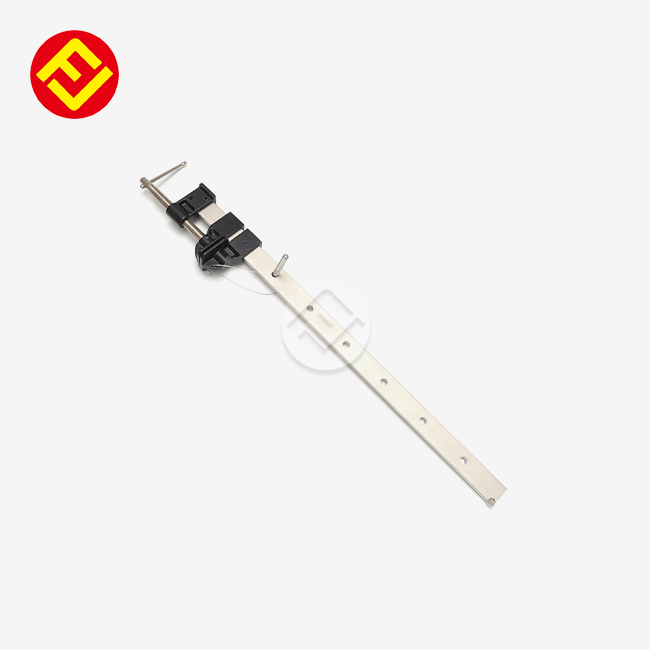
The conventional F clamp assembly has a malleable iron fixed jaw, a sliding arm on a serrated steel rail, and a threaded screw rod with a swivel pad. Malleable cast iron has a better strength-to-weight ratio than grey cast iron in lower versions and absorbs stress without breaking. The forged and precision-machined steel rail has aggressive serrations that latch with a reinforced clutch plate in the sliding arm to prevent slippage under load or equipment vibration.
Material Choices and Performance Impact
Durability, load capacity, and environmental compatibility depend on material choice. For an American F clamp, malleable cast iron jaws allow modest bending under intense pressure without permanent distortion in professional clamps. I-beam steel rail shapes minimize weight and retain stiffness, whereas solid rectangular rails resist bending during high-force glue-ups or metal production. Heat treatment improves thread durability and torque resistance in medium-carbon steel screw rods. Zinc-plated finishes prevent corrosion in humid or outdoor building conditions and painted coatings for inside workshops.
Size Specifications and Application Matching
How far the clamp can reach onto a workpiece depends on throat depth, measured from the rail's inner edge to the screw spindle center. Common industrial sizes are 80mm, 100mm, and 120mm deep, with specialist variants exceeding 150mm for large panel work. Maximal jaw opening spans from 200mm in tiny units to 1200mm in heavy-duty structural timber lamination machines. Procurement managers should match throat depth to workpiece width and evaluate opening capacity depending on their biggest assemblies.
Step-by-Step Guide to Installing American F Clamps
Methodical preparation and alignment are needed for successful installation. Structured processes reduce material damage and operational delays and assure consistent output.
Workspace Preparation and Tool Selection
Workpiece surfaces should be clean, dry, and debris-free before installation to avoid uneven pressure points. Slide the clamp mechanism's moveable arm along the rail to check clutch engagement and smooth passage. Check jaw faces for embedded particles that might damage polished surfaces and that screw threads revolve smoothly without binding. Protective pads or wooden blocks between metal jaws and delicate materials like veneer or softwoods can disperse pressure and avoid indentation.
Positioning and Securing Techniques
Place the fixed jaw against one workpiece edge with the jaw face perpendicular to the material. Slide the movable arm of the Products" target="_blank" style="color:blue" >products">American F clamp along the rail until it's within 10-15mm of the other edge. Working with several American F clamps requires less threading and faster setup with this preliminary placement. Try to rotate the screw handle clockwise without abrupt movements that might misalign the jaw. Apply pressure gently, ensuring alignment every few rotations to ensure both jaws are parallel and flat against the workpiece.
Screw Adjustment and Pressure Optimization
Right torque balances holding and material protection. Overtightening can crush softwoods, shatter fragile composites, or compress glue, weakening lamination joints. Pause to check workpiece stability as tightening resistance increases—the assembly should feel secured without compression or distortion. Work from one end to the other to clamp many parts, distributing stress equally. This meticulous strategy minimizes uneven glue distribution in woodworking and preserves welding fixture alignment, where millimeter accuracy dictates joint quality.
Safety Protocols and Damage Prevention
Never exceed the manufacturer's clamping force, usually 500-1200 lbs depending on type and structure. Injury and equipment damage can result from unexpected jaw failure, rail bending, or screw rod shearing due to excessive stress. Clamps should be distanced from the arc to avoid heat damage to painted surfaces and screw threads during welding. When clamping metal stock for machining, make sure it won't block cutting tool pathways or workpiece ejection during drilling. Apply modest lateral pressure to the workpiece after installation to assess stability. Any movement indicates inadequate clamping force or jaw alignment and requires quick modification.
Comparing American F Clamps with Other Clamp Types for Installation Efficiency
Strategic tool selection affects setup time, labor costs, and flexibility. Understanding comparative advantages optimizes inventory and process design for procurement teams.
Installation Mechanics: Speed versus Stability
Spring-loaded quick-grip clamps are perfect for temporary holding during measurement or light assembly work since they operate quickly with one hand. Plastic parts deteriorate in high heat, and their clamping force seldom reaches 300 lbs. Although it takes longer to set up and requires two hands, the American F clamp provides better gripping strength and stability for vibration-heavy activities like routing and grinding. Bar clamps can reach huge assemblies but lack the throat depth for wide panel work, restricting furniture production and cabinet installation flexibility.
Grip Strength and Duty Rating Analysis
Place the fixed jaw against one workpiece edge with the jaw face perpendicular to the material. Slide the movable arm of the American F clamp along the rail until it's within 10-15mm of the other edge. Working with several American F clamps requires less threading and faster setup with this preliminary placement. Try to rotate the screw handle clockwise without abrupt movements that might misalign the jaw. Apply pressure gently, ensuring alignment every few rotations to ensure both jaws are parallel and flat against the workpiece.
Ergonomic Factors and Operator Efficiency
Operator tiredness during recurrent setup operations depends on tool weight. Aluminum fast clamps are lighter than cast iron F-style clamps but less durable and heat-resistant. Procurement should balance operator comfort, lifespan, and application compatibility. Reclaimed timber processing and irregular metal manufacturing sometimes include workpieces that aren't parallel, but American F clamp screw rods' swivel pads decrease surface marring and allow modest angular adjustment. This versatility reduces shimming and repositioning, reducing setup time during high-volume manufacturing.
Procurement Considerations for American F Clamps: Choosing the Right Model and Supplier
Long-term operating expenses and urgent budget restrictions are balanced via strategic sourcing. Consider application needs, supplier capabilities, and total ownership costs when purchasing.
Application Requirements and Usage Volume Assessment
Glue-up woodworking operations benefit from buying more mid-range machines with 100-120mm throat depths and 600-800mm opening capacity. Builders should use zinc-plated finishes and impact-resistant rail profiles for tough construction site circumstances. Welding and metal production facilities need heat-resistant paint and malleable iron structure that can withstand thermal cycling. Procurement managers should compare inventory to consumption patterns—idle clamps waste capital, whereas department borrowing indicates understocking.
Supplier Reliability and Quality Verification
Manufacturing origin greatly affects product consistency and certification. Manufacturers accredited by ISO9001, such as those producing the American F clamp, do raw material verification, dimensional precision inspections, and functional testing before export. Trustworthy providers give precise throat depth measurements, opening capacity ranges, and maximum clamping force ratings to match tools to applications. To avoid project delays, FLA Industrial & Trading Co., Ltd. provides thorough product documentation and fast technical help within 24–48 hours. Custom fabrication suppliers are valuable for businesses that need non-standard throat depths, jaw forms, or finishes not found in catalogs.
Bulk Purchasing Strategies and Logistical Planning
Volume purchase allows tiered pricing and ensures inventory availability during peak production. Procurement teams should manage lead times with suppliers, especially when procuring from international manufacturers when shipping difficulties and customs clearance delay delivery. Container-load ordering decreases freight costs but needs storage and cash flow management. Domestic warehouse distributors provide faster replenishment cycles at higher unit prices, a trade-off for enterprises with uncertain demand or limited storage space. Before placing significant purchases, obtain sample units to check that claimed parameters reflect actual performance in your application context.
Best Practices for Maintaining and Optimizing American F Clamps Post-Installation
Service life, clamping precision, and unforeseen equipment failures that affect production schedules are improved by systematic maintenance.
Cleaning and Lubrication Protocols
Adhesive residue on jaw faces causes uneven pressure distribution and surface contamination on final workpieces. Before residues cure, clean metal surfaces with mineral spirits or acetone after glue or bonding agent usage. The steel rail's serrated design collects sawdust, metal filings, and building debris that impede clutch plate engagement. Weekly stiff wire brush cleaning eliminates imbedded particles, ensuring rail lock performance. To avoid dust, lightly oil screw threads after 20-30 operation cycles and wipe away excess. Avoid rail lubrication—oil collects impurities and can create clutch slipperiness under load.
Inspection Routines and Wear Monitoring
Jaw alignment should be checked monthly by placing the American F clamp on a level reference surface and looking for swaying or gaps that indicate bent components. Check screw threads for galling or distortion that binds rotation. Apply lateral force to the sliding arm when locked to test clutch plate engagement. Any movement indicates worn serrations that need repair before crucial operations. A precision straightedge may verify rail straightness; bending over 0.5mm per 300mm length impairs clamping accuracy and indicates overloading or impact damage requiring retirement.
Storage Practices and Lifespan Maximization
Keep clamps dry to avoid corrosion on unpainted steel. Hung storage systems arrange clamps and avoid jaw injury from stacking or lowering. Apply a thin coat of rust-preventive compound to exposed metal surfaces while clamps are unused, especially in coastal or high-humidity areas where corrosion accelerates. Simple logbooks record use hours and maintenance activities to estimate component wear and arrange replacements before inventory shortages. Facilities managers using these approaches claim 30-50% longer service life than those without systematic maintenance plans.
Conclusion
Clamping tool installation and maintenance affect production quality, operator safety, and equipment lifetime in various industrial applications. Knowing material qualities, dimensional specifications, and comparative advantages helps procurement teams source according to operational needs. Precision woodworking, metal manufacturing, and construction require systematic installation to minimize workpiece damage and maximize holding stability, for example when using an American F clamp. Prefer production transparency, certification compliance, and quick technical assistance above short-term cost reductions when choosing suppliers. Regular cleaning, lubrication, and wear inspection preserve capital expenditures and avoid unforeseen downtime. Organizations using these best practices frequently improve project results and tool inventory total cost of ownership.
FAQ
1. What throat depth should I specify for cabinet installation work?
Cabinet assembly uses 300-600mm-wide face frames, side panels, and rear components. The throat depth of 100-120mm allows edge banding and trim installation and access to center sections during glue-up. Without repositioning or supplementary clamping points, this specification supports most common cabinet construction.
2. Can these clamps withstand welding heat during metal fabrication?
Tack welding models with malleable cast iron jaws and steel screw grips can withstand high temperatures and splatter. Avoid prolonged direct arc contact, which degrades paint. Use clamps to align workpieces, not as electrical grounds. Use a wire brush to quickly remove screw thread splatter for smooth operation.
3. How do I prevent jaw marks on finished wood surfaces?
When clamping compression-sensitive pre-finished materials or softwoods, provide protection shields between metal jaws and workpiece surfaces. Hardwood blocks, cork pads, and leather strips eliminate localized indentation by clamping over greater surfaces. Reduce torque to the minimal force needed for stable holding—excessive pressure damages surfaces without enhancing joint quality in most gluing applications.
Partner with a Trusted American F Clamp Manufacturer
Optimizing clamping operations involves more than superior tools—it requires a long-term provider. FLA Industrial & Trading Co., Ltd. has delivered precise clamping solutions to North American construction builders, woodworking factories, and metal fabrication businesses for almost 40 years. Through thorough material verification and functional testing, our malleable cast iron and steel rail construction fulfills ISO9001 requirements. Our engineering staff answers to technical queries within 24-48 hours for conventional configurations or bespoke throat depths for unique applications, keeping projects on track. Contact sales@flaindustrial.com for bulk pricing, product specifications, and delivery logistics adapted to your operating needs.
References
1. Woodworking Industry Association (2021). Clamping Force Requirements in Laminated Panel Construction: Technical Standards and Best Practices. Professional Woodworker Publishing.
2. American Welding Society (2020). Fixture and Clamping Methods for Precision Metal Fabrication. AWS Technical Guidelines Series, Volume 12.
3. Construction Tool Safety Council (2022). Hand Tool Selection and Maintenance in Commercial Construction Environments. Industry Safety Standards Manual.
4. Manufacturing Engineering Journal (2019). "Comparative Analysis of Clamping Mechanisms: Performance Metrics in High-Volume Production Settings." Vol. 47, Issue 3, pp. 112-128.
5. International Woodworking Machinery & Furniture Supply Fair (2023). Global Trends in Clamping Technology and Industrial Tool Procurement. Exhibition Technical Report.
6. National Association of Manufacturers (2021). Equipment Maintenance Best Practices: Extending Service Life Through Systematic Care Protocols. Operations Management Resource Guide.
YOU MAY LIKE