Choosing the Right Permanent Screw Jack Supplier
2026-05-21 09:47:59


If you want your permanent screw jacks to work smoothly, safely, and cost-effectively, you need a partner. Industrial lifting equipment needs accurate engineering, strong materials, and reliable support. The supplier you pick affects equipment performance, project timeframes, and long-term operational costs for building, manufacturing, and infrastructure maintenance. Learn how to evaluate suppliers, comprehend product specs, and make procurement decisions that meet your company goals with this handbook.


Understanding Permanent Screw Jacks and Their Key Specifications
What Are Permanent Screw Jacks?
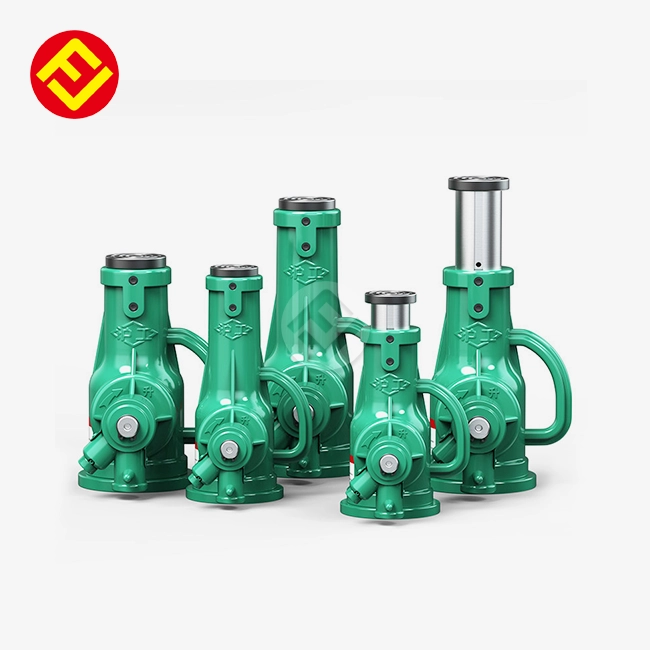
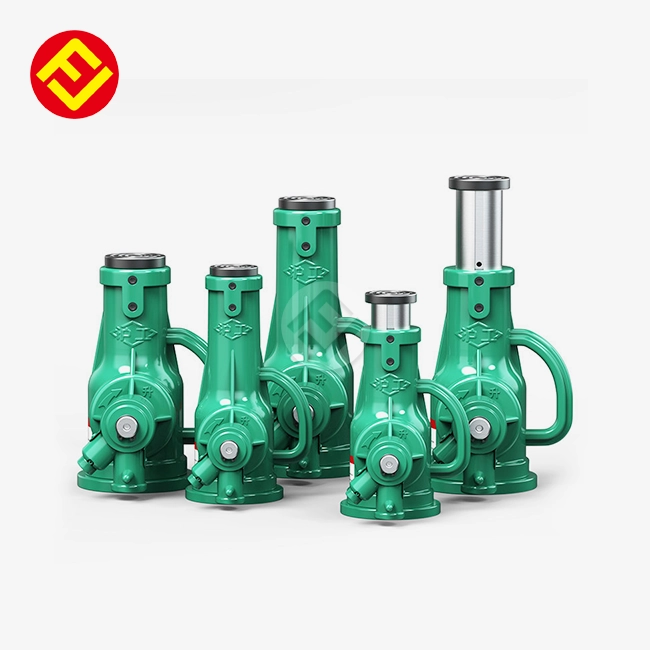
Modern industrial processes depend on threaded screw mechanical lifting systems to lift, drop, or hold big items. These machines transform rotational motion into linear displacement for excellent load positioning without power. Screw-type lifters self-lock, so weights stay put even when working forces are eliminated, unlike hydraulic or pneumatic models. This makes them ideal for long-term load support, such as supporting structural beams during construction or aligning industrial equipment.
Essential Performance Specifications
The most basic criteria is load capacity, which can range from 500 kilos to over 100 tons depending on design and construction, including permanent screw jacks. In industrial applications, engineers must match capacity rating to working loads while allowing for safety considerations, generally 2:1–4:1. Lift height parameters typically vary from 100 millimeters to 2 meters, however specialized setups can expand this.
Material choice affects durability and lifespan. High-quality systems use alloy, carbon, cast, or stainless steel for structural components. Tempering or quenching the lead screw improves hardness and wear resistance. Bronze nuts are used for heavy weights and engineered plastics for lesser loads or corrosive situations. Lifting efficiency and load-holding depend on trapezoidal, acme, or metric threads.
Maintenance and Installation Considerations
Installation atop reinforced concrete footings stabilizes load distribution and prevents structural collapse. Based on soil bearing capability and equipment ratings, the footing must manage point-load densities. In humid or outdoor applications, spray-painted finishes and corrosion-resistant coatings prevent environmental damage. Optional dust coverings and lubrication interfaces increase equipment life and maintenance. Industrial settings from cold storage to foundries need operating temperatures between -20°C and +80°C.
Core Criteria for Selecting a Permanent Screw Jack Supplier
Quality Certifications and Compliance Standards
Reliable suppliers have ISO9001-certified quality management systems to ensure consistent production and product reliability. CE certification verifies health, safety, and environmental compliance in European markets. Industry-specific standards like DIN, AGMA, and EN ensure goods satisfy technical criteria.
Certifications aren't just paperwork—they verify production methods, material traceability, and testing techniques to guarantee each unit meets standards. Procurement managers should check supplier certification and obtain proof of conformity with key standards for their application and market.
Manufacturing Capabilities and Customization
Not all industrial activities suit typical solutions. Custom-engineered designs distinguish great suppliers from average wholesalers. Find partners who provide bespoke dimensions, mounting configurations, and load requirements. Advance providers offer 3D design services to see specific solutions before manufacturing, minimizing costly mistakes and assuring system integration.
Precision turning, grinding, milling, and heat treatment are manufacturing skills. Suppliers with in-house testing facilities may verify bespoke unit performance under real-world settings. FLA Industrial & Trading Co., Ltd., with over 40 years of manufacturing expertise, has the technical competence to create solutions for permanent screw jacks in demanding construction, automotive, and heavy manufacturing applications.
Lead Times and Global Logistics
Fast response matters in competitive industries. Top vendors deliver bids, load confirmations, and technical drawings in 24-48 hours, speeding decision-making and keeping projects on time. Production lead times depend on order complexity and volume, but schedule clarity creates trust and aids planning.
International purchasers need global shipping cooperation, including permanent screw jacks. Established logistics suppliers comprehend international shipping rules, paperwork needs, and packaging standards. Clear communication about delivery timetables, tracking, and handling processes eliminates costly delays and assures units are ready for installation.
Pricing Transparency and Warranty Policies
While cost is crucial, the lowest price rarely offers the best value. Budgeting is easier with transparent pricing that breaks down basic unit, customisation, and delivery costs. Buyers should receive precise breakdowns of how requirements impact pricing from suppliers to improve designs for cost effectiveness without compromising performance.
Warranty coverage shows supplier product quality confidence. Comprehensive warranties for manufacturing faults, material failures, and performance difficulties reduce buyer risk. Beyond standard warranties, service agreements include technical assistance, maintenance advice, and replacement parts for long-term functioning. Before buying, procurement teams should explain warranty terms, coverage length, and claim processes.
Comparing Leading Permanent Screw Jack Solutions and Brands
Types and Operational Characteristics
Hand crank or wrench permanent screw jacks are suitable for occasional adjustments or low-frequency positioning changes. These devices are useful for remote sites or backup systems due to their simplicity and power independence. Electric motors provide frequent cycling or coordinated lifting of many pieces. Motorized systems work easily with automated processes and control systems but need electrical infrastructure and power failure prevention.
Hydraulic options raise quickly and smoothly but require pumps, hoses, and seals. Mechanical screw-type devices are ideal for precision placement, load retention, and low maintenance. Self-locking eliminates hydraulic system pressure loss and equipment drift.
Market Reputation and Customer Feedback
Established manufacturers with decades of experience have improved designs based on field performance data, including the use of permanent screw jacks. Businesses servicing Fortune Global 500 partners satisfy strict quality and delivery criteria. Customer testimonials and case studies reveal real-world performance, dependability under pressure, and supplier technical support.
Seller histories, third-party ratings, and references from related businesses should be researched by buyers. Visits to industrial sites reveal production capability, quality control, and organizational professionalism. These studies boost supplier selection confidence and lower procurement risks.
Total Cost of Ownership Analysis
Only one part of lifetime expenses is initial purchase price. While more expensive, premium units made with high-quality materials and procedures last longer and require fewer replacements. Maintenance needs vary widely by design. Frequent lubrication, adjustment, and component replacement cost labor and parts over time.
Energy-efficient drive systems lower high-cycle motorized unit operating costs. Downtime from equipment breakdowns might outweigh budget savings. Total cost of ownership includes purchase price, installation, maintenance, estimated service life, and failure repercussions. This detailed research frequently shows that mid-to-premium equipment is better than inexpensive solutions.
Practical Guide to Procuring Permanent Screw Jacks for B2B Clients
Procurement Channels and Sourcing Strategies
Industrial buyers use several supplier channels for permanent screw jacks, each with benefits. Direct manufacturer partnerships offer volume discounts, technological customization, and engineering assistance. Wholesale wholesalers sell conventional configurations for urgent needs, but customization is limited and unit costs may be higher.
Online B2B platforms let customers compare prices and specs with worldwide vendors. However, these systems require careful supplier verification to assure quality and reliability. Flexible and cost-effective hybrid models combine direct manufacturer ties for special or high-volume demands with distributor partnerships for standard goods and emergency replacements.
Managing International Transactions
Cross-border purchases have issues beyond domestic buying. Letters of credit, wire transfers, and trade finance have varying risk and cost profiles globally, acting as permanent screw jacks that secure transaction stability. A clear purchase agreement should include quality standards, inspection processes, acceptance criteria, and non-conformance remedies.
Destination country customs documents, import taxes, and regulatory compliance vary. For easy customs clearance, experienced vendors prepare documentation, classification codes, and regulatory certificates. Purchase contracts specify shipping insurance coverage for transportation damage or loss.
Building Strategic Supplier Relationships
Long-term collaborations have benefits beyond commerce. Suppliers who understand customer needs can recommend changes, inform clients about new technology, and prioritize manufacturing for trusted partners. Suppliers may reduce lead times and ensure availability by communicating expected requirements and managing inventory and manufacturing capacity.
Supplier performance may be objectively assessed using on-time delivery, quality fault, and technical inquiry response rates. Periodic company evaluations on performance, market, and improvement prospects strengthen relationships and increase service levels.
Key Applications and Use Cases of Permanent Screw Jacks in Industry
Construction and Infrastructure Projects
Heavy-duty lifting equipment supports structural members during bridge inspection, repair, and rehabilitation. Workers may securely access below components and perform vital maintenance by carefully positioning and holding loads. Building construction projects use these devices for temporary beam support, load transfer while permanent supports are built, and structural element leveling.
Foundation repair professionals use adjustable lifting mechanisms to fix settling. The tiny design facilitates crawl space installation and provides high lifting capability. Corrosion-resistant coatings protect permanent screw jacks in wet subterranean conditions where moisture and dirt would quickly corrode unprotected steel.
Manufacturing and Assembly Operations
Automotive assembly lines use positioning equipment to align chassis components, support body panels during welding, and install engines, including permanent screw jacks for reliable load holding. Precision control allows millimeter-accurate positioning and tight assembly tolerances. Machinery installation in manufacturing plants requires precise leveling to eliminate vibration, assure optimum operation, and extend equipment life, often achieved with **permanent screw jacks** to maintain long-term stability. Adjustable support systems allow machine position adjustment after installation.
Industrial Maintenance and Equipment Support
Production line adjustments may require equipment relocation for new Products" target="_blank" style="color:blue" >products or process enhancements. Screw-type lifters ease these modifications and save downtime compared to permanent mounting solutions. Warehouse and distribution center material handling applications use these units for horizontal platform support and vertical load control, giving flexible storage solutions.
Portable lifting equipment helps plant maintenance crews fix machines, access components, and safely hold assemblies. Self-locking keeps loads steady even if operators are called away suddenly. Equipment alignment restores geometry following component replacement or facility upgrades using precision positioning. Electricians and utilities building power infrastructure employ insulated and corrosion-protected versions for outdoor usage and near electrified equipment. Mechanical operation prevents sparking on electric alternatives, improving safety in dangerous areas.
Conclusion
Technical parameters, quality assurance, service capabilities, and pricing must be considered while choosing permanent screw jacks providers. Long-term value is higher for suppliers with manufacturing knowledge, complete certifications, customization possibilities, and quick support than those with competitive price. Professionals in procurement should choose partners with track records, transparent business procedures, and continuous customer ties. Buyers find trustworthy equipment that improves operational efficiency, worker safety, and corporate goals across varied industrial applications by applying systematic assessment criteria and considering total cost of ownership rather than initial purchase price alone.
FAQ
1. How do I determine the appropriate load capacity for my application?
Determine your equipment's maximum static load, then use a safety factor between 2:1 and 4:1 for permanent screw jacks depending on application risk and regulatory requirements. Consider dynamic loads if equipment will vibrate or hit. Check with engineering-supported vendors to ensure capacity selection fits your operational circumstances and safety standards.
2. What safety features should I prioritize when selecting lifting equipment?
The most important safety feature is the self-locking screw system, which prevents load-weight-induced lowering. Anti-corrosion coatings prevent structural deterioration that might reduce load-bearing capability. Overload protection and safety factor ratings keep equipment running smoothly in unforeseen situations. Certification to safety standards ensures excellent design and manufacture.
3. Can suppliers accommodate bulk orders with consistent delivery schedules?
Established manufacturers have the ability and inventory management to fulfill big orders with planned delivery. Include quantity and delivery timeline when getting quotations. Reliable suppliers disclose production deadlines, address capacity restrictions, and recommend purchasing patterns that balance inventory costs and manufacturing efficiency. Framework agreements with agreed quantities generally provide delivery priority and preferential pricing.
Partner with FLA Industrial & Trading Co., Ltd. for Reliable Screw Jack Solutions
Our nearly four decades of manufacturing experience makes us a trusted permanent screw jacks provider for your most demanding lifting needs. We design precise lifting systems from premium alloy steel, carbon steel, and stainless steel with load capacities from 500 kilos to 100 tons and raise heights up to 2 meters. Before delivery, each product is heat treated, precisely machined, and tested to ISO9001, CE, and DIN/AGMA/EN requirements.
Within 24-48 hours, we provide quotes, load confirmations, and 3D drawings to speed up decision-making. Our modification includes non-standard dimensions, mounting configurations, and environmental needs. We provide reliable operations with over 1,000 product requirements for Fortune Global 500 partners in the US, Germany, and Australia. Talk to sales@flaindustrial.com about your application needs and get thorough technical offers for your operations.
References
1. American Gear Manufacturers Association. (2021). AGMA Standards for Mechanical Power Transmission Equipment: Design and Application Guidelines. Alexandria, VA: AGMA Publications.
2. British Standards Institution. (2019). EN 12158: Builder's Hoists for Goods - Safety Requirements. London: BSI Standards.
3. Deutsches Institut für Normung. (2020). DIN 15018: Cranes - Principles for Steel Structures - Calculation. Berlin: DIN Standards.
4. International Organization for Standardization. (2018). ISO 9001: Quality Management Systems - Requirements. Geneva: ISO Publications.
5. Machinery's Handbook Editorial Board. (2020). Machinery's Handbook: Guide to Screw Jack Design, Materials, and Applications (31st ed.). New York: Industrial Press.
6. National Institute of Standards and Technology. (2022). Mechanical Lifting Devices: Performance Standards and Safety Guidelines for Industrial Applications. Gaithersburg, MD: NIST Technical Publications.