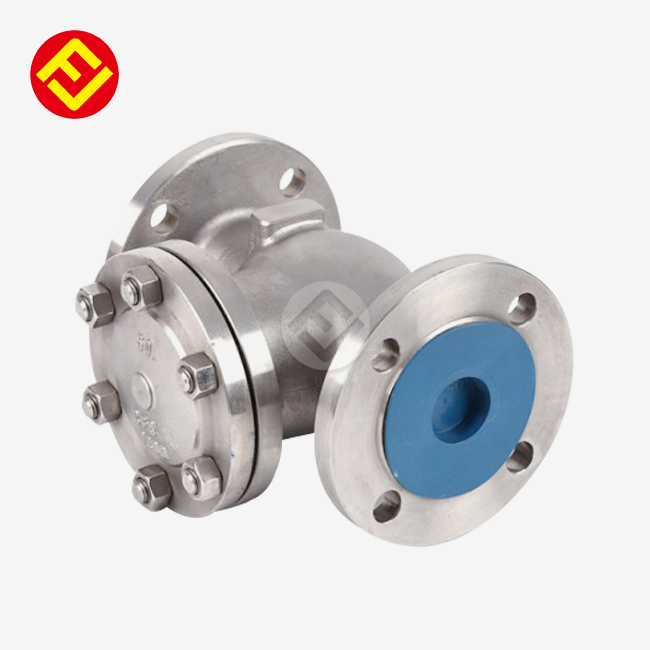
6 Swing Check Valve


Application: Prevents backflow in pipelines, ensuring one-way water supply; commonly installed at fire pump outlets and pipeline networks.
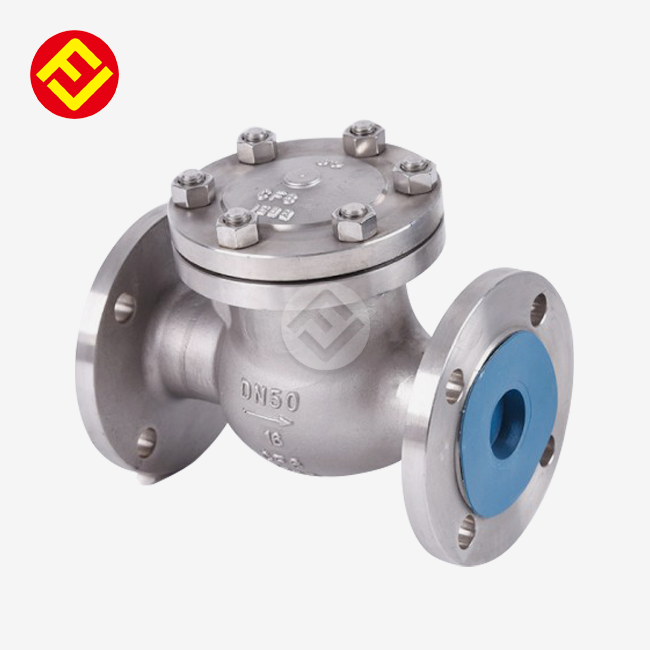
Appearance: Compact valve body with internal disc; available in flanged or threaded connections.
Origin: China
Manufacturing Process: Casting / Machining / Assembly / Coating
Certification: ISO9001, CE, UL, FM
6 Swing Check Valve: DN150 Backflow Protection for Industrial and Fire Protection Pipelines
Backflow can wreck pumps and compressors on industrial lines and fire protection pipelines. Stopping it on those lines is the job of the 6 Swing Check Valve (DN150) from FLA Industrial & Trading Co., Ltd. Fluid travels one way. Once flow stops, the valve shuts. As flow pushes forward, a hinged disc swings open. Gravity and the pressure difference then close it. One option for the body is cast iron. Stainless steel is offered too, and so is carbon steel. Ends come flanged or threaded. Every unit is made in China. Casting comes first, then machining, assembly, and coating. ISO9001, CE, UL, and FM certification come with the valve.
How a DN150 Swing Check Valve Works
Only one direction of flow passes through this valve. Its nominal bore is 6 inches (DN150), and the part works as a control component. A hinge pin holds the disc. Forward flow lifts that disc off the seat.
Gravity and the pressure difference push the disc back onto the seat when flow stops or turns around. Centrifugal pumps and compressors then stay clear of reverse rotation. Media in separate lines also stop flowing back into each other. Inside, the path is full bore. That holds turbulence and pressure drop at a low level.

Specifications
| Model (DN) | Type | Material Options | Connection Type |
|---|---|---|---|
| DN50 | National Standard Medium Body | Cast Iron / Stainless Steel / Carbon Steel | Flanged / Threaded |
| DN50 | National Standard Large Body | Cast Iron / Stainless Steel / Carbon Steel | Flanged / Threaded |
| DN50 | National Standard Heavy Body (Thickened) | Cast Iron / Stainless Steel / Carbon Steel | Flanged / Threaded |
| DN65 | National Standard Medium Body | Cast Iron / Stainless Steel / Carbon Steel | Flanged / Threaded |
| DN65 | National Standard Large Body | Cast Iron / Stainless Steel / Carbon Steel | Flanged / Threaded |
| DN65 | National Standard Heavy Body (Thickened) | Cast Iron / Stainless Steel / Carbon Steel | Flanged / Threaded |
| DN80 | National Standard Medium Body | Cast Iron / Stainless Steel / Carbon Steel | Flanged / Threaded |
| DN80 | National Standard Large Body | Cast Iron / Stainless Steel / Carbon Steel | Flanged / Threaded |
| DN80 | National Standard Heavy Body (Thickened) | Cast Iron / Stainless Steel / Carbon Steel | Flanged / Threaded |
| DN100 | National Standard Medium Body | Cast Iron / Stainless Steel / Carbon Steel | Flanged / Threaded |
| DN100 | National Standard Large Body | Cast Iron / Stainless Steel / Carbon Steel | Flanged / Threaded |
| DN100 | National Standard Heavy Body (Thickened) | Cast Iron / Stainless Steel / Carbon Steel | Flanged / Threaded |
| DN125 | National Standard Medium Body | Cast Iron / Stainless Steel / Carbon Steel | Flanged / Threaded |
| DN125 | National Standard Large Body | Cast Iron / Stainless Steel / Carbon Steel | Flanged / Threaded |
| DN125 | National Standard Heavy Body (Thickened) | Cast Iron / Stainless Steel / Carbon Steel | Flanged / Threaded |
| DN150 | National Standard Medium Body | Cast Iron / Stainless Steel / Carbon Steel | Flanged / Threaded |
| DN150 | National Standard Large Body | Cast Iron / Stainless Steel / Carbon Steel | Flanged / Threaded |
| DN150 | National Standard Heavy Body (Thickened) | Cast Iron / Stainless Steel / Carbon Steel | Flanged / Threaded |
| DN200 | National Standard Medium Body | Cast Iron / Stainless Steel / Carbon Steel | Flanged / Threaded |
| DN200 | National Standard Large Body | Cast Iron / Stainless Steel / Carbon Steel | Flanged / Threaded |
| DN200 | National Standard Heavy Body (Thickened) | Cast Iron / Stainless Steel / Carbon Steel | Flanged / Threaded |
| DN250 | National Standard Medium Body | Cast Iron / Stainless Steel / Carbon Steel | Flanged / Threaded |
| DN250 | National Standard Large Body | Cast Iron / Stainless Steel / Carbon Steel | Flanged / Threaded |
| DN250 | National Standard Heavy Body (Thickened) | Cast Iron / Stainless Steel / Carbon Steel | Flanged / Threaded |
| DN300 | National Standard Medium Body | Cast Iron / Stainless Steel / Carbon Steel | Flanged / Threaded |
| DN300 | National Standard Large Body | Cast Iron / Stainless Steel / Carbon Steel | Flanged / Threaded |
| DN300 | National Standard Heavy Body (Thickened) | Cast Iron / Stainless Steel / Carbon Steel | Flanged / Threaded |
Data not listed in this table, such as temperature range, weight, or Cv value, is not stated on this page. Please Contact Us to request it for your model.
Materials and Construction
Cast iron is one option for the body. Stainless steel and carbon steel are the other two. Grades listed are cast carbon steel ASTM A216 WCB plus stainless steel ASTM A351 CF8M, and duplex steel shows up there too for corrosive media. Ordering This product? Then check the body grade and the seat type against the media you run and the temperature you run at.
Two seat options are on offer. Where erosion is a risk, a hardened seat with a Stellite 6 overlay holds it back. For clean water or gas, pick a soft seat in PTFE or EPDM. That one seals tighter. Soft seat temperature limits sit lower than a metal seat allows.
Face-to-face dimensions follow ASME B16.10. Fit-up gets easier that way. Handy when the valve drops into a pipeline layout that already exists.

Key Features
Cracking pressure stays low with the swing design. Flow moves through an open path too. In a pumping system, that means less energy loss.
Top-entry maintenance is possible thanks to the bolted bonnet. Out come the disc and arm. Lapping or replacing the seat can be done with the valve body still in the line.
A strong surge in the system? You can add an external lever and weight. A hydraulic dashpot works too. Both options cushion the closing action. Closing speed is adjustable as well.

Applications
Municipal water and wastewater: At sewage lift stations, the valve has to sit downstream of the 6-inch discharge pumps. Raw sewage then stays out of the wet well. Swing clearance lets the valve pass fluids that carry some solids. Check the solids content for your duty.
Oil and gas midstream: Crude oil transmission lines are one common spot. Refinery off-sites are another. Once a pump shuts down, product has no way to flow backward there. Metering stations need the same cover. Compressors do too.
Chemical processing: Put it in cooling water loops and chemical feed systems. Low pressure loss is the reason in those spots. For volatile fluids, pick a version with an external lever and weight. Closing speed becomes easier to control.
Fire protection: Put a 6 Swing Check Valve at fire pump outlets. Pipeline networks need them fitted inside as well. Water then travels one way only. Buying for fire service? Ask for the UL and FM certificates. Check that they match the exact model you picked.
Quality Control
Testing runs to API 598 and ISO 5208. The steps look like this:
- Visual and dimensional inspection: We look at casting quality (MSS SP-55). Face-to-face dimensions get checked against ASME B16.10 as well.
- Hydrostatic shell test: Pressure inside the body goes up to 1.5 times the rated pressure. Any porosity or leak then shows up.
- High-pressure closure test: The seat is tested at 1.1 times rated pressure.
- Low-pressure air test: Seat leaks that high-pressure testing can hide get caught here.
- Non-destructive testing (RT or MT): Used when a critical application calls for it. The hinge pin and disc arm are checked for defects.

Purchasing Considerations for 6 Swing Check Valve
Confirm these details before ordering This product:
- Media type and operating temperature
- Required pressure class, from Class 150 to 2500
- Body material and seat type
- Flanged or threaded connection
- Flow direction and installation position
- Certificates required for your project, such as UL or FM for fire service
Flow velocity also matters. The flow must be high enough to hold the disc lifted against the stop. Otherwise the disc can chatter and wear the hinge pin. Share your flow rate so the team can review this with you.
Customization and Technical Support
Non-standard sizes and special structures can be developed on request. Early in a project, support covers mold development and 3D design verification. Mid-project, it covers product layout and confirmation of material, performance, and dimensional accuracy. Later, production progress updates are sent alongside delivery progress.
Delivery and Supply
FLA keeps 2,000 tons of stock for standard Products" target="_blank" style="color:blue" >products. Custom orders take 7-15 days, per the stated lead time.
Need a price, the unit weight, or a 3D design? Feedback for the 6 Swing Check Valve comes back within 24-48 hours.
FAQ
Q: Is vertical installation allowed for This product?
A: Yes. Use it in vertical lines with upward flow. Gravity helps the disc close there. With downward flow, the disc usually stays open. So the valve does not fit this installation.
Q: Can it stop water hammer every time?
A: No. With a standard swing check valve, water hammer can actually get worse. The disc slams shut and the surge hits harder. If surge is a risk in your system, fit an external lever and weight. A hydraulic dashpot is another option.
Q: What is the lowest flow velocity I need?
A: The disc has to stay fully lifted against the stop, and that takes enough flow. Chatter and early wear on the hinge pin are what you avoid this way. Your fluid and your operating conditions decide the number. Send us your flow data and we will review it.
Q: What is the right way to look after the seating surface?
A: Pick the bolted bonnet if you want to get at it from the top. Take out the disc and the arm. After that you lap the seat or fit a new one, and the body never leaves the line.
Q: Metal seat or soft seat, which one should I take?
A: Metal seats handle high heat and abrasive service. Clean water or gas is a better fit for soft seats (PTFE or EPDM). Their temperature limits are lower, though.
Q: What about the certifications and the lead times?
A: This valve holds ISO9001, CE, UL, and FM certifications. Custom orders get a quoted lead time of 7-15 days. Need the certificates for your exact model? Just ask us.
Contact Us
Send your media, pressure class, body material, and end connection to sales@flaindustrial.com. We will come back with pricing, or a quote for a custom 6 Swing Check Valve.