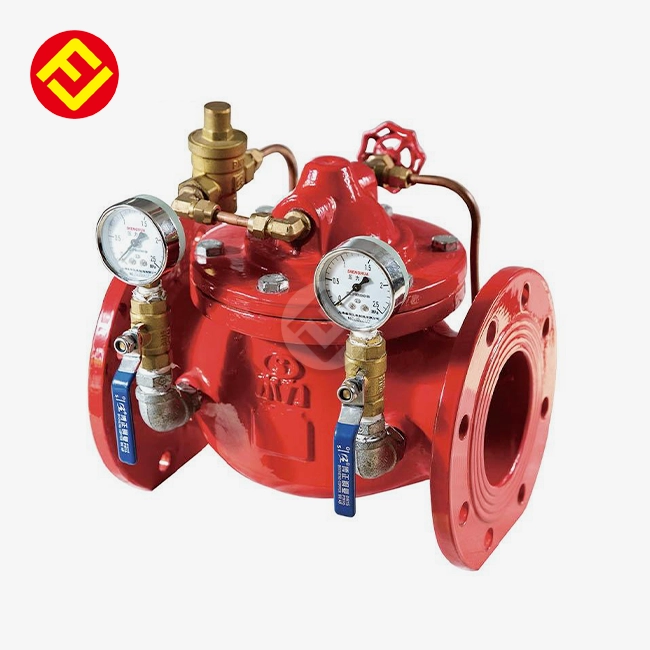
Pressure Reducing Regulator Valve


Application: Designed for fire protection pipelines in high-rise buildings to reduce and stabilize downstream pressure, protecting pipelines and equipment.
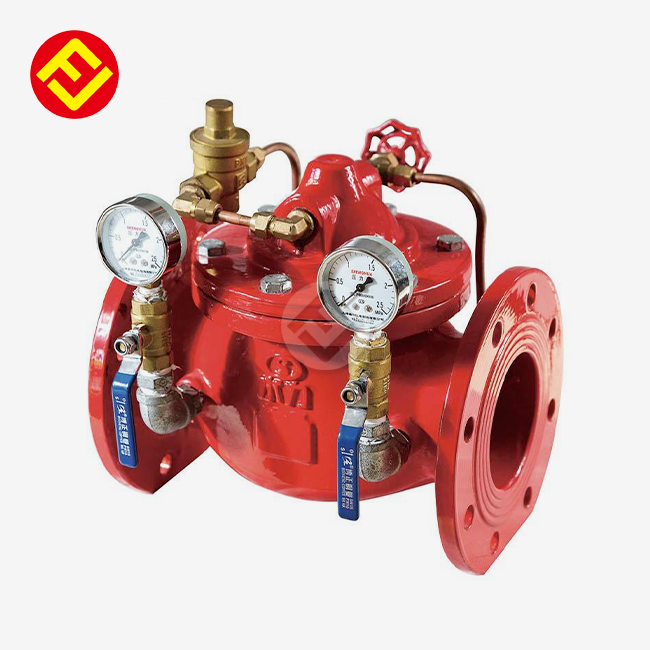
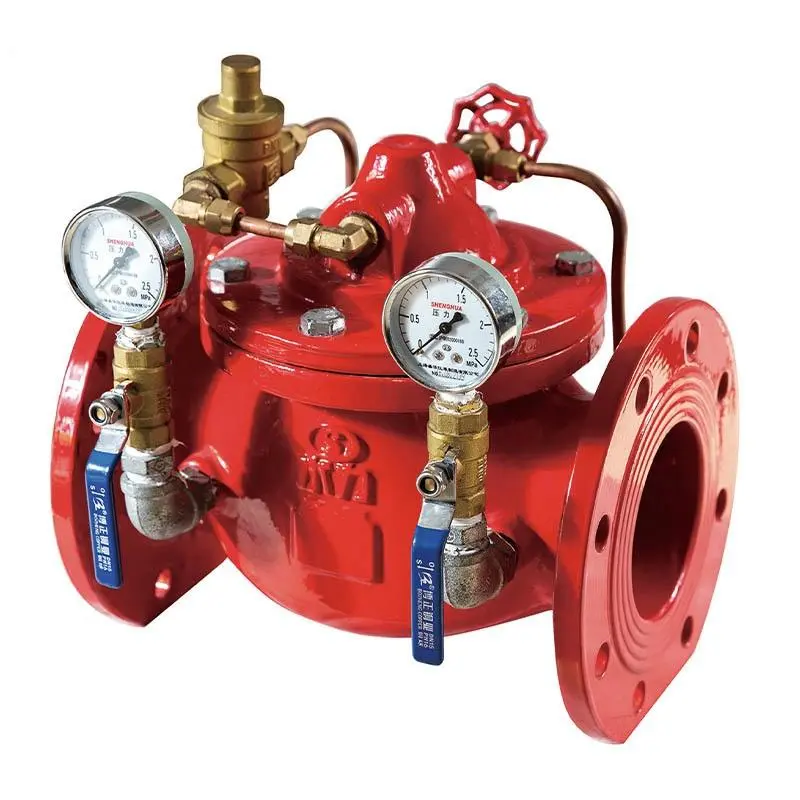
Appearance: Valve body equipped with pressure regulating device and gauge interface; surface nickel-plated or painted.
Origin: China
Manufacturing Process: Casting / Machining / Assembly / Surface treatment
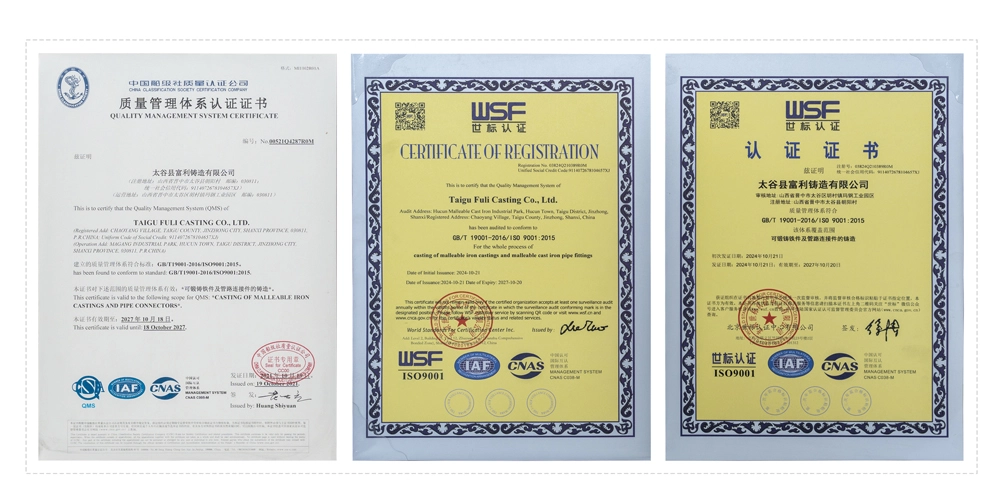
Certification: ISO9001, CE, UL, FM
Pressure Reducing Regulator Valve for High-Rise Fire Protection Pipelines
For high-rise fire protection pipelines, FLA Industrial & Trading Co., Ltd. provides a Pressure Reducing Regulator Valve. Downstream pressure goes down and stays steady. That helps protect pipes and fittings. Connected equipment gets protection too. Brass and cast iron are body options. Stainless steel is also available. A pressure regulating device and a gauge interface come with each valve. Surfaces can be nickel-plated or painted. ISO9001 and CE certification are listed by FLA. UL and FM certification are also listed. FLA supports non-standard sizes and special structures. Before ordering, confirm pressure with FLA. Also confirm size and connection details.
How the Valve Works in Your Line
This product is a self-actuated device that lowers a higher, variable upstream pressure to a lower downstream pressure. It does not need external power.
The valve sits in-line on the inlet pipe. You set outlet pressure with the pressure regulating device. During commissioning and routine checks, the gauge interface lets you read pressure.
Many spring-loaded valves use a simple setup. Spring force pushes one way. Downstream pressure on a sensing element pushes the other way. The two forces balance. The data available here does not say what kind of sensing element this valve has inside. If you need that detail, ask FLA.
Specifications
| Model (DN) | Type |
|---|---|
| DN50 | National Standard Body |
| DN65 | National Standard Body |
| DN80 | National Standard Body |
| DN100 | National Standard Body |
| DN125 | National Standard Body |
| DN150 | National Standard Body |
| DN200 | National Standard Body |
| DN250 | National Standard Body |
| DN300 | National Standard Body |
| DN50 | National Standard Heavy Body |
| DN65 | National Standard Heavy Body |
| DN80 | National Standard Heavy Body |
| DN100 | National Standard Heavy Body |
| DN125 | National Standard Heavy Body |
| DN150 | National Standard Heavy Body |
| DN200 | National Standard Heavy Body |
| DN250 | National Standard Heavy Body |
| DN300 | National Standard Heavy Body |
| DN50 | Stainless Steel Accessories |
| DN65 | Stainless Steel Accessories |
| DN80 | Stainless Steel Accessories |
| DN100 | Stainless Steel Accessories |
| DN125 | Stainless Steel Accessories |
| DN150 | Stainless Steel Accessories |
| DN200 | Stainless Steel Accessories |
| DN250 | Stainless Steel Accessories |
| DN300 | Stainless Steel Accessories |
No pressure rating shows up in the product data we hold. Set-pressure range is absent. So is the size range. Nothing on end connection either. Temperature range and flow data are missing too. Check these values with FLA before you order. Certificate numbers are not there. Scope is absent as well. Ask for the documents you need.
Materials and Surface Finish
Three body materials are available to you. Brass is one of them. Cast iron and stainless steel make up the other two. Match your pick to the pipeline specification. It should fit the installation environment as well. Budget counts too.
Surface finish comes as nickel plating or paint. Body material and finish should both be confirmed at the same time when you order.
Manufacturing Process and Quality
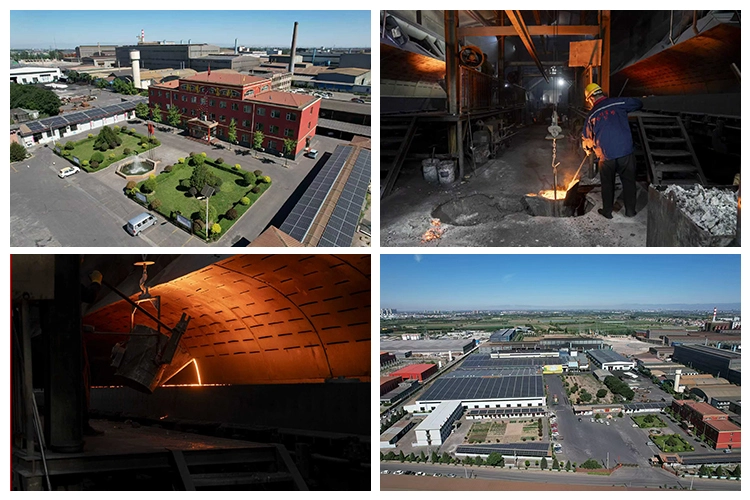
Casting gives you the valve body first. Machining then cuts it down to the sizes the job calls for. At assembly, the pressure regulating device and the gauge interface go on. Surface treatment is the last step. There the part gets nickel plated or painted.
ISO9001, CE, UL and FM certification cover this Pressure Reducing Regulator Valve line. FLA holds all four. Production only starts once the customer signs off on material, performance and dimensional accuracy.
Why Pressure Control Matters in High-Rise Fire Protection
Go down the floors of a tall building and static pressure climbs. A pressure reducing valve keeps the downstream side inside the limits the pipes and fittings can take. Connected equipment stays protected too.
- Protects the equipment: Parts farther down the line won't see pressure rise above the cap.
- Outlet pressure holds steadier: Upstream flow or pressure may change. Outlet pressure should still stay at the value you set.
- Checks are simple: You can read pressure from the gauge interface at commissioning and during inspection.
Where to Use It
Fire protection pipelines in high-rise buildings are the main place these get used. The valve goes on the side where supply pressure is higher than what the downstream system should carry.
Other jobs, like high-pressure gas or ultra-clean service, are outside the data on this page. Those need their own material and rating review. Send your working conditions to FLA before you order.
Pressure Reducing Regulator Valve Selection Notes for Buyers
A Pressure Reducing Regulator Valve does a different job than a pressure relief valve. The reducing valve runs nonstop and holds the outlet at a set pressure. Once system pressure climbs past a safe maximum, a relief valve vents. Someone may need to inspect it after that.
Send FLA your inlet pressure, target outlet pressure, flow rate, pipe size, connection type and preferred body material. That way we can confirm the match.
Customization and Technical Support
FLA builds Products" target="_blank" style="color:blue" >products in non-standard sizes and with special structures for machinery, building materials and other industries. Custom orders get support through the whole order cycle:
- Early stage: Mold development for custom parts, plus 3D design and verification so you can review the product form.
- Mid stage: Layout optimization and confirmation of material, performance and dimensional accuracy.
- Late stage: Production progress feedback linked to delivery.
Supply and Delivery
Standard orders are filled from stock, and FLA says it holds 2,000 tons of it. Parts with special shapes fall under custom orders. For those, the stated lead time is 7-15 days. Look up the schedule for your model and the quantity you need.
FLA states that requests for price, unit weight or 3D design receive a reply within 24-48 hours.
FAQ
Q: What makes this valve different from a pressure relief valve?
A: A reducing valve keeps downstream pressure at a set level while the system runs normally. Once the system goes past a safe maximum, a relief valve opens. Pressure escapes that way. The jobs are not the same. One cannot stand in for the other.
Q: Which body material should I choose?
A: Brass works. So do cast iron and stainless steel. Which one fits depends on your pipeline spec. Where it goes and what you can spend matter too. FLA can confirm the material and the finish.
Q: What details are needed for a quote?
A: A few details are needed from you. Tell us the inlet pressure and the outlet pressure you want to reach. Send the flow rate and the pipe size. How the valve connects matters too. Add the body material and the finish. Then give us the number of units you need.
Q: Does FLA offer this product?
A: Yes. FLA develops molds and 3D designs for non-standard sizes and special structures. Stated lead time for custom orders is 7-15 days.
Contact Us
Send your pipeline pressure, flow rate, size requirement and quantity for the Pressure Reducing Regulator Valve to sales@flaindustrial.com.
YOU MAY LIKE