OEM Stainless Rope Clamp Production for Distributors
2026-05-22 15:26:32


OEM stainless rope clamp manufacture is a strategic choice for hardware wholesalers and procurement managers seeking durable wire rope fastening solutions. In demanding applications, these precision-engineered marine-grade stainless steel grades 304 and 316 components provide excellent corrosion resistance and mechanical strength. For construction, maritime, and industrial distributors, collaborating with an experienced OEM manufacturer provides configurable requirements, consistent quality, and competitive bulk pricing that third-party resellers cannot match.
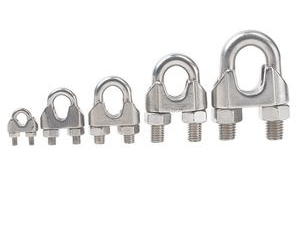
Understanding Stainless Rope Clamps and Their OEM Production
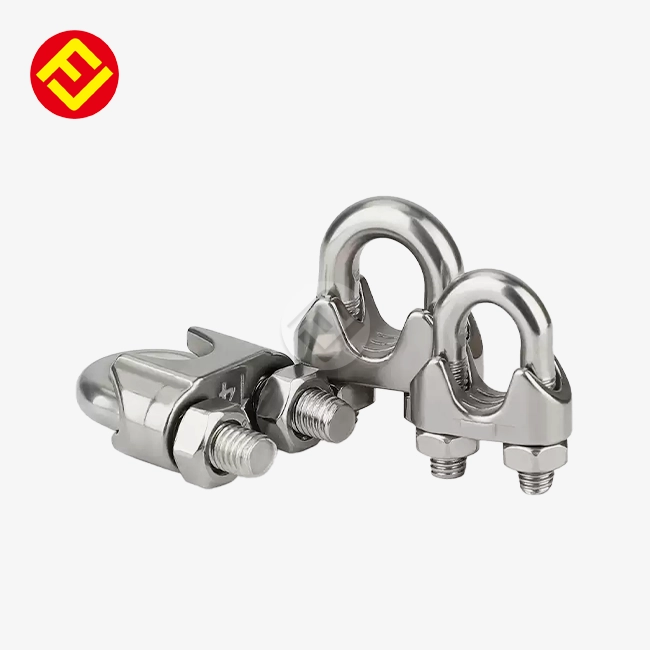
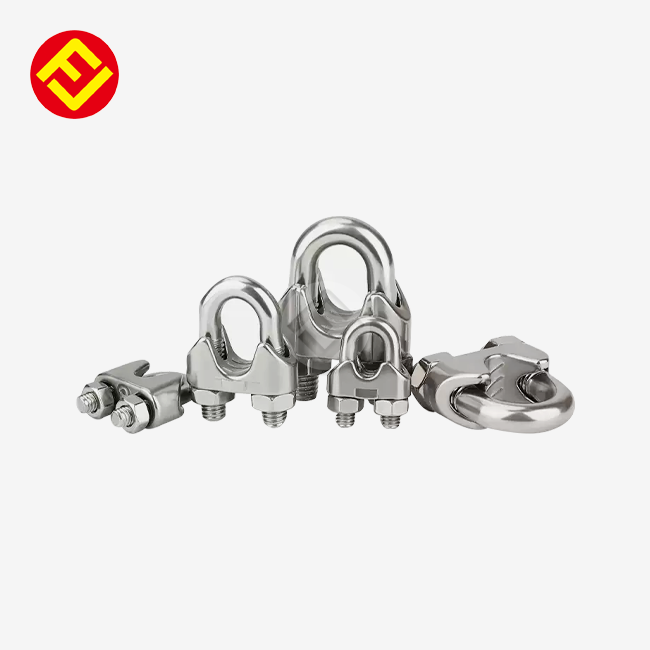
Rigging hardware like stainless rope clamps lock the loose end of a wire rope loop against itself. These wire rope clips or grips produce semi-permanent terminations for static load applications in maritime engineering, architectural tensile constructions, and industrial installations, unlike temporary binding methods.
Definition and Core Functionality
The standard structure includes a U-bolt around the wire rope, a forged saddle on the load-bearing part, and two heavy-duty nuts that compress the assembly. This design eliminates tension cable slippage using a mechanical grip. The saddle's grooved radius matches the wire rope diameter, evenly dispersing pressure to avoid crushing wire strands, a typical failure spot in poorly made alternatives.
Why OEM Production Matters for Distributors
Distributors benefit from OEM production over generic catalog items. Manufacturers with their own facilities oversee raw material sourcing, precise casting, and quality assurance. Vertical integration allows for stricter dimensional tolerances, traceable material certificates, and custom size demands, including for components such as a stainless rope clamp. Our nearly four decades of manufacturing experience allow FLA Industrial & Trading Co., Ltd. to supply custom special-shaped parts that typical vendors cannot make, meeting unique project needs that differentiate your product offerings.
Growing Market Applications and Demand
The global move toward corrosion-resistant infrastructure has increased stainless steel rigging component demand. To decrease maintenance and increase service life, coastal building, wastewater treatment, and renewable energy projects increasingly use marine-grade materials. Distributors with different SKUs in 304 and 316 grades can exploit possibilities in architectural cable railing systems and offshore platform safety rigging.
How to Choose the Right Stainless Rope Clamp for Your Business Needs
Match technical standards to application settings and load requirements when choosing stainless rope clamp hardware. Procurement affects current costs and long-term consumer satisfaction.
Material Grade Selection: 304 vs. 316 Stainless Steel
Grade 304 stainless steel has 18% chromium and 8% nickel, making it corrosion-resistant for indoor and mild outdoor rain situations. This alloy is suitable for non-coastal building and architecture. Grade 316 has 2-3% molybdenum, greatly reducing chloride pitting and crevice corrosion. Chemical processing industries, coastal infrastructure, and marine habitats require this grade. Distributors should supply both alternatives to match client needs and educate end-users about 316-grade component performance differences that warrant the cost.
Load Capacity and Safety Factor Considerations
When correctly fitted, stainless rope clamps achieve 80-90% of the rope's minimal breaking load. Sizing, number per connection, and installation style affect termination efficiency. The average 3mm to 6mm rope needs three clamps positioned six rope diameters apart. Eight- to 19-mm ropes need four clamps. Understanding these specs helps distributors advise clients on safe rigging and avoid responsibility for underspecified gear.
Evaluating Supplier Credibility and Certification
ISO9001 and CE certificates show firms follow European safety requirements and quality management systems. These certifications matter when supplying contractors for certified materials documentation projects. Beyond paper certificates, check production: precise casting and forging produce better saddle shape than stamping. Machine and polishing procedures emphasize surface finish quality, which affects attractiveness and corrosion resistance.
OEM Stainless Rope Clamp Production Process and Quality Assurance
Reliable stainless rope clamps are made well, unlike components that break under pressure or environmental stress. Knowing production routines helps distributors assess vendors.
Marine-Grade Material Selection and Verification
Quality starts with recognized raw materials. Quality OEMs buy stainless steel from mills that examine chemical composition, tensile strength, and yield. This paperwork provides raw material-to-finished product traceability, essential for compliance verification tasks. FLA Industrial & Trading Co., Ltd.'s quality management system oversees incoming material inspection to final product assessment, assuring reliable performance.
Precision Manufacturing Techniques
Precision casting or forging gives the saddle component of a stainless rope clamp its complicated curved form to fit wire rope diameter. Forging generates denser grain structure and improved mechanical qualities, whereas casting produces complicated forms and varied sizes at low cost. CNC machining improves thread quality, saddle groove radius, and U-bolt curvature. Precision fitting maximises clamping force distribution and minimises stress concentrations that might cause fatigue cracks.
Rigorous Testing and Load Verification
Each manufacturing batch is proof-loaded to ensure mechanical performance meets or exceeds specs. This destructive sampling tensions assemblies to design loads and measures slip and deformation. Tests for corrosion resistance expose samples to salt spray to verify surface passivation. Dimensional examination using calibrated gauges confirms saddle groove radius, thread pitch, and U-bolt spacing specifications. These quality checks provide demanding B2B clients confidence when choosing crucial application components.
Customization Capabilities That Differentiate Your Offerings
Standard catalog sizes work for many tasks, but many require specific dimensions or performance. OEMs with engineering help may create custom wire rope diameter, load rating, and environmental criteria. Electrolytic polishing improves corrosion resistance beyond passivation. Distributors boost brand awareness with private labeling and specialized packaging. Our 3D designers visualise unique solutions before manufacturing to ensure they suit your exact needs.
Advantages of Partnering With a Trusted OEM Manufacturer for Stainless Rope Clamps
Strategic stainless rope clamp supplier partnerships offer benefits beyond transactional pricing. Operating benefits from long-term cooperation with established manufacturers boost competitiveness.
Enhanced Supply Chain Reliability
Manufacturers with their own factories can adapt to demand changes better than wholesalers. Direct partnerships reduce communication delays and markup layers, reducing lead times and costs. Manufacturers may meet delivery timelines for small trial orders and huge project volumes with scaled production. Established producers have inventory buffers and production scheduling flexibility for 10 pieces for a particular use or 10,000 units for a big building project.
Superior Quality Control Compared to Third-Party Brands
Trading company Products" target="_blank" style="color:blue" >products generally have several handling points, reducing quality control. Direct manufacturing interactions reveal production and quality systems, such as with our stainless rope clamp. Product claims are supported by material certificates, inspection records, and test results. Customers find this material essential for compliance verification and field performance questions. With regular audits and ongoing improvement, our ISO-certified production procedures guarantee quality from start to finish.
Technical Support Throughout the Product Lifecycle
Experienced manufacturers assist distributors specify customer application solutions with engineering consultancy. This covers material selection, load calculation, and installation technique advice. Direct manufacturer access speeds field problem solving. Technical documents including installation guidelines, torque specs, and maintenance tips identify qualified distributors from box-movers.
Flexible Pricing Models for Volume Commitments
Manufacturers improve production scheduling and raw material purchases with long-term supply agreements and consistent volume commitments. Efficient pricing structures boost distributor profits while retaining market competitiveness. Tiered pricing with quarterly or yearly commitments gives both parties stability. Distributors investing in inventory and market growth can defend their markets with exclusive distribution partnerships in limited territory.
Installation, Maintenance, and Safety Best Practices for Stainless Rope Clamps
Proper stainless rope clamp application methods affect performance and safety. Installation assistance from distributors boosts consumer confidence and reduces callbacks.
Step-by-Step Installation Protocol
Installers are reminded to "never saddle a dead horse" and place the saddle on the load-bearing rope segment and the U-bolt around the cut end. This reversed position diminishes grip effectiveness by 40% and destroys the live wire. Thread wire rope through the first clamp six rope diameters from the eye loop to start installation. Line up clamps six-diameter apart along the standing rope. Avoid crushing wire strands by uniformly tightening nuts in a star pattern to torque standards. Wire rope shrinks under strain, diminishing clamp grip, hence most installations require retightening following load application.
Preventing Common Installation Errors
The most common installation error is under-tightening, enabling rope slippage under stress. However, severe torque destroys wire strands, weakening ropes. Insufficient clamps for rope diameter reduce safety. Different clamp sizes on one termination cause unequal load distribution. Thread anti-seize lubricant avoids galling, a typical problem with stainless steel fasteners, and makes adjustments easier.
Maintenance Practices Extending Service Life
Regular inspections should ensure nuts are snug and not loosening, including on stainless rope clamp components. Visual inspection shows corrosion patterns indicating material grade mismatch with environment. Even 304 grade stainless steel in maritime conditions can acquire "tea staining"—brown discoloration suggesting contamination—in coastal installations. Cosmetic issues imply rapid deterioration but don't always jeopardize structural integrity. Addressing these issues early reduces component-weakening pitting corrosion. After settling, tightening needs reduce, but key applications should be inspected annually.
Load Capacity Guidelines and Safety Standards
Standard DIN 741 commercial clamps are for static man lines, guard rails, and retention, not overhead lifting or personnel suspension. Forged clips with EN 13411-5 safety factors are needed for critical loads. Working load limitations are 20-25% of breaking strength to accommodate for dynamic loading, environmental deterioration, and installation factors. Distributors should clarify these characteristics to avoid misapplication outside product design boundaries.
Conclusion
OEM stainless rope clamp manufacture gives hardware wholesalers a competitive edge via product quality, customizing flexibility, and technical support. Knowing material grade, load capacity, and installation methodologies makes distributors partners, not commodity vendors. Manufacturing with established OEMs ensures supply chain stability, quality, and affordability for sustainable business development. Distributors with extensive product expertise and supplier relationships capitalize on infrastructure projects' corrosion-resistant material requirements in construction, marine, and industrial sectors.
FAQ
1. What distinguishes 304 from 316 stainless steel rope clamps in practical applications?
316 metal resists chloride-induced pitting and crevice corrosion due to its molybdenum concentration. To avoid failure, coastal, marine, and chemical processing plants need 316 grade. Grade 304 stainless rope clamps are suitable for indoor and outdoor use in rain and humidity. In severe situations where replacement costs exceed initial savings, performance justifies the material premium.
2. How do I verify that OEM clamps meet certified load capacity ratings?
Material test results should establish stainless rope clamp grade composition and mechanical qualities. Check manufacturer ISO9001 and CE compliance certificates. Reliable manufacturers give sample batch load test data. These papers promote project specification compliance and responsibility.
3. Can OEM manufacturers accommodate custom sizing and packaging requirements?
Established producers with technical capability create custom stainless rope clamp diameter and load parameters. Private labeling, customized packaging, and bulk volumes for distributor inventory systems are typical. Technical needs must be communicated during quote to guarantee proper specification development.
Partner With FLA Industrial & Trading Co., Ltd. for Reliable Stainless Rope Clamp Supply
FLA Industrial & Trading Co., Ltd. offers reliable stainless rope clamps to distributors. Our over 40 years of hardware tool and rigging component manufacturing experience means unequaled customization, quality, and technical assistance throughout your procurement journey. Our staff assures ISO9001 and CE-certified marine-grade components from design to volume manufacture and timely delivery. We provide affordable wholesale pricing to Fortune Global 500 partners and distributors in the US, Germany, and Australia. sales@flaindustrial.com will help you discuss your needs, request product samples, and explore bulk pricing possibilities to boost your market position.
References
1. American Society of Mechanical Engineers. (2019). Wire Rope Termination Standards and Safety Guidelines. ASME Press.
2. British Standards Institution. (2018). EN 13411-5: Terminations for Steel Wire Ropes – Safety Requirements. BSI Standards Publication.
3. Deutsches Institut für Normung. (2020). DIN 741: Wire Rope Clips for General Applications. Beuth Verlag GmbH.
4. International Organization for Standardization. (2017). ISO 9001:2015 Quality Management Systems – Requirements. ISO Central Secretariat.
5. Marine Technology Society. (2021). Corrosion Resistance of Stainless Steel Alloys in Marine Environments. MTS Journal of Ocean Engineering, Volume 46, Issue 3.
6. Wire Rope Technical Board. (2020). Wire Rope Users' Manual: Fourth Edition. Wire Rope Technical Board Publications.