How to Use Wire Rope Clips?
2026-04-20 16:29:57


To use wire rope clips properly, you must first understand what they're for: they hold the loose end of a wire rope back to itself to make a strong loop. Through the right placement and application of force, a stainless rope clamp made up of a U-bolt, saddle, and two nuts makes this link. The saddle should always be on the load-bearing side of the rope and the U-bolt should go over the cut end. This makes the grip work better and keeps the rope from getting damaged. The width of the rope determines how many clips are needed. For most uses, three to five clips spread properly along the rope are enough. It's important to tighten again after the first load because wire rope contracts under load, so the force needs to be changed to keep the links safe in naval, building, and industrial settings.

Understanding Wire Rope Clips and Stainless Steel Rope Clamps
What Are Wire Rope Clips?
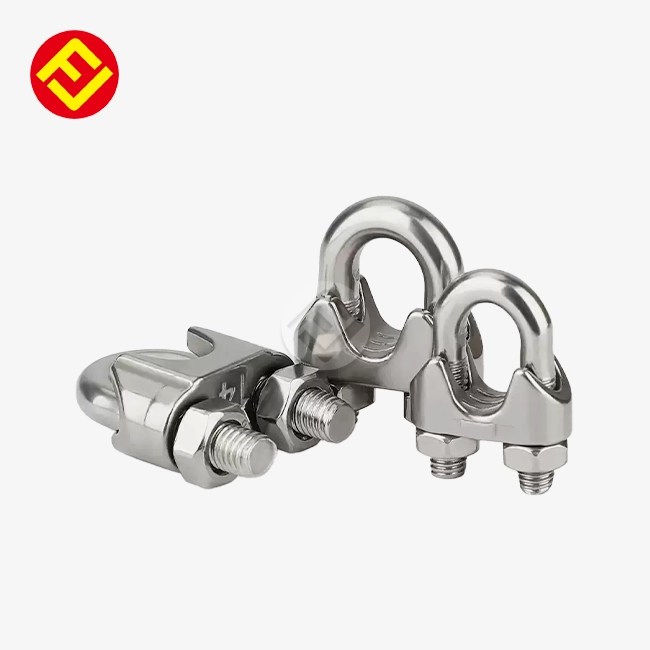
As mechanical fasteners, wire rope clips hold the ends of wire rope together by making strong loops or eyes. There are three main parts to the construction: a U-shaped bolt, a saddle bridge, and two threaded nuts. When placed correctly, these parts work together to clamp the wire rope tightly, making a strong end point that can handle heavy loads. Straight wire rope can be turned into useful construction equipment with the clips. This equipment can lift, pull, or support structure elements.
The tech behind these gadgets that look easy is more complex than they seem. To spread pressure evenly around the rope's length, the bent surface of the saddle must exactly match the width of the rope. The U-bolt needs to be made of a material that won't bend when torqued but is still bendable enough to bend around the rope. Both bolts and nuts must have threads that don't seize up when they are exposed to weather, salt spray, or chemical atmospheres.
Types of Wire Rope Clips
Standard U-bolt clips have a machined or cast base and a separate U-bolt. They are the most popular type. These clips are good for general building and industry uses where saving money is important. Using two saddle pieces instead of one gives double saddle clips a better grip, and since both sides are the same, there is no chance of installing them incorrectly. This approach is especially helpful when assembly teams have people with different levels of experience.
Instead of screw bolts, swage-type clips make lasting links by compressing the material. They need special hydraulic tools, but they make the strongest connections—often close to 90% of the wire rope's breaking strength. Some speciality clamps are made for specific industries. For example, single-saddle versions are used in building setups where looks are just as important as function.
Why Stainless Steel Stands Out?
Marine and acidic environment markets are dominated by stainless steel grades 304 and 316. This is because the chromium in these grades forms an inactive oxide layer that stops rust from forming. There is 18% chromium and 8% nickel in Grade 304, which makes it very resistant to rust and good for outdoor building and light industry use. Grade 316 adds 2 to 3 percent molybdenum to the metal, which makes it much more resistant to chlorides, sulphates, and marine conditions. Because of this, 316-grade stainless rope clamps are necessary for building ships, underwater platforms, and structures along the coast.
Besides not rusting, stainless steel clips keep their mechanical qualities over a wide temperature range, from -40°C to +200°C, without breaking or losing their ability to stretch. Because the material isn't magnetic, it can also be used in places where metal contamination needs to be avoided. The bright shiny finish is not only nice to look at in architecture settings, but it also makes the surface less likely to get dirty than harder finishes.
When judging stainless steel clips, the way they were made is very important. Forging makes the grain structure stronger so that higher load rates can be achieved, while precision casting makes sure that the saddle shape is the same from batch to batch. The last steps, machining and finishing, make sure that the dimensions and quality of the surface are correct, which has a direct effect on how well it works and how long it lasts. These high-tech ways of making things, like precision casting, forging, cutting, and polishing, are used by FLA Industrial & Trading Co., Ltd. to make clips that meet ISO9001 and CE certification standards.
Because of these features, stainless steel clamp are the best choice when project requirements call for dependability over long periods of time. When compared to galvanised or carbon steel options, the initial investment in high-quality stainless gear pays off through fewer maintenance cycles, fewer surprising breakdowns, and longer operating life.
How to Properly Use and Install Wire Rope Clips?
Essential Pre-Installation Considerations
Before you start installing, make sure that the size of the clip fits the thickness of the wire rope perfectly. Using clips that are too big makes it harder to hold on, and using clips that are too small damages the rope's wire strands by compressing them too much. Check the manufacturer's information to see how much weight each clip can hold, and make sure it meets or exceeds the needs of your application. The clip you choose is also affected by the climate. For example, marine uses need 316-grade stainless steel, while light indoor or outdoor settings may be able to handle 304-grade material.
Step-by-Step Installation Process
Getting the Wire Rope Ready: To start, shape the rope into the loop size you want, making sure the tail is long enough to fit the number of clips you need. According to industry guidelines, the tail must be at least six rope diameters longer than the last clip. Get rid of any grease, dirt, or rust that might make it harder for the saddle and rope to grip by cleaning the surface of the rope where the clips will go.
Putting the First Clip in Place: Place the first clip one rope diameter away from the thimble or anchor point on the loop. Remember the important rule: "Never saddle a dead horse." The U-bolt should go over the dead end of the rope and the saddle should always rest on the living (load-bearing) side of the rope. If you change this direction, the load-bearing strands get crushed, which can lower the connection's strength by 40% or more.
Adding More Clips: Place the next clips evenly along the length of the rope, leaving about six rope diameters of space between each clip. For most uses of 8–19 mm rope, you need at least three or four clips to make sure the load is safe. Smaller ropes might only need two or three clips, but bigger ropes need five or more. For the best touch, the saddle on each clip must line up with the lay direction of the rope.
Torque: Tighten the nuts on all of the clips one at a time, starting with the clip closest to the loop and working your way back to the end. Turn the power on in steps instead of fully tightening each clip one at a time. This gradual tightening makes sure that the load is spread out evenly. To reach the torque values recommended by the maker, which are usually between 15 and 60 foot-pounds, use torque tools that have been properly measured. When you under-tighten, the rope can move, but when you over-tighten, the rope strands get crushed and the wire core gets damaged.
Critical Installation Mistakes to Avoid
The most common fitting mistake is still having the saddle facing the wrong way. This is usually because the installer wasn't trained properly or the markings on the clip weren't clear. To keep things clear, good makers stamp "This Side Up" or something similar on seats. Another common mistake is using too few clips. Using only two clips when four are needed might seem fine at first, but it causes the clips to slip under changing loads.
Too much tightening is a minor problem that doesn't show up right away. Too much twisting changes the cross-section of the rope from a circle to an oval, which puts more stress on a smaller number of wire strands. This secret damage lowers the rope's breaking strength and speeds up the wear and tear process. On the other hand, not enough force lets the rope move around inside the clips during load cycling. This wears down the outer wires and gradually loosens the connection.
Post-Installation Inspection and Retightening
When wire rope clip clamp is first loaded, it gets compressed as the individual wire strands settle into their best places. This is called "constructional stretch," and it makes the width of the rope go down a little, leaving spaces between the rope and the seat. Plan to fix all the clips again after the first big load cycle of the assembly, which should happen within 24 hours of installation or after the first shift. Check the torque numbers and make any necessary changes to keep the grip right.
How often you check depends on how bad the program is. Cranes and other lifting equipment need to be checked before every shift, but static guy wires may only need to be checked once a month. Check to see if the clips have changed shape, if the rope is moving inside the clips, or if the screws have signs of rust. Any movement of the rope in relation to the clips means that there isn't enough force or clips, and this needs to be fixed right away.
How to Choose the Right Stainless Rope Clamp for Your Needs?
Rope Diameter and Clip Sizing
The most basic selection criteria is matching the clip size to the width of the rope. Manufacturers list ranges of rope diameters that work with each clip size. These ranges usually cover a spread of 2 to 3 mm. Always choose clips that are in the middle of the range they give you, never ones that are at either end. A clip that is recommended for 10–12 mm rope works best with 11 mm rope and might not work as well with 10 or 12 mm rope.
It's more important than most people think to get the thickness of the rope right. Due to manufacturing errors and not being compressed, new rope is a little bigger than its official size. After working loads have squished the wire strands together, used rope may not measure as long as new rope. Take measurements at several points along the length of the line, and then use the mean number to choose which clip to use. Callipers are better for taking measurements than tape measures, especially for ropes with a smaller thickness.
Load Capacity Requirements
Working Load Limit is the most weight that a fully fitted rope system should be able to hold in normal use. This number includes safety factors, which are usually 5:1 for rope and similar ratios for clips that are placed correctly. The functional WLL of the system is the lower number of the line capacity and the link capacity. When four clips are properly placed on 12mm rope, the link efficiency could be 80%. This means that the assembly's effective WLL is equal to 80% of the rope's maximum capacity.
For dynamic loads like shock loads, moving motions, or fast acceleration, you need to use more safety factors than just static load estimates. To account for dynamic effects, design factors of 1.5 to 2.0 are usually used for cranes and other lifting uses. This means that a piece of equipment that can hold 2,000 kg should not be used to lift more than 1,000 to 13,333 kg. Talking to experienced rope engineers will make sure that the clips you choose and the number of them you use meet both safety rules and operating needs.
Environmental Exposure Assessment
316-grade stainless steel is the base standard for marine and seaside systems. 316 metal is much more resistant to chloride pitting and crevice corrosion than 304-grade material because it has a lot more molybdenum in it. If winds are blowing from the ocean, salty air can reach sites that are several miles inland. For this reason, 316-grade specifications are recommended for any job in a coastal area.
Chemical exposure needs a thorough study of how well the materials will work together. Strong oxidising acids, such as nitric acid, can damage the chromium oxide layer, but most common chemicals can't damage 316 stainless steel. Hydrochloric acid and other reducing acids can make holes in stainless steel. Check chemical compatibility charts for different types of stainless steel and make sure the material you choose is compatible with what the chemical maker says.
When you change the temperature, you create thermal stress that can cause galling, which is a type of sticky wear where stainless steel clamp threads stick together. In high-temperature settings, this problem can't happen if anti-seize oil is used during fitting. In places with low temperatures, it's important to make sure that the grade of stainless steel stays tough. Most 304 and 316 grades work well up to -40°C, but for even colder conditions, you may need special grades.
Evaluating Suppliers and Certification
Having ISO9001 approval means that a company has written quality control systems that cover the planning, production, and testing processes. While this approval doesn't directly promise product quality, it does make sure that the whole production process is consistent and can be tracked. The CE mark shows that a product meets European safety and performance standards. This is important for goods sold outside of Europe because it shows that the product was tested according to recognised standards.
Material approvals show the exact chemical make-up and mechanical properties of each production batch. If you ask, reputable sellers will give you these certificates, which are usually called "mill test reports" or "material test certificates." They let you check on your own that the clips were made from real 304 or 316 stainless steel and not cheaper alternatives. Due to the high number of fake goods in global supply lines, this paperwork is necessary for important uses.
Sample clips from each production batch met the minimum strength standards, as shown by evidence of load tests. Destructive testing doesn't test every clip, but random sampling gives you faith that the whole batch meets the requirements. Good makers do these tests on a regular basis and keep records that customers can look at.
Bulk Procurement Strategies
When you buy in bulk, you can usually get better prices, but buying teams have to weigh the cost saves against the costs of keeping stockpiles and the chance that the goods will become obsolete. Setting up blanket buy orders with planned releases protects prices and keeps just-in-time delivery going, which reduces the need for warehouse space. This method works really well for normal sizes that are used over and over again in different projects.
When normal clips don't work for a certain purpose, custom specs may be needed. FLA Industrial & Trading Co., Ltd. specialises in making unique parts with strange shapes and sizes that regular manufacturers can't make. This includes changes to the structure as well as parts with odd dimensions. The engineering team helps with projects from the first stages of design development all the way through 3D design proof and production optimisation. During manufacturing, they keep everyone up to date on the progress in real time. Custom tooling costs usually spread out over orders of 500 to 1000 pieces, which means that customisation is a good option for big projects or yearly needs.
Supply deals that last more than one year protect the supply chain and keep prices stable. This is especially helpful when the prices of raw materials change a lot. These contracts usually include promises from both parties, with the buyer promising a certain amount of goods and the seller reserving space. This is good for both parties and keeps the relationship stable. Including yearly price changes that are linked to public metal indices saves both parties from changes in the market and keeps planning reliable.
Conclusion
Stainless rope clamp are essential for holding things together in building, naval, industrial, and design settings where safe operations and project success depend on reliable wire rope ties. Stainless steel types, especially 316-grade metals, are better at resisting rust and performing mechanically in harsh conditions where other materials would break down quickly. The best performance is guaranteed by choosing the right one based on the rope width, the load needs, and the surroundings. The strongest connections are made by following the "never saddle a dead horse" rule during installation. Regular inspections, keeping the right power levels, and protecting the environment all add to the service life and make sure that safety standards are met. By knowing the differences between clip types and comparing them to other ways of fixing things, you can make smart purchasing choices that balance the need for performance with the ability to spend. Quality suppliers have been making things for almost 40 years and can customise their Products" target="_blank" style="color:blue" >products in a wide range of ways. They also offer the expert help and product range that different industries need.
FAQ
After taking off stainless steel rope clamps, can they be used again?
Technically, stainless rope clamps can be used again after being taken off, but this is usually not a good idea in safety-critical situations. The safe link is made when the U-bolt threads and saddle contact areas bend plastically during installation and service. This deformation pattern is thrown off when clips are taken off, and even with the right amount of power, reinstalling the clips may not have the same gripping force. If you have to use the clips again, make sure they are free of cracks, damaged threads, and warping. To account for possible strength loss, use new torque numbers and lower the working load limit of the unit by at least 25%. For situations involving protecting people or expensive equipment, putting new clips is a much better way to reduce risk than trying to reuse them.
How many clips should be used for different sizes of rope?
The thickness of the wire rope and the type of application determine how many clips are needed. Ropes that are 3 to 6 mm wide usually need at least three clips to connect them, which is enough for light-duty uses. Medium-sized lines with a width of 8–19 mm need four clips to join 75–80% of the time, which is good enough for most commercial uses. For large diameter ropes bigger than 20 mm, it usually takes five or more clips to make the grip strong enough. These amounts are based on static or low loading conditions. For dynamic uses with shock loads or fast spinning, you may need more clips than what is normally suggested. Always follow the fitting instructions that came with your clip type from the maker and make sure that the total number meets all safety standards.
Partner with FLA Industrial & Trading Co., Ltd. for Premium Stainless Rope Clamp Solutions
Standard gear isn't enough to secure wire rope links; your projects need approved, thoroughly tested parts backed by decades of production greatness. FLA manufacturing & Trading Co., Ltd. has been specialising in hardware tools and precision fitting solutions for almost 40 years. They work with Fortune Global 500 companies in the marine, building, and manufacturing sectors. Our experience as a stainless rope clamp maker lets us make high-quality clips out of 304 and 316 stainless steel that are made through precise casting, forging, cutting, and polishing.
Get in touch with our technical experts at sales@flaindustrial.com to talk about your unique needs for wire rope fixing. We give you full product details, certifications for the materials, cheap quotes for large orders, and professional advice on how to choose clips that work best in your surroundings and with your load. Find out why top builders, dealers, and industrial businesses in the US, Germany, and Australia trust FLA Industrial to provide them with safety-critical fixing solutions that last and work well.
References
American Society of Mechanical Engineers. "ASME B30.26-2015: Rigging Hardware Standard." New York: ASME Press, 2015.
Wire Rope Technical Board. "Wire Rope Users Manual, 4th Edition." Alexandria: Wire Rope Technical Board, 2005.
International Organization for Standardization. "ISO 4347:2015 - Wire Rope Clamps for Wire Rope Terminations." Geneva: ISO Standards, 2015.
McKenna, H.A., Hearle, J.W.S., and O'Hear, N. "Handbook of Fibre Rope Technology." Cambridge: Woodhead Publishing, 2004.
European Committee for Standardization. "EN 13411-5:2008 - Terminations for Steel Wire Ropes - Part 5: U-bolt Wire Rope Grips." Brussels: CEN Publishing, 2008.
Occupational Safety and Health Administration. "OSHA 1926.251 - Rigging Equipment for Material Handling, Regulations and Compliance Guide." Washington: U.S. Department of Labor, 2021.