What are Grooved Couplings?
2026-04-21 17:08:01


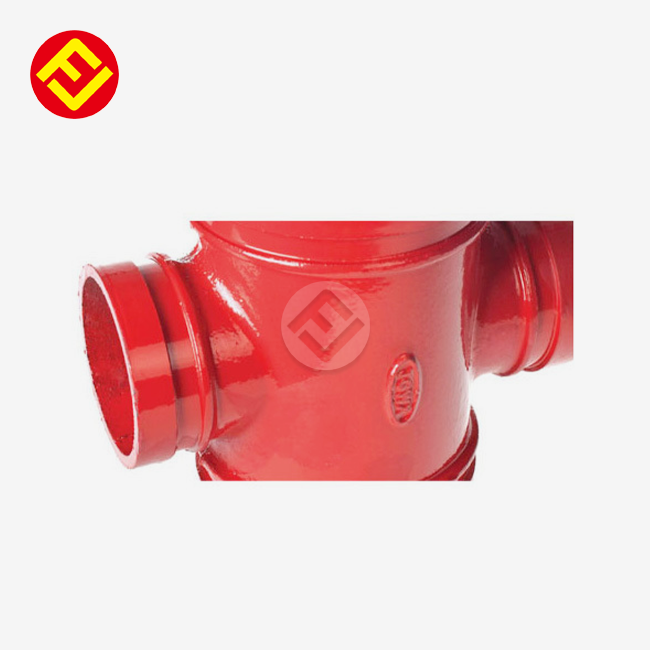
A mechanical pipe connecting method called grooved couplings uses a rolled or cut groove on the pipe end to engage with a housing unit and use a rubber cover to make a leak-tight seal. The coupling grooved system doesn't use fusion joining like standard welding or flanging does. Instead, it uses mechanical contact. This new method gets rid of the dangers of hot work and cuts installation time by a huge amount, making it the best choice for workers and building managers who need to get things done quickly. There are three main parts to the system: the housing pieces, the pressure-responsive seal, and the nuts that hold everything together.


Understanding Grooved Couplings: Definition and Working Principles
How Grooved Pipe Connections Work
Grooved pipe designs are based on simple engineering that works amazingly well. When you put together a grooved joint, the housing keys fit right into the groove shape that was cut or rolled into the ends of the pipes. The gasket between the pipe ends makes a seal that responds to pressure and gets stronger when the system pressure goes up. The pressure of the fluid inside the seal pulls the gasket outward against the groove walls. This strengthens the seal instead of weakening it. This self-energizing behaviour is different from compression fits, which might become loose over time.
We make notched fittings at FLA Industrial & Trading Co., Ltd. using ASTM A536 Grade 65-45-12 ductile iron, which was chosen because it has a minimum tensile strength of 65,000 psi and a minimum yield strength of 45,000 psi. Our goods are carefully measured to make sure that the key sizes and heights meet the manufacturer's requirements. That's why we use Go/No-Go scales as part of our quality control process: even tiny changes can weaken the stability of a joint.
Material Composition and Pressure Ratings
The choice of material has a direct effect on how well and how long something works. Ductile iron housings are great for normal water service and fire protection because they are strong for their weight and easy to machine. Different types of carbon steel are more durable in places with a lot of shaking, like industrial plants and mines. EPDM Grade E rubber is used for water service uses and can withstand temperatures from -30°F to +230°F. Nitrile Grade T rubber is used for oil and fuel services and can withstand temperatures from -20°F to +180°F.
The working pressure values depend on the size of the joint and the weight class of the housing. Standard models can handle up to 300 PSI of working pressure, while heavy-duty models can handle up to 1,000 PSI. These rates meet or go beyond ANSI/AWWA C606 guidelines, which means they will work with city water systems, industrial process pipes, and business HVAC installs. Before sending out production runs, we test them hydrostatically at 1.5 times the maximum working pressure to make sure the body is solid and the bolts can handle being pulled apart.
Groove Formation Methods
There are two main ways to groove: roll grooving and cut grooving. Roll cutting moves metal around without taking away any material, so the original width and strength of the pipe wall are kept. Pipes that are Schedule 10 or Schedule 40 are the best for this method. Specialised hydraulic tools are used in this process to press a slot into the outside of the pipe while holding the inside wall. This makes the shape regular without breaking the pipe.
To make the groove shape, cut grooving removes material. This method is usually only used for Schedule 80 heavy wall pipes or pipes with internal linings where moving the metal could damage the coats. Cut grooving makes the wall a little thinner where the groove is, but as long as the depth is controlled correctly, the strength is still good enough for rating uses. Based on the specs of your pipes and the needs of your system, our expert team can suggest the best cutting method.
Benefits and Applications of Grooved Couplings in Industrial Use
Installation Speed and Labor Efficiency
Costs and finishing dates are directly affected by the amount of time needed for installation of grooved coupling. It takes about five times longer to install grooved mechanical joints than bonded links and twice as long to install flanged systems. With simple hand tools, a two-person crew can make a four-inch curved link in less than five minutes. For big projects with hundreds of links, this efficiency goes up a notch, which means a lot less work and faster building times.
Another big benefit is that hot work permits are no longer needed. Welding in occupied buildings, chemical plants, or factories needs a lot of safety rules, fire watches, and people leaving the area. Grooved systems don't have to follow any of these rules, so they can be installed while the building is still being used or producing things. This feature is especially useful for repair projects that need to keep the building working while they're working on it.
Flexibility and Vibration Dampening
Mechanical pipe systems have to be able to handle different kinds of movement, such as heat expansion, earthquakes, building settlement, and machine shaking. Flexible grooved connections are made with features that let you control both straight movement and rotational bending. The elastic seal bends and expands inside the housing, taking the stress off of solid connections when the housing moves.
At pump release points, chiller connections, and equipment tie-ins, vibrations sent through hard pipes cause downstream parts to fail early and make too much noise. Flexible grooved connections keep vibrations from getting to sensitive equipment and lower the amount of sound that gets through. Because of this feature, separate expansion joints or bendable connections are not needed in many situations. This makes system design easier and cuts down on the number of parts needed.
Industry-Specific Applications
Fire safety devices are where grooved pipe technology is most commonly used. The NFPA 13 rules for fire systems make it clear that grooved mechanical links are acceptable ways to connect. The quick installation makes it possible to quickly set up new buildings, and the ability to take apart joints makes it easy to change or add to the system. UL and FM approval standards make sure that building rules and insurance needs are met all over North America.
Grooved connections are used for heating hot water systems, cooling water circuits, and distributing cold water in HVAC setups. We use painted, epoxy-coated, or hot-dip galvanised treatments that are resistant to rust. These protect against damp and chemical contact that are common in machinery rooms. It is helpful to be able to quickly spin or shift pipes without damaging them during system setup and balance.
More and more, grooved joints are being asked for in transmission mains and distribution lines by municipal water distribution networks. With better leak resistance and the ability to quickly separate parts for repair, system downtime and water loss are cut down. Our goods meet AWWA C606 standards for public water service, which means they are compatible in size and will work reliably across infrastructure projects that last for years.
Conditions are especially tough in mining and slurry activities. Abrasive materials wear pipes unevenly, so they need to be rotated or replaced every so often. Maintenance workers can turn pipe sections 90 degrees during short closing windows thanks to grooved mechanical connections. This spreads out wear patterns and increases the service life. The mechanical lock can handle hydraulic shocks that happen a lot when pumping sludge, where pressure spikes would damage threaded connections.
Installation, Maintenance, and Troubleshooting Guide
Step-by-Step Installation Process
Preparing the groove is the first step in a proper fitting. Whether you use roll or cut shaping, make sure the groove measurements fit the connection requirements. Use the right tools to measure the groove's width, depth, and distance from the pipe end. Get rid of any burrs or sharp edges that could hurt the seal when it's being put together. Clean the gap and the end of the pipe to get rid of any dirt, oil, or other things that could damage the seal.
Place the seal on one end of the pipe for coupling grooved and make sure it fits all the way into the groove. Use a lube that was allowed by the maker on the outside of the gasket. Never use petroleum-based Products" target="_blank" style="color:blue" >products with EPDM gaskets because the chemicals will not work with each other and the gasket will fail early. Place the second pipe in place and make sure the seal covers both holes correctly. Put housing pieces around the pipe so that the keys fit into the holes on both sides.
Put bolts through the lugs on the housing and tighten the nuts by hand until the housing pads touch. Most standard grooved connections are tightened until the bolt pads on two different housing pieces touch fully. This lets you see if the fitting is done right without using torque tools. For high-pressure speciality connectors, torque numbers may be given; check the product literature for these uses.
Maintenance Best Practices
Compared to other ways of joining, grooved mechanical systems don't need as much upkeep. Set up a regular check plan that takes into account how important the system is and how it is being used. Visual inspection can find problems before they become major ones. Make sure that the bolts are still tight and that the pads on the housing pieces are touching properly. Check the outside of the housing for rust, especially in damp places or where insulation keeps water in.
In many cases, you can tell how good a gasket is without taking it apart. Check for signs of extension, which means that the gasket material sticks out past the housing shape. This could mean that the system is under too much pressure or is breaking down due to heat. Small amounts of expansion are normal, but big amounts of warping mean that more research needs to be done. If there is a leak, make sure the connection is fully connected and the nuts are tightened properly before assuming the seal failed.
When the system is drained for winterisation or repair, it can be inspected from the inside. If you can, take apart a fair number of joints to check the state of the gaskets directly. Look for cracks, tension set, or chemical breakdown. Even if there isn't a leak, replace gaskets that are showing a lot of wear and tear. This is because preventative replacement costs a lot less than emergency fixes.
Common Installation Errors and Solutions
The most common assembly mistake is misalignment. If the pipe ends are not lined up correctly, the seal won't fit properly in both holes at the same time. This makes stress collection spots and lowers the performance of the seal. To keep the pipes straight during building, you should always use the right pipe supports and alignment tools. Larger diameter pipes may need to be temporarily braced until the joint is finished.
Many field problems are caused by cutting measurements that are not right. Too narrow grooves keep the housing keys from fully locking, while too deep grooves let the seal overcompress and maybe even come out. If the grooves are too far from the pipe end, they don't connect for long enough, which weakens the joint. Regularly check the cutting tool's accuracy and look at the gap sizes before installing the coupler.
If you use the wrong seal material for the job, it will fail quickly. EPDM seals work great with water but break down quickly with oil. Nitrile gaskets work well with oils, but they can't handle as many temperature changes as EPDM gaskets. Always make sure that the seal works with the fluids and temperatures in the system. For unique or difficult uses, our expert team can help you choose the right seal.
Procurement Insights: How to Source Grooved Couplings for Your Project?
Evaluating Supplier Credentials and Capabilities
Choosing the right supplier has a big effect on the success of a project. Check not only that the product is available, but also that the production and quality processes are up to par. Look for ISO 9001 approval, which shows that quality management methods have been written down. For fire safety purposes, UL and FM approvals are necessary to make sure that goods pass strict testing standards for sprinkler systems.
When you need things quickly, manufacturing ability and store quantity are important for grooved coupling. At FLA Industrial & Trading Co., Ltd., we keep more than 2,000 tonnes of common setups in stock and ready to ship right away. This stash keeps your project plan from getting thrown off by problems in the supply chain. With wait times of 7–15 working days, our production sites can handle unique sizes and non-standard setups. This gives you options without too many delays.
Technical help skills are what set good providers apart from great partners. Can the provider help with the planning of the system design? Do they offer 3D models and thorough plans to help you plan? We give you a lot of detailed information, like pressure grade charts, connection guides, and directions on how to put things. Our tech team answers questions within 24 to 48 hours and helps you make planning and purchasing decisions throughout the whole project.
Understanding Product Specifications and Certifications
Technical catalogues have important information for choosing the right product, but it takes some skill to understand the specs. When you talk about coupling size, you should use the theoretical pipe size, not the real coupling measurements. A 4-inch connection fits a standard 4-inch pipe that has a 4.5-inch outside diameter. Different types of housing weights—rigid vs. bendable vs. lightweight vs. standard—show different pressure values and moving capabilities.
There are both working pressure and test pressure next to the pressure mark. Working pressure is the highest pressure that the system can handle continuously, and test pressure is the pressure that is needed for hydrostatic tests during startup. Always choose joints that can handle more pressure than your system's maximum pressure. This includes surge pressure from water hammer or pump start-up transients.
Certification marks show that the product has been tested and approved by a third party. Products that are listed by UL have been through a lot of fire tests to make sure they work with sprinkler systems. Components that are FM approved meet the standards of Factory Mutual protection. The CE mark shows that a product meets European safety standards, which is important for foreign projects or for overseas businesses that need to make sure all of their facilities are the same.
Pricing Strategies and Negotiation Approaches
The price of a grooved coupling depends on a number of things, such as the type of finish, the number of pieces ordered, and the licensing standards. The least expensive choice is ductile iron housings with painted finishing, which can be used inside where conditions are managed. Hot-dip galvanised treatments are more expensive, but they protect against rust better for outdoor sites or places where corrosion is a problem. The price of epoxy finish is about average, and it has a middling protection to rust.
When you buy in bulk, you save a lot of money, especially on big projects or for wholesalers who serve many customers. We set up number deals to reward customers who commit to buying a lot, and we make sure that the quality of all of our production runs is the same. Our prices are still competitive with foreign options, and you don't have to worry about long shipping times or delays at customs.
Prices are usually higher for custom sizes and setups, but the extra cost is often worth it when standard goods don't meet unique needs. Together with tech teams, we check to see if custom solutions are more valuable than other design methods. Changing the way pipes are routed or using adapter fittings can be cheaper than making unique couplings.
Conclusion
Mechanical pipe systems with coupling grooved have been shown to work well in a wide range of industrial settings. The technology cuts down on project costs by combining quick installation, operating freedom, and long-term dependability. Improvements in material science and industrial methods keep making products better and allowing them to be used in more situations. Grooved joints from FLA Industrial & Trading Co., Ltd. give your projects the longevity and performance they need, whether you're in charge of installing fire protection, improving public infrastructure, or installing pipes for industrial processes. With almost 40 years of experience making things, we can guarantee that every product meets the highest quality standards and comes with full expert support.
FAQ
What determines how much pressure grooved pipe connections can handle?
It depends on the type of material used for the housing, the width of the walls, and the shape of the seal. The structure is made of ductile iron housings that meet ASTM A536 standards. The performance of the seal is controlled by the compression features of the gasket. Standard joints can handle up to 300 PSI of working pressure, while heavy-duty versions can handle up to 1,000 PSI. Always make sure that the value of the connection you choose is higher than the highest system pressure, which includes brief spike pressure.
Can different types of pipes be connected with curved couplings?
Most typical pipe materials are compatible, such as copper, carbon steel, stainless steel, and some plastics. The important thing is that the grooves are the right size. ANSI/AWWA C606 standardises groove shapes to make sure that the sizes are always the same. When joining metals that are not the same, the galvanic corrosion potential should be checked. For some mixtures of materials, you may need isolation seals or dielectric spacers.
How often should I check links that are grooved?
How often a system needs to be inspected depends on how important it is and where it is used. According to the NFPA, fire safety devices should be inspected every year. In tough environments, industrial process pipes should be inspected every three months. During a routine checkup, the contact between the pads is checked, the case is looked for signs of rust, and leaks or seal expansion is looked for. For non-critical equipment, disassembly review should be done every 5 to 10 years.
Partner with FLA Industrial & Trading for Reliable Grooved Coupling Solutions
This is the end of your search for a reliable coupling grooved source. Every product that FLA Industrial & Trading Co., Ltd. sends out is made with nearly forty years of experience making great products. You can choose from painted, epoxy coated, or hot-dip galvanised finishes on our grooved pipe fittings, which are made of high-quality ductile iron and carbon steel. We offer low prices and quick delivery to grocery stores, building companies, and manufacturing sites all over North America. For your future projects, you can email our team at sales@flaindustrial.com to get full product catalogues, technical specs, or bulk prices.
References
American Water Works Association, "ANSI/AWWA C606-17: Grooved and Shouldered Joints," AWWA Standards, 2017.
National Fire Protection Association, "NFPA 13: Standard for the Installation of Sprinkler Systems," NFPA Codes and Standards, 2022 Edition.
ASTM International, "ASTM A536-84: Standard Specification for Ductile Iron Castings," ASTM Material Standards, 2019.
Factory Mutual Research Corporation, "FM Approval Guide: Grooved Pipe Couplings and Fittings," FM Approvals Technical Documentation, 2021.
Mechanical Service Contractors of America, "Grooved Mechanical Piping Systems: Design and Installation Guidelines," MCAA Technical Manual, 2020.
American Society of Mechanical Engineers, "ASME B31.1: Power Piping Code—Grooved Mechanical Joint Requirements," ASME Pressure Piping Standards, 2018.