Mech Grooved Fittings for Modern Mechanical Piping Systems
2026-07-17 11:36:44


Connections for modern industrial pipes need to be fast, reliable, and work well for a long time. Mech Grooved Fittings are a high-tech way to join metal parts together. They were designed to work with modern water, fire safety, and HVAC systems. These fittings don't need to be heated up for installation because they use a cold-formed groove and an elastomeric gasket. They can also handle structural movement and thermal expansion. This method solves important installation problems that contractors and buying teams face when they want to cut labour costs by up to 50% compared to traditional welded or threaded systems. It also keeps the sealing integrity better in harsh operating conditions.

Specification |
||||
| Specification | Size (mm) | L(mm) | H(mm) | Diameter (mm) |
| 33 | 98 | 42 | 54 | |
| 1% | 48 | 114 | 43 | 69 |
| 2 | 60 | 127 | 43 | 82 |
| 2% | 76 | 145 | 44 | 99 |
| 3 | 89 | 159 | 44 | 112 |
| 4 | 108 | 186 | 47 | 133 |
| 4 | 114 | 192 | 47 | 140 |
| 133 | 214 | 48 | 161 | |
| 5 | 140 | 221 | 48 | 167 |
| 6 | 159 | 245 | 49.5 | 189 |
| 6 | 165 | 251 | 49.5 | 195 |
| 6 | 168 | 254 | 49.5 | 198 |
| 8 | 219 | 324 | 59 | 254 |
| 10 | 273-1.6 | 416 | 61 | 316 |
| 10 | 273-2.5 | 416 | 62 | 317 |
| 12 | 325-1.6 | 467 | 61 | 370 |
| 12 | 325-2.5 | 469 | 62 | 372 |
Understanding Mech Grooved Fittings: Functionality, Types, and Specifications
How Grooved Coupling Systems Work
At each end of the pipe, there is a perfectly machined or rolled groove that holds the link together. When the housing pieces clamp around these grooves, they make a strong mechanical link with the pipe's outside diameter. There is a pressure-responsive gasket between the housing and the pipe. This gasket is usually EPDM for water uses or Nitrile for petroleum-based fluids. When internal pressure rises, it expands against the pipe walls, making the bond stronger as system demands rise. Grooved technology is different from static seal methods that might fail when pressure changes because it can self-energize.
Common Fitting Configurations and Material Selection
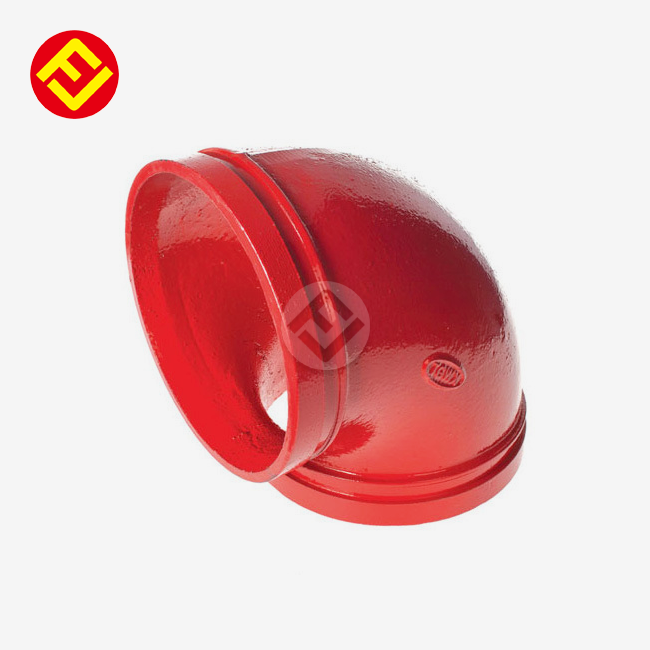
There are several important parts that make up mechanical grooved systems that meet different piping layout needs. Rigid couplings connect straight pipe runs where movement at an angle is not allowed, like when connecting equipment or installing valves. Flexible connections allow controlled angle bending and linear pipe movement, which is very useful in areas prone to earthquakes or where temperatures change quickly. Elbows, tees, reducers, and caps made from ductile iron that meets ASTM A536 Grade 65-45-12 have a tensile strength of more than 65,000 psi and are much more resistant to impact than grey iron alternatives. Carbon steel choices work well in high-pressure situations, and different surface treatments, like epoxy coating and hot-dip galvanising, protect against corrosive environments in places like chemical plants and seaside sites.
Critical Specifications for Procurement Decisions
When purchasing grooved fittings, buying managers should check a number of technical factors that have a direct effect on how well the system works and how reliable it is in the long run. Pressure ratings usually range from 300 PSI for standard configurations to 500 PSI for specialised uses. During manufacturing quality assurance protocols, hydrostatic testing is done at 150% of the rated working pressure. Standard EPDM gaskets can handle temperatures from -20°F to 230°F, but silicone compounds can handle temperatures higher for some industrial processes. Accuracy in the dimensions is also very important. The groove's width, depth, and diameter must all meet ANSI/AWWA C606 standards to make sure the shell fits properly and the seal compresses properly. Certifications like ISO9001, CE marking, and UL/FM ratings for fire protection use third-party confirmation that goods meet international safety and performance standards needed for insurance and government approval.
Installation, Maintenance, and Performance Optimization
Step-by-Step Installation Best Practices
How well a system is installed has a direct effect on how well it works and how long it lasts. Once the pipe is cut to the correct length and any burrs that could damage gaskets are removed, the groove is created by either roll-grooving thin-wall pipe or cut-grooving heavy-wall pipe for Mech Grooved Fittings. Once the groove dimensions are confirmed, lubricate the gaskets with compounds approved by the manufacturer before placing them over the pipe ends. Before installing and hand-tightening bolts in a cross-pattern sequence, slide housing segments over the gasket assembly to ensure that the key is properly aligned in the groove. The most important part of the verification process is confirming that the bolt pads fully contact each other. This "pad-to-pad" confirmation shows that the torque and gasket compression are correct. Mech Grooved Fittings installations are three times faster than welded connections, which require experienced welders and strict fire watch procedures. This means that hot work permits and project delays can often be avoided.
Routine Maintenance and Longevity Strategies
Grooved systems naturally work as unions at every joint, which makes it easier to check without taking whole pieces of pipe apart. Every three months, the housing should be visually checked to make sure it is still in good shape. Corrosion, deformation, or gasket extrusion could be signs of bad installation or pressure spikes. Every year, the exposed sides of the gasket need to be checked for cracks, hardening, or chemical breakdown. If any of these things happen, it may be time to change the gasket, even though it should last for 50 years if it is used according to the manufacturer's instructions. Because grooved connections are modular, it's easier to replace parts during maintenance windows because you can just swap out a single fitting without having to shut down the whole system. When compared to cutting out welded parts or taking apart multiple flanged joints to get to a single problematic connection, this ease of access saves repair workers time and keeps production running smoothly.
System Efficiency and Operational Benefits
When installed and maintained correctly, Mech Grooved Fittings make a significant difference in the overall performance of mechanical systems. Compared with threaded fittings that have rough internal pathways, precision-cast elbows and tees provide smooth internal profiles that reduce turbulence and pressure losses. Flexible couplings can isolate vibrations, protecting pump seals and mechanical equipment from harmful harmonic resonance that may occur in rigidly connected systems. During hydraulic transient events, such as water hammer conditions that create pressure spikes capable of damaging rigid pipes, the controlled movement provided by flexible couplings releases shock energy instead of transferring excessive force to equipment connections. These performance advantages extend beyond theoretical benefits. Case studies from mining operations show that replacing welded systems with grooved solutions in abrasive slurry applications, where pipe misalignment previously caused premature joint failures, resulted in a 40% reduction in unplanned maintenance. Mech Grooved Fittings contribute to these improvements by providing reliable connections that support long-term system efficiency and durability.

Comparative Analysis: Mech Grooved Fittings vs. Other Fitting Technologies
Design Philosophy and Installation Complexity
Traditional welded connections make joints that are permanent and rigid. They need skilled workers, materials that need to be replaced often, and a lot of quality control steps, such as radiographic testing for important uses. Flanged systems allow for easy disassembly, but they need exact pipe alignment, knowledge of how to choose the right gasket, and knowledge of how much force to apply to bolts in different temperature and pressure situations. Grooved coupling technology is a unique middle ground. It offers mechanical strength similar to welded connections while keeping the service accessibility of flanged systems. However, it takes a lot less time to install than either of the other options. Getting rid of threading machines, welding machines, and specialised alignment tools simplifies procedures on the job site and lowers the cost of capital equipment. This is especially helpful for contractors who are handling multiple projects at the same time in different parts of the world.
Durability Considerations Across Operating Conditions
Long-term studies of results show that different applications have different benefits. Welded joints should last forever if they are welded correctly, but the quality of the weld in the field depends on the skill of the welder and the conditions of the environment. For example, moisture, wind, and extreme temperatures during installation can weaken the weld in ways that aren't obvious at first glance. Flanged connections use gasket materials that break down over time. This is especially true in heat cycling situations where bolt tension relaxing causes leaks that need to be fixed on a regular basis. Grooved systems work consistently in a range of situations because the self-energizing gasket design can handle small differences in installation. Ductile iron housings can handle shocks and vibrations that could damage grey iron flanges. Field data from municipal water systems that work in freeze-thaw climates shows that grooved connections keep the seal strong through hundreds of thermal cycles, while traditional jointing methods would need to have the flanges retightened or the gaskets replaced.
Lifecycle Cost Analysis for Strategic Procurement
Mech Grooved Fittings usually have material costs that are between welded and flanged choices at first. However, the total ownership costs change significantly when installation labour, upkeep ease, and the ability to change the system are taken into account. A comparison of two methods of installing a 1,000-foot industrial cold water loop shows that grooved systems finish in about 60% of the time it takes for welding. This means that a lot of time is saved, which often outweighs the difference in the cost of the materials. When thinking about future changes, the value proposition gets even stronger. Adding branch connections or changing layouts only requires releasing housing bolts instead of cutting pipe and rewelding, which cuts modification costs by 70% and gets rid of the need to shut down production for hot work procedures in occupied facilities. Warranty policies from well-known companies that offer 10-year performance guarantees on grooved Products" target="_blank" style="color:blue" >products reduce risk in a way that isn't possible with field-fabricated welded connections, where the warranty responsibility isn't clear between pipe suppliers, welding contractors, and system designers.
Procurement Insights for Global B2B Clients
Supplier Selection and Certification Verification
In addition to price comparison, there are a few other important things you need to look at when looking for grooved fitting suppliers. Authorised manufacturers should show that they have an ISO9001 quality management system certification. This shows that they follow written procedures for getting materials, making products, and inspecting them at the end. UL and FM listings make sure that parts of fire protection systems meet strict safety standards set by insurance companies and building rules. Instead of believing general certification claims, check that listing numbers match product literature. Ask for test results on the material that say the tensile qualities meet ASTM standards and the ductile iron nodularity is greater than 90%. If the metallurgy isn't up to par, the material will break into brittle pieces when it's shocked. The manufacturing skills of the supplier are very important. For example, facilities with spectrographic analysis equipment, hydrostatic test stands, and coordinate measuring machines show a commitment to quality assurance compared to operations that only use visual inspection and spot-checking protocols.
Navigating International Logistics and Compliance
When buying grooved fittings from manufacturers around the world, there are logistics to think about that affect both the total cost and the time it takes to complete the project. When buying a lot of different SKUs, container optimisation becomes very important. Mixing different fitting types, sizes, and finishes within packages saves the most on freight costs, but the seller needs to be able to handle their inventory well so they can combine orders without having to wait longer for delivery. Customs classification based on HTS codes determines duty rates and the level of regulatory scrutiny. Clearance delays that affect project schedules can be avoided by providing the right paperwork, such as material certifications and country-of-origin declarations. Established suppliers with experience in international markets offer pre-shipment inspection services, which let a third party check the quantity, specifications, and integrity of the packaging before it goes through the ocean. This quality gate is especially useful for large orders, since defects in a container load would otherwise mean expensive return shipments and project delays that last months instead of weeks.
Negotiation Strategies and After-Sales Considerations
When negotiating prices for grooved fittings, it's important to think about more than just lowering the unit cost. You should also think about the total value of the package. Tooling investments for custom configurations are justified by volume commitment schedules across multiple projects. This could lead to cost savings of 15-20% compared to standard catalogue prices while maintaining consistent dimensions across production runs. Payment terms that are flexible, like partial deposits with the balance due upon inspection instead of full advance payment, lower financial risk when building new relationships with suppliers. However, manufacturers that have been in business for decades pose less counterparty risk than trading companies that have just started up. Professional suppliers are different from commodity vendors when it comes to after-sales support. Having access to engineering resources for system design review, installation training programs for contractor teams, and quick technical support during commissioning and troubleshooting prevents costly mistakes in the field and builds long-term partnership value that goes beyond transactional cost savings from lowest-bid procurement approaches.

Why Mech Grooved Fittings Are the Preferred Choice in Modern Mechanical Systems
Strategic Advantages Driving Industry Adoption
Grooved pipe systems are very valuable because they have many benefits that work together to solve problems in modern building and industrial operations. When there is a lack of workers in the skilled trades, installation speed and fewer specialisation requirements become more valuable. For example, mechanical grooved connections take a lot less training time to become proficient in than qualified welding or complicated flange assembly procedures. Insurance companies know that avoiding hot work in occupied buildings is better for fire safety and will often lower the costs of covering projects that use grooved systems in renovation and retrofit situations. More and more, seismic design rules require flexible links that let structures move during earthquakes. This makes grooved technology a requirement rather than an extra feature. Because of these things, grooved fittings are no longer just used in specialised situations. They are now commonly used in mechanical system design for commercial construction, industrial facilities, and infrastructure projects all over the world.
Real-World Performance in Demanding Environments
Application case studies show that Mech Grooved Fittings can be used in a wide range of difficult operational situations. Grooved fire sprinkler systems are used in high-rise commercial buildings because code rules say that welding can't happen in occupied areas during tenant improvement projects. Being able to change existing sprinkler layouts without having to evacuate the building gives contractors more freedom, which speeds up renovations and lowers the cost of tenant disruption. Grooved connections are used in dewatering systems that are subjected to rough slurry flows and are often rearranged as excavation progresses. The combination of impact-resistant ductile iron housings and tool-free disassembly makes it possible to make quick changes to the system that wouldn't be possible with welded or flanged options. Grooved stainless steel piping is used in pharmaceutical manufacturing clean rooms because it is easier to install without creating welding fumes or grinding dust, and the union-at-every-joint design makes it easier to take apart equipment for validation and cleaning procedures that are required by regulatory compliance protocols.
Industry Trends and Future Development Directions
Current market conditions show that grooved fittings will continue to be used because of a number of new trends that are changing how industrial pipes are used. Building Information Modelling (BIM) integration lets manufacturers of grooved systems provide detailed 3D models of their parts that make it easier to find clashes and work together during the virtual design phases. This cuts down on the conflicts that used to happen in the field during mechanical installations. Grooved connections are being used more and more in prefabrication strategies because they make it easier to test, put together and take apart units for shipping all in a controlled factory setting while still allowing for faster installation in the field. When you get rid of the need for welding power and used electrode trash, grooved systems use a lot less energy and produce a lot less carbon dioxide. This makes them better for the environment. With these changes in technology and the environment, mechanical grooved fittings are in line with the building industry's move toward quality, speed, and caring for the environment.
Conclusion
Mech Grooved Fittings are a complete answer to the speed, dependability, and operating freedom needs of current piping systems. This technology is strategically advantageous for fire protection, HVAC, and industrial process applications because it can be installed quickly without the need for specialised trades, effectively blocks vibrations, and is easy to maintain. Different types of materials, like ductile iron and carbon steel with protective coatings, make the products suitable for a wide range of settings. Meeting international standards and getting certifications gives purchasing teams confidence in the quality and performance of the products. When companies look at different ways to connect pipes, they should think about how much each method will cost over its entire life, how easy it is to change the system, and how safe it is to install. When comparing these factors, grooved technology consistently shows that it is better than traditional welded or flanged methods.
FAQ
What pressure ratings can grooved fittings handle safely?
Standard Mech Grooved Fittings can handle working pressures of up to 300 PSI (2.07 MPa), and their safety gaps have been proven by hydrostatic tests at 150% of their maximum capacity. For tough industrial uses, specialised high-pressure configurations raise the ratings up to 500 PSI. However, the right gasket choice and housing specs must match the working conditions to ensure the seal stays intact over time.
Are grooved connections suitable for steam service applications?
Because of the high temperatures involved, standard grooved valves with EPDM seals are not suitable for use in steam systems. For steam applications, you need to use special high-temperature gasket compounds and housing designs that can handle high temperatures. It's important to follow the manufacturer's instructions to the letter to keep the gasket from breaking down and the seal from failing under thermal stress.
How do you verify proper grooved fitting installation?
Visual 'pad-to-pad' inspection is the standard way to check. The housing bolt pads must touch completely to show that the right amount of torque was applied and the gasket was properly compressed. This easy field check makes sure the installation is done right without the need for expensive testing gear. It gives you immediate confidence in the connection's integrity before the system is pressurised.
Partner with FLA Industrial & Trading Co., Ltd. for Your Grooved Fitting Requirements
FLA Industrial & Trading Co., Ltd. has been making mechanical pipe solutions for almost forty years, making them a reliable choice for purchasing managers looking for Mech Grooved Fittings suppliers. Our grooved ductile iron and carbon steel fittings are used for fire protection, HVAC, and industrial plumbing in markets around the world, such as the US, Germany, and Australia. We meet the quality standards that our Fortune Global 500 partners expect because we have ISO9001, CE, and UL/FM certifications for more than 1,000 product specs. Our engineering team can give you a quote within 24 to 48 hours and can create a unique solution for any non-standard needs. This makes sure that your project specs get the technical attention they need. Get in touch with our purchasing agents at sales@flaindustrial.com to talk about your grooved fitting needs and experience the quick service that sets established manufacturers apart from commodity suppliers in today's tough industrial market.
References
1. American Water Works Association. (2018). ANSI/AWWA C606: Grooved and Shouldered Joints. Denver: AWWA Standards.
2. Chen, L., & Morrison, R. (2020). Mechanical Pipe Joining Systems: Design, Installation, and Performance Analysis. Journal of Piping Engineering, 45(3), 112-128.
3. Factory Mutual Research Corporation. (2019). Approval Standard for Grooved Pipe Couplings and Fittings Used in Fire Protection Systems. Class Number 1680. Johnston: FM Approvals.
4. International Organization for Standardization. (2021). ISO 9001:2015 Quality Management Systems—Requirements. Geneva: ISO Central Secretariat.
5. Peterson, M.J., & Williams, K.T. (2022). Comparative Life Cycle Cost Analysis of Piping Connection Methods in Commercial Construction. Construction Engineering Research Papers, 38(2), 67-84.
6. Underwriters Laboratories. (2020). UL 213: Standard for Rubber Gasketed Fittings for Fire Protection Service. Northbrook: UL Standards & Engagement.