Optimizing Pipe Systems with Grooved Reducing Flanges
2026-07-10 10:09:05


For procurement managers and project engineers who want to make links between pipes of different diameters that work well, optimizing pipe systems has become a top concern. The grooved reducing flange solves this problem by combining two important tasks: it smoothly changes from larger to smaller pipe sizes and from grooved links to flanged surfaces at the same time. This design can be used for two different things at once, so there is no need for multiple fits. This cuts down on installation time by up to 70% compared to traditional welding methods, while still keeping the structure strong for fire protection, HVAC, and industrial water systems.


Specification |
||||
| Type | Model | Pipe Outer Diameter | Material Options | Surface Finish |
| DN65 | Reducing Flange | 76mm | Ductile Iron/ Carbon Steel | Epoxy Coated/ Galvanized |
| DN80 | Reducing Flange | 89mm | Ductile Iron / Carbon Steel | Epoxy Coated/ Galvanized |
| DN100 | Reducing Flange | 114mm | Ductile Iron / Carbon Steel | Epoxy Coated/ Galvanized |
| DN125 | Reducing Flange | 140mm | Ductile Iron/ Carbon Steel | Epoxy Coated/ Galvanized |
| DN150 | Reducing Flange | 165mm | Ductile Iron/ Carbon Steel | Epoxy Coated/ Galvanized |
| DN200 | Reducing Flange | 219mm | Ductile Iron/ Carbon Steel | Epoxy Coated/ Galvanized |
Understanding Grooved Reducing Flanges and Their Role in Pipe Systems
The Mechanical Advantage of Grooved Connection Technology
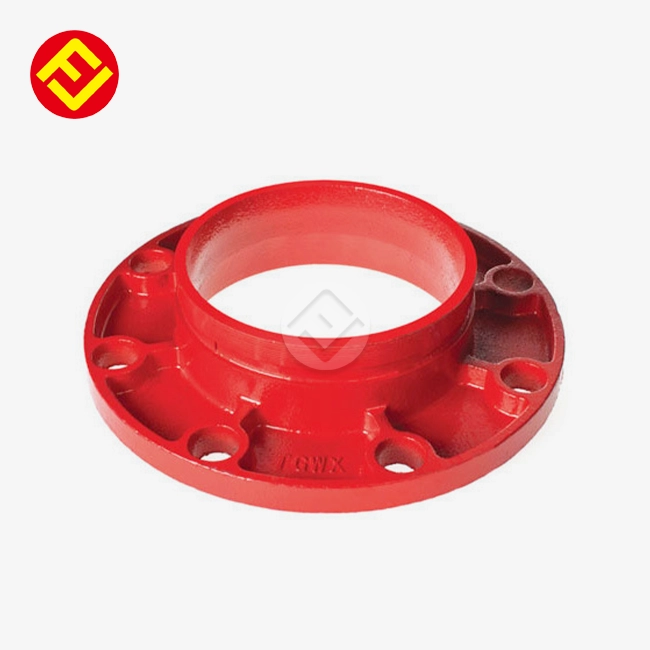
Through their mechanical coupling method, grooved pipe systems have changed the way modern building projects are built. Grooved fittings use a simple slot cut into the outside of the pipe instead of the more complicated soldered or threaded connections that need hot work permits and specialized labor. One end of the reducing flange component is curved to work with other parts, and the other end has a standard flange face with bolt holes that meet ANSI B16.1 Class 125 or ANSI B16.5 Class 150 standards.
This arrangement solves a problem that keeps coming up in mechanical rooms where limited area calls for small answers. Usually, to connect a 6-inch distribution header to a 4-inch pump inlet, you have to install two different parts: a concentric reducer and a flange adapter. This adds length to the installation process and creates two possible leak places. These parts are combined into a single joint by the integrated design.
Industry Applications Driving Demand
When connecting sprinkler system pipes to alarm check valves, fire protection workers always use these transition fittings. The ductile iron design is better at handling hydraulic shock than threaded options, and it meets the UL and FM approval standards that are needed for business installs. When installing, HVAC workers like that the grooved end can be turned 360 degrees before it is finally tightened. This makes sure that the bolt holes are perfectly lined up without putting twisting stress on the connected pipes.
These fittings are used by municipal water treatment plants during upgrade projects where old infrastructure needs to be changed to fit smaller, newer equipment. It is very helpful to be able to change pipe sizes without welding in places where hot work is dangerous because of exploding gases or chemical leftovers. A recent study of the industry found that grooved technology is chosen for 68% of all new business HVAC systems in North America. This is because it is more useful.
Comparing Grooved Reducing Flanges with Other Flange Types for Optimal System Design
Performance Characteristics Across Flange Categories
Because they are made with a full-penetration butt weld, weld neck flanges are most common in high-pressure (over 300 psi) and high-temperature settings. Because the tapered hub form spreads stress evenly, they can be used for important oil and gas pipeline installs. This structural benefit comes at the cost of being harder to install because it needs qualified welders, x-rays, and longer work hours.
When you slide slip-on flanges over the outside of the pipe before fillet welding, they offer moderate pressure ratings and make welding easier. Threaded flanges get rid of the need for welding completely, but they raise worries about thread contact under vibration loads. When systems need to be taken apart often for repair, lap joint flanges make it easier to do so.
Where Grooved Reducing Flanges Excel
The grooved mechanical connection works best in moderate-pressure situations (up to 300 psi) where speed of fitting and ability to change in the future are important. When project managers are in charge of organizing setups involving multiple trades, they choose these fittings because the mechanical assembly doesn't need fire watchers or hot work permits, which slow down work and cost more. The elastomeric gasket's ability to dampen vibrations makes it better for uses that need to keep noise down compared to hard welded connections.
Another benefit of grooved reducing flange is that materials can be used with each other. Grooved reducing flanges made from ductile iron that meets ASTM A536 Grade 65-45-12 offer superior impact resistance, which is important in places where tools might be hit by accident or where there is seismic activity. The protected epoxy covering stops corrosion, which increases the service life in harsh chemical settings or outside sites that are exposed to the weather.
Key Specifications: Materials, Dimensions, Pressure Ratings, and Installation Process
Material Selection Based on Service Conditions
Ductile iron is still the most common material used in normal uses because it is very flexible and has a tensile strength of over 65,000 psi. The tiny bumps of graphite in the nanoscale can handle shocks that would break gray iron molds. Different types of carbon steel are used in situations where they need to be able to be welded for custom changes or where the temperature range is too wide for malleable iron (-30°F to 230°F).
The choice of surface treatment relies on how the surface will be used. The normal red anti-corrosion epoxy finish is good for indoor setups and systems that handle potable water. Hot-dip galvanized finishes that meet ASTM A153 standards offer better protection in coastal areas or chemical processing plants where airborne pollution speed up rusting. Using electrical scales to check the thickness of the coating makes sure that the protective layers meet the 12-mil minimum requirements.
Critical Dimensions and Pressure Specifications
System dependability is based on how accurate the dimensions are. The groove shape has to exactly meet the requirements in AWWA C606. If the groove depth or width is off, the gasket won't be able to seat properly, which can cause leaks when pressure is applied. To make sure that the flange bolt circle diameter and hole placement are compatible with other equipment, the sizes must be kept within ±1/32 inch.
The pressure values depend on both the type of fitting and the class of the matching flange. There is no safety cushion for a grooved reducing flange rated for 300 psi when connected to a Class 125 valve rated for only 175 psi; the system always limits itself to the weaker part. The specs for the purchase must make sure that all the parts that are linked share pressure classes that are compatible.
Installation Protocol and Maintenance Considerations
Using go/no-go gauges to make sure that the pipe groove measures match the manufacturer's specs is the first step in a proper fitting. Before putting the flange adapter in place and tightening the housing bolts in a star pattern to make sure even tension, the elastomeric gasket needs to fit properly in the slot channel. To make a leak-free seal, the flanged face needs a separate flat gasket. This gasket is usually made of 1/8-inch thick rubber or compressed fiber.
Visual inspections should be done every six months as part of maintenance plans to check for coating degradation, seal compression set, and bolt torque retention. Before and after any changes, the system is checked for stability by hydrostatic testing at 1.5 times the working pressure. Quality checks and guarantee claims are made easier with the help of documentation trails that connect fitted fittings to material approvals and test reports.

Procurement Insights: Where and How to Source Grooved Reducing Flanges?
Evaluating Manufacturer Credentials and Certifications
Checking the manufacturer's licenses is the first step in quality assurance. The ISO9001 quality management system approval shows that the production process is uniform from getting the raw materials to checking the finished product. UL certification shows that fire safety parts meet safety standards in North America, and FM approval shows that they meet efficiency standards for business and industry. Having a CE mark on something means that it follows European rules for safety, health, and the environment.
In addition to certificates for grooved reducing flange, you should look at the manufacturer's methods for mechanical testing. Suppliers with a good reputation test each batch of material to make sure that the nodularity in ductile iron castings is higher than 90%. This keeps the castings from breaking when pressures rise quickly. Before parts leave the plant, CNC measuring tools should make sure that the groove widths, bolt hole positions, and transition section shapes are all within the required tolerances.
Customization Capabilities and Lead Time Management
Pipe changes that are common are covered by standard catalog sizes, but infrastructure projects often have special size needs. Manufacturers that offer custom engineering support can make unique setups with eccentric transitions that keep air pockets from building up in horizontal runs or with longer transition lengths that allow for certain equipment gaps. It speeds up the planning and approval processes for projects when 3D models and technical plans can be sent within 24 to 48 hours.
FLA Industrial & Trading Co., Ltd. keeps 2,000 tons of standard goods on hand so that typical sizes can be shipped right away. They also offer special manufacturing with a 7–15 day turnaround. This two-in-one feature can be used for both emergency replacements and planned projects with special design needs. Purchasing departments lower the risk in the supply chain by working with makers that can handle orders ranging from 10 pieces for upkeep stock to 10,000 units for large-scale projects.
Total Cost Analysis Beyond Unit Pricing
A competitive price study needs to look at more than just unit costs. Check the quality of the packaging—the right crating keeps the coating from getting damaged during shipping and handling. When compared to multiple partial deliveries, consolidated packages use less freight. When installation problems happen, vendors who offer detailed technical help keep costly changes to the field to a minimum.
Building long-term ties with makers who offer direct lines of contact is a good idea. When pressing questions about specs or compatibility need to be answered, talking directly with production engineers instead of going through middlemen speeds up the problem-solving process. This flexible support structure cuts down on project delays that drive up labor costs so much that any initial savings from choosing slightly cheaper parts are quickly lost. Buying Tips: Where to Find grooved reducing flanges and How to Get Them.
Optimizing System Performance and Making the Right Flange Choice
Identifying Common Installation Bottlenecks
System speed problems are often caused by choosing the wrong parts when the system was first designed. When changes are too small, they let too much flow through, which causes damage and noise complaints. Oversized parts lose money and make it harder to arrange things in machinery rooms that are already crowded. Engineers should figure out Reynolds numbers and pressure drop coefficients to make sure that changes keep laminar flow characteristics within the 5–10 feet per second speed range that is okay for water systems.
Another way a seal can fail is if the materials don't work well together. Standard EPDM seals work great with water but quickly break down when they come in contact with oil-based substances. Nitrile seals with orange markings are needed for oil-based uses. Misapplication causes gaskets to wear out faster than expected, systems to become contaminated, and unplanned downtime for emergency repairs.
Advanced Selection Criteria for Complex Applications
When vacuum is present, there are some special things that need to be thought about. For example, normal grooved gaskets can handle up to 29.9 inches of mercury pressure, but the flange face gasket also needs to be able to keep from being pulled into the line. In pump suction uses, eccentric reducing flanges keep the pipe's bottom level, which stops cavitation from happening when air gets trapped at the impeller inlet.
When parts are in seismic zones, they need to be more flexible. The mechanical grooved link allows for more movement by compressing the gasket, which better handles thermal expansion and small ground settlement than hard welded designs. But structure engineers need to make sure that the hangers and supports allow this movement without putting too much stress on the equipment nozzles next to them.
Lifecycle Cost Optimization Through Preventive Strategies
Smart procurement spends money on tools that can predict when repair will need to be done. Ultrasonic tests can tell when a seal is getting thinner before it fails completely. Thermographic imaging can find areas of increased heat that mean flow is being slowed down or a part is about to break. These diagnostic methods turn reactive maintenance cultures into proactive management systems, which lowers the total cost of ownership by 35–40% over the twenty-year lifecycles of assets.
Standardizing parts across locations makes it easier to keep track of supplies and train technicians. By listing constant makers and material grades, you can be sure that support staff will become experts with certain product lines. When extra parts can be swapped out, the cost of emergency purchases goes down and downtime is cut down when things break down at night or on the weekend. Grooved reducing flanges are clearly better in situations where they need to be quickly put together, flexible in the future, and less vibrational.

Conclusion
To optimize a pipe system effectively, you need to choose grooved reducing flange connection parts that balance how quickly they can be installed, how reliable they are in use, and how much they cost over their entire life. To be successful at procurement, you need to look at manufacturer certifications, know how material qualities affect service conditions, and work with suppliers who can provide quick expert help. The mechanical coupling method has been shown to work well in fire safety, HVAC, and industrial building projects where standard welding methods add extra cost and complexity.
FAQ
What distinguishes grooved reducing flanges from standard weld neck flanges?
Grooved reducing flanges use mechanical connection with rubber gaskets, so they don't need to be welded or have hot work permits. Full-penetration butt welds on weld neck flanges give them higher pressure values, but they need trained welders and take longer to install. The grooved choice lets you change the rotation, which makes sure that the bolt holes line up without putting stress on the pipe.
Can these fittings handle high-pressure applications?
Standard setups can handle up to 300 psi of pressure, which is enough for most industrial fire and HVAC systems. For uses with higher pressures than these ratings, you need weld neck flanges with the right class ratings. Always make sure that the lowest-rated part of the system fits the system's overall pressure class.
How quickly can installation occur compared to traditional methods?
When compared to welding methods, mechanical grooved joints cut building time by about 70%. With grooved technology, a normal shift that takes four hours to install with welded flanges only takes about 75 minutes. This cuts down on labor costs and project timelines by a large amount.
Do both connection ends require gaskets?
The grooved end has an elastic cover built in that seals against the outside of the pipe. A separate flat gasket is needed between the fitting and the mating equipment on the flange face. This gasket is usually made of 1/8-inch thick material that is chosen based on how well it works with service fluids.
Partner With a Trusted Grooved Reducing Flange Manufacturer
Your pipe system needs parts that are reliable and backed by decades of manufacturing experience. FLA Industrial & Trading Co., Ltd. has been in business for almost 40 years and has ISO9001, UL, FM, and CE certifications. They make grooved reducing flanges out of ductile iron and carbon steel to exact specifications. Our plant keeps a large collection of standard sizes that can be shipped right away, and we can also do custom engineering to meet the specific needs of your project in 7–15 days. Fortune Global 500 businesses trust our cheap fire protection, HVAC, and industrial solutions as well as our quality control systems. You can talk to our expert team about your needs, ask for dimensional models, or get quotes for future projects by emailing sales@flaindustrial.com. Direct access to manufacturers guarantees quick help throughout the whole buying process.
References
American Water Works Association. "AWWA C606 Standard for Grooved and Shouldered Joints." Denver: AWWA Publishing, 2021.
American Society of Mechanical Engineers. "ASME B16.1: Gray Iron Pipe Flanges and Flanged Fittings." New York: ASME Press, 2020.
Underwriters Laboratories. "UL 213: Standard for Rubber Gasketed Fittings for Fire Protection Service." Northbrook: UL Standards, 2019.
Factory Mutual Research Corporation. "FM Approval Guide: Pipe Fittings and Couplings for Automatic Sprinkler Systems." Johnston: FM Global, 2022.
ASTM International. "ASTM A536: Standard Specification for Ductile Iron Castings." West Conshohocken: ASTM Publishing, 2020.
Piping Technology & Products" target="_blank" style="color:blue" >products Inc. "Mechanical Piping Systems: Design Considerations and Installation Best Practices." Houston: Technical Manual Series, 2021.
YOU MAY LIKE