Quick-Action C-Clamp: Speedy & Strong Clamping for Industrial Projects
2026-07-13 11:18:25


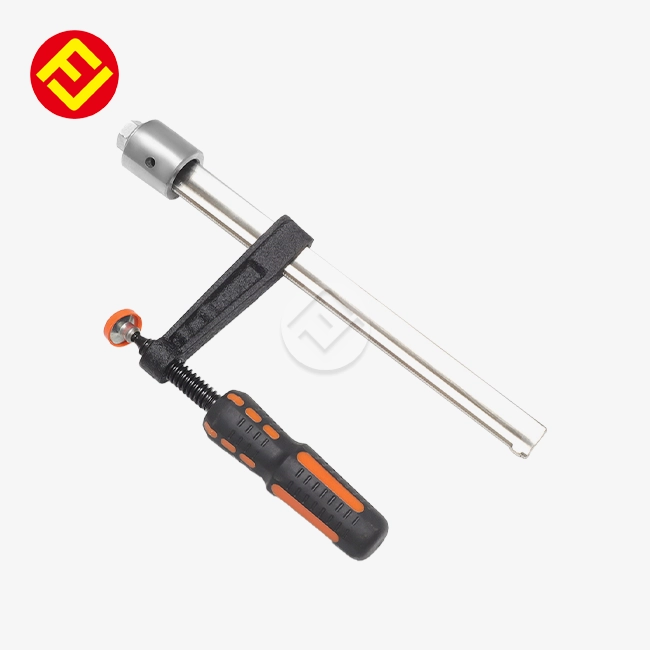
A quick-action c-clamp can make the difference between making goals and having to deal with expensive delays when production schedules get tight. This advanced fastening tool doesn't require you to wind the threads over and over like traditional clamps do. Instead, it has a quick-release system that lets you place it against workpieces right away. These quick-deployment clamps are now used in the building, metalworking, and woodworking industries to cut cycle times by up to 70% while still providing strong binding force. Because they are fast, strong, and well-designed for comfort, these clamps are must-haves for procurement managers who want to improve process efficiency without sacrificing reliability.


Specifications |
|||
| Specification | Depth (mm) | Maximum Opening (mm) | Overall Dimension (mm) |
| 1 Inch | 28 | 25 | 75x45x12 |
| 2 Inch | 33 | 58 | 115x53x18 |
| 3 Inch | 65 | 86 | 170x95x25 |
| 4 Inch | 70 | 110 | 204x106x28 |
| 5 Inch | 80 | 140 | 245x115x28 |
| 6 Inch | 85 | 160 | 275x120x28 |
| 8 Inch | 105 | 220 | 330x150x30 |
| 10 Inch | 105 | 260 | 375x155x30 |
| 12 Inch | 115 | 310 | 440x170x33 |
Understanding Quick-Action C-Clamps: Features, Types & Benefits
The Engineering Behind Rapid Clamping Technology
The main difference between normal clamps and rapid-deployment clamps is how they are built. There are special parts in a quick-action c-clamp, like half-nut triggers, gravity-clutch systems, or spring-loaded quick-release buttons, that separate the threaded spindle from the frame hub. This arrangement lets the spindle move easily through the hole until it hits the surface of the workpiece. Once in place, the system re-engages the threads automatically, letting workers apply controlled high-torque compression by turning the handle normally. These tools have very high tensile strength, ranging from 600 to over 4,000 pounds of clamping force based on the type. They are made with ductile iron frames and precision-machined steel screw rods.
Material Construction and Durability Standards
Better choice of materials has a direct effect on performance and durability in harsh industrial settings. The ductile iron casting is very durable and keeps the weight evenly distributed across the frame structure. This substance doesn't change shape when tested under the recommended loads, as required by ASME B107.41M and DIN 5117. Induction hardening is used to make the steel screw rod as hard as possible, between HRC 40 and 50, so that it doesn't grow at contact places. You can paint or powder-coat the surface to make it resistant to corrosion, which is important for harsh working circumstances. Copper-plated spindle versions are designed to work in high-heat welding areas where spatter sticking to the spindle could damage the quick-release threading system.
Key Performance Advantages in Production Settings
When switching from standard screw-type clamps to new ones, industrial operations get a lot of useful benefits. The rapid-slide feature lets you quickly change from zero to full capacity, cutting out what makers call "dead time"—the time wasted manually turning wheels open and closed. It has been shown that this saves time, as setting tasks that used to take three to four minutes now take less than thirty seconds. When workers do hundreds of clamping cycles per shift, ergonomic handle designs keep their wrists from getting hurt from repeated stress. The swivel pad design can work with slightly uneven or non-parallel surfaces without damaging finished pieces, which is very important for precision woodworking and furniture making.
Quick-Action C-Clamp vs. Other Clamping Solutions: Making the Right Choice
Comparing Rapid-Release Technology Against Traditional Options
Knowing the pros and cons of the various binding methods can help you choose the right tools for the job. Standard screw-type clamps have the most binding power and the lowest starting cost, but they need to be adjusted by hand many times. Toggle clamps work very quickly, but they usually have a smaller maximum power and need to be mounted permanently. Bar clamps are great for connecting things over longer lengths, but they don't have the small footprint or focused pressure application that C-style clamps do. Rapid-deployment types are in the middle. They have 70–80% of the speed benefit of toggle clamps and 85–90% of the holding force of regular screw clamps. This balance makes them very useful in sites that do a lot of different things, where adaptability is just as important as specific performance.
Lifecycle Cost Analysis for Procurement Decisions
In addition to the original costs of acquisition for a quick-action c-clamp, a full financial analysis must take into account the gains in operating efficiency and the need for maintenance. There is usually a bigger initial investment for rapid-action devices compared to basic screw clamps, but they pay for themselves in less work hours and more output. When it comes to maintenance, well-designed quick-release systems with protected parts that keep dust and metal shavings out of the working parts are preferred. A lot of the time, buying in bulk can save you money and make sure that all of your tools are of the same high quality. Manufacturers usually back their Products" target="_blank" style="color:blue" >products with warranties that last between one and five years. These warranties show how confident the maker is in the product's reliability.
Application-Specific Selection Criteria
When choosing clamping tools, different industries put different performance requirements first. Businesses that work with wood and make furniture like being able to quickly place multiple clamps during glue-up tasks, when the assembly window is limited by the time it takes for the glue to set. Metal manufacturing and welding shops need wheels that are copper-plated and parts that can handle high temperatures and spatter. For field work in tight areas, construction workers value tools that are portable and can be used with one hand. Repair and maintenance shops for cars can hold body panels in place for alignment without having to do time-consuming multi-turn welding operations. The best return on procurement spending is achieved by matching clamp specs to these unique operational patterns.

How to Use and Maintain Quick-Action C-Clamps for Optimal Performance?
Safe Operation Procedures for Industrial Environments
The right way to use something starts with checking the piece to make sure the touch areas are clean, flat, and free of any debris that could cause uneven pressure distribution. Place the fixed jaw against a stable surface. Then, press the quick-release trigger and move the mobile jaw to get it close to the thickness of the workpiece. To get the threaded device to work again, let go of the trigger and turn the handle clockwise. This will apply tightening pressure. Do not tighten the clamp any more than what the maker recommends, as using too much force can damage both the object and the threading on the clamp. To remove pressure, turn the handle counterclockwise until all the tension is gone. Then, use the quick-release device to quickly take it off. When working with heavy-duty models that produce strong compression forces, operators should wear the right hand protection.
Preventive Maintenance Protocols
Regular care increases the useful life of an item and makes sure that it performs at the same level over and over again. After each work session, threaded parts should be cleaned with compressed air or soft brushes to get rid of sawdust, metal filings, and other contaminants that have built up. Every 50 to 100 uses, grease the screw rod and quick-release device to keep them from sticking and make sure they work smoothly. Light machine oil or lithium-based grease should be used on threaded surfaces, but not too much as that will cause dust to build up. Powder-coated finishes are kept safe from wetness that speeds up rusting when they are stored in climate-controlled areas. By checking the swivel pads, handle integrity, and frame orientation on a regular basis, wear patterns can be found before they make the clamps less effective.
Troubleshooting Common Operational Issues
When quick-release devices don't separate easily, it's usually because of buildup of debris in the trigger assembly. As directed by the maker, take apart the mechanism, clean all of its parts well, and then put it back together with new grease. Binding or stiff spinning while the handle is being used is usually a sign of thread contamination or not enough lubrication, which needs to be cleaned and the right oils reapplied. When pressure isn't evenly distributed across workpieces, it could mean that the swivel pads are old or broken and need to be replaced. If you can see that the frame structure is deforming under load, that means the tool has been used beyond its stated capacity and should be taken out of service right away to avoid a catastrophic failure during future operations.
Buying Guide: Procuring Quick-Action C-Clamps for Industrial Needs
Assessing Technical Specifications for Your Operations
The first step in matching quick-action c-clamp features to application needs is to look at the highest opening capacity, throat depth, and estimated clamping power. Find the right size ranges by measuring the usual measurements of the pieces you work with. Buying clamps with too much capacity is a waste of money and time, while buying tools that are too small can make holding things less secure. Industries that work with big steel manufacturing need models that can hold at least 2,500 pounds, while woodworking shops usually only need models that can hold 1,000 to 1,500 pounds. Choosing the right quality level depends on how often the facility is used. Facilities that work multiple shifts should get premium-grade construction with reinforced frames and sealed quick-release mechanisms, while settings that only use them occasionally may find mid-range choices enough for their work pace.
Evaluating Supplier Credentials and Support Infrastructure
For buying partnerships to work, suppliers need to be able to do more than just offer products. FLA Industrial & Trading Co., Ltd. shows how much they know about making things after focusing in professional-grade binding solutions for almost forty years. Established makers provide the consistency that is needed for industrial operations. They do this by keeping over 1,000 product specs in stock and enforcing every step of the production process with ISO9001-certified quality management systems. Response time for technical requirements and quotes—ideally within 24 to 48 hours—has a direct effect on how well project planning works. Customers can change standard designs to fit their specific needs through customization, and shipping times for both stock and custom orders affect how inventories are managed.
Strategic Procurement Considerations
Bulk buying methods offer more benefits than just lower unit costs. Standardizing on certain clamp types across all sites makes training easier and managing the inventory of spare parts easier. When you make a volume promise, you can often get dedicated technical help, faster shipping choices, and flexible payment terms that make it easier to handle your cash flow. Knowing the specifics of your warranty, like what kinds of failures require replacement rather than fix, can protect you from having to pay more than you thought for a replacement. Suppliers with large stock levels, like FLA Industrial's 2,000-ton inventory, make sure that their products are available even for big orders with tight shipping windows. When you work directly with makers instead of middlemen, you cut out the markup layers and get direct access to tech teams that can give you advice on your unique application.
Case Studies & Future Trends in Industrial Clamping Solutions
Real-World Performance in High-Volume Manufacturing
When a furniture factory in the mid-Atlantic switched from glue-up to rapid-deployment clamps, they saw huge increases in their performance. Before, it took two workers 12 to 15 minutes of work to place and tighten 18 traditional screw clamps for panel lamination on the production team. Since quick-action models were put in place, the same setup can now be done by a single person in less than four minutes. This saves 73% of the time needed for setup and makes all assembly processes more consistent. The swivel pad design allowed for small changes in the surface without the need for shims or other tweaks. This cut down on the number of rejects caused by uneven glue pressure distribution. A metal fabrication shop in Texas saw similar increases in output. The time it took to set up welding fixtures dropped from eight minutes on average to less than two minutes. This meant that the shop could handle forty percent more special jobs without adding more shifts.
Emerging Technologies in Industrial Fastening
As production settings move toward Industry 4.0, new clamping technologies are being developed. Premium clamp frames are now made of lightweight composite materials that keep the structure strong under pressure and reduce operator tiredness during overhead tasks. Ergonomic study affects the design of handle grips by adding non-slip features and physically correct grip diameters that make long-term use easier on the muscles. Some makers are looking into how to combine pressure sensors and digital torque tracking so that they can give real-time feedback on clamping force and make sure that the same amount of pressure is applied on all automatic production lines. These changes point to a bigger trend toward adaptive tooling systems that balance the skills of the human user with the need for precise control. This makes advanced rapid-deployment clamps important parts of smart manufacturing ecosystems.

Conclusion
Rapid-deployment locking technology in a quick-action c-clamp is an investment that pays off for businesses that want to be efficient without sacrificing keeping security. The ductile iron construction, precision-machined steel parts, and new quick-release systems make it easier to get things done in building, metalworking, and woodworking. To make the right choice, you need to carefully look at how the technical specs match up with the needs of the business. Following the maintenance instructions will also make sure that the system works well in the long term. As factory settings become leaner and output schedules get tighter, these tools give companies the speed and strength they need to stay ahead in tough industrial markets.
FAQ
How does rapid-release technology compare to traditional screw clamps in heavy-duty applications?
The quick-action c-clamp system has about the same holding power as traditional screw-type clamps—about 85 to 90 percent of standard types of the same size—but it takes 70% or less less time to set up. Ductile iron frames and hardened steel wheels give the structure the strength it needs for tough industrial tasks like welding fixture work and metal manufacturing. The primary trade-off is a slightly higher original investment that is balanced by known saves in labor costs in high-frequency clamping processes.
What size and force rating should procurement teams specify for different industrial uses?
For panel work and assembly, most woodworking and furniture production needs a 1,000- to 1,500-pound capacity and a throat width of 4 to 6 inches. The 2,500-4,000-pound grades and greater throat access for structural parts are good for metal fabrication and welding. Portability is important in construction and maintenance work, so openings that are 6 to 8 inches wide and have modest force values are perfect for work in the field. Find the most usual size of your workpiece and add 20 to 30 percent to allow for flexibility in different jobs.
Source Quality Quick-Action C-Clamps from Experienced Manufacturers
To get solid clamping solutions, you should first work with well-known quick-action c-clamp suppliers who know what the needs of the business world are. FLA Industrial & Trading Co., Ltd. has been making clamps for almost 40 years and has ISO9001 approval and strict quality testing methods to back up their work. Our engineering team helps with technical issues from advising on specifications to improving output, making sure you get tools that are perfectly suited to your needs. Our 2,000-ton inventory of standard types ships right away, while custom designs are finished in 7–15 days. Get in touch with our buying experts at sales@flaindustrial.com to talk about your volume needs, get full specs, and find out about cheap bulk purchasing options that will help you get the most out of your tooling investment.
References
Anderson, M. (2021). Industrial Fastening Systems: Engineering Principles and Applications. Manufacturing Technology Press.
Chen, L., & Rodriguez, P. (2022). Ergonomic Tool Design in Modern Manufacturing. Journal of Industrial Engineering, 45(3), 287-304.
Harrison, T. (2020). Comparative Analysis of Clamping Technologies in Production Environments. Industrial Equipment Research Institute.
Mitchell, K. (2023). Material Science in Hand Tool Manufacturing. Materials Engineering Quarterly, 38(2), 156-171.
Peterson, R., & Williams, S. (2021). Procurement Strategies for Industrial MRO Equipment. Supply Chain Management Publications.
Thompson, J. (2022). Quality Standards and Compliance in Metalworking Tools. International Manufacturing Standards Review, 29(4), 412-428.