Screw Jacks for Large Applications with Heavy Loads
2026-04-30 09:54:31


When your business needs solid pulling power for big loads, heavy-duty mechanical screw lifts are a must. Any 3 ton screw jack is a precise mechanical tool that can turn rotational force into controlled linear motion. It can safely hold up to 6,600 pounds of weight. These strong devices stop the positional drift that happens a lot in hydraulic systems. They also have a built-in self-locking feature that keeps things safely in place without the need for extra brakes. These lifting solutions are used in many fields, from building to manufacturing, to solve problems with stability in multi-point lifting arrays and structure positioning jobs where accuracy is just as important as power.
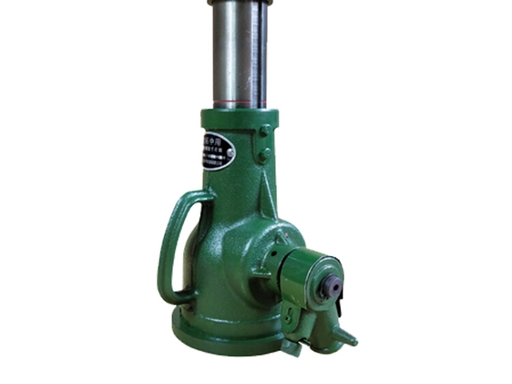
Understanding Industrial Screw Jacks and Their Critical Role
What Makes Heavy-Duty Lifting Mechanisms Essential?
Heavy equipment has to be moved, placed, and supported safely and accurately all the time in industrial settings. When apps need long-term load-bearing or coordinated movement across multiple lift spots, traditional lifting methods often don't work. These problems can be fixed with mechanical lifting devices that use screw drive technology. They do this by using basic engineering principles that have been used reliably in industry for decades.
The main benefit is that it can mechanically stop itself. Screw-based pulling mechanisms stay in place because of the friction built into their threads. This is different from hydraulic or gas systems that can lose their position if the seals break or the pressure drops. Because of this, they are very useful for building companies that need to make changes to foundations or factories that need to support equipment for a long time without constant power input.
Construction and Material Standards
The choice of material is the first step in making good moving tools. Load-bearing parts are usually made of high-grade alloy steel, and heat treatments like cooling and tempering make them stronger and less likely to break down. Usually, the raising screw goes through precise drilling and then heat treatment to make the surface harder than 50 HRC while keeping the core tough.
These hardened screws hold bronze or designed plastic nuts in place. This makes a contact that doesn't wear out and is good for both durability and friction. Cast iron or welded steel housings keep the structure strong and reduce vibrations while the machine is running. Corrosion-resistant coatings make things last longer in tough places, like chemical processing plants and seaside marine uses where wetness and other contaminants can damage metal surfaces that aren't protected.
To get thread standards of less than 0.05mm, manufacturing processes blend old-fashioned turning and cutting with newer grinding methods. This accuracy makes sure that the machine runs smoothly and that the load is spread evenly across all thread surfaces. This stops early wear that could lower safety margins.
Working Principles and Safety Integration
The idea behind screw jack technology is to turn rotary input, like from a hand crank or an electric motor, into linear extension or contraction. The best mix between lifting speed and self-locking ability can be found in a trapezoidal or Acme thread shape. Thread angles are usually between 14 and 30 degrees. Slightly higher angles work better, while slightly shorter angles make them more self-locking.
Safety factors are built right into the design. Backdriving is not possible when the pressure is on the self-locking ratio, which is usually greater than 20:1 in machine screw configurations. The load stays still without any extra stopping systems, even if the power goes out or the turning stops in the middle of the lift. Overload protection comes from carefully calculated safety factors, which are usually 2:1 or higher. This means that a device designed for three tons can physically withstand forces close to six tons before the material's stress limits are reached.
Travel limit switches and position markers improve working safety. They are especially useful when combining multiple units in lifting arrays that work together. Because mechanical links keep the exact positions of lift points in relation to each other, load distribution estimates are made easy.
Key Applications Across Industrial Sectors
For jobs requiring accuracy down to fractions of a millimeter, these lifting tools are used in factories to level and line machines. They are used to place parts on assembly lines, so workers can change the height and angle of a workpiece without having to make hard hand changes or wait for hydraulic systems to settle.
They are useful for structural work like leveling foundations and adjusting bridge bearings, which is why construction companies hire them. Because they can stay in place while being loaded without using power, they are perfect for temporary support during renovations. They are used by electrical utility companies to position towers and poles during construction and repair work.
They are essential for moving big vehicles in auto shops and other places that take care of cars where stability is more important than speed. Mechanical screw devices stay in place during long repair processes, while hydraulic jacks can shift or leak. Marine uses include putting dock equipment in place and doing repairs on ships, where resistance to corrosion and technical dependability are more important than speed.
Selecting the Right Heavy-Duty Lifting Solution for Your Application
Analyzing Load Requirements and Safety Margins
Assessing the load correctly is the first step in choosing the right moving tools. When you're working, you need to think about more than just the steady weight you want to lift. The stress your equipment goes through is changed by vibration, impact loads, and off-center loads. As a general rule, keeping a safety factor of at least 2:1 makes sure that the system will work reliably even when things aren't perfect.
Environmental factors have a big effect on the choice of materials. For outdoor uses in wet areas, you need to use stainless steel or better coating methods to keep things from rusting. Extreme temperatures change how well lubricants work and how materials behave. For example, equipment used in cold storage facilities needs different specs than equipment used in hot forging processes.
Depending on the duty cycle, basic Acme thread designs may be enough or ball screw configurations may be needed. Intermittent use at 20–30% duty cycle works well for most hand or rare powered tasks. For continuous use, you need ball screw types that lower friction heat production. However, these don't have the self-locking feature that makes normal machine screws naturally safe.
Comparing Manual, Electric, and Hydraulic Options
Operating something by hand is easy and doesn't need a power source. A crank handle uses mechanical advantage to turn the effort of the person using it into pulling force. These setups work best in places that don't have access to electricity or where occasional adjustments are enough. The speed of operation is slower when you use the crank, as you can only mechanical screw lift a few millimeters per second when you do it by hand.
When placing things often, electric motor drives make the work a lot faster and easier. Motor choice and gearing ratios let you change the speed. Typical speeds range from 5 to 50 millimeters per second, based on the load and power input. Motor-driven systems can easily be added to automatic production lines because they can take control signals from PLCs and other industrial control systems. When operating speed needs are higher than what can be done by hand, the investment in motorization pays off.
Alternatives to hydraulic jacks offer faster stroke speeds and easier syncing of multiple points by distributing fluid. Still, they make upkeep harder because they have seals, hoses, and fluid control. When speed is more important than accuracy in place, hydraulic methods work best. When exact placement, long-term load holding, or low upkeep are the most important things, mechanical screw devices win.
Evaluating Design Features and Build Quality
The length of the trip is an important detail. Standard setups have strokes ranging from 100 mm to 1000 mm, and unique additions can be made to fit specific needs. When the stroke gets longer, the column needs to be more stable because suspended screw lengths that go over certain limits can buckle under load. For uses with longer travel, manufacturers deal with this by using screws with a bigger diameter or supports with intermediate bearings.
The freedom of placement is affected by how the mounts are set up. Top plate and base plate designs work well in situations where the load and support links need to be able to fit flat surfaces. Clevis ends let you turn for uses where the angle of line changes as the part moves. Threaded ends let you connect a device in a way that fits your load interface.
The type of thread affects how well it works. Acme threads can hold a lot of weight and are good at locking themselves. With metric sizes, trapezoidal threads, which are popular in European designs, work just as well. Ball screw versions greatly reduce friction, but they need stopping systems to keep the load from dropping when the power goes out. The thread profile that best combines speed, safety, and care will depend on the needs of your application.
Maintenance, Safety, and Troubleshooting for Maximum Uptime
Essential Maintenance Routines
The most important upkeep task is to lubricate things regularly. Worn gear housings need to be checked and refilled with synthetic gear oil or high pressure lithium grease on a regular basis. The lifting screw needs open gear lubricant to be applied at regular times that depend on the job cycle and the surroundings. Before adding lubricant, a visual check can help find dirt or worn-out parts that could mean problems are starting to form.
When you look at the thread, you can see wear patterns that show problems with alignment or overloading. If the threads wear evenly across all areas, it means the machine is working correctly. If there is damage in one area, it means the load and lift axes are not lined up correctly. By measuring the diameter of the screw at several places along its trip length, you can figure out how much wear there is and replace it before it breaks.
Screw checking is complemented by nut inspection. Bronze nuts wear down at regular rates, and changes in size show how much service life is left. Too much heat can cause the surfaces of engineering plastic nuts to check or change color, which means they need more lubricant or are being used too much. Replacing things before they wear out beyond what the maker allows stops sudden failures and possible safety issues.
Checks for the soundness of the housing should include checking the pressure on the fasteners and looking for cracks, especially where the stress is highest, like where the mounting points are. In harsh settings, corrosion-resistant paints need to be touched up every so often to keep their safety. When damage or wear and tear makes dust covers and seals less effective at protecting, they need to be replaced.
Safety Best Practices
Side loading, which can bend screws or crack housings, can't happen if the load is properly aligned. The lifting axis should line up with the load's center of gravity, and the places where the load is attached should stay in line with this alignment throughout the trip range. Off-center loading not only lowers the useful capacity, but it also speeds up wear and raises the risk of failure.
Even though it seems clear, people often don't follow the rules about operating within stated capacity. As time goes on, "just this once" overloads cause wear damage that weakens the structure. Load limits that are strictly followed protect both people and tools.
A stable base is just as important as the pulling tool itself. When the base is loaded, it can move around on soft or uneven surfaces, which can be very dangerous. When you use the right base plates, the forces are spread out over enough support areas to keep the foundation from failing, which could cause the whole mechanical screw lift system to fall.
Troubleshooting Common Issues
Most of the time, contamination is to blame when moving becomes hard or inconsistent. Grit between the threads makes them rub against each other more, which speeds up wear. Taking things apart, cleaning them well, and putting new grease on them usually make them work smoothly again. Problems that don't go away suggest wear that is too high and needs to be fixed or replaced.
Noise during surgery can help with diagnosis. Grinding sounds mean that there isn't enough oil or dirt on the part. If something clicks or pops, it means that parts are loose or threads are broken. Dealing with noise right away keeps small problems from getting worse and leading to big fails.
Positional drift in what should be self-locking setups means that the friction that locks the parts together is being lost due to thread wear or damage. This safety-critical problem needs to be looked into right away. By comparing thread sizes to specs, you can see if wear has lowered the contact angle below the levels needed for self-locking.
Corrosion needs a strong reaction. Most of the time, surface rust on screws can be cleaned and fixed, but pitting corrosion makes the structure less stable. Coatings that protect things need to be fixed, and in places that are wet or acidic, switching to stainless steel may be cheaper than replacing parts all the time.
Procurement Strategy for Industrial Lifting Equipment
Sourcing Channels and Purchasing Approaches
When the number is high enough, direct relationships with manufacturers can be helpful. Technical teamwork makes it easier to match Products" target="_blank" style="color:blue" >products to applications, and it also makes it possible to customize products to meet specific needs. Getting rid of dealer margins helps prices, but small-scale needs may not be met by minimum order amounts.
Many industrial wholesalers carry a lot of different product lines, which makes buying things easier when projects need a lot of different parts. Having established relationships with distributors makes buying easier by combining operations and billing. Technical help from experienced wholesalers is more valuable than just fulfilling orders, especially for smaller businesses that don't have their own tech staff.
Online markets offer more choices, but they need careful checking out. Product details need to be checked, and the trustworthiness of the seller needs to be judged by looking at reviews, certifications, and past transactions. There is a balance between the ease of shopping online and the risk of getting bad goods or not having enough technical help.
Negotiations for bulk purchases use the size of the order to get better prices. Setting annual volume promises in contracts ensures fair prices and a steady supply. Blanket orders with scheduled shipping make sure that costs are met and that supplies are available as projects move forward.
Custom Solutions for Unique Requirements
Standard store items work well for most uses, but for unique requirements, they need to be customized. Different fixing arrangements can be used depending on the fitting requirements. Longer journey lengths can be used to meet unusual stroke needs. Material changes are made for places that are toxic or have temperatures that are too high or too low to meet standard requirements.
The first step in custom engineering is a thorough study of the application. Design choices are based on load profiles, job cycles, environmental factors, and the need for integration. When a customer and a producer work together on development, solutions are more likely to meet real operating needs than assumed needs.
Lead times for special tools are longer than those for standard products. When you plan ahead, you can come up with custom ideas without having to rush and make concessions. Testing a prototype or sample ensures success before agreeing to large-scale production, which lowers risk in important situations.
Warranty, Certification, and Support Considerations
Warranty terms show how confident the maker is in the product's longevity. Standard industrial machinery is usually covered for one to two years, but longer terms are available for luxury goods or important uses. Knowing what the guarantee doesn't cover can save you a lot of trouble. Misuse, poor upkeep, or using the product beyond its recommended limits will usually void the warranty.
Certification paperwork shows that safety and efficiency standards have been met. Systematic quality control throughout the production process is confirmed by ISO9001. The CE mark shows that the product meets European standards for health, safety, and the environment. Industry-specific certifications show that technical requirements for mechanical power transfer tools are being met.
Long-term happiness depends on help after the sale. Technical help is useful for fixing business problems without having to wait for expensive downtime. Parts available makes sure that upkeep doesn't have to stop work while waiting for parts. Getting help from application engineers can help you make a system do more or adapt to changing needs as it's used.
Checking out suppliers keeps fake or low-quality goods from getting into supply chains. Lowering buying risk means checking the manufacturer's license, looking at licenses, and making sure the business is actually there. Checking references with past customers gives you an idea of how well the service actually went and helps with quality.
Conclusion
To pick the best lifting option for heavy loads, you need to carefully think about the weight that needs to be lifted, how often it needs to be used, the surroundings, and how it needs to be integrated. Mechanical screw jack are reliable and accurate for positioning, and they are safer because they can stop themselves and don't need much upkeep. Understanding the technical specs and choosing the right tools is important for getting the best results, whether you're working on foundations on a building site, aligning manufacturing equipment, or doing any other job that needs controlled heavy lifting. For decades of reliable service in tough industrial settings, strict upkeep procedures, correct operational procedures, and buying from trusted makers are the building blocks.
FAQ
What maximum load can equipment handle safely?
Rated capacity is the highest load that can be supported in ideal conditions, with everything in the right place and working correctly. By running at 50–80% of stated capacity, you can keep safety gaps that take into account dynamic forces, small misalignments, and wear over the service life. Going over the grades can cause the structure to fail and creates major safety risks.
How often does maintenance need performing?
When to lubricate depends on the job cycle and the surroundings. For heavy use, inspections should be done once a month, while checks every three months are enough for light use. Every year, a full check with measures of all dimensions is done to track how wear is progressing. Protective coats and sealing parts need to be checked more often in harsh settings.
Can these devices operate in outdoor or corrosive environments?
Environmental appropriateness is based on the choice of materials and protective coats. Marine, chemical, or high-humidity conditions can be worked on thanks to stainless steel structure or improved coating systems. Internal parts are kept safe by dust covers and seal systems. Long-term success is guaranteed when specs are matched to real environmental conditions.
Partner with FLA Industrial & Trading Co., Ltd. for Reliable Lifting Solutions
We know how important it is for your business to have reliable moving tools. As a 3 ton screw jack maker with almost 40 years of experience, we offer precision-engineered mechanical lifting solutions that are backed by ISO9001 and CE approvals. Within 24 to 48 hours, our expert team replies with detailed specs and application advice that are made to fit your exact needs. In addition to standard stock items, we also specialize in custom setups that solve specific installation problems or meet specific performance requirements. Contact our team at sales@flaindustrial.com to talk about your heavy-load lifting needs, get technical specs, or look into bulk purchasing options that fit your project's budget and schedule.
References
Bhandari, V.B. (2010). Design of Machine Elements. Third Edition. New York: McGraw-Hill Education.
Deutschman, A.D., Michels, W.J., & Wilson, C.E. (1975). Machine Design: Theory and Practice. New York: Macmillan Publishing.
Khurmi, R.S. & Gupta, J.K. (2005). A Textbook of Machine Design. New Delhi: Eurasia Publishing House.
Mott, R.L., Vavrek, E.M., & Wang, J. (2018). Machine Elements in Mechanical Design. Sixth Edition. Hoboken: Pearson Education.
Shigley, J.E., Mischke, C.R., & Budynas, R.G. (2004). Mechanical Engineering Design. Seventh Edition. New York: McGraw-Hill.
Society of Automotive Engineers (2019). SAE Handbook: Fasteners and Screw Threads Standards. Volume 1. Warrendale: SAE International.