Stainless Rope Clamp for Electric Fence
2026-06-16 15:56:09


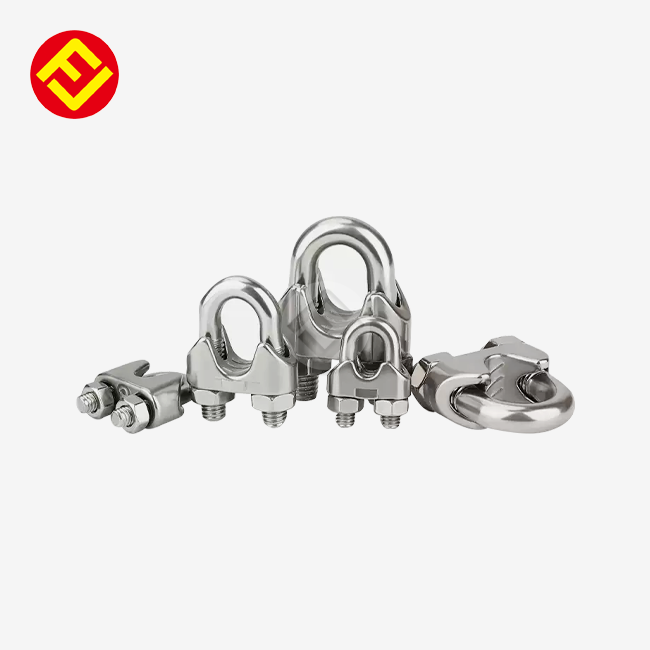
A stainless rope clamp is used to secure electric fence systems by terminating wire ropes and fastening cables. These precision-engineered devices attach loose wire rope ends back into themselves, forming sturdy loops that survive environmental stress and retain electrical conductivity. Long-lasting stainless steel fences are reliable in agricultural, perimeter security, and animal confinement applications where fence integrity affects operational safety and cost efficiency. Galvanized alternatives rust outside.


Understanding Stainless Rope Clamps for Electric Fences
Electric fence must be strong and corrosion-resistant, especially in agricultural environments with moisture, fertilizers, and temperature variations. These customized fasteners solve procurement managers and site engineers' daily problems.
Core Components and Technical Specifications
A good stainless rope clamp has three main parts that function together. The precision cast or forged saddle engages the active load-bearing segment, while the U-bolt wraps around the cable's dead end. The assembly is secured by two hex nuts torqued to manufacturer specifications. The saddle's grooved inside matches cable widths to minimize strand crushing and weakening. Precision machining and polishing provide brilliant, corrosion-resistant surfaces that withstand environmental deterioration.
The dimensional correctness of these techniques provides optimal contact area distribution. Saddle radius vs rope diameter causes point loading, speeding wire strand fatigue. Quality manufacturers have tight tolerances across size ranges, usually 2mm to 25mm rope compatibility, allowing procurement teams to standardize components across fence projects.
Why Stainless Steel Grades Matter for Fencing Applications
Outdoor installations' lifespan depends on material choice. Chromium and nickel in Stainless Steel 304 generate a passive oxide layer that self-repairs when damaged, protecting it in moderate regions with low salt exposure. This protective layer is penetrated by chloride ions in coastal or road salt environments, producing pitting corrosion in electric fence installations.
Stainless steel 316's molybdenum alloy greatly improves chlorine attack and crevice corrosion resistance. This marine-grade polymer can endure seawater spray, agricultural chemicals, and industrial contaminants that ruin other materials. Austenitic stainless grades retain clamping force during seasonal temperature cycling between -40°C and +200°C, including for a stainless steel clamp.
Initial material prices and replacement frequency must be considered by procurement specialists. 316-grade components cost more, but their long lifespan eliminates maintenance visits and unforeseen downtime, which is crucial when fence protects high-value animals or isolated installations that demand time and manpower.
Clamp Types and Size Selection Criteria
Stainless rope clamps win electric fence applications because of their field-adjustability and tool-free retightening. Heavy-duty models include stronger saddle cross-sections and larger bolt sizes to handle higher fence tensions. Duplex stainless rope clamps with two U-bolts per saddle uniformly distribute clamping pressure, making them ideal for terminating synthetic ropes or cables with fiber cores.
Match stainless rope clamp capacity to wire rope diameter and load circumstances to choose size. Small stainless rope clamps cannot grip well, enabling rope slippage under stress. Oversized units may over-torque, shattering wire strands and lowering breaking strength. With suitable size matching and installation, stainless rope clamp efficiency is 80% of rope minimum breaking load, following engineering regulation.
Rope diameter and application criticality determine installation number. The three-stainless rope clamp arrangement works for lightweight agricultural fencing with ropes under 8mm. For bigger cables or installations, four or more stainless rope clamps are needed for redundancy. Most spacing guidelines ask for one rope diameter between the first and second stainless rope clamps and six rope diameters between the rest.
How to Properly Install Stainless Rope Clamps for Electric Fences
Stainless rope clamps perform as rated or fail and compromise fence integrity depending on installation quality. Contractors and maintenance crews must grasp procedure because poor installation causes more stainless rope clamp-related failures than material faults.
Step-by-Step Installation Process
Start by choosing clean, undamaged wire rope and ensuring enough length for the termination loop. Based on application requirements, calculate loop size with enough material for stainless rope clamp placement beyond loop termination. Electric fence loops must be big enough to support strain insulators or connecting hardware without severe bending that causes stress concentration.
Place the first stainless rope clamp one rope diameter from the cut near the loop's dead end. While the U-bolt curves over the dead end, the saddle must contact the live rope, which bears load. This orientation preserves rope integrity by not crushing load-bearing strands. Hex nuts should be finger-tightened onto the U-bolt to position the saddle before torqueing.
For standard electric fence rope diameters, torque parameters range from 15 to 45 Newton-meters, depending on stainless rope clamp size and manufacturer. To avoid saddle cocking, gently alternate tension between the two nuts. Over-torquing crushed wire strands; under-torquing allowed slide. Contractor teams overseeing several installations need calibrated torque wrenches to avoid guessing.
Apply initial fence tension and let the system settle for 24 hours after placing all stainless rope clamps per amount requirements. As strands nest, wire rope shrinks somewhat under first loading. Stainless rope clamps are tightened after bedding-in to compensate for rope compression. To simplify inspections, paint or tag stainless rope clamp locations.
Common Installation Errors and Prevention Strategies
The most common installation error is reversing saddle position, or "never saddle a dead horse." Crushing the live rope instead of the dead end decreases breaking strength by 40% or more. Color-coding saddle surfaces or printing directional arrows helps field workers stay oriented in difficult weather.
Another failure mode is stainless rope clamps slipping under load due to insufficient torque, until they lose hold. However, severe torque deforms rope geometry, causing stress risers where wire strands break under cyclic strain. Compared to torqued installations, both extremes degrade service life significantly.
When installers place stainless rope clamps too close together, rope length is insufficient for U-bolt engagement. Too widely apart stainless rope clamps stress individual fasteners rather than the stainless rope clamp series. Manufacturer spacing guidelines enhance load distribution and termination efficiency.
Maintenance Protocols for Extended Service Life
Loading and environmental variables determine inspection frequency. Monthly inspections are recommended for coastal or high-tension applications, while quarterly checks are suitable for temperate climates with regular agricultural use. Nut torque, apparent corrosion, and rope condition near stainless rope clamps with wear indicators should be checked on inspection checklists.
Settlement and thermal cycling are addressed by tightening schedules. The first 24-hour retightening is crucial, followed by quarterly adjustments throughout the first year. Unless visually checking for loosening, mature systems need just yearly maintenance. Anti-seize compound during installation allows future adjustments without thread damage, especially when stainless steel galls when threaded components bind.
Crevices between saddle and rope where moisture gathers and thread engagement sites where dissimilar metals may interact are monitored for corrosion. Discoloration or surface pitting signals rapid corrosion necessitating component replacement before structural integrity deteriorate. Historical inspection data improves maintenance schedules and indicates problematic installation areas that need design changes.
Stainless Rope Clamp Selection Guide: Making Informed Decisions
Procurement decisions must combine short-term costs with long-term results. Considering material qualities, mechanical ratings, and environmental compatibility ensures selected components last longer and offer value.
Material Grade Comparison and Performance Characteristics
304 or 316 stainless steel greatly affects total cost of ownership. Grade 304 works well in minimum chloride situations like livestock facilities or inland agricultural regions with low industrial contamination. Its reduced raw material cost makes bulk procurement cheaper for large-scale fence projects with benign environmental considerations.
When fence receives coastal salt spray, road deicing agents, or chloride-containing fertilizers, grade 316 is necessary. The molybdenum additive targets pitting and crevice corrosion that penetrates 304's oxide layer. Over multi-year project lifecycles, avoiding biannual replacement cycles and labor costs offsets higher initial purchase costs.
To prevent replaced or mislabeled alloys from entering supply chains, testing techniques ensure material authenticity. Nondestructive composition verification using X-ray fluorescence analyzers ensures certified material grades meet procurement standards. From steel mill certification to final product inspection, documentation traceability offers procurement managers assurance that components will work as designed.
Comparing Clamps Against Alternative Fastening Methods
Traditional attaching stainless rope clamps enable field adaptability and reusability that permanent swaged sleeves cannot match. Stainless rope clamps install using hand tools any maintenance staff may use, unlike hydraulic crimping devices. This accessibility lowers implementation costs for dispersed fence networks when crimping equipment is difficult to mobilize.
Galvanized steel stainless rope clamps are cheaper but less corrosion-resistant. Manufacturers differ in zinc coating thickness and application quality, with thin electroplated layers breaking within months under demanding circumstances. Hot-dip galvanizing prolongs service but cannot match stainless steel's corrosion resistance. Replacement frequency and initial savings must be considered in total cost analysis to establish economic value.
Specialized stainless rope clamps meet specialized needs beyond U-bolts. Simplex stainless rope clamps are low-profile for aesthetic hardware visibility applications. Heavy-duty castings for high-tension livestock enclosure increase working loads. Comparing stainless rope clamp alternatives to application-specific requirements enhances performance and cost.
Load Capacity and Safety Factor Considerations
Working load limitations set safe operating constraints for fence tensioning and environmental loads. Manufacturers determine these ratings by destructively testing stainless rope clamp slippage and component failure loads. Safety factors are usually 5:1 to 8:1, indicating working load is 1/8 of ultimate breaking strength.
Dynamic variables complicate electric fence installations, which seldom exceed rated loads. Cycles of wind loads, animal impact, and thermal expansion promote fatigue. Conservative load ratings and safety margins accommodate for these real-world scenarios, preventing fence functioning problems.
Third-party certification standards verify manufacturer claims. The ISO 9001 quality management certification shows systematic manufacturing controls. CE certification signifies compliance with European safety requirements, important for worldwide markets and global business buying. Certificates provide consistent manufacturing quality across production batches, reducing procurement risk.
Procurement Insights: Sourcing Stainless Rope Clamps for Electric Fence Projects
Supply chain efficiency affects project timeframes and budgets. Strategic sourcing balances cost efficiency and quality assurance to ensure component availability throughout installation schedules.
Evaluating Manufacturer Capabilities and Customization Options
Manufacturer-direct connections remove markups and provide technical expertise. FLA Industrial & Trading Co., Ltd. does this with over 40 years of hardware component manufacturing expertise. Their 1,000+ product specs meet project needs from catalog goods to custom-engineered solutions.
Customization is useful when standard components don't meet application needs. Special-shaped parts, non-standard dimensions, and material grade adjustments solve installation problems that off-the-shelf goods cannot. Before production, three-dimensional design verification ensures bespoke specifications satisfy functional requirements, preventing costly rework and project delays.
Transparent manufacturing processes boost procurement trust. Precision casting creates complicated geometries with tight tolerances. Forging aligns grain structure, improving mechanical qualities. Machining and polishing provide corrosion-resistant surfaces. Understanding these process processes helps procurement teams assess supplier skills beyond pricing.
Wholesale Pricing Dynamics and Volume Strategies
Order volume affects unit pricing due to material procurement, manufacturing setup, and quality inspection economies of scale. Customers submitting aggregated orders save money because manufacturers design production processes around batch sizes that reduce changeover frequency. Considering yearly consumption across various projects might lead to volume agreements that lower acquisition costs.
Price fluctuation in raw stainless steel markets complicates procurement of stainless steel clamps. Nickel and chromium prices depend on worldwide availability, affecting stainless steel prices. Long-term supply agreements with price adjustment provisions safeguard both parties from market volatility and ensure budget predictability. Strategic inventory positions are another option when market conditions favor ahead buying.
Shipping logistics impact landing costs, especially for large hardware components with high freight prices. Weight optimization and transport damage protection are achieved with container optimization. In tight project timeframes, domestic storage eliminates foreign shipping delays for repeated shipments. Total landed cost, not FOB pricing, shows procurement value.
Quality Assurance and Supply Chain Reliability
The repercussions of crucial fence component failure surpass replacement part prices. Substandard gear saves nothing compared to livestock escape, security breaches, and harm liability. Systematic inspection and testing prevent these dangers with strict quality assurance methods.
Material traceability links completed components to mill certificates of alloy composition and mechanical qualities. This document trail is vital for regulatory compliance or liability investigations requiring due diligence. Comprehensive traceability systems give procurement teams credible proof that lower-tier vendors cannot duplicate.
Production batches perform consistently due to testing standards. Load tests check clamping and slippage. Salt spray simulates years of outside exposure in corrosion testing. Dimensional inspection verifies production tolerances meet design. Verified suppliers supply dependable components that work as engineered without field failures that affect operations.
Ensuring Safety and Compliance with Stainless Rope Clamps in Electric Fence Systems
Industry and regulatory standards provide minimal performance requirements for humans, livestock, and property. Understanding requirements helps choose and install compatible components.
International Standards and Certification Requirements
The ISO 9001 accreditation shows systematic quality management in production. This standard demands documented methods, calibrated measuring equipment, and continual improvement to decrease defects and increase product uniformity. ISO certification is increasingly required for supplier qualification in procurement rules.
CE certification demonstrates compliance with EU safety standards on mechanical strength, material safety, and environmental criteria. CE conformity indicates manufacturer adherence to international quality standards, although it is not required for U.S. sales. European components outperform U.S. standards, increasing performance margins.
Industry standards include wire rope termination in numerous applications. Understanding electric fence standards helps procurement teams choose components and check supplier compliance. Standards bodies offer testing methods and acceptance criteria for manufacturers to claim conformity.
Risk Mitigation Through Proper Component Application
Failure mode analysis helps reduce fence system risk by identifying vulnerabilities. Environmentally inappropriate material selection causes corrosion failure. Undersized or improperly installed components cause mechanical failure. Hardware conductor continuity loss causes electrical failure. System vulnerability is reduced by selecting and installing components for each failure mode.
When fence tightness exceeds termination hardware capabilities, over-tensioning is a concern, including for stainless rope clamp. Installation of tension indicators and maximum tension requirements avoids this. Field mistakes that affect component integrity are reduced by training installation staff to identify strain levels.
Documentation requirements vary by application and jurisdiction. Commercial security installations require as-built documents and maintenance logs, but agricultural operations may not. Documentation requirements that match application criticality protect enterprises from liability and increase maintenance efficiency.
Maintenance Schedules and Replacement Criteria
Preventive maintenance prolongs component life and detects issues before failure. Visual inspection reveals stainless rope clamp-area corrosion, loose fasteners, and rope deterioration. Scheduled retightening accounts for rope settling and heat influences that lessen clamping force. Documentation tracking records problematic areas that need design modifications.
Replacement criteria weigh economics and conservative safety margins. Visual corrosion beyond surface discoloration indicates material weakness needing component replacement. Stripped threads or distorted components require rapid repair to maintain clamping force. Rope damage near stainless rope clamps indicates incorrect size or installation, requiring stainless rope clamp and rope replacement and installation technique revision.
Spare parts stocking techniques allow maintenance staff to get replacement parts without delays. Critical installations need on-site inventories for replacements. Less essential applications may use supplier stocking strategies to fulfill quickly without customer inventories. Balance carrying costs and downtime risks to improve inventory strategy.
Conclusion
Corrosion-resistant wire rope termination in stainless rope clamps provides critical functionality for electric fence systems in various climates. Choosing between 304 and 316 grades relies on ambient chloride exposure and budget, and suitable installation technique affects component quality. Manufacturer partnerships, customisation, and quality verification secure project success and optimize total cost of ownership. International standards and proactive maintenance plans ensure fence safety and reliability throughout operating lifecycles.

FAQ
1. What quantity of clamps does my electric fence installation require per termination point?
Wire rope diameter and load determine stainless rope clamp amount. Three stainless rope clamps per termination are normal for 2mm–6mm ropes. From 8mm to 19mm, four stainless rope clamps are needed for retention. Load distribution is optimized by spacing the first stainless rope clamp one rope diameter from the loop end and following stainless rope clamps at six diameters. Critical installations or high-tension applications may require more stainless rope clamps.
2. How does stainless steel grade selection affect long-term maintenance costs?
Grade 304 is cheaper for inland agriculture with less salt exposure. In coastal areas or where road salt and agricultural chemicals cause corrosion, grade 316 is required. 316 components cost more but last longer, eliminating replacement cycles. Any installation using chlorides benefits from 316 grade's lower material and labor costs over time.
3. Can I reuse stainless rope clamps when modifying fence layouts?
Stainless rope clamps with intact threads and structural integrity can be carefully removed and replaced during fence adjustments. Check threads for galling or cross-threading that hinders nut rotation. Look for saddle groove distortion suggesting overtorquing. To avoid clamping force loss, replace damaged stainless rope clamps. Reinstall threads with new anti-seize compound and original torque specs to restore retention.
Partner with FLA Industrial & Trading Co., Ltd. for Premium Stainless Rope Clamp Solutions
Your electric fence projects need reliable hardware in harsh operational situations. FLA Industrial & Trading Co., Ltd. makes precision-engineered stainless rope clamps with over four decades of hardware production experience. Whether you need conventional catalog Products" target="_blank" style="color:blue" >products or bespoke specifications for special application needs, our ISO9001 and CE-certified manufacturing methods assure consistent quality throughout every component. We provide stainless rope clamps in 304 and 316 stainless steel to meet your environmental and performance requirements. Learn why procurement experts in the US, Germany, and Australia choose FLA Industrial for critical infrastructure stainless rope clamp projects by contacting our technical team at sales@flaindustrial.com.
References
1. American Society for Testing and Materials. Wire Rope Users Manual, Fourth Edition. ASTM International, West Conshohocken, 2018.
2. European Committee for Standardization. Steel Wire Rope Slings - Safety - Part 5: Stranded Wire Rope Slings for General Lifting Service. EN 13414-5:2003.
3. International Organization for Standardization. Quality Management Systems - Requirements. ISO 9001:2015.
4. McKenna, D. Rigging Handbook: Principles of Safe Load Handling and Rigging Practices. Industrial Press, New York, 2017.
5. National Agricultural Safety Database. Electric Fence Installation and Maintenance Guidelines. Retrieved from agricultural safety research publications, 2019.
6. Specialty Steel Industry of North America. Designers' Handbook - Stainless Steels for Wire Rope and Springs. SSINA Technical Publications, Washington D.C., 2016.