Ultimate Guide: Choosing the Best Pneumatic Jack for Car
2026-04-23 09:46:06


When you choose the right hydraulic lifting tools, it changes how quickly and safely you can work on cars. A small pneumatic jack uses compressed air to quickly and reliably lift vehicles without the physical strain of hand jacks or the difficulty of maintaining hydraulic systems. This guide shows procurement managers, shop leaders, and expert decision-makers how to make important evaluations based on things like load capacity matching, working safety, source screening, and long-term cost management. Understanding these basic selection rules is important whether you're buying for a high-volume tire center, a building fleet, or big goods to sell later. They will help you make sure that your investment pays off in terms of uptime, operator happiness, and compliance.
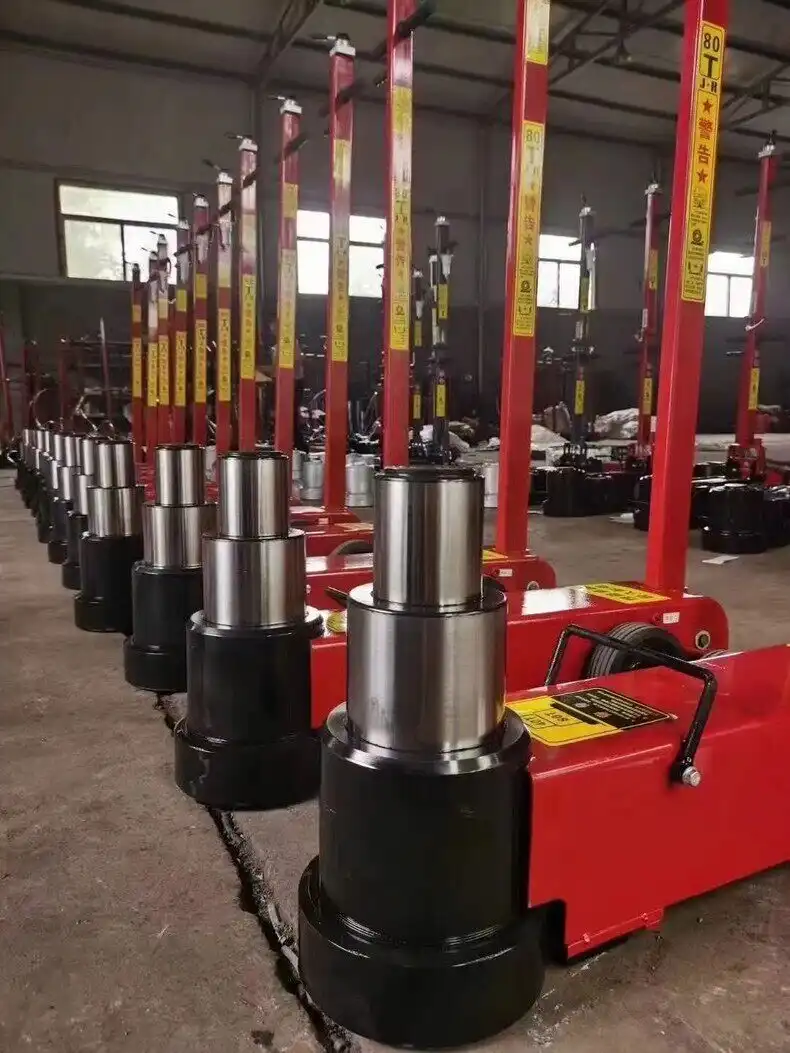
Understanding Small Pneumatic Jacks: Functionality and Benefits
Pressurised air from a standard compressor moves through strengthened interior cylinders in air-powered jacks, turning mechanical energy into controlled vertical raising force. These units reach full extension in three to five seconds, compared to hydraulic types that depend on fluid mechanics and human pumping. This makes response times much faster in business workshops and industrial repair bays.
Core Components Driving Performance
The design is made up of three parts that work together. Precision-machined valves in the pneumatic control unit control the flow of air in and out, keeping the pressure fixed between 0.4 and 0.8 MPa. A chrome-plated cylinder inside the lifting chamber holds high-quality seals, usually made of fluororubber or nitrile rubber, that are designed to keep the chamber from leaking even when it is being cycled over and over again. The flexible stabiliser, which is made of carbon or alloy steel, stops horizontal fracture while the airbag fills up. This keeps the load level while it rises.
Choice of material has a direct effect on life. Chrome treatment on the inside of the cylinders stops rust in damp workshop spaces, and anodised aluminium housings make the whole thing lighter without losing strength. Safety valves let out extra air automatically to keep the tire from over-inflating, and exhaust mufflers quiet the tire when it deflates quickly.
Operational Advantages Over Hydraulic Systems
For the main benefit, speed is key. Traditional floor jacks need 15 to 20 manual pumps to lift a car. Air jacks, on the other hand, reach working height almost instantly, which keeps technicians from getting tired during frequent brake checks or tire changes. This speed saves real money on labour costs. For example, a busy service center that works on 40 cars every day can get back up to two hours of paid time just by lifting things faster.
The needs for maintenance are also very different. Hydraulic jacks need to have their oil changed, seals replaced, and leaks checked on a frequent basis. Pneumatic units don't have to worry about these fluid issues; they only need to have their air filters cleaned and their seals checked every so often. Since there is no hydraulic oil, there are no environmental risks from spills. This makes following the rules easier in places with strict rules about getting rid of trash.
A small form works well in workshops with limited room. Many air jacks can be lowered to less than 150 mm, which makes them easy to slide under lowered cars or machinery with low ground clearance—situations where regular bottle jacks can't work. Because they have a low appearance, they can't be used for fixing changed vehicles or doing precise adjustment work.
Evaluating Application Suitability
Pneumatic jacks like mini air jack are great for quickly placing and lifting things over and over, but they aren't made to hold heavy loads for long periods of time. Safety rules in the industry say that motorised jack stands must be used for any work that needs to be done under a car for a long time. The lifting device quickly puts the load in place, but techs must always engage the secondary support structures before they can work on the bottom.
These tools can work in temperatures ranging from -20°C to +80°C, so they can be used on both cold building sites outside and warm spaces inside. But people who work in harsh environments should check the specs of the seal material. Nitrile rubber works well in normal conditions, while fluororubber stays flexible in a wider range of temperatures.
Key Considerations When Choosing a Small Pneumatic Jack for Cars
The first step in safe buying is matching the pulling ability to the weight category of the car. Not describing enough capacity can lead to a catastrophic failure, while designing too much increases costs without adding any usefulness. The best choice is made after a careful analysis of your fleet's make-up.
Calculating Load Requirements Accurately
Start by making a list of the largest cars that are usually repaired in your business. Most compact sedans weigh between 1.2 and 1.5 tonnes per axle, most mid-size SUVs weigh between 1.8 and 2.2 tonnes, and most full-size trucks weigh more than 2.5 tonnes per lifting point. Always add 25% to the maximum predicted load as a safety cushion. This buffer takes into account uneven weight distribution and dynamic forces during the first lift contact.
Most automobile repair jobs can be done with 2.5- to 3-ton pneumatic types, which can handle everything from passenger cars to light industrial vehicles. Heavy-duty truck or construction equipment shops should look at units listed at 4 tonnes or more to make sure they have enough space for fully loaded work vehicles.
Comparing Jack Types for Specific Applications
Bottle jacks have the most lift per foot because they are made with a straight barrel. Their small base makes them easy to store in small areas, and their vertical position makes them very stable when big things are put on them. But the narrow contact pad needs to be placed carefully so it doesn't slip on the frame rails of the vehicle.
Floor jacks, which are sometimes called trolley jacks, have a frame with wheels and a horizontal lifting system. The low-profile saddle makes it easy to slide under cars, and the bigger length makes placement more stable. These types work well in places with a lot of foot traffic where techs can work on several cars at once, but they take up more floor room when they're not in use.
Pneumatic scissor jacks are portable and can be used with a range of lift heights. The collapsable scissor frame stretches vertically while keeping its stable square base. This makes it perfect for small areas where moving side to side is limited. These types work well in groups of mobile service trucks and emergency roadside help vehicles.
Implementing Critical Safety Protocols
Accidents can be avoided by properly preparing the surface. Jacks should always be put down on flat, hard surfaces, like concrete or steel flooring that doesn't bend much. When heavy things are put on them, asphalt and packed dirt can move, making dangerous tilt angles. Putting rubber or polymer pads under the jack base spreads the pressure over a bigger area, making it less likely that the pressure will go through soft materials.
Routine inspections must be a big part of operator training. Technicians should check that air lines don't have any cracks, links are tight and safety valves work properly before each use. Any unit that has slow rising speeds or pressure changes should be taken out of service right away so that the integrity of the seal can be checked.
Don't lift more than the rated capacity, and don't use spacers or adapters to make the pad higher. These changes can cause structures to fail because they change how loads are distributed. If the jacking points on a car are too high for a normal pad to reach, ask for a model with an extra saddle that is made for that purpose.
Maintenance Strategies for Extended Service Life
Lubricating working parts of small pneumatic jack on a regular basis keeps them from wearing out too quickly. In places with a lot of use, oil the telescoping guide rods and hinge points once a month with light machine oil. Do not use too much oil on seals because it attracts dust and grit that speed up wear.
Every three months, the seal should be inspected. If you look at the material and see cracks, distortion, or stiffening, that means it has been damaged by ozone or changing temperatures. Replacement seals must be made to the same specs as the originals. Using materials that aren't compatible lowers pressure retention and voids the guarantee.
Professional service once a year includes testing for leaks and confirming the burst pressure. Certified techs put too much pressure on the unit to make sure it's structurally sound, and then they watch the pressure drop over 24 hours to find tiny leaks. This preventative process finds problems that are about to happen before they lead to accidents at work.
Buying Guide: Procurement Tips for Small Pneumatic Jacks in Bulk and Retail
To find good moving tools, you have to carefully evaluate suppliers and follow through on your contracts. Problems with low-quality tools go beyond the cost of the initial buy. They include the risk of liability, lost productivity, and damage to the company's image from accidents at work.
Vetting Suppliers for Manufacturing Credibility
Authorised makers who have ISO 9001 approval show that they are dedicated to quality management systems that include checking the designs, controlling the production process, and setting up methods for tracking Products" target="_blank" style="color:blue" >products. Ask for proof of recent tests and actions taken to fix non-conformances; trustworthy providers will be happy to give you information about their quality systems.
The CE mark means that the product meets European safety standards, and the ATEX mark means that it is safe for use in explosive settings. Instead of depending only on documents given by the seller, check these qualifications through independent certificate sites. In markets that aren't controlled, fake licenses are easy to find, leaving buyers open to product liability claims.
OEM partnerships offer benefits for buying things that go beyond store outlets. When you work directly with a maker, you can change specifications like lifting heights, pad designs, or seal materials to fit your specific needs. Minimum order numbers usually start at 50 units, which is a level that medium-sized wholesalers and big fleet owners can reach.
Understanding Price Structures and Volume Incentives
The prices that are listed are based on basic specs and common features. Requests for customisation, like non-standard stroke lengths, special surface treatments, or unique quick-disconnect connections, result in higher engineering costs and longer wait times. Get thorough quotes that list these extra costs so that there are no budget shocks during the approval cycles for purchases.
When you sign a bulk buy deal, you can use tiered discounts. Most of the time, volume limits are broken at 100, 500, and 1,000 units. At the top levels, prices rise to 15 to 25 percent. These economies help distributors who serve area store networks, which makes them more competitive in markets that are split up.
Payment terms depend on the seller and the size of the order. Accounts that have been open for a while and have been checked for credit have standard net-30 terms. Letters of credit or partial advance payments may be needed for new relationships or foreign deals. This adds to the total cost of acquisition. Discuss these terms during the initial contract talks to get a better idea of how they will affect your cash flow.
Evaluating Warranty Coverage and Support Terms
For 12 to 24 months after delivery, full guarantees cover flaws in the materials or the way they were made. Carefully read the restriction terms, because most warranties won't cover damage that happens because the unit was modified without permission, used beyond its stated capacity, or stored incorrectly. Taking pictures of the right places to use something saves you from unfair guarantee denials.
Support systems after the sale for mini air jack are what set good providers apart from average ones. Having access to technology experts who understand the specifics of your application speeds up fixing during setup and ongoing use. Suppliers who promise to respond within 24 hours show a commitment to service that explains a small extra price.
The cost of long-term ownership is directly affected by the supply of replacement parts. Make sure that wear parts will still be made for at least five years, and check the wait times for important seals and valves right now. When suppliers phase out product lines, they often run out of parts, leaving equipment without repairs for too long.
Navigating Logistics and Delivery Complexities
International shipping from manufacturing hubs adds factors that make it harder to predict when packages will arrive. It usually takes 30 to 45 days for standard ocean freight from Asian sources to US ports, plus time for customs clearance. Express plane freight cuts travel time to five to seven days, but it also makes freight prices three to five times higher.
When ordering in bulk, consolidated container packages are the most cost-effective way to ship. A normal 40-foot crate can hold between 800 and 1,000 compact jacks, depending on how well they are packed. This keeps the cost of shipping each unit below the minimum for air travel. Due to combined handling fees, the cost of each unit of freight for partial container loads is higher.
Costs vary depending on the distance and speed of delivery from ports to final places that are inside the country. Distributors that get mixed-SKU packages are served by less-than-truckload carriers, while big orders of a single SKU are sent directly to fleet repair facilities by dedicated truck contracts. When you compare bids from different suppliers, you should include these transportation costs in the total landing cost.
Choosing the Best Brand: Trusted Small Pneumatic Jack Manufacturers and Warranty Services
A brand's image is a good indicator of how consistently it is made and how easily it can be found parts in the future. Established brands can charge higher prices because their products are known to be reliable and their customer service teams are quick to respond to problems. New brands compete by offering better prices compared to what they offer.
Assessing Manufacturer Track Records
A long history in an industry means that it has been around through many economic downturns and technology advances. Suppliers who have been in business for at least 20 years have been through quality problems, changes in regulations, and intense competition that wipes out small players. This length of time suggests long-lasting business practices and a wealth of technical knowledge.
Client collections show that the market is accepted by buyers of all levels of sophistication. Manufacturers that work with Fortune Global 500 companies have to go through strict buyer approval tests that check their production skills, quality systems, and ability to pay their bills. Passing these tests shows that you can meet strict requirements and performance obligations.
Leaders in small pneumatic jack are different from product makers because they spend in technical progress. Patents and secret methods, like improved seal compounds, fast-exhaust valve designs, or corrosion-resistant surface treatments, show that a company is committed to research and development, which improves performance. Check patent files and technical papers that have already been written to see how innovative a company is.
Comparing Warranty Structures Across Brands
The standard length of a guarantee is between 12 and 24 months, but the coverage varies a lot. Limited guarantees only cover new parts, while comprehensive plans cover the cost of labour for guaranteed repair. To find out how much the guarantee will cover in total, multiply the average number of work hours by the rate of service in your area.
People who don't like taking risks and use mission-critical tools will like the extended service choices. For small fees, usually 10 to 15 percent of the buying price, these plans offer coverage for an extra 36 or 60 months. Compare extended plans to self-insurance plans. For big groups, it may be more cost-effective to set away guarantee cost fees as equipment replacement savings.
Geographic service networks affect how easily warranties can be carried out. When suppliers have regional service centers, they can quickly get parts and send technicians to fix problems with equipment, which cuts down on downtime. When a centralised warranty service needs the item to be sent back to the plant, it causes weeks of downtime and high freight costs that lower the value of the guarantee.
Leveraging OEM Customization Capabilities
Engineers who work with makers who can make special setups can help non-standard uses. Changing the lengths of the cylinder strokes can work with cars that have different jacking point designs, and special pad forms spread the weight over fragile composite chassis.
Material replacements deal with differences in the world. Using stainless steel parts is better for naval settings that are prone to corrosion, and low-temperature seal solutions keep things flexible in Arctic service conditions. Because of the way distributors plan their inventory, these changes usually need a minimum order commitment of 50 to 100 units.
With private labelling choices, wholesalers can build brand recognition in local areas. Custom colours, logos, and model names are added by manufacturers to standard platforms to make them seem different and support expensive store placement. When you buy more than 200 units, the costs of the tools used to make unique labels and packages usually spread out over time.
Conclusion
When buying a small pneumatic jack, you have to weigh the immediate functional needs against the costs that will come up over time and the practical risk management. Buyers who are good at what they do make sure that the load capacity matches the make-up of the fleet, check the manufacturer's certifications through outside sources, and build relationships with suppliers that allow for customisation and quick technical support. The compressed air technology offers unique speed benefits in high-volume settings. Proper upkeep procedures and user training extend the life of tools and improve safety on the job. Procurement teams find lifting solutions that increase output, protect workers, and give clear returns on capital investment by looking at the whole ownership experience, from the initial design to guarantee support and parts available.
FAQ
How do I figure out what my car fleet's lifting ability should be?
Find the service mix's biggest car axle weight and then add 25% as a safety cushion. Most car uses need jacks that can hold 2.5 to 3 tonnes, but big business trucks need jacks that can hold 4 tonnes or more. Check the weight by looking at the manufacturer's instructions or using approved scales.
When should repair be done to make sure safety and efficiency are at their best?
Before each shift, look for damage in the seals and air lines. Once a month, put a little oil on the guide rods, and once a year, have a professional service it that includes checking the pressure and looking for leaks. Any machine that has slow lift speeds or unstable pressure should be replaced right away.
Can air-powered jacks handle different types of car weights well?
Units work safely with loads of all sizes, from small cars to their highest reported capacities. The most important thing is to never go over the stated capacity number. Using the right fittings for each type of jacking point arrangement makes sure that loads are transferred safely between car types.
Partner With a Proven Small Pneumatic Jack Manufacturer
In the car service, building, and industrial repair fields, reliable small pneumatic jack is key to improving working efficiency and worker safety. Get in touch with FLA Industrial & Trading Co., Ltd. to learn more about our wide selection of air jacks designed for tough business settings. Our team has been making high-quality products for almost 40 years and is ISO 9001 certified. We offer quality-assured solutions that are backed by strict testing methods. Leak detection, pressure validation, and lifetime endurance trials make sure that every unit meets the highest performance standards. Because every application is different, our engineering experts help you make the right choices about lifting heights, pad designs, and materials to meet your needs.Get in touch with our expert sales team at sales@flaindustrial.comto talk about prices for large purchases, OEM relationship possibilities, and shipping times that are perfect for your supply chain. Find out why Fortune Global 500 companies trust our industrial skills to make precision-engineered tools that make their workers safer and more productive.
References
Thompson, R.L., & Martinez, J.K. (2022). Pneumatic Lifting Systems: Design, Safety, and Industrial Applications. Mechanical Engineering Press.
Industrial Safety Council (2023). Automotive Service Equipment: Standards and Best Practices for Vehicle Lifting Devices. National Safety Publications.
Chen, W., & O'Brien, P. (2021). "Comparative Analysis of Lifting Technologies in High-Volume Automotive Service Environments," Journal of Industrial Equipment Management, 47(3), 112-129.
Global Pneumatic Tools Market Research (2024). Trends in Compressed Air Equipment Procurement: B2B Insights and Forecasts 2024-2028. Industry Analysis Group.
Williams, D.S. (2023). Fleet Maintenance Equipment Selection: Lifecycle Cost Analysis and Procurement Strategies. Commercial Vehicle Technical Institute.
European Committee for Standardization (2022). Pressure Equipment Safety: Compliance Guidelines for Pneumatic Lifting Devices in Professional Applications. CEN Technical Standards Division.
YOU MAY LIKE