Understanding the Essential Role of Pipe Wrenches in Modern Applications
2026-05-18 09:28:50


The heavy pipe wrench is an important tool for repair teams that have to deal with corroded, seized, or over-sized pipe joints on infrastructure projects that need steady performance. This specialized tool has the holding power, torque, and longevity needed for plumbing in factories, oil and gas operations, and building projects. heavy pipe wrench is different from regular adjustable wrenches because their jaws tighten themselves and their design is stronger so they can handle high pressure without breaking. Knowing how these tools work, how to choose the right model, and how to keep them in good shape can have a big effect on how well businesses in the manufacturing, building, and utility sectors run their operations and keep workers safe.
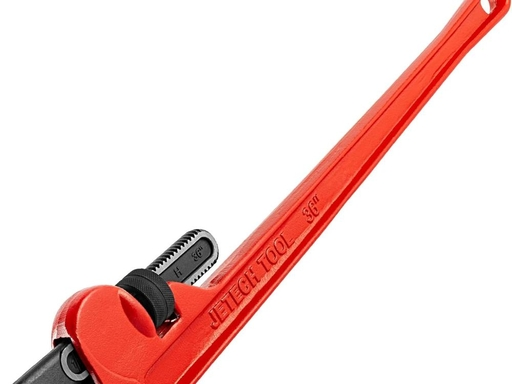
Heavy Pipe Wrenches Explained – Key Features and Functional Benefits
There is a separate group of pipe-gripping tools called heavy pipe wrench that are designed to work in harsh industrial settings. These tools are very different from regular ones because they are built to last, have more power, and are made of special materials that are made to handle big pipes and high-stress situations.
Construction Materials and Manufacturing Excellence
Every professional-grade heavy pipe wrench is made from a carefully chosen mix of materials that are strong and last a long time. Usually, the jaw parts are made from chromium-molybdenum or chromium-vanadium alloy steel, which is chosen because it is very hard to wear down and change shape. Differential induction hardening methods are used on these jaws to make the teeth that grip things harder (HRC 55–60), while the shanks stay tough so they don't break easily when they are hit hard.
The construction of the handle changes depending on the purpose and the operator's choice. Ductile iron grips that are made to meet ASTM A536 standards are very durable and can handle the rough conditions of the workplace, such as drops and contact to harsh chemicals. This choice of material is especially useful in the oil field, where tools are often exposed to digging muds, hydraulic fluids, and substances that eat away at metal. Industrial-grade aluminum alloys are used in other designs. They are about 40% lighter than iron equivalents without losing structural strength. This weight advantage is very important for overhead setups or long repair periods where tired operators directly affect safety and productivity.
The Self-Tightening Mechanism Advantage
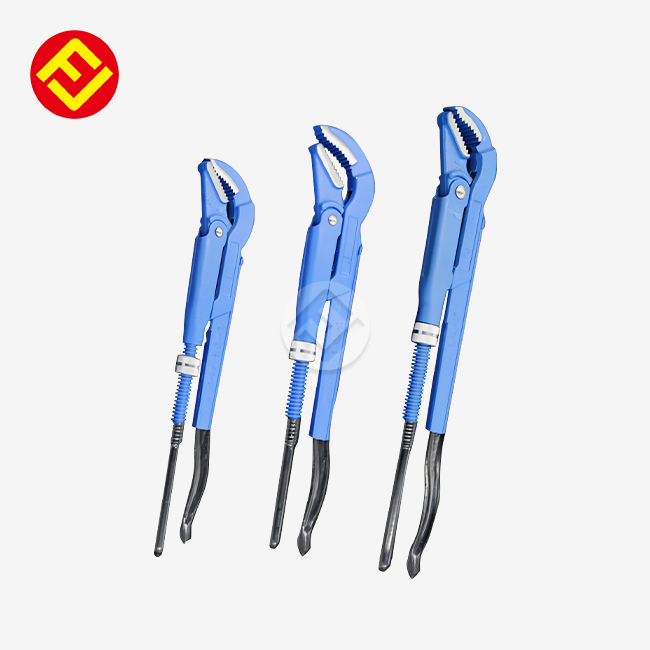
Professional heavy pipe wrench is distinguished by their full-floating hook jaw design, which makes a self-gripping wedging action that is very different from that of regular adjustable wrenches. When you press down on the handle, the floating mouth turns around naturally and bites deeper into the workpiece. This mechanical advantage makes the gripping force equal to the torque applied. This stops tools that aren't as well made from slipping when they're working with rounded, oil-covered, or rusted pipe surfaces.
This self-tightening function solves a number of important problems in the business at the same time. Technicians often use standard tools that slip and damage the pipe surface when they come across stopped joints that have been exposed to temperature changes, wetness, and years of oxidation. heavy pipe wrench types have aggressive serrated teeth that keep in good touch even when the surface isn't in the best shape. The design also improves safety by lowering the chances of sudden slips that can hurt operators, especially in small areas where their balance and placement are already weakened.
Torque Capacity and Structural Design
Another engineering development that sets professional-grade tools apart from consumer models is the I-beam handle design. The best strength-to-weight ratio is reached by focusing material along the main stress lines and removing extra mass from places with low stress. The result is a tool that can take a lot of force without breaking or bending, even when operators are tempted to add "cheater bars" to the ends of the handles to make them longer for really tough jobs—though all makers say not to do this because it could cause the tool to fail.
When heavy pipe wrench is made to meet the standards of the US Federal Specification GGG-W-65IE and ASME B107.100, they are put through a lot of proof torque load tests. These approvals make sure that every tool meets certain performance standards and that the quality stays the same from one production batch to the next. The testing procedures make sure that tools can handle their stated force capacity over and over again without the jaws slipping, the handle deforming, or the pins shearing. If any of these things happen, they could be dangerous in the field.
How to Use and Maintain Heavy Pipe Wrenches Effectively?
To get the most out of a tool and keep the person safe, you need to know both the right way to use it and how to do routine maintenance. If you don't use the heavy pipe wrench properly or let it break down over time, even the strongest ones will not work right or could even be dangerous.
Proper Positioning and Adjustment Techniques
The right way to place the jaws is the key to using a heavy pipe wrench correctly. The tool needs to be set up so that the hook jaw can bite deeper into the object in the direction that the handle turns. For this reason, the wrench is usually put in place so that the hook jaw faces the direction of movement. This is not what many new users think should happen because they think the fixed heel jaw should move first.
Before you use force, make sure the jaw hole is as close as possible to the width of the pipe. The device for adjusting should put both jaws in a position where they touch the pipe surface at the same time. This will spread the holding force evenly across the pattern of serrated teeth. If there is too much space between the mouth and the pipe surface, there is less mechanical benefit. This can lead to teeth wearing out faster because the pressure is concentrated on fewer contact points.
When you need to use a lot of force, position your body so that you can push the handle instead of pulling it. Pushing improves balance, eases stress on the back and shoulders, and makes things safer in case the link quickly breaks. When working in small areas where you can't move around freely, make sure you have stable footing and enough space in the direction you want the handle to move.
Troubleshooting Common Operational Issues
When the jaw slips during surgery, it usually means one of several problems that can be fixed. The most common reason is teeth that are worn down or smoothed, especially in tools that have been used for a long time on harder pipe materials. When teeth lose their sharp shape, they can't go through rough spots on the pipe surface to make a mechanical lock. Regularly check the teeth in good lighting, and replace the jaws when wear starts to show. Don't wait until they completely break during important operations.
Too much play or wobble in the hook jaw assembly could mean that the pivot pins are worn out or that the case is stretched. The moving jaw system allows for some lateral movement, but too much play gets in the way of aligning the teeth properly and makes it harder to grip. This problem usually gets worse over time, so feeling a suspect tool against a brand-new one is a good way to figure out what's wrong.
Most of the time, dirt building up in the threaded parts or not enough greasing causes the adjustment mechanism to become stiff or stick. Good wrenches have self-cleaning threads that make this problem less of a problem, but places with a lot of dust, like concrete dust or fine metal bits, can make these features useless. Usually, a full cleaning, disassembly, and re-lubrication can make the tuning action smooth again.
Maintenance Best Practices for Longevity
Setting up regular cleaning routines for tools greatly increases their longevity and keeps them working well. Wipe down all surfaces with a clean cloth after each use, especially in places where there is rough dust or chemicals that eat away at things. This will get rid of any dirt or dust that might be there before it can damage the material through rust or abrasion. Pay close attention to the jaw teeth and adjustment threads because that's where material tends to build up the most.
At the end of each work session with a heavy-duty pipe wrench, put a little light machine oil on all the moving parts, like the jaw pivot point and the threads on the adjustment mechanism. By doing this, you create a shield against moisture that keeps the tool safe and makes sure it works well when you need it again. Heavy greases can trap rough particles, and penetrating oils can't be used as long-term lubricants because they evaporate, leaving parts exposed.
More than most workers know, the way tools are stored affects how long they last. No matter what kind of coatings they have, tools that are kept in damp places, directly on concrete floors, or in truck beds that aren't covered will rust faster. The best places to store things are in climate-controlled areas with tool boxes or wall-mounted racks. Keeping tools in order also keeps them from getting broken by mistake, which can happen when heavy wrenches are thrown together while being moved.
Procurement Guide: How to Source and Buy Heavy Pipe Wrenches for Your Business?
When buying professional-grade heavy pipe wrench strategically, you need to think about more than just the price per unit. You need to think about the total cost of ownership, how reliable the supplier is, and how well the tool's specs match your real practical needs. A methodical approach makes sure that companies get tools that will help them in the long run instead of ones that will fail early or not work well, which can cost a lot in the long run.
Factors Influencing Acquisition Costs
The main factor that affects price is the size of the tool. Handle lengths range from 14 inches for small jobs to 48 inches for heavy-duty work on industrial pipes with large diameters. Costs tend to go up or down in a straight line with size, but at the very large and very small sizes, where specialized production processes are needed, the link is less straight. Before setting maximum sizes, organizations should make a list of their real pipe diameter variations. Using the right tool size for the job at hand keeps costs low, reduces user fatigue, and improves accuracy.
Choosing the right material has a big effect on the price. For example, aluminum models cost 40 to 60 percent more than ductile iron models with the same capacity. This difference is due to the higher cost of raw materials and the specialized production skills needed to make lighter constructions that are just as strong. Companies should figure out if reducing weight leads to real gains in work or lower risks of injury that make the investment worth it. Aluminum tools often pay for themselves quickly through increased productivity in jobs that require a lot of overhead work, long hauls to rural work sites, or operators with physical limits.
Different tools with similar specs have very different prices because of how the brands are positioned and what warranties they cover. Premium makers can charge more because they have better quality control, more replacement parts, and longer guarantee plans that may cover both problems with the product itself and normal wear and tear. Cheaper options work fine for casual use, but they're rarely a good value for money in professional settings where tools breaking down can cost a lot of money and cause safety problems.
Evaluating Purchasing Channels and Supplier Relationships
When you buy in bulk from industrial wholesalers, you can get discounts and still use the same system for technical help and warranty service. Established wholesalers usually keep new parts in stock, can help with specifications, and keep in touch with maker representatives who can handle particular needs. Building long-term relationships with skilled wholesalers adds value above and beyond transactional price by giving you access to their knowledge, allowing you to choose your own shipping terms, and giving you priority treatment during supply disruptions.
It's best to work directly with manufacturers of a heavy-duty pipe wrench when you need to make a lot of purchases or when you need to make changes that aren't possible with standard store items. FLA Industrial & Trading Co., Ltd. is an example of a maker that offers full help throughout the buying process, from figuring out the specifications to delivering the goods and providing service after the sale. With almost 40 years of experience making things and more than 1,000 product specifications, well-known makers have the technical know-how to match tools perfectly to the needs of an application. Their quality control systems make sure that all of their production batches are the same, which is very important when standardizing tools across multiple job sites or changing units that are already in stock.
Buying in bulk saves money per unit, but you need to carefully look at how much you actually use and how much space you have. When organizations figure out the best amount of inventory to buy, they should take into account handling costs, the risk of items becoming obsolete, and the possibility that specifications could change, leaving them with too much inventory. Setting up master agreements with planned releases is a good way to get big price benefits while still being able to change delivery amounts as needed for projects.
Quality Verification and Certification Requirements
Specifications for purchases should clearly state that they must meet well-known standards in the field, such as ISO9001 certification for quality management, ASME B107.100 performance standards, and the necessary CE certifications for tools that will be sold in Europe. These certifications give third-party confirmation that the methods used to make the Products" target="_blank" style="color:blue" >products have enough quality controls and that the final products work at a certain level.
Ask for proof that the materials used for important parts, especially the jaw and handle, are certified. Reputable makers keep full traceability systems that keep track of raw materials from the beginning of the production process to the end result. This lets them provide certified material test reports (CMTRs) that show the composition and mechanical qualities of alloys. This paperwork is very helpful when tools are going to be used in controlled fields that need to qualify the equipment or when it's time to show that the tools meet the requirements for a contract.
Sample testing before placing big orders is a good way to make sure that the specs being claimed are accurate. Ask the shortlisted suppliers for pre-production samples and do side-by-side tests to check the jaw grip on typical pipe samples, the smoothness of the adjustment mechanisms, and the general comfort. This hands-on testing often shows differences in the quality of making that can't be shown by specs alone.
Conclusion
heavy pipe wrench models are still important tools in many industries, even though similar tools have come a long way in the last few decades. Because they are mechanically simple, have been shown to be reliable, and work well in challenging situations, they will continue to be useful for plumbing setups, oil and gas operations, building projects, and maintenance tasks. When purchasing managers know the technical differences between tool types, how different materials affect performance and durability, and how to build relationships with reliable providers, their companies can keep operations running smoothly while keeping costs low. As worries about ergonomics grow and digital integration opens up new possibilities, the basic pipe wrench design keeps changing to meet the needs of the workforce and new rules.
FAQ
What size pipe wrench should I purchase for general industrial applications?
The best size relies on the widths of the pipes you use most often. For most industrial plumbing, an 18-inch heavy pipe wrench is enough to handle pipes up to 2 inches in diameter. A 24-inch type can handle pipes up to 3 inches in diameter, which is enough for most commercial uses. Companies that work with a range of pipe sizes usually keep a number of wrench sizes on hand so that they don't have to squeeze too-big or too-small tools into tight areas. It is better for both speed and safety when the right tool size is used for the job.
How often should jaw components be replaced?
When teeth with jagged edges become softened or rounded to the point where they slip during normal use, you need a new jaw. A close look at the teeth shows that the sharp triangle shape is wearing away, turning into rounder nubs. Tools that are used continuously in industry usually need new jaws every year, but the exact time depends on how much they are used and how hard the pipe material is. If you replace your teeth before they completely fall out, you can avoid the stuck connections and injuries that come with unexpected sliding.
Can I extend the handle with a pipe for additional leverage?
All tool manufacturers say that you shouldn't use "cheater bars" or pipe extensions because they put too much force on tools that aren't designed to handle it. This practice increases the chance of the handle breaking, the jaw pin shearing, or a quick catastrophic failure that could cause serious harm. Instead, choose a bigger wrench size that gives you enough force within its design limits for jobs that are really tough.
Partner with FLA Industrial for Your Heavy Pipe Wrench Requirements
Getting reliable heavy pipe wrench supplies from a heavy pipe wrench maker with a lot of experience will make sure that your teams have the tools they need to do their jobs safely and quickly. FLA Industrial & Trading Co., Ltd. has been making tools for almost forty years and uses advanced casting techniques, strict heat treatment, and thorough quality testing in all of their products. Our engineering team works directly with customers to make sure that the specifications of the tools meet the working needs. For unique uses that normal stock items can't handle, we offer customization options. We make tools that meet the standards for ISO9001 and CE approval. This gives regulated businesses the paperwork and tracking they need. Get in touch with our team at sales@flaindustrial.com to talk about your specific needs and find out how our heavy pipe wrench seller can help you improve your operations by giving you reliable, professionally-designed tools and quick technical support.
References
American Society of Mechanical Engineers. (2017). Hand Tools Safety and Performance Standards: ASME B107.100 Specifications for Industrial Applications. ASME International.
Johnson, R. M., & Peterson, L. K. (2021). Metallurgy in Professional Hand Tools: Material Selection and Heat Treatment Processes for Optimal Performance. Industrial Manufacturing Press.
National Safety Council. (2020). Hand and Power Tool Safety Guidelines for Industrial Operations. NSC Publications Division.
Roberts, S. A. (2019). Ergonomic Design Principles for Hand-Operated Tools: Reducing Repetitive Stress Injuries in Industrial Settings. Occupational Health Journal, 45(3), 112-128.
Williams, T. J. (2022). Procurement Strategies for Industrial Maintenance Tools: Total Cost of Ownership Analysis. Supply Chain Management Quarterly, 18(2), 67-84.
Zhang, H., & Martinez, C. L. (2023). Advanced Manufacturing Techniques in Tool Production: Forging, Machining, and Quality Control Protocols. International Journal of Industrial Engineering, 31(4), 245-261.