What Materials are Best for Heavy-Duty Customized C-Clamps?
2026-05-08 09:36:33


For a heavy-duty customized c-clamp to be made of the right material, you need to know what strengths, durability, and resistance to the environment are needed for your unique industrial purpose. Drop-forged carbon steel is usually the best material because it can hold the most weight, ductile iron is great for absorbing shocks in industrial settings, and certain stainless steel types are the best when corrosion protection is a must. Different materials have different mechanical qualities that affect clamping power, service life, and operating safety. For dealers, contractors, and industrial engineers, choosing the right material is an important part of a successful buying strategy.
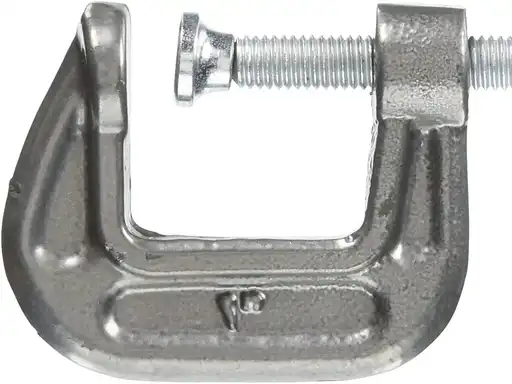
Understanding Heavy-Duty Customized C-Clamps and Their Material Requirements
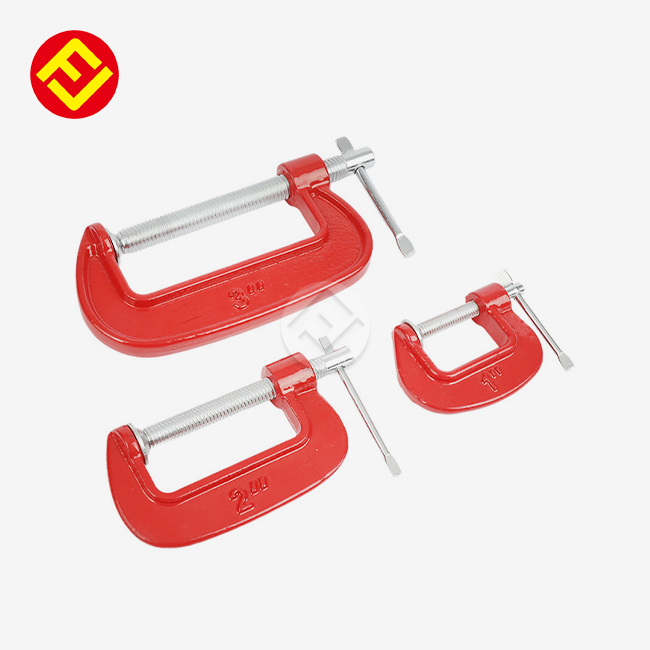
Learn about heavy-duty customized c-clamps and the materials they need. Specialized heavy-duty customized c-clamp represents a step up from regular off-the-shelf tools. These designed holding devices are made to handle specific industrial shapes, load requirements, and weather problems that regular clamps can't handle. A customized c-clamp is different from regular models because its throat depths and spindle alignments are not set. Instead, the C-frame layout is improved over and over again using Computer-Aided Design (CAD) modeling and Finite Element Analysis (FEA).
Why Material Selection Matters in Heavy-Duty Applications?
The maximum efficiency of any clamp is limited by the materials it is made of. When purchasing managers look at tools for building sites, woodworking shops, or industrial repair operations, they have to make important decisions where the properties of the materials and the needs of the operations meet. Tensile strength tells you how much force you can safely put on the clamp before it breaks. Yield strength shows the point at which permanent distortion happens. Corrosion resistance tells you how long something will last in wet or chemically exposed areas.
At FLA Industrial & Trading Co., Ltd., we've seen how mistakes with materials can have expensive results, like tools breaking down too soon during important welding jobs, expensive wooden assemblies getting damaged on the outside, or safety incidents happening because the load capacity isn't high enough. With almost 40 years of experience making metal tools and industrial clamping solutions, we know that choosing the right material isn't just a technical matter; it's also an investment in the long-term stability of the product.
Industrial Pain Points Driving Customization Needs
In certain situations, standard clamps don't always work. When building, builders come across structural parts that aren't perfectly flat. In these cases, they need swivel pads with bigger contact areas to spread the pressure. To hold thin pieces in place without breaking wood fibers, people who work with wood need precise clamping forces. Electrical utility teams want shielded parts that stop the flow of current during repair on live wires. In each case, the material needs to have properties that are in line with these practical needs.
Engineers can choose throat levels greater than 12 inches for hard-to-reach tasks, change spindle thread pitches for fast movement on high-volume production lines, or add non-marring touch surfaces for finished metal parts through the customization process. Your choice of material is what turns your design intentions into real-world capabilities.
Common Materials Used in Heavy-Duty Customized C-Clamps and Their Characteristics
Knowing the material world helps buyers make choices about what to buy based on facts. There are five main types of materials used in the custom c clamp business. Each has its own pros and cons based on its mechanical qualities and cost structure.
Steel Alloys: The Industry Workhorse
For heavy-duty gripping tasks, carbon steel, especially AISI 1045 drop-forged steel, is still the most common material. After the right amount of heat treatment, this material has tensile strengths of over 85,000 PSI, making it ideal for heavy metalworking and building work. When you forge something, the grain structure meets up with stress lines. This makes it more resistant to fatigue than cast options.
304 and 316 types of stainless steel are especially good at resisting corrosion in sea settings, food processing plants, and chemical plants. Even though these metals aren't as strong as carbon steel (their tensile strength is usually between 75,000 and 90,000 PSI), they don't need to be protected with coats that are hard to keep up in corrosive environments. The austenitic structure also works better at low temperatures, keeping its flexibility when carbon steel becomes hard.
Our factory follows strict rules for checking materials, which makes sure that every batch of steel meets ASTM A36 standards for structural quality. This focus on mechanical consistency tells the difference between trustworthy industrial tools and imports whose specs may be false.
Cast Iron and Ductile Iron: Stability and Vibration Damping
Cast iron has been used in the binding business for many years because it is very strong when compressed and doesn't cause vibrations. The flake structure of graphite in gray cast iron makes it self-lubricating and easier to machine, which lowers the cost of production. But the same graphite flakes make stress concentration points that limit the tensile strength to between 20,000 and 40,000 PSI. This means that regular cast iron isn't good for situations where it needs to handle shock loads.
Ductile iron, which is also known as nodular iron, gets around these problems by treating graphite with magnesium, which turns it into round lumps. The tensile strength of ASTM A536 Grade 65-45-12 ductile iron is 65,000 PSI, but it still has the casting benefits and sound damping of regular iron. This material works especially well for heavy-frame clamps, where the extra weight helps keep things stable while they're being machined.
Compared to forging, the casting process allows for more complicated shapes with lower tooling costs. This makes ductile iron a good choice for custom designs that need unique frame profiles. We use investment casting to get very accurate measurements, which means that threaded contacts and bearing surfaces meet practical requirements without having to go through a lot of extra work.
Aluminum Alloys: Lightweight Alternatives with Load Limitations
For compact clamping needs, aerospace-grade aluminum metals like 6061-T6 and 7075-T6 have good strength-to-weight ratios. These materials make it easier to use one hand in tight areas and keep operators from getting tired when they have to do the same positioning jobs over and over again. Tensile strengths can reach 45,000 to 83,000 PSI, based on the metal and temper. This is strong enough for light production and moderately heavy-duty woodworking.
When the load stays high for a long time, the limits become clear. Because aluminum has a lower elastic stiffness than steel, it bends more when it's loaded, which could lead to misaligned workpieces in precision assembly. The material is also less resistant to fatigue, which means it won't last as long in places with repeated loads, like automatic production lines.
Anodizing and other surface treatments make tools last longer in slightly rough circumstances by making them less likely to rust and wear down. Aluminum is a good thermal conductor, so it keeps heat from building up during long clamping operations. This is helpful when working with glue or coats that are sensitive to temperature changes.
Specialty Materials: Titanium and Engineered Composites
Premium materials are sometimes necessary for niche uses. Titanium metals have very high strengths-to-weight ratios and are very resistant to corrosion in saltwater. This makes them perfect for maintaining underwater pipelines and building things overseas. The biocompatibility of the material also makes it good for making medicines, where metal contamination risks need to be removed.
New materials called fiber-reinforced polymer composites are being used in specific electricity uses. The electrical conductivity of these materials is full, and their mechanical strength is good enough for low to middling clamping forces. The dielectric features get rid of the risk of arc flashes when working with live electricity, which is a big safety issue for utility repair teams.
Because they are more expensive, these materials are usually only used in situations where other choices would make the performance worse than acceptable. It's harder to make things because you need to be a skilled engineer to make composite clips that don't cause stress concentrations and delamination.
How Material Choice Impacts Heavy-Duty Customized C-Clamp Performance?
The qualities of the material affect every part of how the custom c clamp works, including how safe it is to use, how often it needs to be maintained, and the total cost of ownership. Knowing about these connections helps buying teams match the performance needs of tools with the specs that are needed in the real world.
Load Capacity and Safety Margins
Creating and maintaining gripping force is what any clamp is used for. The ideal maximum load is set by the material's tensile strength. However, responsible engineering uses safety factors of 3:1 or more to account for shock loading, stress concentrations, and differences in manufacturing. For a clamp with a 2,000-pound gripping force, the frame material needs to be able to hold 6,000 pounds without breaking.
Steel has a high yield strength, which lets designers make frames that are small but still have strong gripping forces. This is very important when the size of the tool is limited by the room available, like with welding fixtures on auto assembly lines or placing clamps in small assembly jigs. To get the same level of strength, aluminum alternatives need bigger cross-sections, which could cause problems in tight areas.
The right choice of material also takes into account the mode of failure. Ductile materials, like steel, bend in ways that can be seen before they break completely. This can be used as a warning during regular checks. When used in critical situations, brittle materials pose higher safety risks because they can break quickly and without warning.
Longevity and Maintenance Requirements
The service life depends a lot on how long the material lasts in certain circumstances. Carbon steel that isn't covered quickly rusts on the outside in damp places. To protect it, it needs a finish like powder coating, electroplating, or hot-dip galvanizing. Even though these treatments add steps to the manufacturing process and cost more, they are still worth it because they triple the service life from three years to nine years in most commercial settings.
Stainless steel doesn't need coating upkeep, but you have to be careful when choosing the material. For indoor humidity and light chemical exposure, the 304 grade is fine, but for saltwater settings, the 316 grade with molybdenum added makes it more resistant to pitting. We've seen how wrong steel specs cause early corrosion in salt-spray situations, which takes away from the benefits of the material itself.
Thread wear is another thing to think about when it comes to life. ACME thread types on steel spindles spread the load over a larger contact area than standard V-threads, which makes regular adjustment processes less likely to cause wear. Custom designs sometimes use bronze or brass spindle nuts as "sacrificial wear" parts to protect the more expensive frame while making it cheap to replace threads that are worn out.
Ergonomics and User Comfort
Material density directly affects tool weight, which in turn affects how tired an operator gets when doing repeated positioning jobs. A steel clamp that weighs 8 pounds gets heavy after a few dozen placement rounds, but an aluminum clamp that weighs 3 pounds is easier on the body. This practical benefit means that workers can use more clamps per unit, which increases efficiency in high-volume assembly tasks.
Spreading out the weight is also important. Where the center of gravity is placed affects the balance of handling, especially in large-throat-depth clamps where uneven frames cause awkward times. Our design team uses FEA to find the best way to remove material by placing lightening holes and twisted structures in the right places. This keeps the strength while improving the balance.
When choosing materials, handle functions aren't always given enough thought. When working outside in the winter, steel handles can get too cold, and when they're exposed to direct heat from welding, they can get too hot. The fact that aluminum is a better heat conductor makes this problem worse. For customized options, you may choose heated handles, thermoplastic overmolding, or wooden grips that keep your hands at a comfortable temperature no matter what the weather is like.
Procurement Tips for Selecting the Best Materials in Heavy-Duty Customized C-Clamps
A good purchasing strategy takes into account more than just the specifications of the materials. It also takes into account the ties with suppliers, the customization methods, and the overall cost of ownership for every custom c clamp order. These tips help people who work in buying make better decisions about where to buy things.
Defining Application Requirements Accurately
A thorough needs survey is the first step to successful adaptation. Write down the highest clamping force that is needed, the throat depth requirements, the working environment, and the expected duty cycle. Giving sellers actual measurements of the workpiece, pictures of how it is usually used, and the type of material it is made of will help them make more accurate suggestions than just giving them general specs.
Pay close attention to environmental factors. Will the clamps be exposed to chemicals, extreme temperatures, or high or low humidity that makes rusting happen faster? Does the application contain risks of electrical conductivity that mean the parts need to be insulated? Will people be using the tools while wearing heavy gloves, which means the handles need to be bigger than usual? These facts about the situation help choose the right material and make changes to the design that keep costly mistakes from happening when the tooling doesn't match the real conditions.
Volume estimates affect how things are made and how prices are set. For customized designs that need new forging dies, the minimum order quantity is usually 500 to 1,000 units in order to justify the cost of the tools. On the other hand, machined or fabricated options can handle smaller amounts of 10 to 50 units with changed per-unit costs. Talking openly about expected numbers and reorder trends helps suppliers come up with the best ways to make things.
Evaluating Supplier Capabilities and Reliability
Work with makers who can show they are technically skilled in making unique clamps. Ask for examples of past customization projects that dealt with similar application problems. If a supplier has their own CAD modeling, FEA validation, and prototype testing tools, they can find problems with a design before making the production tools, which saves money on costly repair processes.
Lead times and manufacturing ability have a big effect on project plans. Our 2,000-ton stock of raw materials and partially finished parts lets us meet standard needs quickly and speed up the timelines for unique projects. When project deadlines are coming up or equipment breaks down and needs new tools right away, being able to offer custom solutions within 7 to 15 days gives you a competitive edge.
How quickly a provider responds to communication is an early sign of how reliable they are. We promise to give expert feedback and preliminary quotes within 24 to 48 hours of receiving a request. This is because we know that procurement schedules often don't allow for answer delays of a week or more. This responsiveness continues throughout the lifecycle of an order, with regular reports on the state of production and the organization of operations.
Considering Total Cost of Ownership
The purchase price is only one part of how much tools really cost. Think about how long the material is supposed to last and what the application needs. A cheaper cast iron clamp that needs to be replaced every two years might end up costing more than a high-quality ductile iron clamp that lasts six years, especially when you consider the time it takes to buy and set up the new clamp and the downtime it causes during repairs.
Ongoing costs are affected by the need for maintenance. Touching up the protective covering, lubricating the spindle threads, and replacing the swivel pads all cost money over the life of the tool. Total ownership costs go down and working uptime goes up when these upkeep needs are minimized in materials and designs.
Support after the sale adds value to the goods itself. Suppliers who offer application help, upkeep instructions, and warranties show that they care about their customers' success. Our expert support team helps with finding the best places to put clamps, fixing problems with performance, and suggesting extra tools that will make the device work better overall.
Conclusion
Before choosing a material for heavy-duty customized c-clamp, you need to carefully look at its mechanical qualities, the working conditions, and the needs of the application. Carbon steel is very strong and a good value for most industry uses. Stainless steel, on the other hand, is better for corrosive conditions but costs more at first. Aluminum works well for portable uses where a lower weight is worth the trade-off in load capacity, and unique materials meet specific needs when standard choices don't work. When you work with experienced manufacturers who understand how hard it is to customize things, you can find a good mix between these performance aspects and your budget. Choosing the right material improves safety, extends service life, and gives a clear return on investment by cutting down on upkeep and making operations run more smoothly.
FAQ
What minimum order quantities apply for fully customized c-clamp designs?
The MOQ requirements are based on the customization scope. Forged clamps that need a new die to be made usually start at 500 to 1,000 units so that the costs of the tools are spread out evenly over many production runs. Custom designs that are machined or manufactured can be made in smaller amounts of 10 to 50 units, but the cost per unit goes up because of the fixed costs of setup. Talking to providers about your expected number helps you find the most cost-effective way to make what you need.
How do protective finishes affect material performance?
Surface processes improve the qualities of the base material without changing its basic mechanical properties. Powder coating protects against rust and impacts very well while adding very little weight. Electroplating makes coats that are thinner and can be used in places where size limits are tight. Hot-dip galvanizing is the best way to protect against rust for outdoor uses, but it makes the layer thicker, which may mean that the dimensions of the design need to be changed. Each finish choice has pros and cons in terms of cost, amount of safety, and effect on the shape.
Can material selection address work-piece surface damage concerns?
Customizing the swivel pad keeps the surface of soft materials or finished parts from getting damaged. Polyurethane caps spread tightening pressure and provide touch that doesn't damage the part. Because brass pads are softer than steel workpieces, they bend more easily to avoid being dented. Large-diameter steel moving pads have more surface area, which lowers the touch pressure. By choosing the right pad materials and frame materials, you can make sure that sensitive applications are fully protected.
Partner with a Trusted Customized C-Clamp Manufacturer
When making customized c-clamp, FLA Industrial & Trading Co., Ltd. uses nearly 40 years of experience to make the best Products" target="_blank" style="color:blue" >products. They work with hardware stores, building companies, and industrial makers all over the world. Our ISO9001-certified factory makes more than 1,000 different types of products using modern casting, machining, and assembly methods that guarantee uniform quality and performance. Our engineering team can make custom solutions in 7 to 15 days, whether you need drop-forged steel clamps for heavy manufacturing, stainless steel designs that won't rust in marine settings, or special shapes for specific uses. Get in touch with our sales team at sales@flaindustrial.com to talk about your particular needs and get detailed technical advice based on decades of experience.
References
American Society of Mechanical Engineers. (2018). ASME B30.20: Below-the-Hook Lifting Devices – Safety Standard for Cableways, Cranes, Derricks, Hoists, Hooks, Jacks, and Slings. New York: ASME Press.
Boyer, H.E., & Gall, T.L. (1985). Metals Handbook: Desk Edition. Materials Park, OH: ASM International.
Budinski, K.G., & Budinski, M.K. (2010). Engineering Materials: Properties and Selection (9th ed.). Upper Saddle River, NJ: Prentice Hall.
Davis, J.R. (Ed.). (1996). Cast Irons: ASM Specialty Handbook. Materials Park, OH: ASM International.
Oberg, E., Jones, F.D., Horton, H.L., & Ryffel, H.H. (2016). Machinery's Handbook (30th ed.). New York: Industrial Press.
Shigley, J.E., & Mischke, C.R. (2001). Mechanical Engineering Design (6th ed.). New York: McGraw-Hill Education.