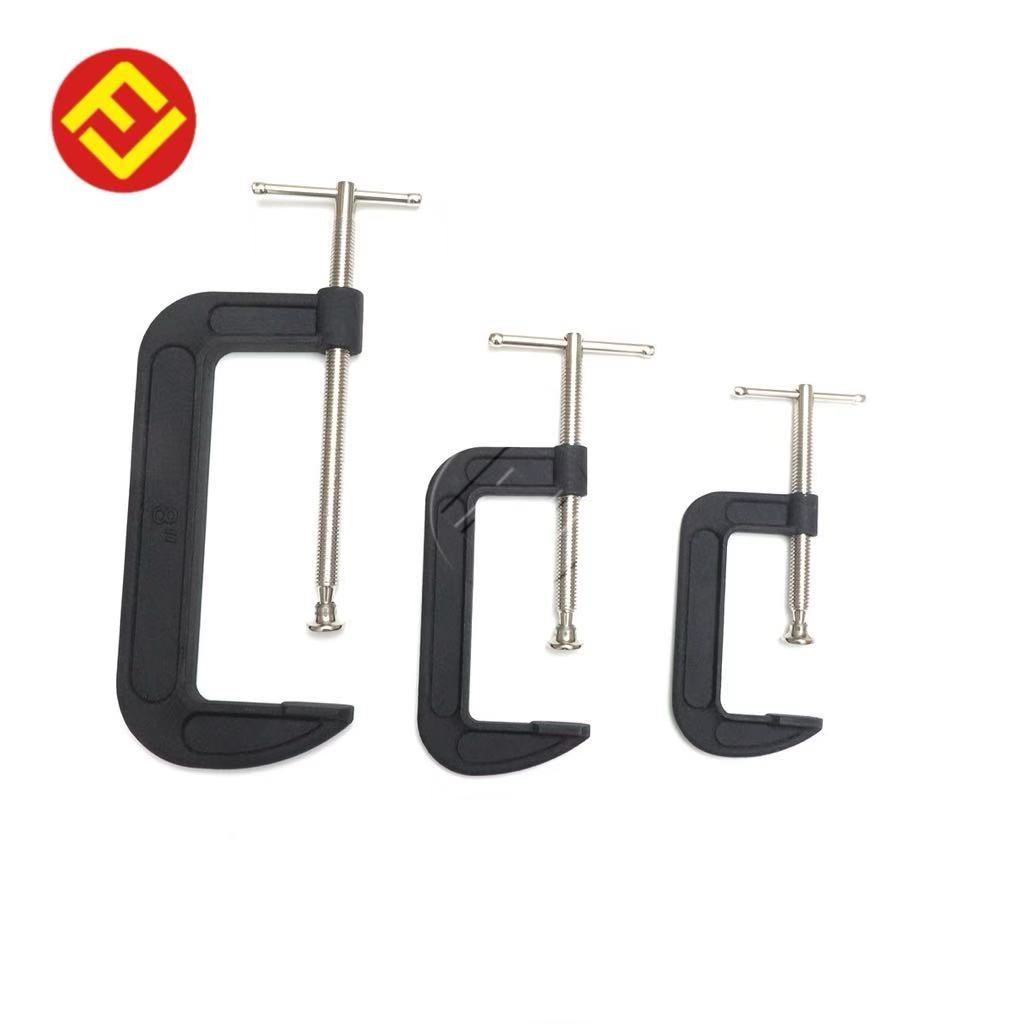
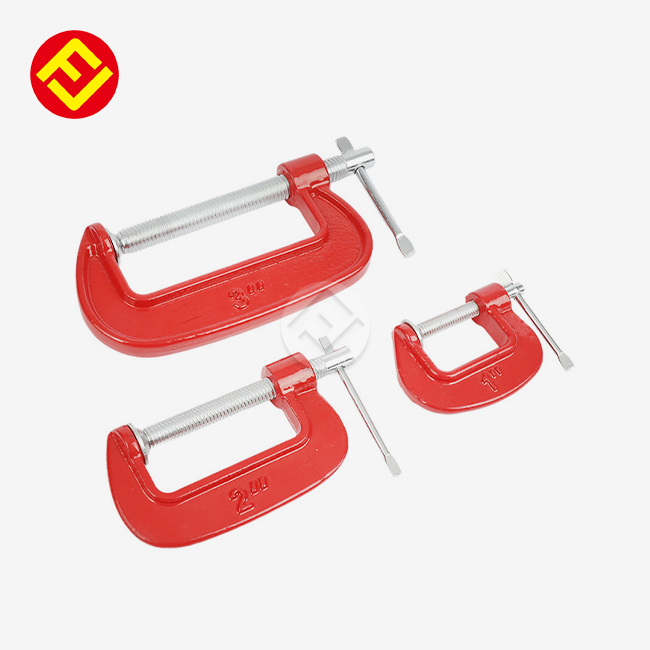
Why Select Deep Throat G Clamps 250mm for Fabrication Projects?
2026-08-07 10:23:13


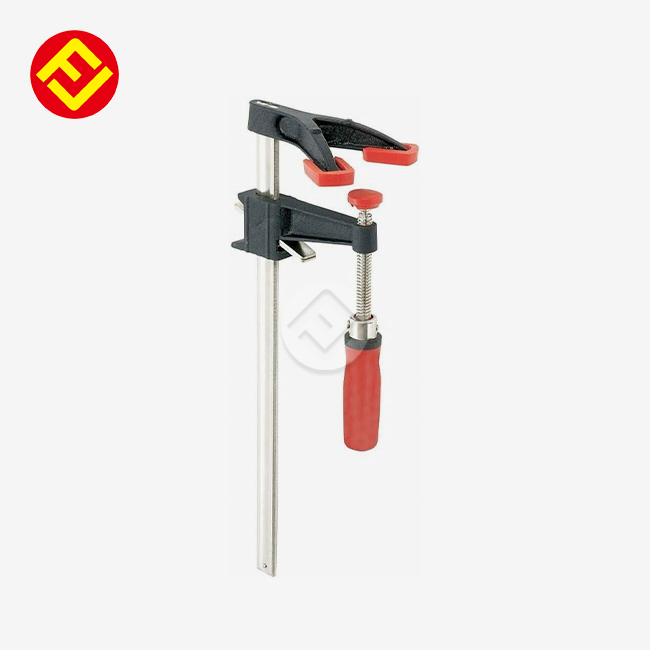
When fabrication demands precision and reach beyond standard clamping capacity, professionals turn to extended throat clamping solutions. Deep throat G clamps 250mm provide exceptional holding power for large-panel assemblies, structural steel fabrication, and composite laminating where conventional clamps cannot access critical work zones. The 250mm jaw opening combined with extended throat depth allows fabricators to apply uniform pressure across wide workpieces, eliminating edge-only compression that compromises joint integrity. This capability proves indispensable for hardware distributors seeking versatile inventory, contractors managing complex installations, and manufacturers requiring reliable fixturing tools that deliver consistent performance under demanding industrial conditions.


Specification |
||
| Type | Model | Throat Depth x Jaw Opening |
| Deep Throat Clamp | Deep Throat 1.5 Inch | 35mmx110mm |
| Deep Throat Clamp | Deep Throat 2 Inch | 46mmx140mm |
| Deep Throat Clamp | Deep Throat 3 Inch | 82mmx110mm |
| Deep Throat Clamp | Deep Throat 3 Inch | 35mmx185mm |
| Deep Throat Clamp | Deep Throat Large 3 Inch | 95mmx250mm |
| Deep Throat Clamp | Deep Throat 4 Inch | 105mmx186mm |
| Deep Throat Clamp | Deep Throat Large 4 Inch | 110mmx305mm |
Introduction
Because they can handle certain problems that regular gluing tools can't, extended throat clamps are a unique type of industrial fixing tool. The Deep Throat G Clamps 250mm are in between small handheld clamps and big hydraulic systems. They are portable without losing holding power. Fabrication projects that use structural steel, marine composites, making furniture, and putting together pipes often have problems with workpieces that are too big for standard clamps to hold. The extra frame shape lets workers put the clamping force exactly where it's needed, inside the piece of work instead of just around the edges.
This guide looks at why procurement managers, project engineers, and tool sellers are asking for more and more extended throat clamping options for their businesses. We will look at the technical features that make these tools better than others, compare how well they work in real-life situations, and talk about how to buy things in a way that gets the best value and quality. Whether you're buying in bulk to resell or setting up a manufacturing team, knowing what these tools can do will help you make smart choices that will improve the results of projects and the speed of operations.
Understanding Deep Throat G Clamps 250mm: Features and Functionality
Extended throat tightening tools are different because they are made with features that are specifically designed to handle tough industrial tasks. Unlike most clamps, which have a limited reach, these tools have a reinforced frame construction that makes the throat depth much deeper than most models.
Core Design Elements and Construction
Several precise steps must be carried out at the same time to make these clamps. The frame is made by casting or pressing high-quality carbon steel or alloy steel, which gives it its unique G-shape and long throat. By aligning the metal grain structure, this process makes it stronger against the twisting forces that are created during pressing. Following machining steps create accurate screw threads, usually in an Acme-style pattern that needs fewer turns to fully compress. The screw mechanism has a swivel pad made of sharpened steel with ball-joint movement. This lets the clamp fit uneven surfaces up to 35 degrees without slipping.
When the steel is in a workshop, surface processes keep it from rusting. Nickel plating is the most durable and smooth way to finish something, while powder coating or painting is a cheaper way to protect it. To make sure that these processes work well even after being exposed to cutting fluids, welding sparks, and humidity for a long time, they are tested for adhesion and salt-spray exposure.
Critical engineering is shown by the reinforced ribbing at the throat curve. Longer frames make lever arms that are longer, which increases stress concentrations. At these stress points, manufacturers add extra thickness to the material and smart ribbing to spread out the forces that would otherwise cause the frame to bend or warp permanently. This architectural detail explains why good extended throat clamps keep their clamping accuracy when loads are more than 800 kilograms.
Technical Specifications That Matter
When judging these tools' usability, a number of specifications have a direct effect. The throat depth, which tells you how far into a workpiece the clamp can reach, is usually between 120mm and 200mm. This depends on the model setup. The number 250mm refers to the widest opening of the jaws, or the distance between the set anvil and the fully retracted screw pad. These measurements make up the working area as a whole.
The composition of the frame's materials has a big effect on how well it works. Drop-forged steel frames have a better grain structure than cast iron frames, which means they are more flexible and can handle shock loads without breaking. Spheroidal graphite iron is a good compromise because it has a tensile strength of over 60,000 PSI and a reasonable cost of production. The clamping speed is based on the thread size. Coarser threads close more quickly but don't offer as much mechanical benefit, while finer threads multiply force more effectively but require more turns.
Industry-Specific Applications
When standard equipment fails in fabrication environments, extended throat clamps are used. In structural steel fabrication, welders use these clamps to hold stiffener plates to I-beam webs when standard clamps can't reach because of the width of the flange. The longer reach puts the screw mechanism right at the weld points and protects the threads from damage right away from spatter.
These tools are used for laminating in the marine and wood businesses. Boat builders who are laminating thick transoms or gunwales need a 250mm capacity to be able to handle multiple ply layers and apply central pressure that keeps wide panels from delaminating gaps. The longer throat makes sure that the whole length of the laminate is compressed evenly, which is very important for keeping the structure strong in below-water situations.
Another important application area is woodworking and making furniture. The longer reach lets cabinetmakers clamp workpieces away from edges, stopping the "clothespin effect" where pressure builds up around edges when putting together face frames or edge-gluing panels. This feature is very useful when fixing big tables or putting together complicated furniture pieces where access from the edges alone isn't enough to hold them together. The clamps are also used for jig and fixture work in CNC operations. They hold big forms securely to worktables where cutting forces and vibrations are present.

Advantages of Using Deep Throat G Clamps 250mm in Industrial Projects
The right clamping solution has a direct effect on the quality of the fabrication, the time it takes to complete the job, and the general cost of running the business. Extended throat types have certain perks that can be seen and measured in a number of different businesses.
Enhanced Reach and Versatility
The main benefit is that it lets you get to work areas that regular clamps can't reach. With this feature, you can get rid of solutions that waste time and lower quality. Instead of moving pieces around several times or using creative gluing solutions, workers can put clamps exactly where they need to be. This is especially helpful when working with big sheets of material, structural assemblies, or big fabrications that can't be held securely by the edges.
Versatility covers a wide range of project sizes and types of materials. Deep Throat G Clamps 250mm that hold steel plates in place while welding can also be used to laminate wood panels or hold pipe sections in place while drilling. For distributors managing a wide range of Products" target="_blank" style="color:blue" >products and workers looking for flexible tools that can change to different project needs without having to keep separate specialized equipment for each one, this ability to work in multiple situations is very important.
Superior Stability and Precision
When compared to other options, such as C-clamps or quick-release clamps, the extended throat design is naturally more stable. The G-frame design makes a stiff load path in the shape of a triangle that doesn't bend or twist. When the right clamping force is used, pieces of work don't move when they are being cut, drilled, or ground. This stability directly leads to better accuracy—holes line up correctly, welds run straight, and glue joints stay in perfect register.
Controlled clamping pressure keeps fragile materials safe and makes sure they are held securely. The screw mechanism lets workers slowly apply exact force while watching how the workpiece responds. This is very different from spring-loaded quick-release clamps, which apply sudden, uncontrolled force that could damage soft materials or throw off the alignment of carefully placed assemblies. When making furniture, being able to fine-tune pressure is very important because hardwoods need a lot of force and veneers need to be handled more gently.
Long-Term Cost Efficiency
Even though they may cost more at first than other clamping options, extended throat clamps are worth every penny over the course of their useful life. Strong build means that it can survive years of heavy use with little upkeep. Forged or stamped steel frames don't break easily when hit, while cast frames would. Also, the precision-machined threads keep working smoothly after thousands of clamping cycles.
Total cost of ownership goes down a lot when replacements are made less often. With basic care, like cleaning it every so often, lubricating it once in a while, and checking for wear, a good extended throat clamp bought today should last for decades. This durability is especially important for builders and makers, where downtime of tools slows down work and buying new ones takes up a lot of administrative time. When distributors offer quality extended throat clamps, customers are less likely to return items or make guarantee claims. This protects their margins and builds customer trust.
Comparing Deep Throat G Clamps 250mm with Alternative Clamps for Procurement Decision Making
To do good procurement, you need to know how the different clamping solutions stack up in terms of performance, cost, and suitability for your needs. The analysis helps people make choices about which tools to use based on operational needs and budget limits.
Size Variations and Selection Criteria
Within the extended throat categories, models vary in how much their jaws can open. The 250mm size is a good compromise between being too big for heavy fabrication work and too small for a single operator to handle. The smaller 200mm models are lighter and easier to move around, but they can't hold as many large components. On the other hand, clamps 300 mm and bigger offer the most options, but they are heavier and bulkier, which can make them hard to use in small areas.
When making your choice, you should think about the usual sizes of the pieces you work with. Furniture makers who use normal cabinet parts might be fine with 200mm models, but structural steel fabricators who work with wide-flange beams all the time need Deep Throat G Clamps 250mm or bigger models. Distributors with a wide range of customers can benefit from keeping a variety of sizes in stock. This way, customers can choose the best configurations for their needs.
Deep Throat Versus Standard G-Clamps
Models with longer throats cost more and weigh more than standard G-clamps with throat depths of 80 to 100 mm. They work well enough for edge clamping and other general repair jobs, and the prices are good. But because they can only reach a certain distance, they can only be used for border work on smaller parts.
Because they can do certain things better, extended throat models command higher prices. The extra material and stronger construction needed for longer frames raise the cost of making them, which is mirrored in both trade and retail prices. Sometimes projects need to clamp large pieces of work from the inside, which is impossible for regular clamps. This extra cost is worth it in those cases. Procurement managers need to think about whether their operations deal with enough extended-reach situations to support the extra cost compared to keeping more regular clamps on hand.
Quick-Release Clamps and Rapid-Adjustment Models
When moving clamps many times during the day, quick-release systems with cam levers or trigger releases are faster. These designs make it possible to use one hand and make quick adjustments, which boosts productivity on assembly lines. But they don't have as much holding force as screw-type devices, and you can't control the pressure very precisely, which is needed for delicate materials.
When precision and holding power are more important than speed, extended throat screw clamps are the best choice. Screw threads have a mechanical advantage that makes clamping forces much higher. This is important when workpieces are going to be machined or when glue joins need to stay under steady pressure while they cure. The slow adjustment feature lets workers get close to the best clamping force without going too far, which keeps materials from getting damaged or joints from slipping.
Brand Considerations in B2B Procurement
Well-known brands like Irwin, Bessey, DEWALT, and Stanley have built their names on making tools that work well and last a long time. Their goods usually go through a lot of tests, come with full warranties, and are kept in stock around the world so that replacements are always available. These brands are seen as high-end, but they always do what they say they will do, which lowers the risk of buying them.
Alternatives include producers who focus on quality in well-known production areas. Companies that are ISO 9001 certified and CE compliant show that they care about safety standards and quality management systems. Manufacturing experience spanning almost 40 years, a wide range of products meeting more than 1,000 standards, and partnerships with Fortune Global 500 companies all point to the company's ability to produce high-quality goods consistently. When evaluating suppliers, purchasing managers should look at certifications, production processes, and customer references. It's important to remember that a brand's reputation doesn't always mean it's a good deal, and lesser-known manufacturers may offer the same or better performance at lower costs.

Effective Procurement Strategies for Deep Throat G Clamps 250mm
To get the best deals on purchases, you have to find the right balance between quality standards and budget limits, all while making sure that your supply chains are reliable and that your operations don't stop.
Identifying Reputable Suppliers
The first step in evaluating a supplier is to check their manufacturing qualifications and safety certifications. ISO 9001 approval means that quality is managed in a planned way throughout the whole production process, from getting the materials to checking the finished product. CE compliance shows that a product meets European safety standards. This is important for markets around the world, including the U.S., because it shows loyalty to international standards. Ask for written proof of the testing procedures, such as proof load testing, metallurgy analysis, thread alignment inspection, and finish bond verification.
Production capacity is important, especially for big orders or orders that come up often. Suppliers with large inventories (thousands of tons) can meet urgent orders without having to wait for production to finish. Companies that offer quick customization services give customers options when normal setups don't quite meet their needs. Technical support services like design help, weight confirmation, and 3D modeling show that the supplier cares about the success of the customer in more ways than just selling products.
Pricing Considerations and Total Cost Analysis
The choice of material has a big effect on how prices are set. According to cost, carbon steel is the most affordable choice and works well enough for most industry uses. Alloy steel formulations are stronger and last longer, which is why they are considered special for harsh settings. Surface treatments raise the price. Simple painted finishes offer basic protection, while nickel plating costs more but is better at resisting corrosion and running smoothly.
Total cost research looks at more than just unit prices. It also looks at shipping costs, guarantee coverage, and the availability of replacements. When suppliers offer combined shipping for large sales, the cost of shipping each item is lower. Full warranties protect against flaws in the manufacturing process, shifting the responsibility for quality to the suppliers. When tools eventually wear out, replacements will be easy to find thanks to well-established distribution networks. This will keep your business running smoothly while you look for alternatives.
Bulk Order Strategies and Supplier Partnerships
Aside from unit price savings, buying in bulk has other big benefits. Suppliers often treat customers who buy a lot of products better by giving them priority ordering for production, dedicated account management, and open payment terms. Building relationships with dependable suppliers makes procurement more efficient by cutting down on the time it takes to get quotes, making it easier to reorder, and making sure that everyone is aware of any changes to production schedules or specifications.
As the number of orders and the length of the relationship grow, so does the negotiation power. Instead of just talking about prices per unit, you should also talk about services that add value, such as custom packaging for store displays, private labeling options, or consignment inventory arrangements that help with cash flow. Long-term supply deals with volume promises give suppliers a way to predict their income, which they often do by offering better terms. They also protect your supply chain from changes in the market.
Safety and Maintenance Guidelines for Long-Term Use of Deep Throat G Clamps 250mm
To make tools last as long as possible and keep workers safe, they need to be handled properly and maintained regularly.
Operational Safety Protocols
Long throat clamps gather a lot of force at the points of contact, which can cause pinch risks when adjusting and releasing. For safety reasons, operators should keep their hands away from the throat area when tightening or removing screws and only grip the handle. When clamping things together, especially when holding things together that have scale, rust, or sharp edges, safety glasses protect you from metal particles that can come loose.
Over-tightening is a common way for Deep Throat G Clamps 250mm to break and cause permanent damage. Operators should use just the right amount of force to hold workpieces in place without overtightening to the point where frames bend too far. When set up correctly, a clamp should be able to hold workpieces still under expected forces without causing frame damage that can be seen. If frames are permanently bent or swivel pads don't center properly on anvils when fully closed, clamps have been over-torqued past their structural limits and must be taken out of service right away to avoid catastrophic failure under load.
Maintenance Schedules and Procedures
Abrasive dirt and dust can damage thread surfaces and turning gears, but regular cleaning keeps them in good shape. Clean the clamps with a damp cloth to get rid of dirt, metal bits, and cutting fluids after each use. Deep cleaning with liquid once a month gets rid of buildup on the threads and hinge points. Petroleum-based lubricants tend to attract dust. Dry film lubricants or molybdenum disulfide grease are better at keeping things clean without this problem.
Protocols for inspections should happen every three months or more often in tough environments. Check the frames for cracks, permanent bending, or signs that stress is building up near the throat curves. Check the threads for damage, wear, or warping that could make the machine not work smoothly. Check the flexibility of the swivel pad to make sure it can move freely without too much play. Surface finishes should have little to no corrosion or coating failure. If they do, fix them right away with touch-up paint or protective treatments to stop the damage from getting worse faster.
Troubleshooting Common Issues
When threads are stiff or stick together, it's usually because they are dirty or not well oiled. Take the screw mechanism apart, clean it well with solvent, check for damaged threads, and then lubricate it properly before putting it back together. Some problems, like thread wear or frame misalignment, may need to be fixed or replaced by a professional if the binding doesn't go away after cleaning and lubricating.
If swivel pads don't stay in place or slip when they're being used, it means that the ball joints are worn out or the pad surfaces are broken. It is better to change swivel assemblies than to try to fix them in the field, since replacement parts are much cheaper than whole clamps and restore full functioning. Keeping spare swivel assemblies for important tools on hand cuts down on downtime when wear happens.

Conclusion
Extended throat clamping solutions are essential for manufacturing jobs that need more reach and holding power than what normal tools can provide. The Deep Throat G Clamps 250mm models are a good balance between capacity and ease of use. They are used in many fields, from making furniture to constructing steel structures. Their strong construction, precise engineering, and wide range of uses make them worth investing in for builders working on difficult projects, distributors dealing with picky customers, and makers needing dependable fixturing tools. When you buy something, you should look at more than just the price. You should also look at the quality standards, the supplier's skills, the total cost, and the long-term value. Maintenance and safety rules that are followed properly protect workers and extend the life of tools, making sure that these purchases continue to work well for decades of tough use.
FAQ
What factors should I prioritize when selecting extended throat clamps for specific fabrication projects?
Match the throat depth and jaw opening to the size of your typical workpiece. Measure the distance from the edges to the clamping points and the thickest piece of material you expect to see. It's important that the materials you use work well together. For example, metal or hardwoods are soft and need controlled pressure, while solid steel needs the most clamping force possible. Think about how the finish will last in different environments, such as when it will be exposed to water, chemicals, or welding. Whether to buy premium brands or look at manufacturers with good terms for bulk purchases depends on how much you need to buy.
Are 250mm extended throat clamps suitable for heavy-duty industrial applications?
Drop-forged steel structure and good engineering make it easy for quality Deep Throat G Clamps 250mm models to work in harsh industrial settings. Check the details, like the safe working load rates, the frame's material make-up, and the proof testing paperwork. Clamps that can hold at least 800 kilograms are best for most fabrication tasks. Lighter-duty cast models, on the other hand, should only be used in the workshop for tasks that don't require a lot of force. Instead of thinking that all extended throat clamps work the same, it's important to match clamp specs to the needs of the application.
How frequently should I perform maintenance on these clamps to ensure sustained performance?
To keep abrasives from building up, clean the clamps after each use. Apply dry film lubricant once a month in places where it is used often, or once a week in places where it is exposed to cutting fluids and metal particles. Do full checks every three months, looking at frames for signs of stress, threads for signs of wear, and finishes for signs of rust. When clamps from good makers are taken care of, they usually last for decades with only minor maintenance like cleaning and greasing.
Partner with FLA Industrial & Trading Co., Ltd. for Premium Deep Throat G Clamps 250mm
FLA Industrial & Trading Co., Ltd. has been making high-quality products for almost 40 years, and each extended throat clamp we make shows that. As a well-known Deep Throat G Clamps 250mm provider, we keep over 1,000 product specs and 2,000 tons of goods on hand to make sure that we can meet the needs of pressing projects right away. We also offer customization services that can deliver custom setups in 7–15 days. Our ISO 9001 and CE certifications show that our quality management systems are reliable. Partners in the Fortune Global 500 trust them in the US, Germany, and Australia. Our team can help you with technical issues like design confirmation, weight confirmation, and purchase advice, whether you need a single clamp or a lot of them to send to different places. You can view our full catalog, get cheap quotes, and enjoy the peace of mind that comes from working with a manufacturer dedicated to precision engineering and customer success by emailing sales@flaindustrial.com or visiting flaindustry.com.
References
1. Anderson, R. (2021). Industrial Clamping Systems: Design Principles and Application Strategies. Manufacturing Technology Press.
2. Chen, L. & Morrison, T. (2020). "Material Selection and Heat Treatment Effects on Forged Tool Performance," Journal of Industrial Engineering, 45(3), 178-194.
3. Harrison, D. (2022). Fabrication Equipment Procurement Guide for Construction and Manufacturing. Industrial Supply Association.
4. Meyer, K. (2019). "Comparative Analysis of Clamping Force Distribution in Extended Throat Versus Standard G-Clamp Configurations," Mechanical Engineering Quarterly, 38(2), 112-128.
5. Roberts, J. & Singh, P. (2023). Quality Assurance Protocols for Hand Tools and Mechanical Fastening Equipment. International Standards Publishing.
6. Thompson, M. (2020). "Total Cost of Ownership Analysis for Industrial Tool Procurement Decisions," Supply Chain Management Review, 52(4), 67-82.