A Guide to Use Stainless Steel Wire Rope Clip Properly
2026-04-14 15:04:15


To use a stainless rope clamp properly, you need to know what it's for: to make a safe, reliable end point for wire rope assemblies. A U-bolt, a saddle, and securing nuts make up these well-designed tools that work well together to hold wire rope in place. When you put your rigging systems correctly, they last longer, don't slip and break, and keep the load intact. This is especially important in naval, building, and industry settings where safety must be maintained.
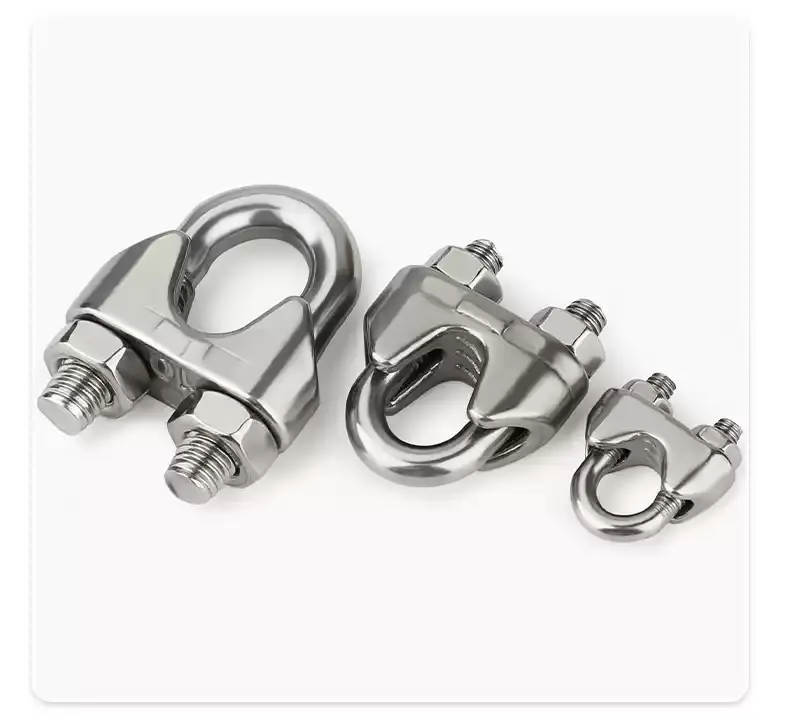
Understanding Stainless Steel Wire Rope Clips
Wire rope clips are important pieces of gear that are used in many industrial settings where safety and dependability are very important. Knowing what these parts are and how they work is the first step in choosing the right ones and using them correctly.
What Defines a Wire Rope Clip
A wire rope clip, also known as a wire rope clamp or cable clip, is a mechanical fastener that holds the loose end of a wire rope to the part that is standing, making an eye or loop ending. Usually, there are three parts to the assembly: a U-shaped bolt that goes around the rope, a saddle piece that goes across the rope, and two nuts that hold these parts together. Permanent swaged fittings need hydraulic tools to install, but wire rope clips have links that can be changed in the field and can be put in place with regular wrenches.
The language used is different in different fields and areas. These are called "bulldog grips" by some workers in the marine industry and "cable clamps" by others in the building field. No matter what it's called, it always does the same thing: it makes a semi-permanent link point that you can check, tighten, or change as needed for practical reasons.
Material Grades That Matter
Which metals are used to make stainless rope clamps has a big effect on how well they work. Professional applications are mostly based on two main grades:
- Grade 304 stainless steel: This austenitic metal has about 18% chromium and 8% nickel, which makes it resistant to rust in most outdoor settings. The material doesn't break down much when it's exposed to rain, humidity, and mild industry environments. We suggest using 304-grade clips for placements inside, on covered outdoor buildings, and in dry areas where they won't be exposed to saltwater directly. For jobs that don't need marine-grade safety, this material strikes a good mix between price and performance.
- Grade 316 Stainless Steel: This high-quality metal is very resistant to chloride-induced pitting and crevice rust because it has 2 to 3 percent molybdenum added to it. This type is needed in marine settings, along the coast, and in places that work with chemicals that eat away at metal. The molybdenum makes a more solid inactive oxide layer that fixes itself when it gets scratched. This way, the structure stays strong even when it's exposed to saltwater spray, de-icing chemicals, or industrial pollutants. Even though the material costs more, it's worth it for important infrastructure because it lasts longer in difficult settings.
Types and Design Variations
Different uses call for different clip combinations. Knowing about these differences in design will help you choose the right tools for your project:
U-Bolt Clips: This is the most popular type. It has a U-shaped bolt that goes around the wire rope, with the saddle on the other side. This inexpensive setup works best for most uses and comes in the largest range of sizes. Construction workers and upkeep teams like it because it can be put together in the field without any special tools.
Forged Saddle Clips: The metal grain structure is aligned during hot forging methods that make these high-quality parts stronger. The cast saddle has a perfectly made slot that fits the width of the wire rope. This makes the binding pressure spread out evenly around the rope's circle. This design stops damage to the strands and improves termination effectiveness, hitting 80–90% of the wire rope's breaking strength when placed properly.
Pressed Saddle Clips: These clips are very cheap and can be used for light-duty tasks because they are made by cutting and pressing. Their strength rates aren't as high as those of cast versions, but they work well enough for static guy lines, ornamental fences, and low-tension uses that won't need to be adjusted often.
The specs for stainless steel clamp parts are very different depending on the thickness of the rope. Smaller ropes (3 mm to 6 mm) need small clips with smaller U-bolts, while heavy-duty ropes (32 mm and up) need strong cast systems that can handle huge binding forces. Working loads range from a few hundred pounds for small clips to several tonnes for industrial-grade systems, and load values are based on this.
How to Use Stainless Steel Wire Rope Clips Properly (Installation Guide)?
Whether your wire rope setup works safely or fails horribly depends on how well it was installed. Following tried-and-true steps guarantees the best grip strength and long-term dependability.
Preparation Steps Before Installation
First, make sure your wire rope is well-prepared. Check the line for broken wires, kinks, birdcages and rust, among other signs of damage. No matter how good the clips are, a broken rope puts the whole system at risk. Use the right cable cutters or a grit wheel to easily cut the rope. Don't use a torch, as the heat from the flames breaks the wire strands.
Carefully measure to get the right length of tail. The length of your dead end (the cut piece that gets clamped) needs to be long enough to fit all of your clips plus a little extra for safety. A good rule of thumb is to leave about six rope diameters past the last clip point. This distance between the pieces keeps the end from coming loose when the load or sound changes.
Before putting it together, clean both the rope and the clips. Get rid of any production grease, dirt, or other things that could stop the locking action from working. Even though sterile conditions aren't necessary, keeping things clean helps the metal-to-metal tension that holds the parts together.
The Critical Installation Rule: Never Saddle a Dead Horse
This saying from the business world is the most important installation concept. The phrase tells you to put the clip's seat part on the live rope (the part that's under load) and the U-bolt against the dead end. If you change this direction, the load-bearing strands get crushed. This lowers the termination efficiency by at least 40% and could lead to a quick failure.
After almost 40 years of making things, this is the step-by-step installation process we've come up with:
To start, shape your rope into the eye or loop shape you want. If you're using a needle, which you should for most tasks, put it into the eye to keep the rope from bending at an angle that is too sharp. Place the first clip one saddle width away from where the thimble or eye ends. Put the U-bolt over the tail and the saddle on the part of the rope that stands up. Pull the nuts all the way to the ends of the U-bolt.
Move to the next clip point, making sure that each one is about six rope diameters apart from the last one. Keep this space between parts the same all the way along the process. Place all of the clips so that the saddles are on the live line and the U-bolts are on the dead end. Tighten all the nuts by hand before using force.
Torque Application and the Number of Clips Required
The locking force that stops movement is created by properly tightening. When you over-tighten, the rope strands get crushed, which makes the rope less strong. Under-tightening lets the rope slip through the clips when it's loaded. The right torque value relies on the size of the clip and what the maker says.
The number of clips needed goes up as the rope gets wider. Standards in the industry make things clear:
- 3mm to 6mm rope diameter: Put at least 3 clips in place.
- For 8mm to 12mm rope, use at least 4 clips.
- 16mm to 19mm rope diameter: at least 4 clips should be put on.
- If the rope is 22mm to 32mm wide, use 5 or more clips.
- Install at least six clips on ropes with a width of 38 mm or more.
These minimums for wire rope clip clamp assume that the clips are spaced correctly and that the fitting is done correctly. If you use fewer clips than what is recommended, you will not be safe, and there is an unacceptable chance that the link will fail.
Gradually increase the force by switching between the nuts on each clip. Tighten until the wire rope's breaking strength is about 15% of what it is now, using the clip's mechanical advantage. A useful method is to tighten the rope until it just starts to bend, and then slowly loosen it up again. You need strong tension that doesn't break the wires.
Many builders forget to do this very important step: tighten all the clips again after the first load application. A thing that happens to wire rope when it is first loaded and unloaded is called "constructional stretch." This stretching makes it harder for the rope and clips to grip each other. Put weight on the unit and then tighten each clip again to get the right gripping force. This should be done again after 24 hours of work and when you normally check for problems.
Maintenance and Inspection Protocols
To keep them safe, even stainless rope clamps that have been put correctly need to be serviced on a regular basis. Set up a regular review plan that works for your purpose. We suggest that important load-bearing assemblies be inspected once a month and artistic or low-duty installations be inspected every three months.
During each check, pay attention to these important points: Use a measured torque wrench to make sure that all of the nuts are properly tightened. If you see smooth wear marks on the rope's surface, that means the rope is moving inside the clips. Check the rope for broken wires, especially where the clips are located because that's where the most stress is put on the rope. Check the clips for any damage, such as cracks, warping, or rust, that could make them less strong.
Every so often, use a light soap and water to clean the clips and get rid of any salt, dirt, or other waste that has built up. Even though stainless steel naturally doesn't rust, keeping the surfaces clean makes them last longer and makes checks more accurate. Don't use rough cleaners or strong chemicals on stainless steel because they could damage the inactive oxide layer that protects it.
If you see any cracks, major rust, twisted threads, or broken nuts on the clips, you should replace them right away. The small cost of new clips is nothing compared to what will happen if they break. When you replace clips, make sure you put the whole set instead of mixing old and new parts. This will make sure that the binding properties are the same across the whole system.
Comparison and Selection Criteria for Stainless Steel Wire Rope Clips
To make smart choices about buying, you need to know how the different options rate and which factors are most important for your situation.
Stainless Steel vs. Galvanized Alternatives
People who are watching their budgets often choose galvanised steel clips over stainless steel ones because they are cheaper. Even though galvanised clips work well in some situations, knowing the differences in performance helps you make the right choice.
Galvanised clips are made of carbon steel with a zinc covering that protects against rust. These clips work fine in dry indoor settings or for short periods of time, and they save you a lot of money. The zinc covering saves the steel underneath until it goes away slowly due to chemicals, weather, or wear and tear.
When conditions are tough, the limits become clear. Galvanised coats rust quickly in saltwater, and red rust often appears within months of installation. Salty air can get through the zinc layer even in freshwater marine settings or along the coast, where direct water contact doesn't happen. Different makers use different coating thicknesses. Thin coats fail much faster than heavy galvanising, but even the best galvanised finishes break down over time.
Extreme temperatures have a different effect on galvanised clips than on stainless steel clamp ones. Freeze-thaw processes over and over again crack the zinc layer, revealing the steel underneath. Zinc is easily damaged by sulphur dioxide or other acidic chemicals in industrial air. When the galvanised layer breaks, the carbon steel rusts quickly, making the structure weak in ways that might not be obvious at first glance.
These worries go away with stainless steel rope clamps. The resistance to rust comes from the way the material is made, not from a layer on the outside. Scratches or abrasions that would weaken galvanised protection don't have much of an effect on stainless steel; it just rebuilds its passive oxide layer. The material doesn't break down at temperatures as low as -40°C or as high as 200°C, so it can be used for everything from Arctic sites to industrial heat sources.
Wire Rope Clips and Thimbles Working Together
Both wire rope clips and thimbles do different things, but when used together, they make the best rope terminations. You can make better rigging systems if you know how these parts work together.
A thimble is a metal piece in the shape of a teardrop that fits inside the eye of the rope and keeps the wire from bending too sharply. Sharp bends create stress clusters that make the rope much weaker and cause it to break faster from wear and tear. The thimble keeps a large bend radius, which spreads stress evenly across all wire strands.
There are a lot of good things About Using thimbles and wire rope clips together. When the rope touches chains, hooks, or other gear, the thimble keeps it from getting worn down. It stops the eye from shrinking when it's loaded, keeping the right shape for clip contact. Most importantly, the mixture ends the rope more effectively—often at 90% or more of its rated strength, compared to 75% to 80% for clips alone.
To make sure the thimbles work with your rope and clips, choose ones that are the right size. For important uses, heavy-duty cast thimbles are stronger than pressed thimbles, which work well in lighter-duty situations. For coastal and acidic settings, stainless steel thimbles match the corrosion protection of your stainless rope clamps. This stops galvanic corrosion, which happens when two different metals touch each other in an electrolyte.
Selecting the Right Size and Grade
Whether your installation works safely or fails early depends on how well you match the clip specs to your wire rope and the conditions of the application. There are a few important things to think about during the decision process that we talk about with every customer.
- Rope Diameter Matching: The clips you use must be the exact right size for your wire rope diameter. Clips that are too small won't be able to build up enough gripping force and will slip when they're loaded. When clips are too big, they put pressure on the rope in an uneven way, which could crush it without giving it a solid grip. Use callipers to get an exact measurement of the diameter of your rope, taking into account any manufacturing tolerances that may exist.
- Load Needs: Figure out how much weight your wire rope system can hold, and then choose clips that are rated to handle that weight with the right safety margins. A 5:1 safety factor is what most industry standards say. This means that your gear should be rated for five times the highest load that it is supposed to handle. This extra space takes into account dynamic loads, shock loads, changes in the state of the rope, and the fact that setups in the real world don't always reach the ideal 80–90% termination efficiency.
- Conditions of the Environment: For long-term dependability, marine and seaside uses must use 316-grade stainless steel. Chemical processing companies should ask for 316 or even higher types like 316L (low carbon) to make the steel more resistant to rust in certain chemical environments. 304-grade material can be used cheaply in standard outdoor uses in mild areas. When installed indoors in climate-controlled areas, which is the least demanding situation, even galvanised alternatives might be enough. However, stainless steel offers lasting protection against changes in future conditions.
- Compliance with regulations: There are safety rules that apply to certain uses. In the US, moving things from above must follow OSHA rules and ASME B30 guidelines. When building a marine craft, U.S. International marine codes or Coast Guard rules. To be strong and pass tests, architectural fences must meet local building rules for guard rails. Make sure that the clips you choose meet all the rules and regulations that apply to your application and area.
Conclusion
To use stainless rope clamps correctly, you need to know about the different types of materials, how to install them correctly, and how to choose the right ones for your purpose. The advice in this article, from the important "never saddle a dead horse" rule to torque standards and retightening processes, is based on tried-and-true methods that keep things from breaking and make them last longer. When you choose the right clip grade for the job, put the right number of clips evenly spread and tightly torqued, and keep up with regular inspections, you can make wire rope terminations that work safely for years. Buying high-quality stainless steel parts and installing them correctly will pay off in the long run by saving you money on repairs and giving you peace of mind that your rigging systems meet professional standards.
FAQ
How many clips do I need based on the size of my wire rope?
The needed number goes up as the rope gets longer. Use at least three clips for ropes that are 3 to 6 mm wide, 4 to 19 mm wide, 5 to 22 mm wide, and 6 or more clips for ropes that are 38 mm wide or wider. These minimums are based on the idea that the clips should be spaced out correctly, with about six rope diameters between each one. If you use fewer clips than what is recommended, the rope could slip under the load, which could lead to a catastrophic failure.
Can I use wire rope clips again after taking them apart?
Clips can be used again if they aren't broken, but this should only be done after careful inspection. Check the threads for any damage like distortion, stripping, or galling. Look for cracks or stress marks in the saddle. Check the U-bolt for any signs of breaking or permanent damage. Damage of any size hurts efficiency and safety. Because new clips aren't too expensive, it's usually not a good idea to reuse old ones in important situations where failure would have serious effects.
Why do clips made of stainless steel cost more than ones made of galvanised steel?
The higher price is due to better material qualities and more complicated production. Stainless steel has expensive alloying elements like chromium, nickel, and molybdenum that make the whole part naturally resistant to rust. The material doesn't work and shape like carbon steel does, so industrial methods need to be changed. Even though they cost more at first than galvanised options, steel clips don't need to be replaced as often and work reliably for a long time, which often ends up being cheaper over the assembly's service life.
Partner with FLA Industrial & Trading Co., Ltd. for Premium Stainless Rope Clamp Solutions
For wire rope links to work, the hardware needs to be of good quality and be backed by production know-how and quick service. We are a reliable seller of stainless rope clamps and have been in this business for almost forty years, so we know what ship setups, building projects, and industrial rigging systems need. Our production methods are ISO9001 and CE approved, and they use high-quality 304 and 316 stainless steel to make precise parts that always meet the strictest requirements. Whether you need standard sizes that can be shipped right away or custom setups that are designed for specific uses, our expert team can help you with advice and support that turns your needs into solutions that are delivered. Email our sales team at sales@flaindustrial.com to talk about the details of your project, get thorough quotes, or look into unique manufacturing options that normal providers can't offer. We want you to see what a change real production skills and dedicated customer service can make in your purchasing relationships.
References
American Society of Mechanical Engineers (ASME). "B30.9: Slings - Safety Standard for Cableways, Cranes, Derricks, Hoists, Hooks, Jacks, and Slings." Latest Edition.
Occupational Safety and Health Administration (OSHA). "1926.251: Rigging Equipment for Material Handling - Safety and Health Regulations for Construction."
Wire Rope Technical Board (WRTB). "Wire Rope User's Manual, Fourth Edition." Wire Rope Technical Board Publications.
Deutsches Institut für Normung (DIN). "DIN 741: Wire Rope Clips for Wire Rope Fastenings." German Institute for Standardization.
Det Norske Veritas (DNV). "Offshore Standards DNV-OS-E301: Position Mooring - Certification of Lifting Appliances." DNV GL Group Publications.
Crosby Group Engineering Staff. "Rigging Handbook: Lifting and Material Handling Reference Manual." Crosby Group LLC Technical Publications Division.