Bolted Dead End Clamp for Secure Electrical Cable Termination
2026-07-21 14:34:09


Choosing the right anchoring method for securing electrical conductors above line terminals, angle poles, or crossing spans is important for the overall reliability of your distribution system. An ACSR, AAC, or AAAC wire can be connected to insulators on poles or buildings with a Bolted Dead End Clamp, which is a heavy-duty mechanical anchor. Unlike permanent compression fittings, this clamp holds wires in place with high-torque clamping force. This means that you don't need any special hydraulic tools and can make changes while repair or re-sagging is being done. The strong design successfully passes tensile loads while keeping electrical conductivity and mechanical integrity even when temperatures are high or low and environmental pressures are high or low.
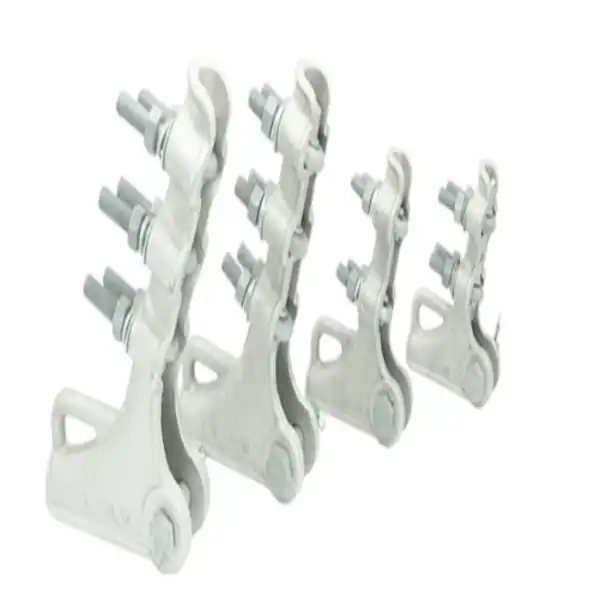
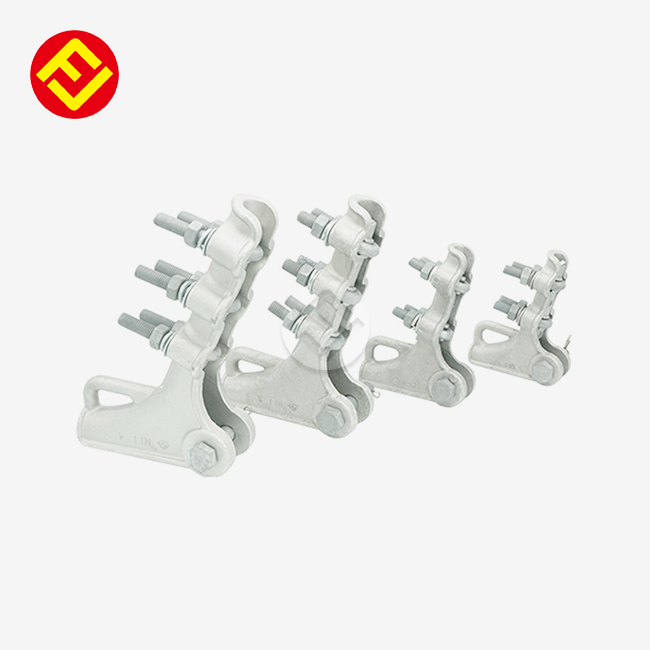
| Product Name | Applicable Range | Material Options | Finish | Manufacturing Process |
| NLL-1 Strain Clamp | 35-50mm² | Aluminum Alloy with Steel Core/Ductile Iron | Ho-Dip Galvanized/Natural Aluminum | Casting, Forging, Machining |
| NLL-2 Strain Clamp | 70-95mm² | Aluminum Alloy with Steel Core/Ductile Iron | Hot-Dip Galvanized/Natural Aluminum | Casting, Forging, Machining |
| NLL-3 Strain Clamp | 120-150mm* | Aluminum Alloy with Steel Core/Ductile Iron | Ho-Dip Galvanized/Natural Aluminum | Casting, Forging, Machining |
| NLL-4 Strain Clamp | 185-240mm² | Aluminum Alloy with Steel Core/Ductile Iron | Hot Dip Galvanized/Natural Aluminum | Casting, Forging, Machining |
Understanding Bolted Dead End Clamps: Function, Uses, and Specifications
What Makes These Clamps Essential for Cable Anchoring
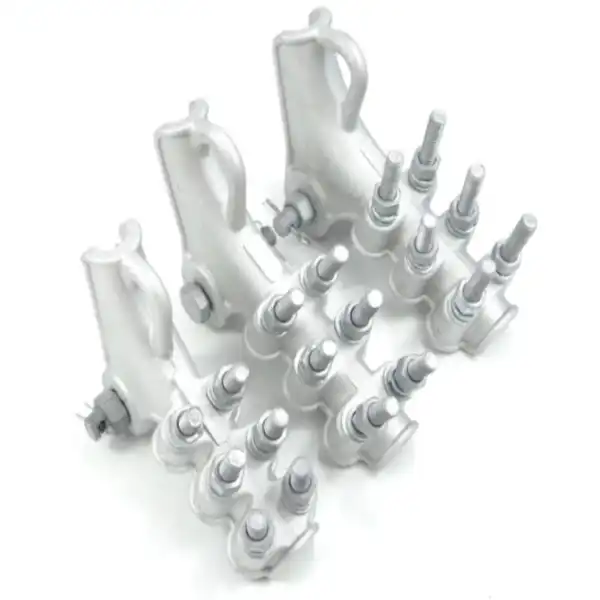
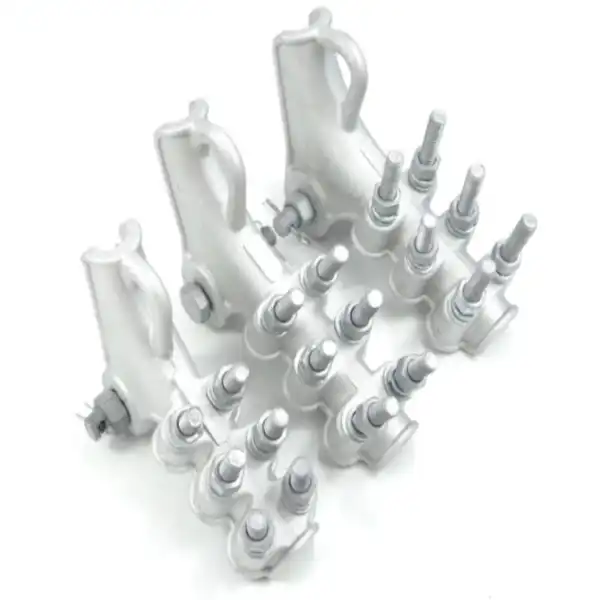
The strain clamp's main job is to be a point where mechanical tension and electrical continuity meet. The part is made up of a grooved aluminum alloy body that holds the conductor in place and a matching keeper piece that is held in place by galvanized steel U-bolts or bolts that are spaced out. It creates even pressure around the cable's diameter when it's tightened to exact torque specs. This keeps the strands from getting damaged and achieves grip strength of 95% of the conductor's rated breaking strength. The bell-mouthed cable exit lets the bent radius change slowly, which reduces the risk of fatigue failure at stress concentration places that often happen in fixed terminations.
Material Composition and Engineering Standards
The body and guard parts of our clamps are made from an A356-T6 aluminum alloy, which we chose because it has better mechanical qualities when used with aluminum conductors and is less likely to rust. The steel hardware is hot-dip galvanized according to ASTM A153 standards. This makes sure that the zinc coating is thicker than 86 microns so that it doesn't rust over time. Our goods meet the requirements of IEC 61284 and ANSI C119.4 Class A, which means that the connection will stay cooler than the conductor even when the current changes. This combination of materials stops galvanic rusting and gives structures the strength they need for high-tension uses.
Primary Application Environments
Distribution networks with 11kV to 33kV depend on these termination devices at poles with no lines, where the lines change directions, or where they end at transformers. Utility companies often put them in places like river and canyon bridges where the long spans make wind loading and running conditions very bad. The mass of the clamp prevents some vibrations and keeps the wires from getting worn out from aeolian vibrations. Engineers who work in substations like the reversibility feature because it lets them change bus links or replace old infrastructure without having to mess up expensive insulator strings. Telecommunications companies use special kinds to keep fiber optic and communication cables in place at the ends of poles. This keeps the signals from getting weaker when the cables move.
Bolted Dead End Clamp vs Other Clamp Types: Making the Right Choice
Understanding the pros and cons of different termination methods is often a key part of making buying choices. There are a few important things that stand out when we compare strain clamps to other options that affect the total cost of ownership and the reliability of operations.
Comparing Installation Methodologies and Flexibility
Compression dead ends use hydraulic crimping to make permanent connections. This method needs special die sets for each size of conductor and pricey field equipment. Our Bolted Dead End Clamp gets rid of this problem because it works with normal torque wrenches that can be found in any utility truck. This ease of access is very helpful for emergency fixes or when you're in a remote area where carrying hydraulic tools isn't possible. Wedge-type clamps are easy to set up, but they can't be adjusted to fix lines that have sagged due to temperature changes or storm damage. Crews can loosen, re-tension, and re-secure lines without cutting conductors because the design is bolted. This protects the value of the asset and cuts down on material waste.
Load Capacity and Range-Taking Advantages
At intermediate poles, suspension clamps can hold up the weight of the wire, but they can't handle the tensile forces at termination spots. Tongue clamps work for smaller gearbox lines but don't have the staying power needed for distribution lines. With a single SKU, our range-taking design can handle conductor sizes from #6 solid to 336.4 MCM. This makes stocking a lot easier for hardware dealers and tool suppliers. Because of this, purchasing managers can keep fewer part numbers in stock while still meeting the needs of a wide range of projects. This helps the warehouse's cash flow and efficiency.
Maintenance Requirements and Long-Term Performance
Aluminum wires expand when they are loaded and contract and flow cold when they are compressed for a long time. Compression joints could become loose over time if they can't be checked and re-crimped on a regular basis. Our clamps' spring washer assemblies instantly adjust to changes in temperature, keeping the link under constant pressure even when temperatures change with the seasons. Galvanized hardware doesn't let thread seizure happen, so it can be taken apart decades after it was installed. These maintenance benefits lead to lower lifecycle costs and higher system uptime, which are very important factors for construction companies that are in charge of long-term infrastructure projects.
Installation Guide and Best Practices for Bolted Dead End Clamps
The right way to put something together has a direct effect on its safety, function, and service life. Field teams that follow structured processes avoid common mistakes that weaken the system.
Pre-Installation Site Assessment and Preparation
Before you start fixing, make sure that the type, size, and state of the conductor match the clamp's requirements. Check the wire for kinks, broken strands, or rust that could weaken the grip. To get the best electrical contact, the surface of aluminum conductors needs to be prepared. To get rid of the oxide layer completely, use a wire brush made of stainless steel. This will reveal bright metal across the clamping zone. Put on a thin layer of electrical oxide-inhibitor grease that is made just for connecting aluminum pieces. This chemical stops oxide from reforming, lowers contact resistance, and keeps heat production to a minimum while current flows.
Torque Application and Quality Assurance
Achieving the torque values recommended by the maker is important for Bolted Dead End Clamp performance. These values are usually between 40 and 75 ft-lbs for half-inch bolts and 75 to 100 ft-lbs for five-eighths-inch hardware. Under-torquing lets the conductor slip when it's loaded, which can lead to hot spots and failure. When you over-torque something, you crush the aluminum strands, which lowers the mechanical strength and creates stress risers. To make sure the pressure is spread out evenly, you should always use calibrated torque wrenches and tighten in a cross-pattern. After applying the initial torque, do a follow-up check within 48 hours to account for the cold flow that occurred during the initial application. Write down torque readings and the times of installation to keep good records that can be used for safety checks and guarantee claims.
Common Installation Errors to Avoid
When the conductor and clamp gap are not lined up correctly, the pressure is not spread evenly, which leads to earlier wear. Before putting pressure on the keeper, make sure the cable is fully in the grooved channel. The unit won't be able to keep its tension during heat cycling if you don't use spring washers or standard flat washers. When copper wires and aluminum clamp bodies touch each other, the mixed metals cause severe galvanic corrosion. Utility companies that work with copper lines must choose bronze-alloy or tin-plated versions that are made to work with both copper and other metals. If you don't check the insulator's mechanical rating against the estimated tension loads, the structure could fail during high loading conditions or when ice builds up.
Procurement Insights: Buying Bolted Dead End Clamps for Your Business
Strategic buying choices weigh the needs of the project at hand against the stability of the supply chain and long-term ties with suppliers. Hardware stores and tool dealers that work with electricians need partners who know how to deal with the technical and business aspects of buying in bulk.
Evaluating Supplier Capabilities and Certifications
Our ISO9001-certified quality control method at FLA Industrial & Trading Co., Ltd. makes sure that all of our production runs are made to the same high standard. Chemical spectroscopy is used on each clamp to make sure that the aluminum alloy composition meets the requirements for strength and corrosion. We test the slip strength of sample units by putting loads on them to make sure the grip holds 95% of the conductor's rated breaking strength before it moves. Magnetic thickness gauges make sure that all steel parts that have been galvanized meet the standards of ASTM A153. These written quality controls give procurement engineers the traceability they need when choosing infrastructure parts that will be used for many years.
Inventory Management and Lead Time Considerations
Electrical contractors have to work with tight project plans where the key path for finishing is determined by the supply of materials. We keep 2,000 tons of standard inventory on hand so that typical setups can be shipped the same week. Our advanced casting, forging, and machining skills allow us to meet custom requirements for special conductor ranges or unique mounting geometries in 7 to 15 days. This level of production flexibility helps project planners deal with last-minute changes to the design or changes made in the field without having to add expensive delays to the schedule. Bulk purchasing programs offer tiered pricing structures that reward customers for making large orders while keeping prices low to protect distributor margins.
Technical Support and Customization Services
A lot of the time, complex setups need technical help that goes beyond what is listed in the catalogue. Our expert team can help you with 3D modeling and designing unique strain assemblies, including Bolted Dead End Clamp solutions, for poles with odd shapes or crossings with unusual configurations. Plant managers and production engineers like being able to talk directly with plant specialists who know both what the product can do and how it should be installed in the field. When you email sales@flaindustrial.com with a question, you'll get an answer within 24 to 48 hours, which keeps the buying process running smoothly. This flexible service model helps producers and the channel that serves end users build the trust that is needed for long-term relationships.
Benefits and Future Trends of Bolted Dead End Clamps in Electrical Projects
Investing in good termination hardware pays off in a way that can be measured: it improves safety, complies with regulations, and speeds up operations. Understanding new trends in technology helps procurement professionals make sure that their buying plans are in line with how infrastructure needs are changing.
Immediate Operational Advantages
Bolted strain terminations are easier to install than compression methods because they are mechanically simpler. This saves time and money on projects with multiple termination points. Field adjustability protects capital investments by extending the life of assets by allowing line repair without replacement. Temperature resistance from -40°C to +90°C makes sure that it works the same way in all temperature zones in North America, from the mountains of Arizona to the winters in Minnesota. The finish doesn't rust, so it will last for decades in seaside areas where salt fog speeds up the breakdown of hardware. Because these benefits have been shown to work, Fortune Global 500 utility companies choose these parts for the infrastructure that serves millions of customers.
Emerging Innovations in Clamp Technology
New developments in materials science have led to the creation of aluminum alloys that are more resistant to rust in industrial settings and have better conductivity-to-weight ratios. Coating methods that use ceramic-reinforced galvanization make maintenance times longer in harsh settings. Researchers looking into smart clamp systems are looking into putting in temperature and vibration sensors to allow condition-based monitoring. This would let maintenance teams know about problems before they break down. As grid modernization speeds up, procurement professionals should look at providers that are investing in new technologies and make sure that the inventory they buy still works with new utility standards and upkeep methods.
Strategic Recommendations for Long-Term Planning
Electrical infrastructure projects can last for decades, so choosing parts that will work now and in the future is important. Obsolescence risks can be reduced by choosing Products" target="_blank" style="color:blue" >products from companies with well-established quality systems and stable supply chains. Having suppliers that offer expert help and the ability to make changes gives you freedom as the needs of the project change. As corporate responsibility goals become more important to stakeholders in the building and utility sectors, buyers should give more weight to vendors who can show they are committed to sustainable manufacturing practices and ongoing growth. This will help buyers make decisions that are in line with these goals.
Conclusion
When choosing the right cable termination gear, you need to think about how well it works technically, how easy it is to install, and how much it costs over its lifetime. Bolted Dead End Clamp solutions are widely used by utility workers, hardware distributors, and building maintenance teams because they provide secure cable anchoring, flexible installation options, and reliable performance in various applications. Our hardware is made of galvanized steel and an aluminum alloy, which gives it the mechanical strength and corrosion protection needed in overhead distribution settings. ISO9001 and IEC compliance make sure that the quality of the products meets international standards, and helpful technical support ensures that they perform well in a wide range of situations. Professionals in procurement can choose solutions that support reliable electrical infrastructure for decades by understanding best practices for installation and keeping up with new technology trends.
FAQ
Can strain clamps be reused after conductor removal?
If there are no stress cracks, arc marks, or deformation when the high-strength aluminum body and guard are inspected, they should still work. Industry standards say that when you reinstall something, you should replace the nuts, bolts, and spring washers because the galvanization may be damaged and the threads may be worn out from the first torque application. To get the best electrical performance, wire-brush the contact surfaces and put on new oxide-inhibitor grease.
How do these clamps prevent aluminum oxidation issues?
Chemical bonding is not used in the locking process. Instead, mechanical pressure is used. To properly prepare the surface, the conductor should be wire-brushed to reveal bright metal, and then conductive oxide-inhibitor grease should be applied before the guard is installed. This process stops the oxide layer from reforming, keeps the electrical resistance low, and gets rid of any hot spots that form when current flows.
What makes spring washers critical in these assemblies?
As loads change throughout the day, aluminum conductors grow and shrink by a large amount. This is called thermal cycling. Spring washers keep the connection under constant pressure, which makes up for the connection's tendency to expand and the fact that aluminum naturally flows cold when it is compressed for a long time. Without this feature, nuts slowly loosen, which raises the contact resistance and makes it possible for things to get too hot, which is risky.
Partner with FLA Industrial & Trading Co., Ltd. for Reliable Cable Termination Solutions
Getting reliable strain clamp stock from a Bolted Dead End Clamp maker with a lot of experience will help you keep your project deadlines and customer promises. We have been making hardware tools and electrical line components for almost 40 years, and we work with procurement teams that need steady quality, technical know-how, and quick contact. Our 2,000-ton collection makes sure that standard setups are filled quickly, and our engineering team comes up with custom solutions for unique needs. Get in touch with our experts at sales@flaindustrial.com to talk about your conductor termination needs, get full specs, or get cheap quotes for your next infrastructure project.
References
1. Smith, J.R. (2021). Overhead Line Hardware: Design, Testing, and Application Standards. Electrical Transmission Publishing.
2. International Electrotechnical Commission (2019). IEC 61284: Overhead Lines – Requirements and Tests for Fittings. IEC Standards Authority.
3. American National Standards Institute (2020). ANSI C119.4: Electric Connectors for Use Between Aluminum-to-Aluminum or Aluminum-to-Copper Bare Overhead Conductors. ANSI Publications.
4. Thompson, M.K., & Rodriguez, P. (2022). "Material Selection for Electrical Hardware in Corrosive Environments." Journal of Utility Engineering, 45(3), 112-128.
5. National Electrical Safety Code Committee (2023). NESC Handbook: Overhead Line Construction and Maintenance Practices. IEEE Standards Association.
6. Wong, L.C. (2020). "Thermal Cycling Effects on Bolted Aluminum Connections in Power Distribution Systems." Transmission & Distribution World, 72(8), 34-41.