Choosing 12 Deep Throat C Clamps for Manufacturing Applications
2026-08-05 10:58:25


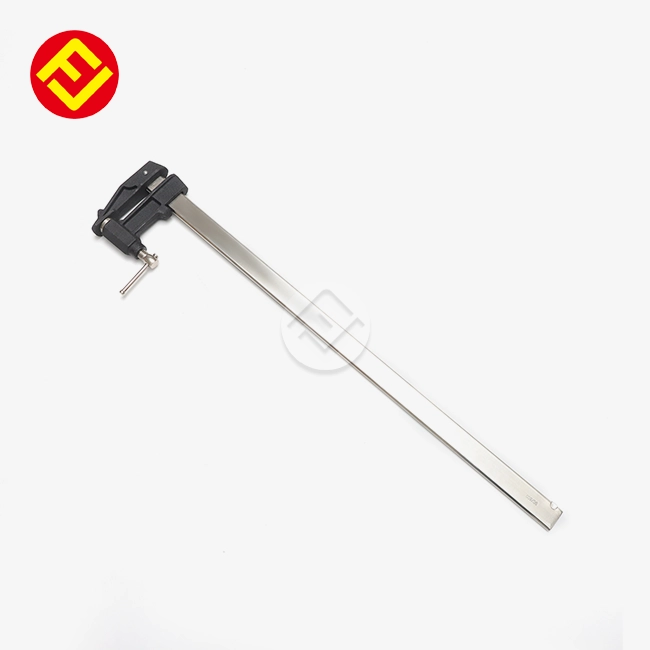
When selecting clamping equipment for industrial operations, understanding the capabilities of specialized tools can transform production efficiency. A 12 deep throat C clamp extends clamping reach far beyond what traditional clamps offer, making it indispensable for woodworking, metalworking, and pipe installation where workpieces require secure holding deep within their structure. This guide addresses the practical considerations procurement managers, site supervisors, and production engineers face when specifying these tools for bulk orders or ongoing project requirements.


Specification |
||
| Type | Model | Dimensions (Depth x Reach) |
| Deep Throat Clamp | Deep Throat 1.5 Inch | 35x110MM |
| Deep Throat Clamp | Deep Throat 2 Inch | 46x140MM |
| Deep Throat Clamp | Deep Throat 3 Inch | 82x110MM |
| Deep Throat Clamp | Deep Throat 3 Inch | 85x185MM |
| Deep Throat Clamp | Deep Throat Large 3 Inch | 95x250MM |
| Deep Throat Clamp | Deep Throat 4 Inch | 105x186MM |
| Deep Throat Clamp | Deep Throat Large 4 Inch | 110x305MM |
Understanding 12 Deep Throat C Clamps: Features, Benefits, and Applications
Extended throat clamps solve a problem that manufacturers have had for a long time: how to reach parts inside systems without lowering the binding pressure. 12 Deep Throat C Clamps are different from regular ones because the screw mechanism is farther from the back edge of the frame. This makes room to secure materials that are a few inches inward.
Core Design Characteristics That Matter
The extended throat shape is the result of choices made by structure engineers. Frames made of carbon steel and alloy steel are forged or stamped to have the right amount of stiffness and reach. Surface treatments, like nickel plating or industrial-grade paint, keep things from rusting in places where metal shavings and water are always present. Precision machining is used in the threaded spindle mechanism to make sure that the change goes smoothly under load. This keeps the mechanism from binding like lower-quality options do.
These clamps are made by FLA Industrial & Trading Co., Ltd. using a controlled method that includes casting, pressing, machining, and putting them together. Before being sent out, each unit is checked against ISO9001 and CE standards for both material quality and functionality. This method solves the problem of inconsistent quality that hardware distributors and contractors have when they buy from overseas suppliers.
Industrial Applications Across Sectors
When putting together cabinet frames or furniture, where the clamping point is deep inside the structure of the item, woodworking processes are greatly improved. During glue-up, the extended throat reaches panel centers and evenly applies pressure across joints that regular clamps can't reach. When making drawer systems or securing veneer layers on wide areas, furniture makers like being able to do this.
Metal fabrication shops deploy these tools for tasks like drilling, grinding, and welding. The strong structure can handle the heat and vibrations that are usual in these places. When holding metal sheets or brackets in place for machining, the clamp's strength stops the workpiece from moving, which could affect the accuracy of the measurements.
Pipe construction teams that work with different diameters find that the throat depth makes it easy to install and fix fittings. On construction sites, these tools are used to hold building materials temporarily and place parts while they are being installed, since other clamping methods aren't possible because of limited access.
Measurable Advantages for Procurement Teams
In a business setting, these are the main benefits this tool offers:
- Accessibility: The throat depth, which can be anywhere from 35mm to 110mm (depending on the model), lets you clamp in tight areas where frame structures or flanges make it hard to get to normal tools
- Force Distribution: The frame is made of carbon steel and alloy steel, which keeps the clamping pressure steady without bending, keeping the workpiece from getting damaged during long hold times
- Operational Lifespan: Surface treatments make things last longer in harsh settings, which means they don't need to be replaced as often and cost less overall
- Versatility: Sizes ranging from 1.5 inches to 4 inches allow for a wide range of project sizes without the need for various tool stocks
As hardware wholesalers and contractors, these benefits directly address the things that they value most: stable quality, durability that can stand up to constant use, and performance that makes the investment worthwhile when ordering in bulk.
How to Choose the Right 12 Deep Throat C Clamp: Criteria and Decision Factors?
To start matching specifications, you need to know what your business needs are. The selection of the right 12 Deep Throat C Clamp depends on the throat depth, which determines how far away from the edge you can place clamping force. For projects with wide panels or assemblies that have structures in the way, the throat needs to be bigger. On the other hand, shorter reaches make the frame more rigid, which is good for compact work.
Material and Construction Assessment
For general shop use, carbon steel versions offer great value for money when it comes to power. When tools are put through multiple high-stress cycles or impact conditions, alloy steel models last longer. When purchasing managers evaluate suppliers, they should check the composition of materials and the processes used to make them. When compared to casting, forging makes grain structures that are denser, which makes the metal more resistant to bending under load. Machined threads make sure that the spindle runs smoothly and that the gripping force is always applied in the same way.
Surface treatments stop rust and rusting, which makes tools last longer in wet places or places where chemicals are present. Nickel coating is better at protecting things, but it costs more to make. Industrial paint coats are a cheaper way to protect surfaces in dry, controlled settings. When procurement teams understand these trade-offs, they can set the right level of protection based on how the product will actually be used.
Load Capacity and Application Matching
Different businesses have very different clamping force needs. For woodworking, moderate pressure is usually enough to keep soft materials from getting crushed. For metalworking, higher force is needed to keep the workpiece from moving during machining. Instead of depending on marketing claims, when reviewing suppliers, ask for proof of tested load capacities. Reputable manufacturers test the functionality of their Products" target="_blank" style="color:blue" >products to make sure that the spindle mechanisms keep the force they're supposed to without slipping or binding.
FLA Industrial & Trading Co., Ltd. checks the quality of their products in real time during production. They check the thickness of the layer and test each unit's functionality. This methodical technique makes sure that unit number 1,000 works the same as unit number one, which solves the quality consistency problems that come up when procurement teams place big orders.
Supplier Reliability for Volume Orders
Hardware dealers and wholesalers give more weight to providers who keep enough stock on hand and deliver on time. When judging a supplier's skills, you should look at their stock levels, production ability, and how quickly they can meet your unique needs. Manufacturers with large stock levels can fill standard orders right away, and flexible production systems can make custom configurations in a reasonable amount of time.
How suppliers talk to each other shows how competent they are at their job. Within 24 to 48 hours of receiving detailed answers to questions about specifications, materials, and measurements, systems that are well-organized and help buying go smoothly are evident. This responsiveness is especially important when buying managers need quick bids for budget approvals.

Best Practices for Using and Maintaining Your 12 Deep Throat C Clamp
When a 12 Deep Throat C Clamp is used correctly, it works better and accidents don't happen. To place the clamp properly, you must first look at the structure of the item. Avoid putting the clamp so that the spindle touches the work area at an angle, which could cause the object to move or the clamp to slip. Before applying force, make sure that the frame is firmly against the other surface.
Operational Techniques That Extend Service Life
Tightening methods affect both the quality of the item and the life of the tool. Gradually apply force, checking the line of the object as the pressure rises. When the force is too low, the workpiece can move, but when it's too high, the frame and spindle threads are put under unnecessary stress. Through practice, operators learn how much pressure is right, but training should focus on watching how the part behaves instead of just focusing on making the tightening effort as strong as possible.
It is best not to use pressure extensions on the handle. Because the neck is longer, the moment arms are longer than with normal clamps, meaning the frame is bent more when the spindle loads are the same. Adding handle extensions creates forces that are higher than what was intended, which can damage the frame permanently or cause it to fail catastrophically. Tools are labeled with their maximum hand-tightening force to prevent damage and safety risks.
Maintenance Protocols for Industrial Environments
Regular cleaning gets rid of built-up dirt and dust that gets in the way of the spindle's operation, and for 12 Deep Throat C Clamp, metal bits, sawdust, and dried adhesives can get stuck in threads and make them hard to fix, and cleaning once a week with stiff brushes gets rid of dirt and grime before it hardens, and after cleaning the threads, use dry-film lubricants instead of petroleum-based ones that tend to pull in more dirt. Metal bits, sawdust, and dried adhesives can get stuck in threads and make them hard to fix. Cleaning once a week with stiff brushes gets rid of dirt and grime before it hardens. After cleaning the threads, use dry-film lubricants instead of petroleum-based ones that tend to pull in more dirt.
Every month, look at the frames and spindles for damage that you can see. Tools that have cracks in the frames, bent parts, or mushroomed spindle ends should be taken out of service. Finding damage early keeps things from breaking down during use, which could hurt people or damage the work. Welding shops should make sure that the swivel pads can move freely and are free of spatter that could fuse parts together.
Safety Considerations for Work Environments
These tools are only used to hold work in place; they are never used to lift or rig hardware. No matter how much weight the clamps are rated to hold, they can fail catastrophically when used for overhead uses or load support. This difference needs to be made clear in safety training, especially in building sites where people sometimes wing it when they are pressed for time.
Using personal safety equipment is still the norm. When clamping, safety glasses protect your eyes from metal fragments, and gloves keep your fingers from getting pinched when you are adjusting spindles. Before letting go of the clamps, operators should make sure that the workpieces are steady, since leftover stress can cause them to move quickly.
Procurement Insights: Where and How to Buy 12 Deep Throat C Clamps for Manufacturing?
Decisions about where to get a 12 Deep Throat C Clamp affect both short-term costs and long-term operational efficiency. Hardware distributors usually look for suppliers with competitive pricing. However, the cheapest unit cost isn't always the best deal when you look at things like consistent quality, reliable delivery, and support after the sale.
Evaluating Supplier Credentials and Capabilities
Manufacturers you can trust make clear records of their quality methods. When a company has ISO9001 certification, it means that they have set quality management methods that cover planning, making, and testing. CE marking shows that a product meets European safety standards, which are important for buyers in the U.S. when looking at supplier standards. These certificates are independent confirmations of commitments to consistent production practices.
Order fulfillment is directly linked to production capacity. Suppliers with more than one production line can handle big orders without having to extend wait times, which can throw off project schedules. FLA Industrial & Trading Co., Ltd. keeps 2,000 tonnes of standard products in stock so that common orders can be shipped right away. Custom orders that need special surface treatments are finished within 7 to 15 days.
Customization Options for Specialized Requirements
Standard catalogue items work well for many uses, but for some unique projects, the specs need to be changed. Manufacturers who can do tailored work can change throat lengths, frame materials, or surface treatments to fit the needs of each specific application. Requesting 3D designs before committing resources to production makes sure that unique tools meet standards before production starts.
Suppliers who offer full technical support throughout the buying process are helpful to procurement managers. Misunderstandings that cost a lot of money can be avoided with pre-production services like mould development and requirement proof. Support during the production phase makes sure that custom specifications are carried out correctly in the finished products. Post-production tracking and progress reports help procurement teams stay up to date.
Cost Structure Understanding
Pricing is based on more than just the cost of making the product. Choosing the right material has a big effect on prices. For example, alloy steel costs more than carbon steel because it performs better. Choices of surface treatment affect both the initial cost and the total cost over the life of the item, since better corrosion protection means less replacements. Quantity prices are good for buying a lot, but procurement teams should make sure that the saves are worth the cost of keeping inventory.
We should look closely at how brand affects prices. Price increases for well-known brands are due to their image and marketing efforts, but when quality systems are properly checked, lesser-known brands often offer the same performance at lower costs. Because they don't have to pay markups to distributors, direct maker ties are especially helpful for contractors and OEM buyers who place repeat orders.

Conclusion
To choose the right 12 Deep Throat C Clamp tools, you have to find a balance between technical requirements and the supplier's abilities. The throat depth, the way the material is made, and the way the surface is treated must all match the needs of the application, not just theoretical maximums. When making a purchase decision, it's helpful to check the supplier's quality systems, production capacity, and support services that go beyond the initial delivery. Manufacturing efficiency depends on selecting tools that work reliably even after a lot of use.
FAQ
What differentiates deep throat from standard C-clamps?
With standard C-clamps, the threaded spindle is close to the back of the frame, which makes it hard to reach areas around the edges. 12 Deep Throat C Clamp versions make this distance much longer, often by doubling or tripling the depth. This lets pressing pressure be applied well inside the edges of the workpiece. This longer reach comes with frame engineering that keeps the structure strong even when the longer throat causes more bent moments.
How do the prices of upkeep affect the total cost of ownership?
Service life is greatly increased by proper maintenance, which has a direct effect on cost per use. Tools that are regularly cleaned and oiled run smoothly and don't rust, so they can last for decades in expert settings. When clamps aren't taken care of, they rust, bind, and break mechanically, which means they need to be replaced too soon. Small amounts of time spent on regular repair saves a lot of money.
Which suppliers provide reliable performance for industrial use?
For corporate procurement, the most trusted manufacturers are those with ISO9001 certification, that keep enough inventory on hand, and that offer quick expert support. FLA Industrial & Trading Co., Ltd. has been in the manufacturing business for almost 40 years, showing they know how to run their business and understand the market. Supplier relationships with Fortune Global 500 companies show that quality standards meet strict industry needs.
Partner With FLA Industrial & Trading Co., Ltd. for Your Clamping Tool Needs
We at FLA Industrial & Trading Co., Ltd. know that buying managers and production engineers need more than just low prices. They need a 12 deep throat C clamp manufacturer that can provide confirmed quality, reliable delivery, and helpful support. With almost 40 years of experience making things, we work with building companies and woodworking shops in the US, Germany, and Australia.
We keep 2,000 tonnes of basic models in stock so they can be shipped right away. Custom configurations take 7–15 days to make with our flexible production methods. Our quality control systems are backed up by ISO9001 and CE certifications, and our agreements with Fortune Global 500 companies show that we can meet strict industry standards. For more information, pricing on large orders, or help with a custom design, please email our sales team at sales@flaindustrial.com. We offer full technical help from the first question to the follow-up after delivery, making sure that your buying process goes smoothly.
References
1. American Society of Mechanical Engineers (2021). Industrial Fastening and Work-Holding Equipment Standards. ASME Technical Publications, New York.
2. Industrial Supply Association (2022). Procurement Best Practices for Manufacturing Tools and Hardware. ISA Industry Report Series, Chicago.
3. National Institute of Standards and Technology (2020). Material Specifications for Industrial Hand Tools. NIST Handbook 150, Washington DC.
4. Woodworking Machinery Industry Association (2021). Clamping Technology in Modern Manufacturing. WMIA Technical Bulletin 47, Raleigh.
5. Construction Industry Institute (2022). Tool Reliability and Safety in Construction Operations. CII Research Report 315, Austin.
6. International Organization for Standardization (2020). Quality Management Systems for Tool Manufacturing. ISO 9001:2015 Implementation Guide, Geneva.