Choosing Fire Protection Flanged Valve for Large Building Safety Projects
2026-08-11 11:16:14


When large-scale building safety projects require reliable water flow control for critical fire suppression systems, choosing the correct Fire Protection Flanged Valve becomes essential for protecting lives and property. A Fire Protection Flanged Valve designed specifically for fire protection pipelines provides strong structural performance, secure leak prevention, and dependable operation for complex sprinkler and hydrant networks. Unlike general industrial valves, a Fire Protection Flanged Valve is manufactured to meet strict fire safety requirements and features a durable design that can remain reliable after years of standby service. Selecting a high-quality Fire Protection Flanged Valve helps ensure that fire suppression systems perform effectively during emergencies while maintaining compliance with regulatory standards. By evaluating factors such as certifications, materials, sealing performance, and long-term reliability, project managers can choose the right Fire Protection Flanged Valve to support safe and efficient fire protection infrastructure.

Specifications |
||
| Model(DN) | Valve Body Type and Rod Weight(kg) | Valve Body Length |
| DN140 | National Standard Medium Body Steel Rod, 5.5 kg | Approx.14.3cm |
| DN40 | National Standard Large Body Steel Rod, 7.5 kg | Approx.16cm |
| DN50 | National Standard Body Steel Rod,6.5 kg | Approx.17.3cm |
| DN50 | National Standard Medium Body Steel Rod,7.5 kg | Approx.17.5cm |
| DN50 | National Standard Large Body Steel Rod,9 kg | Approx.17.2cm |
| DN65 | National Standard Body Steel Rod,7.5 kg | Approx.18.5cm |
| DN65 | National Standard Medium Body Steel Rod,8.5 kg | Approx.18.6cm |
| DN65 | National Standard Large Body Steel Rod, 10.5 kg | Approx.18.5cm |
| DN80 | National Standard Body Steel Rod,9 kg | Approx.20cm |
| DN80 | National Standard Medium Body Steel Rod, 10.5 kg | Approx.20cm |
| DN80 | National Standard Large Body Steel Rod,12 kg | Approx.19.7cm |
| DN100 | National Standard Body Steel Rod, 10 kg | Approx.21.5cm |
| DN100 | National Standard Medium Body Steel Rod, 12.5 kg | Approx.22.5cm |
| DN100 | National Standard Large Body Steel Rod, 17.5 kg | Approx.22cm |
| DN125 | National Standard Body Steel Rod,19 kg | Approx.24.5cm |
| DN125 | National Standard Medium Body Steel Rod,21 kg | Approx.25cm |
| DN125 | National Standard Large Body Steel Rod,24 kg | Approx.25cm |
| DN150 | National Standard Body Steel Rod, 20 kg | Approx.26cm |
| DN150 | National Standard Medium Body Steel Rod,23 kg | Approx.26.2cm |
| DN150 | National Standard Large Body Steel Rod, 29 kg | Approx.26.3cm |
| DN200 | 8-hole National Standard Body Steel Rod,36 kg | Approx.28cm |
| DN200 | 12-hole National Standard Body Steel Rod,36 kg | Approx.28cm |
| DN200 | 8-hole National Standard Medium Body Steel Rod, 40 kg | Approx.28cm |
| DN200 | 12-hole National Standard Medium Body Steel Rod,40 kg | Approx.28cm |
| DN200 | 8-hole National Standard Large Body Steel Rod,50 kg | Approx.28.4cm |
| DN200 | 12-hole National Standard Large Body Steel Rod,50 kg | Approx.28.4cm |
| DN250 | National Standard Medium Body Steel Rod,70 kg | Approx.32.5cm |
| DN250 | National Standard Large Body Steel Rod,80 kg | Approx.32.5cm |
| DN300 | National Standard Medium Body Steel Rod,85 kg | Approx.35cm |
| DN300 | National Standard Large Body Steel Rod, 111.5 kg | Approx.35cm |
| DN350 | National Standard Large Body Steel Rod, 150 kg | Approx.37.5cm |
| DN400 | National Standard Large Body Steel Rod, 175 kg | Approx.40.5cm |
| DN450 | National Standard Large Body Steel Rod, approx.251.5 kg | Approx.430cm |
| DN500 | National Standard Large Body Steel Rod, approx.340 kg | Approx.45.5cm |
| DN600 | National Standard Large Body Steel Rod, approx.450 kg | Approx.50.7cm |
Understanding Fire Protection Flanged Valves: Basics and Benefits
Fire Protection Flanged Valves are important control points in the foundation of a building that puts out fires. In an emergency, these special parts control the flow of water through sprinkler systems, standpipe networks, and hydrant connections to keep people and property safe.
What Makes Flanged Valves Essential for Fire Safety Systems
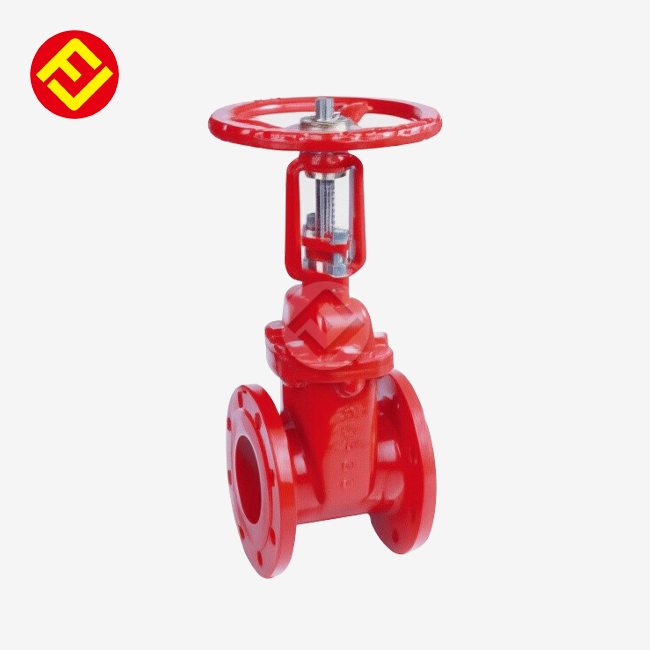
When it comes to mechanical strength, flanged connections are better than threaded ones. Bolted flange joints spread stress evenly across the connection surface. This makes seals that are reliable and can withstand system pressures of 175 to 300 PSI without breaking. When building tall buildings, where hydrostatic pressure rises a lot, this strong construction method is especially useful. The Outside Screw and Yoke (OS&Y) gate valve configuration is most common in commercial Fire Protection because the rising stem makes it easy to see where the valve is located, which is a key safety feature that lets first responders quickly check the water supply.
Core Benefits That Impact System Performance
The choice of material has a big impact on how long a valve lasts. Ductile iron that meets ASTM A536 Grade 65-45-12 has better tensile strength and impact protection than regular cast iron, making it better for harsh settings. The fusion-bonded epoxy covering that is put on both the inside and outside sides stops corrosion and tuberculation, so the full flow capacity stays the same for decades of use. This barrier usually has a dry film thickness of more than 250 microns, which meets AWWA C550 standards for water system parts.
Another important step forward is resilient wedge technology. The valve disc is completely covered in vulcanized EPDM rubber. This lets the sealing surface squeeze around any dirt or debris that gets stuck in the line. This design makes sure that the shutdown is bubble-tight even if sand, rust particles, or mineral deposits get into the sealing area. This is a common problem in Fire Protection systems that stay still for a long time.
Regulatory Compliance and Certification Requirements
Fire Protection Flanged Valves need to have marks that say they are UL Listed and FM Approved, which means they meet the standards set by Underwriters Laboratories 262 and Factory Mutual Class 1120/1130, respectively. These certifications show that the valve has been through strict tests to make sure it doesn't leak at the seat, that the hydrostatic shell is intact, and that it works properly when under pressure. The NFPA 25 standard requires specific upkeep and inspection procedures, such as eye checks once a week or once a month and full-operation cycling once a year to keep the stem from seizing. Buildings that have valves that are properly certified and kept show that they follow local Fire Protection codes and insurance requirements. This helps avoid costly violations and possible liability problems.
Types and Specifications of Fire Protection Flanged Valves
To choose the right valve configurations, you need to know how the different designs meet the working needs of big building Fire Protection systems.
Gate Valves Versus Butterfly Valves
Due to their full-bore design, which leaves no obstructions when fully opened, gate valves are most often used for Fire Protection. This feature reduces head loss, which is a key part of hydraulic formulas used for designing spray systems. The flexible wedge moves across the flow direction, creating a straight-through path that effectively maintains system pressure. The smaller size and lighter weight of butterfly valves make them good for installations with limited room. But the disc stays in the flow path even when it is opened. This causes turbulence and a drop in pressure that needs to be taken into account in the hydraulics of the system.
Material Choices and Environmental Considerations
Three main types of material are used to make valves. Cast iron works well and doesn't cost much for indoor uses in controlled settings. Ductile iron has a higher strength-to-weight ratio and is more resistant to thermal shock, which makes it perfect for systems where temperatures change. The construction of carbon steel works well in high-pressure situations or places with a lot of mechanical stress. During the inbound inspection process, each material's chemical and mechanical properties are carefully checked. This makes sure that only approved materials get into the production process.
Pressure Ratings and Size Selection
Standard working pressure values of 200, 250, and 300 PSI can be used with pumps that are set up in a variety of ways and at different heights. Fire Protection Flanged Valve ratings of 300 PSI are often needed for buildings with more than 20 stories to handle the huge hydraulic forces that multi-stage fire pumps create. There is a range of sizes available, from 2-inch (DN50) links for branch lines to 12-inch (DN300) mains that feed whole building zones. Face-to-face dimensions that meet ANSI B16.10 standards make sure that they can be used with existing pipeline layouts. This keeps expensive changes from having to be made in the field during installation.
Flange Standards and International Compatibility
ANSI Class 125 or 150 flanges are usually used for projects in North America, while PN10 or PN16 are used for systems in Europe. Even though these standards can handle about the same amount of pressure, their bolt hole patterns and pitch circle diameters are not the same. When you try to mix standards without the right tools, installation fails, and alignment problems happen. We give buying teams clear standard sheets that show flange drilling patterns so they can make sure they are compatible before placing an order. International projects can use universal flanges that have slotted bolt holes that work with a number of different standards.

Comparison and Decision-Making: Choosing the Best Valve for Large Building Projects
When making a purchase choice, you need to look at more than just the initial cost to make sure that the system will work well and be reliable in the long run.
Installation Complexity and Labor Considerations
To get leak-free service from flanged joints, they need to be perfectly lined up and the bolts must be tightened to the right pressure. To install something, you have to line up the flanges so they are parallel within very tight tolerances, put in the gaskets correctly, and tighten the bolts in a star pattern to the right torque levels. This method requires more skill than threaded connections, but the joint quality that results does not leak like threaded parts often do in large-diameter situations. Being able to take apart flanged joints without cutting the pipe is very helpful for maintenance or making changes to the system. This saves time and money on labor over the life of the building.
Pressure Handling and Structural Integrity
The structural strength is confirmed by hydrostatic shell testing at twice the maximum working pressure. Fire Protection Flanged Valves that are rated for 300 PSI are tested at 600 to 875 PSI to make sure that the shell doesn't leak or change shape under high conditions. In high-rise situations, where pump pressures and static head make for tough working conditions, this proof becomes very important. The design of the cast body spreads stress evenly, stopping stress concentration points that could cause catastrophic failure in situations when systems experience rapid pressure spikes from the pump turning on.
Corrosion Resistance in Various Environments
When working in industrial areas with harsh weather, extra safety measures need to be taken. Our advanced coating technology is tested over the holidays with high-voltage monitors to find tiny holes that could start rusting. It only takes one tiny hole in the epoxy covering for water to get in and cause rust to form, which weakens the valve. Marine applications and coastal buildings are especially harsh environments because the salty air speeds up the breakdown of metals. The ductile iron base material and thick fusion-bonded epoxy work together to give great security, greatly increasing the service life compared to options that aren't coated.
Installation, Maintenance, and Longevity Best Practices
The dependability of valves and the performance of the system are directly affected by the right way to place them and maintain them over the life of the building.
Installation Procedures for Reliable Operation
To meet the manufacturer's requirements for parallelism, the flanges must be lined up so that there is less than a 0.0625-inch offset across the joint diameter. Using flange alignment tools or laser alignment systems makes sure that the parts are in the right place before the bolts are put in. It is very important to choose the right gasket. Full-face gaskets work with Class 125 flat-face flanges, while ring gaskets work with Class 150 raised-face designs. Tightening bolts is done in a certain order, starting with finger-tight assembly and then applying torque in several passes using a star design to make sure that compression is spread out evenly. The final torque range depends on the bolt size and material, but for most Fire Protection Flanged Valve sizes, it is between 45 and 150 foot-pounds.
Inspection Protocols and Preventive Maintenance
NFPA 25 compliance requires inspection schedules to be written down. Visual checks make sure that the valve position signs can still be seen and are still correct. This makes sure that the stems show the correct open or closed state. Every year, each Fire Protection Flanged Valve is fully opened and closed while being watched to make sure it works smoothly and to keep the stem from freezing up from rust or mineral deposits. During riding, inspectors listen for odd resistance, grinding noises, or damage to the stem thread that could mean that internal parts are breaking down. Checking the packing glands early on can find small stem leaks, so the gland nuts can be easily adjusted before the whole packing needs to be replaced.
Troubleshooting Common Issues
Most of the time, loose packing glands cause stem leaking after installation. This is an easy problem to fix by partly tightening the gland nuts while the Fire Protection Flanged Valve is still under pressure. Too much tightening causes too much friction, which hurts the stem threads and speeds up wear. When valves won't work, it's usually because the wedges have become stuck from too much static electricity. Putting penetrating lubricant on stem threads and waiting a while before trying to operate helps get stuck parts free without hurting the mechanisms. If the Fire Protection Flanged Valve keeps locking up even after being oiled, it means that the internal rust is bad enough that the valve needs to be replaced instead of being fixed, which could affect emergency operations.
Procurement Guide: Buying Fire Protection Flanged Valves for Large Projects
Strategic choices about where to get things affect not only the initial costs of a project, but also the costs of upkeep over time and the stability of the system as the facility runs.
Supplier Qualification and Certification Verification
Products" target="_blank" style="color:blue" >products that are real and approved can only be bought from authorized dealers and producers whose quality management systems are documented. We keep our ISO 9001 certification, which shows that we control quality thoroughly throughout the whole production process. Our UL Listed and FM Approved statuses show that our designs are sound and our manufacturing is consistent. Teams in charge of buying things should ask sellers for certification paperwork directly, like test records and material certifications that show they meet the standards that apply. These checks make sure that fake or low-quality goods don't get into important life-safety systems.
Bulk Purchasing and Custom Manufacturing Options
Consolidated purchasing helps big building projects by making sure that product specs are the same in all zones. We are experts at making custom solutions for problems that don't fit a standard pattern. We change designs to fit the needs of each job. Our engineering team makes detailed 3D models that can be seen and checked before production starts. This makes sure that the models fit perfectly with the infrastructure that is already in place. Custom pressure grades made for specific uses let you create the best system possible instead of having to make adjustments because of the limits of standard products. Size changes and special alloys can still be ordered, and metallurgy experts can help you choose the right materials for tough environments.
Lead Times and Logistics Coordination
Realistic delivery times that work with installation processes are needed for construction plans. Standard setups usually ship within the time frames that have been set, but custom specs take longer for planning and production. We respond to requests for pricing, technical details, and 3D plans within 24 to 48 hours. This greatly speeds up the decision-making process. Logistics management that works well makes sure that product arrival times match up with construction milestones. This keeps expensive delays from happening because of missing parts. For easy inclusion into project processes, bulk shipments come with full paperwork packages that include dimensional verification reports, material certificates, and installation instructions.

Conclusion
For big building safety projects, choosing Fire Protection Flanged Valves means carefully looking at their technical specs, whether they meet approval requirements, and how reliable they will be in the long run. The strong flanged connection design provides better sealing integrity and structural strength, which are important for high-pressure fire suppression systems that work on multiple floors. When deciding between cast iron, ductile iron, and carbon steel as a material, each application's weather factors and performance needs must be taken into account. The right way to fix something, like making sure the flanges are lined up perfectly and using the right amount of torque on the bolts, sets the stage for years of leak-free service. Valve maintenance that follows NFPA 25 guidelines makes sure that Fire Protection Flanged Valves are always fully functional for when emergencies call for immediate action. Strategies for buying things that focus on certified suppliers and well-documented quality systems keep life-safety systems safe from low-quality goods.
FAQ
What distinguishes OS&Y from NRS valve designs in fire protection applications?
Outside Screw and Yoke (OS&Y) valves have stems that rise when the valve opens, making the valve position immediately visible. This is required by Fire Protection rules for major water supply lines. NRS (Non-Rising Stem) designs hide the stems, making them good for installations underground or in places with limited space when used with position indicators. Above-ground Fire Protection systems mostly use OS&Y setups because first responders can quickly check the state of valves in an emergency without having to look at instruments or paperwork.
Can I interchange PN16 and ANSI Class 125 flanges in the same system?
Despite similar pressure capabilities, PN16 and ANSI Class 125 flanges feature different bolt hole patterns and pitch circle diameters that prevent direct interchange. Attempting to mate these incompatible standards without proper adapters results in misaligned bolt holes and compromised sealing. Projects must maintain consistent flange standards throughout entire systems, or incorporate approved adapter flanges at transition points. Mixing standards introduces unnecessary complexity and potential leak points that undermine system reliability.
How frequently should fire protection valves undergo inspection and operation?
NFPA 25 calls for visual checks to be done once a week or once a month, depending on the level of supervision, to make sure that valve position indicators stay accurate and easy to reach. Full-cycle operation once a year under supervised conditions keeps the stem from seizing and makes sure the wedge stays in the right place. This operational testing finds parts that are breaking down before they completely stop working. This lets planned maintenance happen instead of emergency fixes being needed when the system needs to work reliably.
Partner with FLA Industrial & Trading Co., Ltd. for Certified Fire Safety Solutions
Getting reliable Fire Protection Flanged Valves from a reputable company will make sure that your big building projects meet all safety requirements without any problems. FLA Industrial & Trading Co., Ltd. has been making high-quality critical infrastructure parts for almost 40 years. They make Fire Protection Flanged Valves that are UL Listed and FM Approved, which are needed for industrial fire control systems. Our ductile iron and carbon steel valves have fusion-bonded epoxy coats that are more than 250 microns thick. This gives them great corrosion protection in harsh conditions.
We offer full technical support to building builders, procurement engineers, and facility managers all over the United States, from the initial design advice to the final installation. As part of our quality control procedures, we test the shell underwater, check for seat leaks, and use high-voltage holiday detection to check the integrity of the coating. This makes sure that every Fire Protection Flanged Valve meets international standards before it is shipped. Standard catalogs can't cover all of a project's needs, but custom sizes, non-standard pressure grades, and specific materials can.
Get in touch with us at sales@flaindustrial.com to talk about the Fire Protection Flanged Valves you need. For bulk orders placed within 24 to 48 hours, we offer reasonable prices, thorough specs, and 3D models for verification. As a recognized provider of Fire Protection Flanged Valves to Fortune Global 500 companies in both domestic and foreign markets, we give your important safety systems the dependability they need.
References
1. National Fire Protection Association. (2020). NFPA 25: Standard for the Inspection, Testing, and Maintenance of Water-Based Fire Protection Systems. Quincy, MA: NFPA Publications.
2. American Water Works Association. (2019). AWWA C550: Standard for Protective Interior Coatings for Valves and Hydrants. Denver, CO: AWWA Publishing.
3. Factory Mutual Global. (2018). FM Approval Standard 1120: Fire Service Main Control Valves for One-Way and Two-Way Water Supplies. Johnston, RI: FM Approvals.
4. Underwriters Laboratories. (2021). UL 262: Standard for Safety Gate Valves for Fire Protection Service. Northbrook, IL: UL Standards.
5. American Society of Mechanical Engineers. (2017). ASME B16.1: Gray Iron Pipe Flanges and Flanged Fittings: Classes 25, 125, and 250. New York, NY: ASME Press.
6. ASTM International. (2019). ASTM A536: Standard Specification for Ductile Iron Castings. West Conshohocken, PA: ASTM Technical Publications.
YOU MAY LIKE