Why Choose a Pressure Reducing Regulator Valve for Pipeline Protection?
2026-08-11 11:16:01


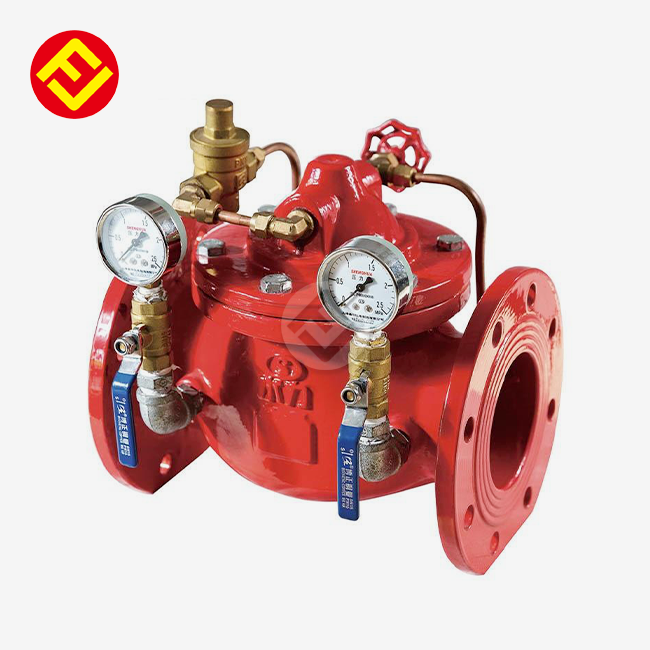
Choosing a Pressure Reducing Regulator Valve for your pipeline system means investing in reliability, safety, and long-term cost efficiency. These self-actuated devices automatically reduce higher, variable upstream pressure to a stable, constant downstream pressure, protecting your equipment from pressure spikes and ensuring consistent performance. Whether managing fire protection systems in high-rise buildings, industrial plumbing networks, or HVAC installations, these valves serve as a critical line of defense against overpressure incidents, equipment damage, and operational interruptions that can cost thousands in repairs and downtime.


Specification |
|
| Model(DN) | Type |
| DN50 | National Standard Body |
| DN65 | National Standard Body |
| DN80 | National Standard Body |
| DN100 | National Standard Body |
| DN125 | National Standard Body |
| DN150 | National Standard Body |
| DN200 | National Standard Body |
| DN250 | National Standard Body |
| DN300 | National Standard Body |
| DN50 | National Standard Heavy Body |
| DN65 | National Standard Heavy Body |
| DN80 | National Standard Heavy Body |
| DN100 | National Standard Heavy Body |
| DN125 | National Standard Heavy Body |
| DN150 | National Standard Heavy Body |
| DN200 | National Standard Heavy Body |
| DN250 | National Standard Heavy Body |
| DN300 | National Standard Heavy Body |
| DN50 | Stainless Steel Accessories |
| DN65 | Stainless Steel Accessories |
| DN80 | Stainless Steel Accessories |
| DN100 | Stainless Steel Accessories |
| DN125 | Stainless Steel Accessories |
| DN150 | Stainless Steel Accessories |
| DN200 | Stainless Steel Accessories |
| DN250 | Stainless Steel Accessories |
| DN300 | Stainless Steel Accessories |
Understanding Pressure Reducing Regulator Valves and Their Function
What Makes These Valves Essential for Modern Pipeline Systems
A Pressure Reducing Regulator Valve works with a force-balance system that checks and changes the pressure downstream all the time. The valve is connected to your main input pipe and has a dial or wheel on top that you can turn to set the pressure you want at the output. Once set up, the internal mechanism automatically opens and closes when the pressure and flow rate upstream change. This is usually done by balancing the force of a spring against the pressure acting on a diaphragm or piston downstream.
The beauty of this design is that it works on its own. These regulators keep the pressure stable even when there is no flow or flow is present, unlike control valves that need external power sources and complicated feedback loops. The valve opens to let more fluid through when the pressure downstream drops below your set point. If the pressure goes up, the valve closes in the right way, keeping precise control without any help from a person or electronic parts.
Key Differences Between Pressure Reducing and Relief Valves
Pressure Reducing Regulator Valves and pressure relief valves are often mixed up by procurement managers, but they are used for very different things. A pressure-reducing valve changes the flow continuously to control the pressure further downstream. The main thing it does is keep the conditions of the tools and processes that come after the valve stable.
On the other hand, a pressure release valve acts as an automatic safety that keeps things from getting too pressured. When the system pressure goes over a certain limit, these safety devices open quickly and let out extra fluid straight to a safe discharge point. When they're not in use, relief valves stay closed, and they usually need to be inspected and fixed after being used. Knowing the difference between these two types of protection helps you choose the best one for your application.
Material and Design Variations for Different Applications
These days, pressure controllers come in a number of different shapes and sizes to meet the needs of different industries. The choice of material is very important for function and durability. The design of brass is very resistant to corrosion and works well in pipes and water transfer systems. Cast iron is strong and durable, making it ideal for heavy-duty uses like steam systems and industrial processes. Stainless steel is very good at withstanding harsh chemicals and high temperatures, which makes it perfect for use in chemical processing and marine uses.
Design differences go beyond changes in materials. Diaphragm-sensing elements work best in situations where they need to be very sensitive and react quickly to small changes in pressure. They can usually handle exit pressures below 500 psi. Piston-type designs can handle higher pressures and are more durable in places where there is hydraulic shock or vibration, but they lose some sensitivity because of friction between the seals. When minimizing pressure droop is important, dome-loaded or external feedback regulators provide flatter flow characteristics. Spring-loaded mechanisms work reliably in most situations.
Key Benefits of Using Pressure Reducing Regulator Valves for Pipeline Protection
Enhanced Safety Through Overpressure Prevention
By installing Pressure Reducing Regulator Valves, the chance of major pipeline breakdowns and equipment harm is greatly reduced. These devices keep sudden pressure changes from affecting sensitive parts further down the line. This keeps gauges, instruments, and other connected equipment from going over their maximum working pressure. When upstream supply pressure changes, like when gas tanks run out of gas or when water pressure changes throughout the day, the consistent protection is especially helpful.
These valves protect more than just physical assets. They also protect people and buildings. Uncontrolled pressure spikes can break pipes, damage joints, and let steam or dangerous fluids explode. A regulator valve that is the right size and is well taken care of is your best defense against these kinds of problems. It keeps processes safe even when supply conditions change without warning.
Operational Efficiency and Equipment Longevity
Keeping the pressure downstream stable has measured practical benefits that have a direct effect on your bottom line. When equipment works at a constant pressure, the stress and wear that come from pressure cycles are gone. Less mechanical stress is put on pumps, valves, heat exchangers, and other parts further downstream. This means that they need to be serviced and replaced less often. This means less unplanned maintenance and more time for the system to be online.
Another important benefit is that the process is stable. To keep product quality and reaction stoichiometry, manufacturing processes, chemical dosing systems, and precise uses need constant pressure. Flow oscillations can be caused by changes in pressure, which can affect mixing ratios, coating thickness, or heat transfer rates. A quality monitor gets rid of these unknowns, making sure that your methods always give the same, good results.
Cost Reduction Through Lifecycle Value
There are more financial reasons to use Pressure Reducing Regulator Valves than just the initial cost of buying them. Quality valves cost more up front, but they save you a lot of money in the long run because they last longer, need less maintenance, and cause less downtime. Think about how much it would cost to fix things in an emergency, lose production during unexpected shutdowns, and replace broken equipment before it's time. These costs are much higher than the money you would spend on good pressure control.
Pressure regulation also makes energy use more efficient. Pumps, compressors, and heating systems use less energy when they are running at the right pressure instead of too much supply pressure. Modern regulators don't need as much upkeep as older, more complicated control systems because they clean themselves and are made of long-lasting materials. This lets your team focus on other tasks and keeps running costs stable.

Pressure Reducing Regulator Valve Installation and Maintenance Best Practices
Critical Installation Considerations for Optimal Performance
When something is installed correctly, it will work reliably for a long time. The most important thing is the size—a valve that is too small won't be able to give the necessary flow rates, and a valve that is too big will work outside of its ideal range, which could make the control unstable. Make sure you know exactly how much flow you need at its peak, and choose a valve whose flow coefficient puts action in the middle of its performance curve, not close to its limit.
Positioning is very important. Place the valve in a straight, horizontal piece of pipe that has enough room for upkeep and adjustments. Make sure the component is oriented correctly according to the manufacturer's instructions, as some designs need certain fixing places for the diaphragm or internal components to be lined up. Adding upstream strainers will keep debris from hurting the internal seats and seals, which will keep your investment from wearing out too quickly.
Having the right pipe support keeps the valve body from being stressed mechanically. Support the pipes upstream and downstream separately so that the weight of the pipes, forces of heat expansion, or vibrations don't get transferred to the valve. Put pressure gauges both upstream and downstream to keep an eye on performance and quickly figure out what's wrong. These gauges show right away if something is working right and let workers know about problems before they get worse.
Maintenance Schedules and Inspection Protocols
Setting up regular repair plans for your Pressure Reducing Regulator Valves will make sure they keep working well for as long as they are supposed to. In harmless situations with clean, dry fluids, checks once a year are usually enough. But places that are harsh, like those with toxic chemicals, steam, or high-cycle operation, need more frequent care. Checks may need to be done every three months or even once a month to catch problems early.
During inspections, make sure that the downstream pressure is correct both when there is flow and when there is no flow. Look for leaks on the outside around the body seals and adjustment stems. Keep an ear out for strange sounds that could mean cavitation or flow turbulence. Check the device for adjusting to make sure it works easily and doesn't get stuck. These easy checks only take a few minutes but give you useful information about the state of the valves and how they're working over time.
Troubleshooting Common Issues and Preventive Strategies
Being aware of common issues helps you fix them before they lead to failures. Pressure creep, which is when the outlet pressure slowly rises when the flow stops, means that the seat is worn or dirty, which is stopping it from closing properly. Because of this problem, the soft parts like seats, seals, and maybe even the internal poppet need to be taken apart and replaced. External freezing during operation sets off the Joule-Thomson effect, in which fast gas expansion lowers the temperature, which freezes the water. Some solutions are to dry the gas upstream, heat the valve bodies, or lower the pressure in more than one step to split the cooling loads.
Unstable exit pressure or hunting behavior is usually caused by the wrong size, too much inlet pressure, or limits further downstream that create back pressure. Check your application conditions and valve choice to see if they don't match up. A sudden drop in performance is usually a sign of a broken internal component or serious contamination that needs to be fixed right away. When service is needed, having spare parts kits on hand, especially soft goods like diaphragms and seals, cuts down on downtime as much as possible.
How to Choose the Right Pressure Reducing Regulator Valve for Your Pipeline
Matching Valve Specifications to Application Requirements
To choose the right valve, you need to carefully look at how your system is working. Make a clear list of the pressure ranges you need, including the highest pressure at the inlet, the pressure you want at the exit, and the amount of pressure change that is allowed as the flow conditions change. Know how much flow you need across the whole working range, taking into account situations like normal operation, high demand, and minimum flow. With these parameters, you can find valves that have the right flow rates and pressure ratings.
Media compatibility is another important selection factor. Standard elastomer seals can be used on devices that distribute water and are made of metal or cast iron. For chemical uses, you need stainless steel with seal materials that are suitable and rated for the fluids you are using. For high-temperature steam service, the materials and systems must be able to handle thermal cycles without breaking down. To keep things from breaking down too soon, they need special alloys or protective coatings that can handle corrosive environments like those with chlorides, acids, or hydrogen sulfide.
Evaluating Materials and Construction Quality
The choice of material has a direct effect on how long and reliably a valve works. Brass is a great material for building systems and city uses because it doesn't rust when exposed to water and air at normal temperatures. Cast iron works well in bigger sizes and higher pressure situations, especially when saving money is more important than considering weight. Stainless steel is the best material for corrosive, high-temperature, or clean uses. Its higher cost is justified by the fact that it lasts longer and needs less upkeep.
Construction quality changes a lot from one maker to the next. Check the form of the body to make sure that the wall thickness and pressure values are right, with enough safety margins. Make sure that the materials used in the internal parts are right for the job. For example, hardened seats will resist wear, and soft seals will provide a tight seal. Look for designs that let you change parts without taking the valve out of service. This will cut down on the time needed for upkeep. Manufacturers who make good Products" target="_blank" style="color:blue" >products give you a lot of technical information, like pressure-flow curves and capacity tables, so you can make an informed choice.
Certification Standards and Supplier Reliability
When making decisions about what to buy, suppliers with known certifications that show steady quality should be given more weight. ISO9001 approval means that quality management is used systematically throughout the whole production process. The CE mark shows that the product meets European safety standards. UL listing confirms safety tests done by a third party, while FM approval is only for fire defense uses. These certifications show that valves meet basic safety and efficiency standards, which lowers the risk in serious situations.
Certifications aren't the only thing that makes a supplier reliable. Check to see if standard products are in stock and how long it takes to get custom configurations. Strong providers keep a lot of stock on hand so that orders can be sent out right away, and they can also make changes to meet non-standard needs. Technical support is very important. Engineering teams that respond quickly and offer application advice, 3D design help, and installation support within 24 to 48 hours show that they care about their customers' success. Order tracking in real time and clear contact throughout the buying process are signs of a business that takes your business seriously.
Future Trends and Innovations in Pressure Reducing Regulator Valves
Digital Integration and Smart Control Technologies
By integrating digital control technologies, the valve industry is advancing toward Industry 4.0 standards, and the Pressure Reducing Regulator Valve is becoming an important part of intelligent fluid management systems. Modern controllers used with a Pressure Reducing Regulator Valve increasingly include sensors and communication functions that enable remote monitoring of pressure, temperature, and flow conditions. These smart Pressure Reducing Regulator Valve solutions transmit real-time operational data to centralized control platforms, allowing operators to evaluate system performance, monitor valve conditions, and optimize processes from remote locations. Predictive analytics integrated with a Pressure Reducing Regulator Valve system can identify potential issues before they develop into serious failures, transforming traditional maintenance methods from reactive repairs into proactive strategies. With advanced monitoring capabilities, the Pressure Reducing Regulator Valve helps improve reliability, efficiency, and long-term performance in modern industrial applications.
Digital control also lets you make precise changes that you couldn't do with mechanical designs alone. Electronic actuators can keep control limits tighter because they react faster to changes in pressure. Technicians don't have to directly access valves in dangerous or hard-to-reach places when they can make adjustments from a distance. As more industrial facilities use building management and process control systems that work together, pressure regulators that are natively digitally connected make the process easier to understand and make the integration more seamless.
Advanced Materials and Sustainability Initiatives
New discoveries in materials science keep making valves work better and last longer. New metal formulas offer better protection to corrosion while keeping the same low cost as traditional materials. Surface treatments and coats make things last longer in harsh settings, which means they don't need to be replaced as often and create less waste. Manufacturers are coming up with designs that use less material without lowering the power. This is done to protect the earth while still meeting performance standards.
Regulatory Evolution and Market Demands
Sustainability issues are becoming more and more important in choosing and designing valves. Energy-efficient designs keep pressure loss through the valve body to a minimum. This lowers the cost of pumping over the life of the system. Companies are switching to environmentally friendly ways of making things, which means less trash and pollution during production. Longer repair intervals and the ability to change parts make something more sustainable by lowering the number of replacement parts that are used. As rules about the environment get stricter and companies set higher goals for sustainability, these factors, along with performance and cost, will be used more and more to make buying decisions.
As safety rules get stricter around the world, performance standards for pressure control tools keep going up. As building codes change to reflect new risks, fire safety requirements get stricter. Process safety management is getting more attention in the oil and gas and chemical processing industries. This is causing the need for more reliable and well-documented pressure control options. Manufacturers are being pushed by these changes in regulations to meet higher quality standards and more thorough testing methods.
More customization and faster delivery are becoming more important to the market. Teams in charge of buying things need providers that can deliver standard items right away and offer custom setups with short lead times. Being able to make non-standard sizes, pressure ratings, or connection types without having to wait too long gives you a big competitive edge. When suppliers keep a lot of inventory on hand and can make things in a variety of ways, they can adapt to changing customer needs in markets that are always changing and where project deadlines are shortened, and specifications become more specific.

Conclusion
Choosing Pressure Reducing Regulator Valves to protect pipelines is an investment in safety, dependability, and the speed of operations. These self-actuating devices provide stable pressure control downstream, keeping equipment safe from harmful changes in pressure while also extending the system's life and making maintenance easier. For the right choice, you need to carefully think about the application factors, such as the pressure ranges, flow needs, media compatibility, and weather conditions. For reliable long-term performance, make sure the construction is of high quality and uses the right materials, like brass, cast iron, or stainless steel, for the job. Best practices for installation and regular maintenance make valves work better, and new technologies promise to make them more precise, connectable, and long-lasting. As industrial systems get more complicated and performance standards rise, it becomes more important to work with experienced suppliers who offer manufacturing know-how, large stockpiles, and quick technical support. This will help you reach your pipeline safety goals.
FAQ
How often should pressure reducing regulator valves undergo maintenance inspection?
How often you do maintenance depends on how you run your business and how the service is going. Normal uses with clean, dry, inert fluids usually need to be checked once a year to make sure they are working right and look for signs of wear. In harsh settings with toxic chemicals, high temperatures, steam service, or high-cycle operation, things need to be checked more often—often every three months. If you see pressure creep (outlet pressure going up when there is no flow) or unstable downstream pressure, you should inspect right away, no matter what your schedule is. In harsh work environments, it may be necessary to do checks every month to find problems early on before they become major ones. Write down the results of inspections so that you can find patterns that show when repair is due.
Can these valves handle corrosive fluids and aggressive media?
The choice of material affects how well it works with harmful fluids. Standard brass and cast iron structures work well in air and water, but it breaks down quickly in corrosive conditions. If you choose the right type of stainless steel, it can handle most corrosive fluids well, especially when paired with suitable seal materials that are suitable. Chemical compatibility goes beyond the valve body and includes the seats, seals, and springs that are inside. These must not be damaged by the media you are using. When choosing valves for harsh environments, look at chemical interaction charts and the manufacturer's instructions. Specialized metals and protected coatings can be used in places that are especially hard to work in, but they need to be carefully specified and may take longer to deliver.
What distinguishes pressure reducing valves from pressure relief valves functionally?
Even though they have similar names, these gadgets do different things. Pressure Reducing Regulator Valve manages downstream pressure by changing all the time to keep the set point. It opens when downstream pressure drops and closes when it rises. It works all the time while the system is running, keeping the outlet conditions fixed even if the pressure at the input changes. A pressure relief valve controls the pressure upstream. It stays closed when everything is working normally and opens quickly only when the pressure at the outlet goes over a dangerous level. Relief valves let extra fluid out into the air or a containment system. They are not meant to be used all the time, but rather as emergency safety devices. Because of these basic differences in how they work, the devices can't be used in place of each other—each meets different protection needs.
Partner with FLA Industrial & Trading Co., Ltd. for Reliable Pressure Control Solutions
Trust FLA Industrial & Trading Co., Ltd. to help you with your pressure control needs.
FLA Industrial & Trading Co., Ltd. has everything that procurement managers and project engineers need in a reliable Pressure Reducing Regulator Valve maker. We've been making things for almost 40 years, and we're experts at making high-quality flow control parts out of brass, cast iron, and stainless steel for tough industrial uses. Our huge 2,000-ton inventory means that basic goods can be shipped right away, and custom designs can be delivered in 7–15 working days. Our valves protect plumbing networks, fire safety systems, and industrial processes in North America and around the world. They are certified to meet ISO9001, CE, UL, and FM standards. Our expert team can help you with your application and give you cheap sourcing options that will make your pipeline safer and more reliable. You can reach them at sales@flaindustrial.com.
References
1. Smith, J.R. & Anderson, M.K. (2021). Industrial Valve Selection and Application Guide. Technical Publishing International, 4th Edition.
2. National Fire Protection Association. (2022). NFPA 13: Standard for the Installation of Sprinkler Systems. NFPA Press.
3. Wilson, D.L. (2020). "Pressure Regulation in Industrial Pipeline Systems: Best Practices and Common Failures." Journal of Process Safety and Environmental Protection, Vol. 138, pp. 245-258.
4. International Society of Automation. (2019). Control Valves and Pressure Regulators: Performance Standards and Testing Protocols. ISA Publishing.
5. Thompson, R.A. & Chen, L. (2023). "Material Selection for Corrosive Service Applications in Pressure Control Devices." Materials Performance and Characterization, Vol. 12, No. 3, pp. 412-429.
6. American Water Works Association. (2021). Manual M11: Steel Pipe—A Guide for Design and Installation. AWWA Press, 5th Edition.