Why Are 3 Grooved Couplings Preferred for Industrial Pipe Connection Projects?
2026-08-11 11:15:45


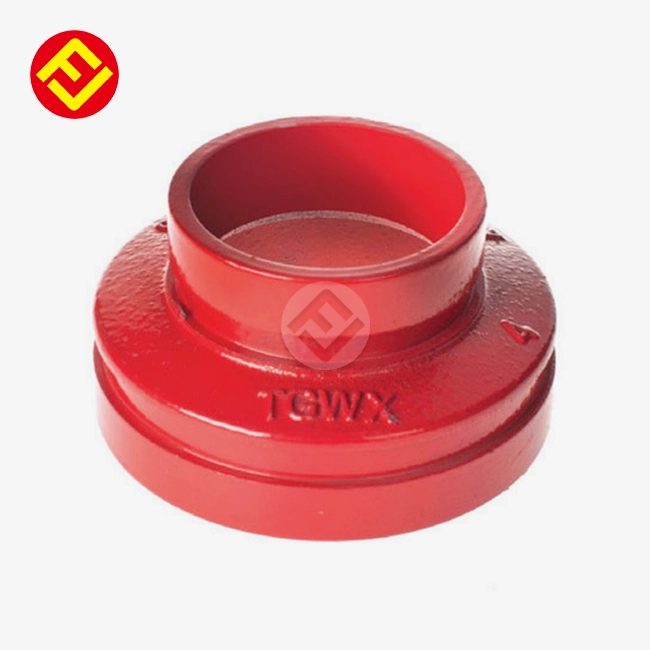
When construction managers and procurement engineers evaluate pipe connection methods for industrial applications, the 3 grooved coupling consistently emerges as a superior choice. This mechanical joining system features three precisely machined grooves on the pipe end, working with a ductile iron or carbon steel housing and a pressure-responsive gasket to create leak-tight seals. The added groove enhances alignment accuracy and distributes clamping forces more evenly than traditional two-groove designs, reducing stress concentrations while dramatically improving installation speed. In firefighting systems, water distribution networks, and HVAC installations across the United States, this technology eliminates hot work hazards, cuts labor costs by up to 60%, and accommodates thermal expansion—three critical factors that directly impact project timelines and long-term system reliability.


Specification |
||||
| Specification | Size (inches) | L(mm) | H(mm) | Diameter (mm) |
| 1 | 33 | 98 | 42 | 54 |
| 1/2 | 48 | 114 | 43 | 69 |
| 12 | 60 | 127 | 43 | 82 |
| 2/2 | 76 | 145 | 44 | 99 |
| 3 | 89 | 159 | 44 | 112 |
| 4 | 108 | 186 | 47 | 133 |
| 114 | 192 | 47 | 140 | |
| 5 | 133 | 214 | 48 | 161 |
| 5 | 140 | 221 | 48 | 167 |
| 6 | 159 | 245 | 49.5 | 189 |
| 6 | 165 | 251 | 49.5 | 195 |
| 6 | 168 | 254 | 49.5 | 198 |
| 3 | 219 | 324 | 59 | 254 |
| 10 | 273-1.6 | 416 | 61 | 316 |
| 10 | 273-2.5 | 416 | 62 | 317 |
| 12 | 325-1.6 | 467 | 61 | 370 |
| 12 | 325-2.5 | 469 | 62 | 372 |
Understanding 3 Grooved Couplings in Industrial Pipe Connections
In the last forty years, mechanical pipe joining has come a long way. 3 Grooved Coupling technology is one of the most effective improvements. 3 Grooved Coupling systems work by mechanically locking together pipes, while welded or threaded connections change the pipe's integrity in a way that can't be undone. The coupling is made up of three main parts: heat-treated carbon steel bolts, an elastomeric gasket (EPDM or Nitrile, based on the type of fluid), and the housing pieces, which are usually cast from ASTM A536 Grade 65-45-12 ductile iron.
When you put these joints together, the housing pieces go around the pipe ends with grooves, and the gasket fits inside the grooves. When the bolts are tightened, the housing pads move closer together until they make "pad-to-pad" contact. This is a visual check that usually doesn't need a torque wrench. This design makes a seal that gets stronger when there is pressure inside, because the fluid pushes the gasket out into the groove, making better contact.
Material Compatibility Across Pipe Types
3 Grooved Couplings can be used with a wide range of pipe types. When you choose the right gasket for the job, you can use them with steel (Schedule 10 through Schedule 40), copper, PVC, and even special types of pipes. This adaptability is appreciated by construction workers who work with mixed-material systems because it makes installation methods consistent across different pipe specs.
Carbon steel joints work well in most industry settings, while ductile iron housings can handle higher pressures, up to 1,000 PSI in some cases. In corrosive environments, surface treatments are very important. For outdoor installations, hot-dip galvanization that meets ASTM A153 standards protects against rust. For climate-controlled indoor spaces, epoxy powder coating is enough. This material flexibility lets buying managers choose the exact design that meets performance needs and stays within the budget.
Rigid Versus Flexible Configuration Options
There are two main types of 3 Grooved Couplings, each of which is used for a different engineering purpose. Rigid couplings have tongue-and-groove housing connections that lock pipe pieces into place. They can be used instead of flanged joints and are easier to install. These are good for straight runs where the structure needs to be stable and not move around much.
Flexible joints let you control how much they bend and move in a straight line, as well as how much they bend and move when the ground settles or there is an earthquake. The gasket both seals and absorbs movement, keeping stress from moving from one pipe section to another. Seasonal changes in temperature cause pipes to expand a lot, which rigid links can't safely handle. This property is very helpful for HVAC systems.
Advantages of Using 3 Grooved Couplings for Industrial Projects
Site supervisors and project engineers like 3 Grooved Coupling technology because it improves performance in a way that can be measured and directly leads to cost savings and operational reliability. Let me go over the main benefits of these methods that have made them standard in modern industrial buildings.
Elimination of Hot Work and Fire Hazards
In workplace settings that are still in use, traditional welding poses a lot of risks. You need people to watch out for fires, hot work permits, and air systems, which all cost money and make things more difficult. These needs are not at all met by 3 Grooved Couplings. Assembling only requires mechanical fastening, so you can do your work safely in chemical plants, oil refineries, and buildings that are already occupied without stopping work or making sparks fly. Insurance companies often lower rates when projects use less welding because they know they are less likely to be sued.
Dramatic Installation Speed Improvements
Studies of time spent on different building sites show that installing 3 Grooved Couplings takes about 20% less time than installing similar welded joints. With simple hand tools, two people can make a 3-inch 3 Grooved Coupling in less than five minutes. This speed advantage grows with bigger jobs. For example, 3 Grooved Coupling technology can finish a 500-joint pipe system in three days, while welding would take two weeks. One of the highest costs of a project is labor, so this efficiency directly increases your profits.
The ease of use helps contractors who are having trouble finding workers. It takes months to train welders and keep their certifications up to date. Anyone with average skills can learn how to properly install a 3 Grooved Coupling in one day. This means you can hire more people and not have to rely on expert trades as much.
Superior Leak Prevention and Joint Integrity
When compared to older connection generations, the three-groove form is better at sealing. Each groove makes a separate sealing surface, and the C-shaped profile of the gasket changes depending on the pressure inside. When the fluid pressure goes up, it pushes the gasket deeper into the holes, making a seal that works better when it's under stress.
Failure rates for properly placed 3 Grooved Couplings are less than 0.1%, according to data from water utility installs. This means that the performance is about the same as welded joints, but there is no quality variation. You don't have to worry about the common issues that can weaken traditional joints, like weld porosity, incomplete penetration, and heat-affected zones.
Accommodation of System Movement
Thermal cycles, shaking, and structural settling all cause industrial pipe systems to move all the time. These pressures are spread along the pipe by rigid connection methods, which create fatigue spots that finally break. 3 Grooved Couplings work like built-in expansion joints, absorbing movements that would damage equipment otherwise.
When the weather changes, the HVAC system in a commercial building might get a few inches bigger. This movement can be accommodated by strategically placed flexible 3 Grooved Couplings, which eliminates the need for separate expansion loops or bellows. This saves installation space and component costs. The material of the seal also stops vibrations from pumps and compressors from traveling, which lowers the noise level and keeps sensitive equipment safe from mechanical stress.

Comparing 3 Grooved Couplings to Alternative Connections
To make smart choices about what to buy, you need to know how 3 Grooved Coupling systems compare to other connection methods. Each method of connecting has its own uses, but 3 Grooved Couplings are the best choice for most commercial situations.
Performance Against Welded Connections
For more than one hundred years, industrial pipes have used welded joints, which form lasting fusion ties that can handle a lot of pressure. But welding needs qualified craftsmen, takes a long time, and makes links that can't be undone, which makes future changes harder. Adding heat can harm pipe coverings and change the way metal works in areas that are affected by heat.
3 Grooved Couplings work the same way as welded joints up to 1,000 PSI, but they are five times faster to install. For maintenance or system reconfiguration, the mechanical connection makes it easy to take apart—you just unbolt the housing instead of cutting the pipe. This flexibility is very useful in places where processes change or equipment is upgraded all the time.
Advantages Over Flanged Systems
Flanged joints work well and can be taken apart, but they need to be cut precisely, gaskets to be installed, and bolts to be tightened in four to eight places per joint. To stop leaks, the flange faces must line up properly, which usually means making several changes while installing.
3 Grooved Couplings can handle small misalignments and usually only need two nuts per joint. The visual "pad-to-pad" inspection standard takes away the need to guess how to tighten things correctly. Installation speed is about 100% faster than with flanged joints, and the connection weight is a lot lighter, making it easier to handle and lowering the load needs on the structure.
Comparison with Threaded Joints
When the pressure is low, threaded joints are good for small-diameter pipes. Thread cutting, on the other hand, makes pipe walls weaker, and installing it needs special tools. Corrosion can seize up threads, making it hard or impossible to take something apart again. Threaded joints are also not flexible enough to allow for movement, so all pressures are transferred to the pipe and any equipment that is attached to it.
3 Grooved Coupling systems keep the full width of the pipe wall, can handle higher pressures, and are easy to take apart, even after decades of use. When the pipe size is bigger than 2 inches, where threading equipment is expensive and takes a lot of work, the cost advantage becomes big.
Procurement and Selection Guide for 3 Grooved Couplings
To choose the right 3 Grooved Couplings, you need to look at a number of technical factors that make the product features match the needs of your system. When procurement managers and engineers know about these factors, they can make decisions that balance performance, dependability, and cost-effectiveness.
Sizing and Pressure Rating Considerations
3 Grooved Couplings come in widths ranging from 1 inch to 12 inches and even bigger. The dimensions are defined by ANSI/AWWA C606. Pressure ratings depend on the type and size of coupling. Lightweight models can usually handle 300 PSI, standard models can handle 500 PSI, and heavy-duty models can handle 750 PSI to 1,000 PSI.
You need to make sure that the working pressure of the coupling is higher than the maximum running pressure of your system by a suitable amount. Most water distribution systems work at pressures below 150 PSI, which is a good range for standard 3 Grooved Couplings. During pump starts, surge pressures in fire protection systems may be higher than usual, so they need parts with higher values.
When working in small spaces, the size of things matters. The outside diameter of the 3 Grooved Coupling and the height of the bolt pad determine how much space is needed. These measures are on detailed specification sheets, so you can make sure they fit before you order. If you plan ahead, you can avoid costly delays caused by measurement problems that are found during installation.
Material Selection for Operating Conditions
The working area determines the right material for the housing and how to treat the surface. For most uses, ductile iron housings are a good value because they are strong for their weight. Standard orange enamel coating works well for indoor installations with controlled conditions because it makes things easy to see and provides basic corrosion resistance.
For long-lasting corrosion prevention, hot-dip galvanization is needed for outdoor systems, coastal areas, and places where chemicals are present. The zinc layer gives up its own protection to keep the iron underneath safe, and it lasts for decades even in harsh conditions. Carbon steel housings are used in particular situations that need certain mechanical qualities or to follow rules.
Gasket Technology and Fluid Compatibility
The choice of gasket has a big impact on how reliable a system is and how long it lasts. From -30°F to 230°F, EPDM (Grade E) seals can handle water, weak acids, and oil-free air. This makes them perfect for use with potable water, HVAC systems, and general industry use. The green stripe helps keep construction mistakes from happening.
Nitrile (Grade T) gaskets are easy to spot because they have orange stripes that make them work with petroleum-based fluids, oils, and hydrocarbon vapors between -20°F and 180°F. If you use the wrong seal material, it will break down quickly, and the system will not work. Petroleum Products" target="_blank" style="color:blue" >products break down EPDM chemically, and oxidizing acids don't work well with Nitrile.
Supplier Quality and Certification Verification
Suppliers you can trust give you a lot of information about their products, like material approvals, pressure test results, and proof that they meet all the necessary standards. Having ISO 9001 certification means that quality management techniques are used consistently throughout the production process. Fire prevention systems must have UL and FM approvals, which show that the goods meet strict safety and performance standards.
FLA Industrial & Trading Co., Ltd. has all the necessary certifications and includes full traceability paperwork with every order. This way, you can be sure that the products are real and that they are in line with regulations. Our four decades of manufacturing experience and partnerships with Fortune Global 500 companies show that we can be trusted when procurement managers need to define important pipe parts.
Installation and Maintenance Best Practices for 3 Grooved Couplings
Only when they are installed correctly will 3 Grooved Couplings work as well as they can. Following a set of steps makes installation mistakes less likely and sets the stage for years of reliable service.
Pipe Preparation and Groove Inspection
Preparing the pipes correctly is the first step in installation. The ends of cut pipes must be smooth and square, and the cut face must be straight and parallel to the pipe plane within 1 degree. In contrast to welded joints, beveling is not needed. Clean the pipe end and groove area well, getting rid of any oil, dirt, scale, or other things that could get in the way of the gasket seating.
Carefully check the gap before putting it together. For standard wall pipes, roll grooving is the best way to make the groove because it doesn't remove any metal, so the pipe stays strong. ANSI/AWWA C606 says that the slot must be the right depth, width, and distance from the pipe end. Use a groove gauge to make sure these measurements are correct; gaps that aren't the right size can damage the seal and cause the 3 Grooved Coupling to fail.
Assembly Sequence and Technique
Use the oil that the maker recommends on the gasket. This step must be done—proper lubrication lets the gasket fit correctly in the grooves during assembly. Never use lubricants made from petroleum on EPDM gaskets; doing so will cause them to break down chemically right away.
Place the seal on one end of the pipe and make sure it fits all the way into the groove. Bring the other end of the pipe together and make sure it is lined up. Place the housing pieces on top of the joint so that the gasket is in the middle of them. Put the bolts through the housing lugs and tighten the nuts by hand. Tighten the bolts one at a time, alternating between them, until the housing pads make full metal-to-metal contact across their width. This pad-to-pad contact lets you see if the fitting is correct without having to measure the force.
Routine Maintenance and Inspection Protocols
3 Grooved Couplings don't need as much care as other ways of joining things, but they should still be inspected every so often to catch problems before they become major. Critical systems should have visual inspections every three months to look for signs of leakage, housing corrosion, gasket extrusion, and bolt looseness.
Watch the state of the gaskets when the machine shuts down. If the housing is not damaged, it can be used again and again. However, when putting it back together, you should replace the gaskets. After a long time of use, the elastomer takes on a fixed tension set, and using the same gaskets over and over again makes the seal less reliable. This is a small cost that keeps big problems from happening.
Damage to 3 Grooved Couplings can be caused by water hammer, thermal shock, and mechanical impact. After something strange happens, carefully check the joints that were hurt. 3 Grooved Couplings are useful because they are flexible, but they also absorb system stresses, so make sure that the housings haven't changed shape and the seals are still in the right place.

Conclusion
In the industrial plumbing field, 3 Grooved Coupling technology has become popular because it solves real problems that building companies and facility managers have every day. When hot work is stopped, safety risks go down, and insurance costs go down too. Improving the speed of installation directly raises the project's profitability and helps solve the problem of a lack of skilled workers. Being able to adapt to system movement keeps it from breaking down too soon and increases its service life. When you add these useful benefits to the fact that 3 Grooved Coupling systems can handle the same amount of pressure as standard methods, it's easy to see why they are better. Ultimately, purchasing decisions are based on a balance of several factors, including the initial cost, the cost of installation, the long-term dependability, and the need for maintenance. In all of these areas, 3 Grooved Couplings are the best. They provide value that goes far beyond the purchase price and lasts for decades of reliable service.
FAQ
Can grooved couplings be reused after system maintenance?
The housing parts can be used again and again as long as they are carefully checked and there are no cracks, deformations, or too much rust. But the best way to do things in this business is to replace the gaskets and nuts when putting it back together. The elastomer material in the gasket permanently sets in place during use, which means that it won't have the same sealing power when it's used again. When you compare the cost of new gaskets to what happens when a joint leaks, it's clear that replacement is the better option. Bolts may have gotten a little loose during the first fitting and tightening, so using new hardware makes sure that the clamping force is right.
How do I choose between rigid and flexible grooved couplings?
Your choice will depend on whether the pipe system needs to be able to move. Rigid 3 Grooved Couplings are best for straight runs where you need structural stability and fixed alignment. They can be used instead of flanged connections and are easier to install. Flexible joints are used in situations where the temperature changes, there is shaking, there is earthquake activity, or the ground settles. Flexible 3 Grooved Couplings that can handle seasonal growth without creating stress points are good for most HVAC systems. For fire safety and process pipes, rigid 3 Grooved Couplings are often used on straight sections, and flexible units are put in specific places to allow for movement.
Partner with FLA Industrial & Trading Co., Ltd. for Reliable 3 Grooved Coupling Solutions
The parts you need for your industrial plumbing projects have to meet strict performance standards and be delivered on time and on budget. Every 3 Grooved Coupling that FLA Industrial & Trading Co., Ltd. makes is the result of almost 40 years of experience making things. Our ductile iron and carbon steel joints are certified by ISO9001, CE, and UL/FM, so you can be sure they meet the quality and safety standards your projects need. We keep more than 2,000 tons of inventory in more than 1,000 different product specs. This means that standard sizes ship right away, and custom designs are ready in 7–15 days. As a reliable 3 Grooved Coupling maker with partners in the Fortune Global 500 in the US, Germany, and Australia, we know that procurement managers need quick responses, low prices, and products that they can always count on. You can email our team at sales@flaindustrial.com or go to flaindustry.com to talk about the needs of your specific project and get quotes with full technical specifications.
References
1. American Water Works Association. (2020). ANSI/AWWA C606: Grooved and Shouldered Joints. Denver: AWWA Standards Division.
2. ASTM International. (2019). ASTM A536-84: Standard Specification for Ductile Iron Castings. West Conshohocken: ASTM Committee A04.
3. National Fire Protection Association. (2021). NFPA 13: Standard for the Installation of Sprinkler Systems. Quincy: NFPA Technical Committee on Sprinkler System Discharge Criteria.
4. Underwriters Laboratories. (2018). UL 213: Rubber Gasketed Fittings for Fire Protection Service. Northbrook: UL Standards & Engagement Division.
5. Mechanical Contractors Association of America. (2022). Grooved Mechanical Piping Systems: Installation and Design Guidelines. Rockville: MCAA Technical Publications.
6. Construction Industry Institute. (2021). Productivity Metrics in Industrial Piping Installation: Comparative Analysis of Connection Methods. Austin: CII Research Team 347.