Choosing the Best Metal Drain Gully Covers for Urban Drainage
2026-06-18 15:39:32


Choosing the right metal drain gully cover for urban stormwater systems has a direct effect on how long the infrastructure lasts, how safe the public is, and how much it costs to run. These designed parts connect the underground drainage networks to the surface runoff management system. They can carry loads from people walking to big industrial vehicles without getting clogged. Covers that are long-lasting, compliant, and meet strict load-bearing standards are needed by procurement managers, building engineers, and construction workers. This guide tells you how to choose materials, figure out load ratings, put things correctly, and rate suppliers. It gives decision-makers the tools they need to choose goods that work well in cities, factories, and transportation networks.

Technical Parameters |
|||
| Specification (mm) | Load Capacity | Specification (mm) | Load Capacity |
| 590×480×20 | A15 | 380×500×20 | A15 |
| 590×300×20 | A15 | 350×500×40 | C250 |
| 500×500×40 | C250 | 350×500×30 | B125 |
| 500×500×30 | A15 | 350×500×30 | B125 |
| 450×750×40 | B125 | 320×500×20 | A15 |
| 450×750×30 | A15 | 300×500×40 | C250 |
| 400×600×40 | C250 | 300×500×30 | B125 |
| 400×600×30 | B125 | 300×500×20 | A15 |
| 400×500×40 | C250 | 250×500×30 | B125 |
| 400×500×30 | B125 | 200×400×20 | A15 |
| 394×594×30 | A15 | 340×500×20 | C250 |
| 380×500×40 | B125 | - | - |
Understanding Metal Drain Gully Covers and Their Benefits
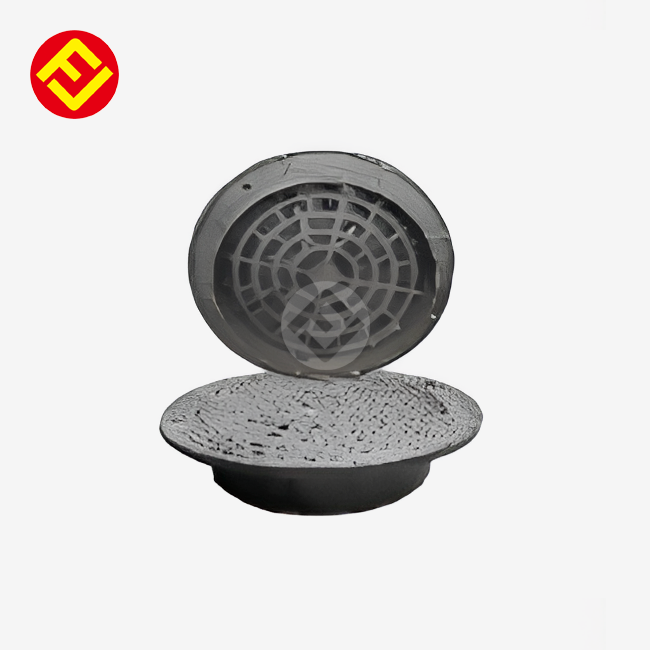
A metal drain gully cover protects the access point for catch basins and lets water flow in efficiently while keeping garbage out and supporting heavy traffic. These covers are made from ductile iron, cast iron, or galvanized steel, and they are stronger, last longer, and absorb pressure better than polymer and concrete options. Ductile iron, especially Spheroidal Graphite Iron (GJS-500-7), has a tensile strength of more than 500 MPa and a stretch rate of more than 7%. This means that it can bend under stress without breaking completely.
Why Metal Covers Excel in Urban Applications?
Drainage systems in cities are constantly put under mechanical stress, changing temperatures, and being exposed to road salts. When repeatedly loaded, ductile iron drainage grates show better resistance to fatigue, which is very important for high-traffic crossings and freight routes. When they are treated with bituminous coatings or hot-dip galvanization according to ISO 1461 standards, their natural resistance to rust gets better. This makes them last longer than 25 years in mild temperatures. When compared to composite materials, metal choices stay the same size and shape from -40°F to 140°F, which stops warping that affects how accurately they fit together and makes dangerous rattling sounds.
Structural and Hydraulic Advantages
Metal covers are designed in a way that matches structural strength with fluid economy. Precision-cast slot designs make the waterway area, which is the total opening in the surface that decides how much water can flow during storms, as big as possible. More advanced designs get waterway ratios above 40% while keeping rib thicknesses high enough to spread the load evenly. Anti-slip surface patterns, which can be made by casting or cutting, make it less likely for people to slip without slowing down the flow of water. Integrated locking mechanisms and fixed hinges stop theft and damage, which is a problem that keeps happening in cities where the value of scrap metal makes it tempting to take things without permission.
How to Choose the Best Metal Drain Gully Cover for Your Application?
To choose the right metal drain gully covers, you need to carefully look at the site conditions, government rules, and operating goals. Structured decision frameworks help procurement teams make decisions that are in line with project performance standards. This lowers the risk of failure too soon or fines for not following the rules.
Determining Load Rating Requirements
The BS EN 124-2:2015 guidelines for load classification set out six classes based on where the site is located and the amount of traffic that is expected:
Class B125 is good for places with a lot of foot traffic, private roads, and landscaped areas where the maximum wheel load is less than 12.5 metric tons. These covers can handle foot traffic and light repair vehicles, but they aren't strong enough to handle long-term stress from cars.
Class C250 covers sites along the curb, parking lots, and service roads that have occasional car crossings. The 25-ton load grade can hold delivery trucks and rescue vehicles without changing shape permanently.
Class D400 represents the basic standard for highways, main roads, and loading docks that are always busy with heavy traffic. This group of covers can handle 40-ton loads, like garbage trucks and fully loaded semi-trailers.
Class E600 covers places with a lot of heavy machinery, like shipping ports, intermodal hubs, and industrial yards where trucks and container workers work. The 60-ton grade keeps the structure from breaking when stacked goods puts a lot of weight on one spot.
It is important for procurement engineers to always define one class above the expected loads for metal drain gully cover. This is to account for dynamic effect forces and future traffic growth. Underspecification causes cracks, frame movement, and the risk of being sued when infrastructure fails.
Material Selection: Ductile Iron vs. Cast Iron
Ductile iron has irregular graphite structures that stop cracks from spreading. This gives it impact hardness that isn't found in regular gray cast iron. Cast iron breaks quickly when it comes in contact with fast loads like when a car brakes or hits a rock. Ductile iron bends elastically before giving way. Adding magnesium to melted metal during the spheroidization process changes graphite flakes into spheroids, which increases the length from less than 1% to over 7%. This difference in microstructure affects how well the cover works in the field: ductile iron covers can handle freeze-thaw cycles and temperature shocks that would break cast iron covers.
Steel and stainless steel options are lighter, but they need to be carefully managed to prevent rusting. Galvanized steel works well in dry areas but quickly breaks down when it comes into contact with de-icing salts, which are popular in the northern U.S. Even though stainless steel doesn't rust, it's very expensive, so it can only be used in certain places, like chemical plants or seaside structures.
Dimensional Compatibility and Customization
Standard frame sizes are based on standard sizes (12x12 inches, 18x18 inches, and 24x24 inches), but site conditions often require unique layouts. When retrofitting old infrastructure, openings that aren't standard are common because of settling or changes that were made in the past. Manufacturers that offer physical adjustment get rid of the need for expensive field changes and make sure that the seats fit correctly. Specification sheets should check the clear hole size, frame depth, and sitting ledge width to make sure they will work with existing gully pot structures.
Certification and Compliance Verification
Suppliers you can trust will give you proof that their Products" target="_blank" style="color:blue" >products meet EN 124, AASHTO M306, or other national standards that are similar. Test records should include permanent set measures (the amount of deformation that remains after the load is removed) and final failure loads. Through spectroscopic analysis and tensile tests, material certificates confirm the chemical make-up and mechanical qualities. Having ISO 9001 quality management approval means that the process is controlled in a planned way, which lowers difference from batch to batch. Buyers should ask for mechanical studies that show the graphite nodularity is higher than 85%, which is the minimum level needed for ductile iron to work well.
Installation and Maintenance: Maximizing Performance and Longevity
The total cost of ownership and the length of time a service lasts are directly affected by how well it is installed and maintained. Clear instructions are needed so that site managers and care teams don't make common mistakes that hurt the structure's strength and its ability to handle water.
Installation Best Practices
Correctly placing the frame and preparing the bedding are the first steps to a successful fitting. The frame assembly needs to be level and rest on either crushed grainy base material or concrete footings. The loads must be spread out evenly to avoid uneven settlement. If the cover and frame seating area aren't lined up correctly during fitting, gaps form between them. These gaps make noise and speed up wear from repeated impact. With careful placement, the cover seats will be flush with the ground around them, removing trip hazards and stopping water from pooling at the frame edges.
Depending on the conditions of the base, frames are held in place either by embedding them in concrete or using mechanical anchors. To keep frost heave from happening, concrete projects need to be buried at least 6 inches deep and reinforced with mesh. Using expansion bolts that can handle dynamic loads, mechanical anchors are good for repair situations where digging is limited. The machined surface where the cover sits, the seating ledge, needs to be clean during fitting. Debris or mortar dust gets in the way of full contact, which causes stress accumulation that cause cracks.
Common Installation Errors to Avoid
When the base isn't compacted enough for a metal drain gully cover, the frame settles, leaving holes under the structure that make it more likely to collapse under heavy traffic. For coarse base courses within 12 inches of the frame's edge, the specifications should require a 95% Proctor density. If the frame level is too high or too low compared to the finished grade, it can mess up water patterns and put people in danger. When high frames stick out above the ground, they damage the tires and suspension parts of vehicles. Low frames, on the other hand, collect water and dirt.
Using cover and frame parts that don't work together, often from different makers, stops the chair from sitting properly and voids guarantees. Covers and frames work as matched systems with millimeter-sized specs; parts that aren't matched create gaps that are too big to be accepted.
Routine Maintenance Procedures
Every six months, checks are planned to find new problems before they become useful. Maintenance workers should check to see if the frame is stable, the cover sitting is solid, and there is a buildup of waste. Loose frames need to be re-secured right away to stop them from moving further. Covers that shake or rock mean that the seat surfaces are old or that the frame is moving, so they need to be replaced before they break completely.
Cleaning procedures get rid of dirt that builds up and lowers hydraulic capacity while speeding up rust. High-pressure water jetting can clean out slot holes without hurting the non-slip surfaces. Cleaning plans that happen once a year keep design flow rates steady, which stops surface flooding when it rains hard. Corrosion tracking looks at how well the coating is holding up, especially along the sides of the frame and at hinge points that get worn down over time. When compared to replacing something after it has already broken down a lot, touch-up coats that are applied early in the rusting process greatly extend its useful life.
Troubleshooting and Replacement Indicators
Cracks that can be seen in the cover or frame are a sign of overloading or material flaws that need to be fixed right away. Cracks weaken structures and spread quickly when they are loaded over and over again. Noise issues that don't go away mean that the seats aren't good, which is usually because the bearing surfaces are worn or garbage is building up. Surface ponding near grates during mild rains is a sign of a drop in hydraulic performance. This could be because slots are getting clogged or sediment is building up and blocking flow.
Repair costs and failure risks are balanced by replacement time. Multiple cracks in the cover, deep rust damage, or frame movement that can't be fixed should mean that the cover needs to be replaced. Preventative replacement during planned sidewalk rehabilitation projects keeps you from having to make fixes on the spot and keeps traffic as smooth as possible.
Comparing Metal Drain Gully Covers: Materials, Types, and Applications
Material choices and design features are very different depending on the application, so it's important to carefully match the product's features to its working conditions. By knowing these differences, buying teams can get the most out of their budgets and improve performance.
Material Performance Characteristics
Due to its balanced qualities, ductile iron is still the standard for use in city and highway projects. Tensile strength between 500 and 800 MPa can hold big loads while still being flexible enough to absorb impact energy. The material's compression strength is higher than 600 MPa, so heavy wheels won't be able to crush it. The thermal conductivity of the asphalt and concrete around it is the same. This keeps the difference in expansion that causes cracks at surfaces to a minimum when temperatures change.
Even though cast iron is less expensive, it works best for light-duty tasks where resistance to pressure is less important than cost. Its higher carbon content and flake graphite structure make it very durable for areas where people walk, but not so tough for areas where cars drive. Modular iron, which is a middle grade, is more resistant to impact than gray iron, but it costs a bit more.
When compared to ductile metal drain gully cover, galvanized steel is about 40% lighter, which makes it easier to handle during installation. The zinc layer acts as a sacrifice to protect against rust, slowly turning into a protective patina. But if the covering is damaged by wear or impact, the base metal can rust quickly in damp places. There is no need to worry about rusting with stainless steel, but the material costs two to three times as much as ductile iron, so it can only be used in harsh industrial settings or for aesthetic purposes.
Application-Specific Recommendations
Covers that put safety and looks first are good for pedestrian areas and business plazas. Narrow hole lengths below 10mm keep heels from getting caught, which meets ADA standards. Decorative patterns and building finishes can be used in garden designs while still allowing water to drain properly. In these conditions, grades of Class B125 or C250 are enough, which strikes a good balance between structure safety and cost effectiveness.
Industrial buildings that work with chemicals or big machinery need to be more resistant to rust and be able to handle very heavy loads. Stainless steel or ductile iron that has been treated with epoxy can handle harsh chemicals that break down regular coats. Class E600 or F900 ratings can handle forklifts and other material-moving machines that are constantly working on factory floors.
Installations on highways and major roads need to last as long as possible with as little upkeep as possible. Class D400 ductile iron covers with asphalt coats can handle years of traffic and freeze-thaw cycles. Noise complaints are eliminated by anti-rocking designs that use gasket seals or polished sitting surfaces. The pavement's service life is also increased by stopping localized wear and tear around frames.
Cost-Benefit Analysis and Bulk Purchasing
When you look at the costs of upkeep, repair, and failure, the initial purchase costs are only a small part of the total costs over the product's lifetime. Even though ductile iron covers cost more up front, they have lower total ownership costs because they last longer and need less upkeep. When you buy in bulk for multi-phase projects or city-wide standardization programs, you can get big savings and make sure that parts can be used in different installations.
Sticking to a single manufacturer's line of products makes it easier to keep track of supplies and train people to do upkeep. Maintenance crews that know how certain locking systems and chair designs work can fix things more quickly and with fewer mistakes. Framework agreements with yearly volume promises can help you get better prices and make sure you have enough supplies for your projects, so they don't get held up by a lack of supplies.
Procurement Guide: Where and How to Buy Metal Drain Gully Covers for Urban Projects?
Sourcing choices affect how well projects stay on schedule, stay within price, and work well in the long run. Procurement tactics that work well balance the skills of suppliers, the quality of the products, and the terms of the deal to get the best results.
Evaluating Supplier Credentials
Certifications and written records of process controls for metal drain gully cover show that a maker is qualified and that the standard is always the same. ISO 9001 certification proves systematic quality management practices that include testing the end product, inspecting the raw materials, and keeping an eye on the work that is being done. Foundries should keep records of inspections, the iron that went into each batch, and the heat treatment settings so that each batch can be tracked back to its source. Independent load testing and mechanical research by third-party testing laboratories back up the claimed performance.
Production capacity assessments of suppliers make sure they can meet project numbers and deadlines. When compared to job shops that don't have many foundry capabilities, facilities that have specialized ductile iron production lines with automatic molding equipment offer better stability. By looking at the quality of the molds, the heat treatment ovens, and the accuracy of the machining, site visits show how complex the production process is.
Technical Support and Customization Services
Engineering help sets makers apart from commodity providers who can't meet the specific needs of a project. Experienced technical teams do load estimates for non-standard uses, suggest the right load classes for each site, and create unique designs that fit within the available space. CAD design services make detailed plans that need to be approved before they are made. This keeps costly mistakes from happening because of poor communication.
Customization options go beyond changing the sizes; they also include different finishes, locking methods, and better drainage patterns. Better protection systems are helpful for projects with harsh chemical conditions, and special locking designs are needed for places where theft is likely to happen. Prototyping services let you test things in real life before committing to full production, which lowers the risk in important situations.
Ordering Process and Lead Times
Standard goods can usually be shipped within one to two weeks of being in stock, which helps with tight building plans. Custom setups need to have patterns and tools made, which can add four to six weeks to the lead time, based on how complicated the order is. Manufacturers can plan output well and avoid delays caused by limited capacity if they are clear about project timelines during the quote stage.
Order paperwork should include information about the load class, material grade, size, type of finish, amount, and any extras that might be needed for installation losses. Misunderstandings that lead to the delivery of wrong goods can be avoided by giving clear specs. For custom orders, payment terms usually include deposits, with the balance due upon shipment. However, businesses that have been working together for a while may be able to arrange net payment terms that help them handle their cash flow.
Logistics and Quality Assurance Upon Receipt
Freight companies ship ductile iron covers on pallets that are tied together to keep them from getting damaged during transport. Receiving inspection methods check the quantities, look for harm from transportation, and make sure that the markings on the products match the specs. Random sampling for checking dimensions finds problems with the way the parts were made before they are installed. Shipments should come with documentation packages that have things like material certificates, test results, and installation instructions.
Conclusion
When choosing metal drain gully covers for urban drainage, you have to think about the budget, the load needs, the material qualities, and the environment. Most of the time, ductile iron is still the best choice because it is stronger, lasts longer, and costs less. For procurement to go well, the right load classes must be specified, the supplier's records must be checked, and the right installation and upkeep procedures must be followed. When people who make decisions use structured review methods and take advantage of manufacturing knowledge, infrastructure projects get reliable drainage, better public safety, and lower life-cycle costs that make the initial investments worth it.
FAQ
What distinguishes ductile iron from cast iron in drainage covers?
Ductile iron has spheroidal graphite that is made when magnesium is added. This gives ductile iron flexibility and resistance to pressure that brittle cast iron doesn't have. Because of this difference in structure, ductile iron can bend under high stress instead of breaking, which makes it safe for use in vehicles. The flake graphite in cast iron makes weak areas where cracks can spread easily, so it can only be used in light-duty walking areas.
How do I select the correct load rating for my project?
Load class decision is based on EN 124 standards and the area of the installation. Class B125 is needed for pedestrian places, Class C250 is needed for parking lots, Class D400 is needed for roads, and Class E600 is needed for industrial yards with big equipment. Include one class above the bare standards to allow for changing loads and future traffic growth, which will keep the structure from failing too soon.
What prevents covers from rattling under traffic?
Precision-machined sitting surfaces and sealing seals keep covers and frames from rubbing against each other, which would make noise. Full contact across the sitting ledges is guaranteed by manufacturing errors of less than 1 mm. Regular inspections get rid of the buildup of dirt that causes gaps, and installing things correctly with level frames stops them from rocking. Anti-rattle designs with elastic pillows stop vibrations in places with a lot of foot traffic.
Partner with FLA Industrial & Trading Co., Ltd. for Premium Drainage Solutions
The infrastructure of cities needs parts that are solid and can work in tough situations year after year. As a well-known company that has been making metal drain gully covers for almost forty years, we offer ductile iron drainage covers that are built to meet or beat international standards. Our factory is ISO certified and makes more than 1,000 different product specs. This way, you can be sure that you'll find the right options for pedestrian areas, industrial yards, or highway uses. We have load rates in stock ranging from Class B125 to E600, and we can make changes to meet non-standard size and finish needs.
Throughout the lifecycle of a project, from the initial load calculations to installation advice and upkeep suggestions, procurement teams value our expert support. Our engineering staff offers CAD drawings, material certificates, and third-party test results that make it easier to meet regulations and get approvals for products. We can meet tight building plans without sacrificing quality because we keep 2,000 tons of stock on hand and can make standard products in less than two weeks. Get in touch with our team at sales@flaindustrial.com to talk about your drainage project needs and get professional advice from people who have worked with Fortune Global 500 companies in the U.S., Europe, and Australia.
References
British Standards Institution. (2015). Gully Tops and Manhole Tops for Vehicular and Pedestrian Areas – Part 2: Gully Tops and Manhole Tops Made of Cast Iron. BS EN 124-2:2015. London: BSI Standards Limited.
American Association of State Highway and Transportation Officials. (2016). Standard Specification for Drainage Castings. AASHTO M306. Washington, DC: AASHTO.
Davis, J. R. (Ed.). (1996). Cast Irons: ASM Specialty Handbook. Materials Park, OH: ASM International.
Chisholm, D. H., & Roberts, G. T. (2008). Urban Drainage Design Manual: Hydraulic Engineering Circular No. 22 (3rd ed.). Washington, DC: Federal Highway Administration.
International Organization for Standardization. (2013). Hot Dip Galvanized Coatings on Fabricated Iron and Steel Articles – Specifications and Test Methods. ISO 1461:2013. Geneva: ISO.
Maguire, M., & Sansalone, J. (2014). Hydrologic and pollutant loading performance of stormwater drainage grate inlet devices. Journal of Environmental Engineering, 140(11), 04014046.