Everything You Need to Know About Motor Housing
2026-04-29 09:49:47


Motor housings are the unsung heroes of electric motor systems. They protect the motors and keep the structure strong, which is what keeps factories running smoothly. An aluminum motor housing is a special kind of safe case that holds important motor parts like the stator, rotor, and windings. It has to keep the exact measurements needed for the best performance. These housings, which are usually made by high-pressure die casting or extrusion with aluminum alloys like ADC12 or A380, solve important problems related to managing heat, reducing weight, and protecting the environment. Purchasing managers and engineers can make choices that are in line with practical needs and budget limits by learning about the technical specs, comparative benefits, and buying factors of motor housings.
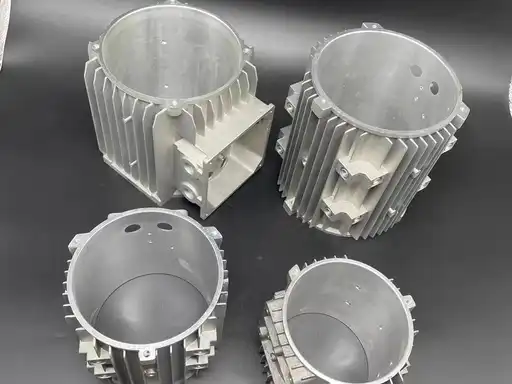
Understanding Aluminum Motor Housing: Properties, Benefits, and Design Considerations
Learn about the properties, benefits, and design considerations of aluminum motor housing. In the last few decades, motor case design has changed a lot. This is because industrial uses need motors to be more efficient and have smaller sizes. The main goal hasn't changed: to keep sensitive electrical parts safe from damage from the surroundings, make it easier for heat to escape, and provide mounting places for adding them to bigger systems.
What Defines Quality Motor Housing Materials
The choice of material for motor covers has a direct effect on how well they work and how long they last. Because they transfer heat so well (90 to 160 W/m·K), aluminum alloys have become popular materials. This is because they are about three times better than standard cast iron options. This better ability to move heat lets motors work at lower temperatures, which extends the life of the insulator and keeps it from breaking too soon. Aluminum has a density of about 2.7 g/cm³, which gives it a strength-to-weight ratio that lowers the overall system mass without affecting the structural integrity.
Cast iron and aluminum alloy are both good for motor housing uses in different ways. Cast iron is good at damping vibrations and keeping its shape when temperatures change, so it can be used in heavy industrial settings where weight is not as important. Aluminum alloy resists corrosion by forming a natural oxide layer. In many situations, this means that thick protective coats are not needed. At FLA Industrial & Trading Co., Ltd., we use both materials in our production processes, choosing the best mix based on the needs of the purpose and the conditions under which it will be used.
Critical Design Parameters for Motor Enclosures
Accuracy in measurements is very important when designing a motor housing. To keep bearings from creeping or breaking too soon, bearing bore limits usually follow ISO H7 or J6 fits. Accurate cutting keeps the concentricity between 0.01mm and 0.02mm, which keeps the air gap between the rotor and stator parts at the right level. When using servo motors, where dynamic reaction and positioning accuracy have a direct effect on system performance, these tight limits become even more important.
When managing heat, you need to think about more than just the material. You also need to think about rib patterns, optimizing surface area, and building in cooling pathways. Liquid-cooled motor housings have precision-cast water tanks that keep the temperature even, which lets them pack more power into smaller spaces. The engineering team looks at computational fluid dynamics models to find the best way to cool things down while keeping the structure stiff and easy to make. Surface treatments like powder coating and anodizing make things less likely to rust and better at insulating electricity. The finish can be changed to fit the needs of the surroundings.
Mechanical Properties That Matter in Industrial Applications
Elasticity levels in quality aluminum motor housings are between 150 and 310 MPa, which gives them enough support for the structure and lets machines make them exactly the right size. Hardness levels between 60 and 80 HB make it easy to machine, which lowers production costs and shortens wait times for custom designs. The material naturally blocks electromagnetic interference, which keeps sensitive control electronics safe in variable frequency drive applications by lowering noise and boosting signal integrity.
Resistance to vibration is another important performance factor, especially when machinery is moving back and forth or spinning. Resonance frequencies that could make mechanical movements worse are kept to a minimum by strong construction. This keeps bearings and connecting components from wearing out. During the design process, we use finite element analysis to find possible stress clusters and find the best places for the ribs. This makes sure that the structure stays strong under the dynamic loading conditions that happen in real-world settings.
Aluminum Motor Housing Compared: Versus Steel, Plastic, and Cast Iron
To make an informed choice about what material to use, you need to know how different enclosure materials work across a number of different evaluation factors. Each material has its own pros and cons that become more or less important based on the needs of the application and the situations under which it is used for aluminum motor housing.
Weight and Thermal Performance Analysis
The difference in weight between aluminum and steel housings has a big effect on situations where lowering mass leads to better energy economy. In electric car traction motors, lowering the weight of the motor unit directly increases the range of the vehicle by lowering the curb weight. Positioning systems with less drag work better with industrial automation tools because they improve acceleration rates and cycle times in robotic applications. Most aluminum housings weigh 65 to 70 percent less than steel housings of the same size and shape. This means that they perform much better without sacrificing structural integrity.
Differences in thermal conductivity have real effects on the motor's working temperatures and its power level. Aluminum is better at getting rid of heat than other metals, so motors can run cooler or be made smaller while still putting out the same amount of power. Comparative testing shows that moving from cast iron to aluminum housings with improved fin designs lowers temperatures by 15 to 25°C in continuous duty situations. According to studies on thermal aging in the business, this drop in temperature directly leads to longer insulation life. For every 10°C drop, the insulation life is doubled.
Corrosion Resistance and Environmental Durability
Conditions of environmental exposure have a big impact on the choice of materials. In outdoor settings, marine areas, and chemical processing sites, corrosion protection is very important. Protective coats are needed on cast iron housings to keep them from rusting in damp places. The quality of the coating determines how long it will last. Aluminum naturally creates a protective oxide layer that heals itself when it gets scratched. This layer protects against rust without any extra surface treatments in most situations.
Because they are exposed to salt spray, marine and seaside systems are especially hard to keep from rusting. For these uses, regular aluminum alloys need special surface treatments like hard anodizing or marine-grade powder finishing. When choosing an alloy, choose one with low copper content, like the 5xxx series. Putting money into the right surface treatment pays off because it requires less upkeep and more frequent service intervals than coated steel or iron options that break down over time due to coating breakdown and base rust.
Cost Considerations and Manufacturing Flexibility
Material costs are only a small part of the total cost of purchase. The end price of a component is heavily affected by how complicated the manufacturing process is, how much money is spent on tools, and how many are made. Die casting makes it possible to make complicated shapes in a single piece, with built-in mounting points, cooling channels, and wire entry points. This cuts down on assembly work and improves dependability. Extrusion processes are good for making long, regular cross-section housings with a smooth surface and lower initial tooling costs. They work especially well for making custom-length motor bodies for specific uses.
Here are the core material comparison factors that impact purchasing decisions:
- Manufacturing scalability: Die casting works best for large-scale production with complicated shapes, while cutting from billet works best for small-scale special jobs.
- Lead time flexibility: Extruded shapes allow for quick prototypes and small batches of production without having to buy expensive tools.
- Design iteration costs: CNC machining lets you change designs without having to change the tools, which lowers the cost of making new motor frames.
- Surface finish quality: extrusion usually produces a better surface quality as-is, which could mean that no additional finishing steps are needed.
These manufacturing factors have a direct effect on the total cost of ownership, which goes beyond the price of the original buy. Our engineering team works closely with procurement managers to look at expected production volumes, the level of development of the design, and time constraints in order to suggest the most cost-effective way to make each product. Being able to switch between manufacturing methods gives you the freedom to find the best prices as your goods move from the planning stage to the production stage.
Manufacturing and Technical Specifications of Aluminum Motor Housing
Quality uniformity, the ability to customize, and the financial soundness of aluminum motor housing purchase are basically shaped by production methods. By understanding how things are made, you can better evaluate suppliers and set realistic goals for lead times, minimum order amounts, and the ability to make changes to designs.
High-Pressure Die Casting Process Advantages
High-pressure die casting (HPDC) is the most common way to make complex aluminum motor housings for middle to large quantities. Under pressures ranging from 10,000 to 20,000 PSI, the process injects molten aluminum alloy into steel dies, filling complex holes and making parts that are very close to net-shape and have very consistent dimensions. Depending on the size and thickness of the wall, cycle times are usually between 60 and 180 seconds. This makes production cost-effective once the initial investment in tools is spread out over a large number of production runs.
Die casting has certain technical benefits, such as the ability to include thin wall sections, complicated internal paths for cooling liquids, and built-in mounting features that get rid of the need for extra building steps. However, the process naturally adds some porosity because gas gets trapped during the fast fill cycle. Professional makers use vacuum-assisted die casting to get density levels above 99% in important structural areas and reduce gaps to a minimum. After vacuum impregnation sealing processes, polymer resins fill in any microporosities that are still there. This makes sure that liquid-cooled housing designs are pressure-tight.
Precision Machining and Quality Control Protocols
As-cast parts are turned into precision units with mounting surfaces, bearing bores, and threaded features that meet strict standards during secondary machining operations. Statistical process control methods find trends before parts go beyond the limits of what is allowed by computer numerical control machining centers that are equipped with coordinate measuring systems. These systems check the accuracy of the dimensions throughout the production run. Tolerances for bearing hole concentricity and perpendicularity are usually kept to within 0.01mm. This makes sure that the bearing fits properly and stops it from breaking too soon from stress that happens because it isn't lined up right.
Quality control includes more than just checking the sizes; it also includes analyzing the materials and making sure the structures are strong. Spectrometric research proves that the alloy's chemical makeup is within the limits set, which means that its mechanical qualities are as expected. Radiographic analysis and computed tomography scans are examples of non-destructive testing methods that can find internal porosity or inclusions that could weaken the structure. Before they are shipped, liquid-cooled housings are tested for 100% pressure decay or helium leak detection to make sure the closing is strong and that they meet IP65 or IP67 entry protection standards. These checking steps are used by our quality management system at every stage of production, from getting the raw materials to making sure the final packing and shipping is ready.
Technical Specifications and Performance Standards
By knowing the important specs, you can easily compare what different suppliers have to offer and make sure that the parts you buy meet the needs of your application. The success of a material under load is determined by its mechanical qualities, such as its tensile strength, yield strength, and elongation. Thermal properties like thermal conductivity and coefficient of thermal expansion affect how well thermal management works and how stable the dimensions are across a wide range of working temperatures.
Industry guidelines give specifications and acceptance factors a place to start. The levels of machining accuracy are based on ISO measurement limits. IT7 means very precise work that can be used for bearing mounting surfaces. The ASTM material standards spell out the limits of the alloys' chemical make-up and the mechanical properties they must have. Electrical safety standards, like UL and CE, set limits on things like insulation resistance, dielectric strength, and grounding that motor housings must meet by having the right features built in.
Manufacturing licenses show that a provider is dedicated to managing quality and keeping an eye on the production process. ISO 9001 certification means that a company has a quality management system that is well-established and has documented methods, regular internal checks, and processes for ongoing growth. These certifications give people who buy things faith that sellers keep quality standards the same across all production runs and have the organizational discipline to deal with quality problems in a planned way when they happen. We are still certified with ISO 9001, and customers are free to check our quality management and producing skills.
Why FLA Industrial & Trading Co., Ltd. Stands as Your Trusted Motor Housing Partner?
Our company has been making aluminum motor housing solutions for almost 40 years, which makes us a reliable source for precision-engineered components used in a wide range of industrial settings. Our technical skills cover the whole process of making a product, from the first idea to mass production. They are backed up by cutting-edge manufacturing tools and strict quality control systems.
Modern die casting cells, precise CNC machine centers, and a wide range of quality checking tools make up the manufacturing infrastructure. This allows for full control over production within the company. Keeping 2,000 tons of material on hand makes sure that standard parts are always available and that special orders can be filled quickly. This investment in inventory shows our dedication to a reliable supply chain, which protects customers from production delays caused by material shortages or longer wait times.
Some of our Fortune Global 500 customers are relationships with companies that work in the automobile, industrial automation, HVAC, and power generation industries. These partnerships have been formed by consistently delivering high-quality goods, providing quick and helpful technical support, and launching ongoing improvement projects that cut costs and boost performance. Having worked in international markets in North America, Europe, and the Asia-Pacific region gives you a deep understanding of how regulations, quality standards, and business practices change from one market to the next.
Quality assurance guidelines make sure that each step of the production process is carefully inspected, and written procedures make sure that the same standards are met across all runs of the production. Coordinate measuring tools check the correctness of measurements against engineering standards, and they store measurement data so that it can be found again. Each shipment comes with material proof papers that confirm the alloy's composition and mechanical qualities. Our ISO 9001 certification shows that our company is dedicated to quality management and methods for ongoing progress.
Our value offering goes beyond just supplying parts; we also offer technical help. The engineers work together to improve designs, figure out if they can be made, and help with the start of production. We respond quickly to technical questions and usually send quotes, specs, and first 3D drawings within 24 to 48 hours. This flexibility shortens the time it takes to create new motor platforms and get them on the market faster. Product layout optimization services help customers get the most out of their Products" target="_blank" style="color:blue" >products while keeping costs low. They do this by finding ways to standardize parts across product lines and simplify their inventory.
Conclusion
The choice of motor case has a big effect on the performance, dependability, and total cost of ownership of electric motors used in commercial settings. When compared to traditional cast iron options, aluminum motor housings offer strong benefits in controlling temperature, reducing weight, and resisting corrosion. However, the best material for each application will eventually decide which one is best. Knowing how things are made, the technical specs, and how quality control is done can help you choose the best suppliers and make better purchasing decisions. When it comes to sourcing, good strategies weigh the costs of the original purchase against the benefits of long-term dependability, supply chain continuity, and expert support skills that become more important as products move from research to production. The information in this guide gives engineers and procurement workers the skills they need to find, define, and implement motor housing solutions that meet strict operating needs while being as cost-effective as possible.
FAQ
How does aluminum improve motor efficiency compared to cast iron housings?
Aluminum's thermal conductivity is 90–160 W/m·K, which is much higher than cast iron's 50 W/m·K. This means that motor windings can lose heat more quickly. Motors can work at lower temperatures because of this better cooling ability, which lowers coil resistance and raises electrical efficiency. Lower working temperatures make insulation last longer and allow for more power in smaller packages. Less weight from being made of aluminum lowers rotational inertia in direct-drive uses. This makes rapid reaction better and energy use lower in positioning systems.
What lead times should I expect for custom motor housing orders?
Lead times depend on how complicated the design is, how many tools are needed, and how many items are ordered. After the design is approved and the buy order is received, it usually takes 7–15 working days to make custom housings from existing extrusion profiles. For complex shapes, making new die casting tools and getting samples usually takes 4-6 weeks. Once the samples are approved, production orders ship within 2-3 weeks. There may be choices for rush service, based on how busy the production schedule is right now and how complicated the design is.
Can motor housings withstand harsh environmental conditions?
When the right materials are used and the right surface processes are applied, housings work well in harsh settings. Powder coating or anodizing on standard aluminum metals makes them resistant to water, mild chemicals, and most industry atmospheres. For longer service life, marine or chemical handling uses may need special metals and better surface treatments. With the right gasket designs and seal setups, you can get ingress protection grades from IP54 to IP67, which keep dust and water out of the internal parts.
Partner with a Proven Motor Housing Manufacturer
FLA Industrial & Trading Co., Ltd. has a wide range of motor housing options ready to meet your unique business needs. Our tech team is ready to talk with you about the problems you're having with your application, come up with custom designs, and give you competitive quotes for both standard and custom setups. Contact our technical sales experts at sales@flaindustrial.com to find out how our aluminum motor housing can improve the performance of your motor, lower the weight of your system, and make it easier to control temperature. You can look through our full product list at flaindustry.com, which has more than 1,000 specification choices, or you can set up a meeting to talk about making a prototype and planning for mass production for your next motor platform.
References
Chapman, S. J. (2021). Electric Machinery Fundamentals (6th ed.). McGraw-Hill Education.
Kaufman, J. G., & Rooy, E. L. (2018). Aluminum Alloy Castings: Properties, Processes, and Applications. ASM International.
Boglietti, A., Cavagnino, A., & Staton, D. (2019). Thermal Analysis of Electric Motors: Advanced Modeling Techniques. IEEE Transactions on Industrial Electronics, 66(12), 9650-9660.
Totten, G. E., & MacKenzie, D. S. (2020). Handbook of Aluminum: Physical Metallurgy and Processes (Vol. 2). CRC Press.
Miller, T. J. E. (2019). Electronic Control of Switched Reluctance Machines. Newnes Publishing.
Campbell, J. (2022). Complete Casting Handbook: Metal Casting Processes, Metallurgy, Techniques and Design (2nd ed.). Butterworth-Heinemann.
YOU MAY LIKE