Choosing the right way to join pipes can make your business a success or a failure. When you look at coupling clamp grooved and flanged connections, the decision affects how quickly you can install it and how much it costs to maintain it over time. When compared to standard welding methods, our coupling clamp grooved solutions speed up the assembly process and can cut down on time spent working by as much as 50%. At the same time, flanged connections offer better mechanical strength for high-pressure uses. Knowing these basic differences helps people who work in procurement make smart choices that are in line with their needs and budget.
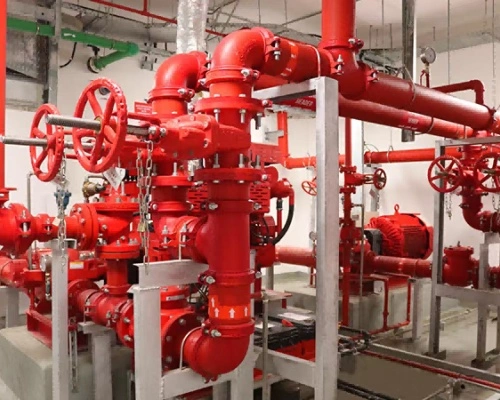
Understanding Grooved Coupling Clamps and Flanged Connections
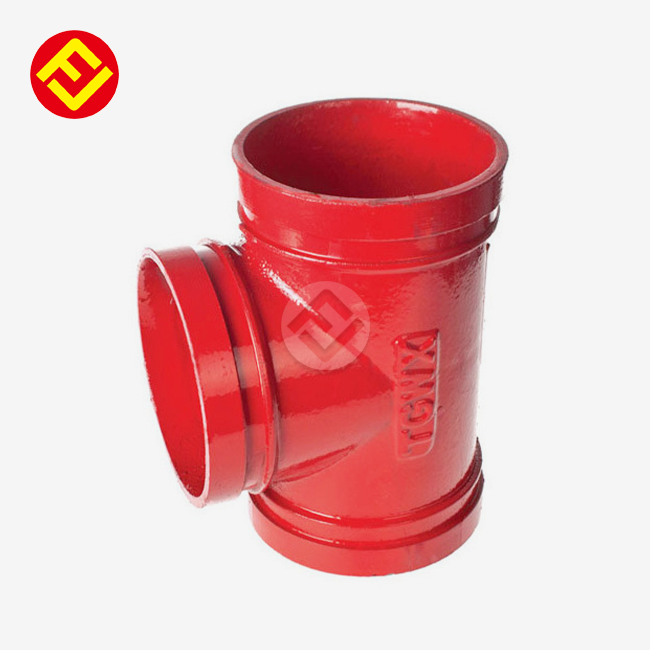
Grooved coupling clamps and flanged connections are two different ways to connect pipes. Each has its own design and ways of working. The system with grooves uses precisely cut grooves on the ends of pipes that fit together with mechanical clamps. This is done with new engineering ideas to make sure the pipes stay connected without using permanent methods.
How to Use Grooved Coupling Systems?
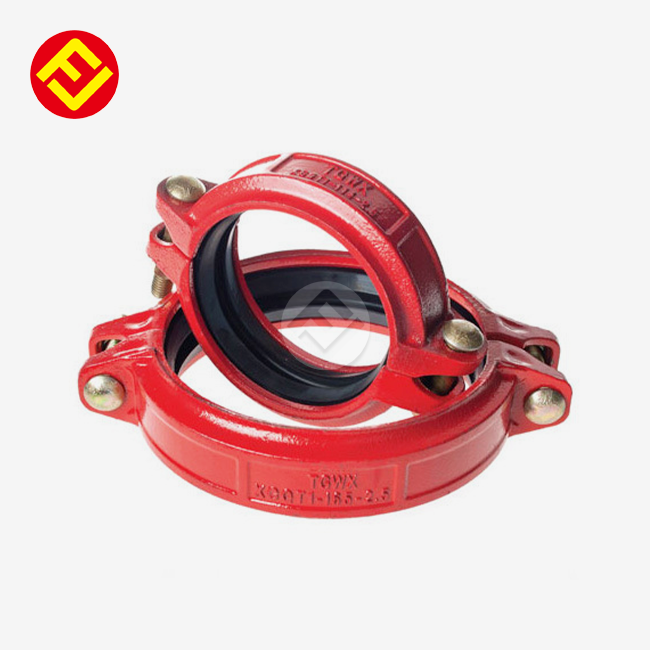
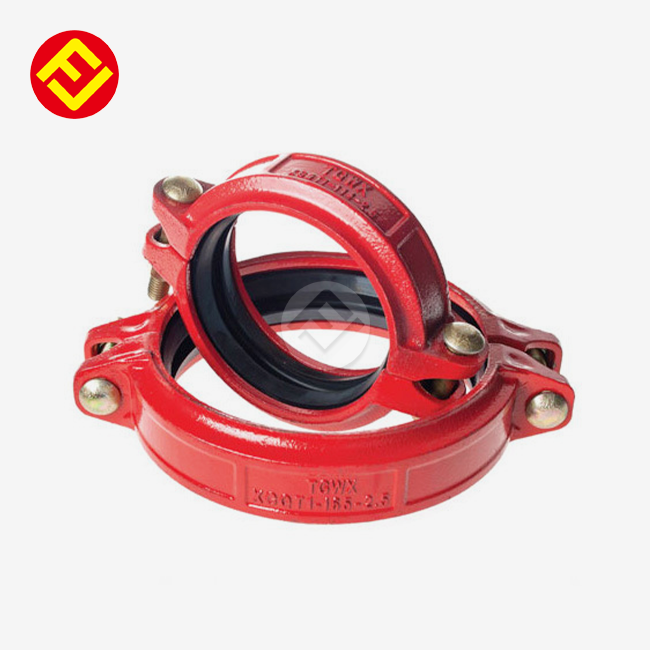
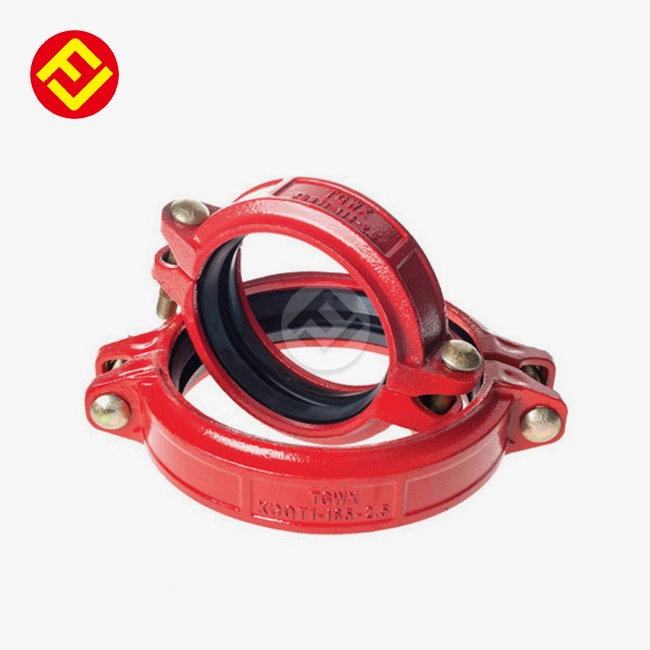
The grooved coupling mechanism works based on a simple but effective idea. Pipes are made with exact grooves near their ends, and coupling housings fit over these grooved parts. EPDM rubber gaskets make seals that are tight against water, and bolted clamp parts hold the connection in place. Angular deflection and thermal expansion are possible with this design, so it works well for piping systems that change over time.
At FLA Industrial & Trading Co., Ltd., we use advanced casting and machining methods to make our grooved couplings out of high-quality ductile iron and carbon steel. The goods are tested for quality in a very strict way so that they can meet the ISO9001, CE, and UL/FM certification standards. This makes sure they will work well in a variety of situations.
Flanged Connections Explained
Flanged connections depend on flat, round discs that are either welded or screwed to the ends of a pipe. The discs are then bolted together with gaskets between the faces. This makes a strong mechanical joint that can handle a lot of pressure and heat. The raised-face design adds more sealing surface area, which makes flanged connections especially good for important applications where stopping all leaks is very important.
Flanged systems are great for situations where they need to be taken apart a lot to check on them or fix them. The bolted setup lets technicians get to the parts on the inside without cutting or destroying the connection. However, this method usually takes more time and needs special tools compared to grooved setups.
Key Differences Between Grooved Coupling Clamps and Flanged Connections
The basic ideas behind these connection methods are not the same, and neither are the ways they are installed, how they perform, or the total cost.
Installation Speed and Complexity
Installing a grooved coupling clamp doesn't need a lot of special tools and can be done by technicians with basic training. Cutting grooves, putting on gaskets, and tightening bolts are all parts of the process that usually take just a few minutes for each joint. This level of efficiency means that the cost of labor is much lower on large-scale projects.
Flanged installation requires more work ahead of time, such as making sure everything is lined up correctly, following specific sequences for bolt tensioning, and using cranes to help with bigger pipes. The process guarantees great joint integrity, but it takes a lot more time and skilled workers than grooved options.
Pressure and Temperature
Flanged connections work better in high-pressure situations. They are usually used in industrial settings where they have to deal with pressures over 1,000 PSI. The metal-to-metal contact and comprehensive gasket compression make seals that are almost completely leak-proof even under very harsh conditions.
Our grooved coupling systems keep the seal in great shape even when they have to deal with pressures up to 300 PSI. The adaptable design allows for thermal expansion and vibration without weakening the joints. This makes them especially useful in HVAC and fire protection systems where temperature changes are common.
Ease of Access and Maintenance
Grooved couplings make maintenance easier in a way that no other coupling does, because they can be quickly disconnected. Without needing any special tools, technicians can quickly take joints apart. This lets them change the system or replace parts with very little notice. This ease of access cuts down on maintenance downtime and the costs that come with it very significantly.
Even though flanged connections are harder to take apart, they let you get to the inside parts of the pipe very easily once they are open. The strong build means that, when used correctly, the device can go a long time between uses and doesn't need to be maintained very often.
Advantages and Limitations: Grooved Coupling Clamp vs Flanged Connection
Each way to connect has its own strengths and weaknesses that make it better or worse for different reasons.
Good Things About Grooved Couplings
It is easy to install grooved coupling systems, and they can be used in many different ways. These joints let the building settle. They also keep the stress from concentrating in one spot during thermal expansion and vibration. This helps the entire system last longer.
l Rapid Installation: It takes 50% to 75% less time to install everything than if the joints were welded. This greatly reduces both the amount of work and the time needed to finish the project.
l Flexibility: The ability to bend at an angle that is part of the design lets the pipe move without needing extra expansion joints or other hard-to-understand design parts.
l Vibration Damping: The gasket is made in a way that lets the system's vibrations be absorbed. This reduces the noise in the system and makes the connected equipment less stressed.
l Corrosion Resistance: Epoxy, hot-dip galvanizing, and other coatings protect very well in difficult environmental conditions.
Grooved couplings can be very helpful in situations where these benefits are seen: they help speed up the installation process, they give the system more flexibility, and they make the maintenance process easier.
Benefits of Connections with Flanges
Flanged connections work well when they need to be very strong and able to handle a lot of pressure. The rigid connection method makes important process piping and applications with high pressure very stable.
l High-Pressure Performance: It works best when the pressure is over 300 PSI; some setups can handle more than 2,000 PSI.
l Temperature Resistance: It works best in a wide range of temperatures, particularly when it's used in steam or very hot liquids.
l Mechanical Strength: A stiff connection gives the most support to applications that are used in heavy-duty and high-stress situations.
l Standardization: A lot of different industries use the same rules, which means that parts from different companies and uses will work together.
Flanged connections are the most popular choice for these important industrial processes because they are totally reliable, even though they aren't the easiest to install.
Limits on Operations
One problem with coupling clamp grooved is that they can't handle as much pressure. Their gaskets can also wear out over time, particularly when chemicals are involved. These would be okay for most business and light industrial uses, but maybe not for ones with very high pressure or temperature.
Flanged connections are hard to install and expensive to use, especially for piping systems with large diameters that need to be lifted by a crane. Without extra design considerations, the rigid connection method also lets very little building settlement or thermal expansion happen.
Choosing the Right Pipe Connection: Selection Criteria for B2B Procurement
Choosing a good way to connect depends on carefully thinking about technical needs, operational priorities, and long-term costs.
Technical Specification Study
The most important technical measure is the pressure rating. Grooved couplings work well for applications below 300 PSI. Flanged connections are needed for higher pressures. The temperature also affects the choice of material, and ductile iron works very well in most temperature ranges.
The size of the pipe has a big effect on how much it costs and how hard it is to install. Grooved couplings are especially useful for applications with small diameters (from 1" to 12"), where it's easier to install them quickly. If you already have equipment for lifting things at the site, systems with a larger diameter might work better with flanged connections.
Requirements That Are Specific to the Application
Fire protection systems focus on quick setup and dependable sealing. For this reason, grooved couplings are perfect for standpipe and sprinkler system networks. The UL/FM certification of our Products" target="_blank" style="color:blue" >products makes sure they are safe around fires and also makes it easier to install them.
Flanged connections are often needed in industrial process piping because they are good at handling pressure and are easy to get to for inspection. Chemical processing, steam distribution, and high-pressure water systems usually call for flanged connections to be safe and reliable.
Criteria for Evaluating Suppliers
When choosing a manufacturer, it is important to look at quality certifications, technical support capabilities, and supply chain reliability. While offering complete technical support during the buying process, FLA Industrial & Trading Co., Ltd. keeps its ISO9001 quality management certification.
Our partnership with Fortune Global 500 companies and 40 years of experience in manufacturing show that we can be trusted to get the job done in difficult industrial settings. The ability to get custom solutions and quick responses to technical questions makes procurement even more valuable.
Installation and Maintenance Best Practices for Grooved Coupling Clamps
Installing a grooved coupling clamp the right way will make it work better and last longer. Following instructions keeps things from breaking as much.
How to Insert?
You need to prepare the pipes before installing a grooved coupling. Check that the ends are square and free of burrs with the right tools. Then, make the cuts in the pipes. Either machine the grooves or use a roller to get them the right size. Check that the depth and evenness are the same all the way through.
Make sure the gasket is lined up and looking good when you put it in. Check that your EPDM gaskets are clean and unbroken before putting them in. Check that the coupling groove is the right size for them. As you take turns tightening the bolts, don't be too rough or make the coupling housings uneven.
Maintenance Rules
Looking at things regularly can help you spot issues before they become costly errors. As part of normal upkeep, look for coating damage, loose bolts, or gasket extrusion. You don't have to stop the system to get a good look at the grooved couplings.
As a way to keep things from breaking down, the gasket and bolt tension should be checked often. Gaskets that are broken or look like they could break any time now should be replaced. At the right torque level, make sure the bolts are tight. This proactive approach keeps the system running and makes it last longer.
Identifying Common Issues and Implementing Solutions
When the gasket is broken or not put together right, it's normal for things to leak. Check the groove dimensions, gasket condition, and bolt torque before assuming something is broken. Small leaks are usually fixed by making the bolts tight again. If that doesn't work, the gasket might need to be replaced.
If things aren't lined up right, they can break seals and wear things down. Be sure the coupling joints aren't stressed and the pipes have enough support. Grooved couplings can handle some misalignment, but you'll need extra pipe fittings or supports if the angle is very steep.
Why Choose FLA Industrial & Trading Co., Ltd. for Your Coupling Solutions?
Before getting into the pipe fitting business, FLA Industrial & Trading Co., Ltd. spent almost forty years making things. We have over 1,000 different kinds of hardware tools, electrical line tools, Woodworking Clamps, and malleable iron pipe fittings. Because of this, we are a dependable partner for a lot of different kinds of industrial needs.
Top Quality Manufacturing
Our grooved coupling clamps are made of carbon steel and ductile iron of the highest quality. They have been shaped and polished with the help of new technology. All of the products are carefully tested to make sure they meet the ASTM A536 and AWWA C606 standards and maintain the ISO9001 quality management certification.
With the help of precision casting and computerized machining, we can guarantee that all of our sizes, from 1" to 48", are correct in every way. In a range of situations, the best protection against corrosion is a surface finish that is painted, epoxy-coated, or hot-dip-galvanized.
General Technical Support
Our engineers are always ready to help with any technical issues that come up when people buy and install our products. In 24 to 48 hours, Rapid Response can give you 3D drawings, pricing, and specs. This helps you make quick choices for projects that need to be finished quickly.
The custom development of a solution changes the size, materials, or coating specifications so that they can be used in the right way. This ability to change makes sure that it works perfectly and meets certain needs that regular products can't.
Conclusion
When to use grooved coupling clamps or flanged connections depends on the needs of the job, how quickly people want to be able to install it, and how people want it to work in the long run. If you want to save time and money on installation and maintenance, grooved couplings are a good choice. For high-pressure and very important processes, flanged connections work better. Procurement professionals can make smart choices that are good for both the needs of the moment and the long-term success of the business when they understand these basic differences.
FAQ
How does a grooved coupling clamp make pipeline maintenance easier than flange connections?
You don't need any special tools to quickly take things apart with a grooved coupling clamp. This lowers the time that maintenance can't be done by 60% to 80% when compared to connections with flanges. The simple design lets technicians quickly check things and change out parts. The flexible joint also lets the system move without adding extra stress to parts that might make them fail early.
Are grooved coupling clamps safe to use in systems where steam is under a lot of pressure?
Grooved coupling clamps can be used for a lot of things with steam because they work well up to 300 PSI and between -29°C and 110°C. But if a high-pressure steam system goes beyond these standards, it will probably need flanged connections. Flanged connections are better at staying strong and sealing tight in very bad conditions.
What should you think about when picking between flanged and grooved connections?
The pressure and temperature needs for operating, the installation time frame, how easy it is to get to for maintenance, how well the system can adapt, and the total cost of ownership are all important factors that go into making a decision. Grooved couplings are good because they are easy to install and make maintenance simple. Flanged connections, on the other hand, are better for high-pressure situations and when you need the strongest connection possible.
Partner with FLA Industrial for Premium Coupling Solutions
Learn how FLA Industrial & Trading Co., Ltd.'s many grooved coupling clamp options can make your piping systems work better. Our skilled team offers full technical support, the ability to make custom products, and great prices on large orders. As a coupling clamp grooved maker with almost 40 years of experience in the field, companies in the Fortune Global 500 trust us to give them reliable goods that meet their high standards. Ready to improve your procurement strategy with pipe connection solutions that are known to work? If you want to talk about your exact needs with us and get detailed product info that fits your project needs, email us at sales@flaindustrial.com.
References
1. American Water Works Association. "AWWA C606 Standard for Grooved and Shouldered Joints." American Water Works Association Standards, 2019.
2. ASTM International. "ASTM A536 Standard Specification for Ductile Iron Castings." ASTM International Standards, 2020.
3. Mechanical Contractors Association of America. "Grooved Piping Systems Installation Guidelines." MCAA Technical Publication, 2018.
4. National Fire Protection Association. "NFPA 13 Standard for the Installation of Sprinkler Systems." NFPA Standards Council, 2021.
5. Pipe Fabrication Institute. "Technical Bulletin: Comparison of Pipe Joining Methods for Industrial Applications." PFI Engineering Standards, 2019.
6. American Society of Mechanical Engineers. "ASME B16.1 Cast Iron Pipe Flanges and Flanged Fittings." ASME International Standards, 2020.