Grooved Mechanical Cross Solutions for Complex Piping Layouts
2026-08-05 09:37:04


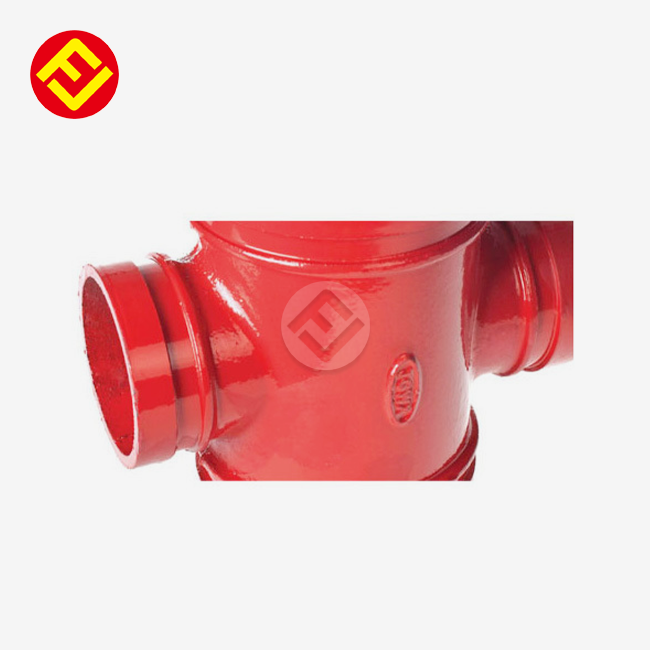
When piping systems require multi-directional fluid distribution across orthogonal branches, the Grooved Mechanical Cross emerges as an engineered solution that streamlines complex installations. This four-way fitting utilizes roll-grooved or cut-grooved end profiles that engage with mechanical couplings and elastomeric gaskets, creating leak-tight, self-restrained joints without welding. Contractors appreciate how this design addresses critical challenges: eliminating hazardous hot works in volatile environments, reducing installation labor substantially through rapid coupling assembly, and accommodating system misalignment that rigid connections cannot tolerate.


Specification |
|||||
| The following table outlines our available product configurations: | |||||
| Type | Series | Material | Finish | Working Pressure | Connection Type |
| Grooved Mechanical Cross | 76 Series | Ductile Iron | Red Painted / Epoxy Coated | Per Industry Standards | Grooved Coupling |
| Grooved Mechanical Cross | 89 Series | Ductile Iron | Red Painted /Epoxy Coated | Per Industry Standards | Grooved Coupling |
| Grooved Mechanical Cross | 114 Series | Ductile Iron | Red Painted / Epoxy Coated | Per Industry Standards | Grooved Coupling |
| Grooved Mechanical Cross | 165 Series | Ductile Iron | Red Painted /Epoxy Coated | Per Industry Standards | Grooved Coupling |
| Grooved Mechanical Cross | 219 Series | Ductile Iron | Red Painted/Epoxy Coated | Per Industry Standards | Grooved Coupling |
Understanding Grooved Mechanical Crosses: Basics and Applications
Grooved piping fittings are different from other ways of joining things together because of how they are built. The grooved system doesn't use threaded connections that need sealants or welded joints that need certified workers. Instead, it uses precision-machined grooves that hold housing segments and gaskets. With this mechanical connection method, things that used to take hours can now be done in minutes.
Fire Protection Networks and Sprinkler Grids
One of the most difficult uses for four-way pipe fittings is in fire suppression systems. When engineers design wet and dry sprinkler systems, they need parts that can handle sudden increases in pressure when the pump is turned on. The ductile iron construction meets UL and FM standards and makes it easy to quickly connect water supplies to several safety zones. In an emergency, these grid setups have to work perfectly, so the stability of the materials and connections can't be compromised.
HVAC and Chilled Water Distribution
There are special space rules for commercial mechanical rooms because supply and return lines cross over more than one point. The flexible form of the grooved fitting solves these problems because it lets workers make complicated branch configurations without having to cut or weld a lot of pipe. When used with flexible couplings, the assembly can handle seismic movement and pump vibration, which keeps the system from breaking when the building moves or when the equipment is running.
Industrial Process and Mining Operations
Fittings that can handle being moved around a lot and rough materials are needed in harsh settings. The ability to quickly take apart is useful for mining dewatering systems and slurry transport lines. For example, maintenance teams can disconnect a four-way junction in tight areas using only hand tools, which greatly reduces downtime compared to flanged options that need to be taken apart bolt-by-bolt.
Technical Guide: Specifications, Materials, and Installation
Material science has a direct effect on how well and how long pipes work in different situations. When buying teams know the technical specs, they can better match parts to practical needs.
Material Standards and Performance Metrics
Grooved fittings are made from ductile iron that meets ASTM A536 Grade 65-45-12 standards. This requirement makes sure that the minimum tensile strength is 65,000 psi and that the material is resistant to contact so that it doesn't break easily when exposed to heat shock or hydraulic hammer. When compared to regular grey iron, which isn't tough enough for high-pressure uses, ductile iron's nodular graphite structure gives it better dynamic qualities.
Pressure ratings depend on the type of coupling used and the order in which pipes are connected. Typical working pressures are between 300 and 1000 psi, with 1000 psi being used for fire mains and high-demand industrial loops. These ratings only apply if the parts are installed correctly and are compatible with each other. Using parts from different manufacturers or applying the wrong amount of torque can damage the system.
Our epoxy resin covering with a red paint finish protects against rust in two ways. The epoxy layer chemically sticks to the cast surface, making a barrier that keeps water out. The paint topcoat lets you see what's going on and protects against UV light. This mix makes the covering last a lot longer than regular coatings, especially in wet or outdoor settings where galvanised options might be needed.
Dimensional Precision and Groove Specifications
Advanced casting and machining techniques used in precision engineering make sure that all production batches have the same dimensions. Three important measurements must be met by every fitting: the A-dimension for gasket seating depth, the B-dimension for groove width, and the C-dimension for groove diameter. Any change in a characteristic can lead to a failed seal or incorrect coupling contact.
The groove specs exactly follow the AWWA C606 standards, and for Grooved Mechanical Cross, this standardisation makes sure that all makers using Victaulic-style coupling systems can work together, and this standardisation keeps the pipes from separating when there are changes in pressure or cycles of heat expansion, and the quick installation design doesn't require welding—technicians only need to line up the pipes and tighten the coupler for an instant connection. This makes sure that all makers using Victaulic-style coupling systems can work together. This standardisation keeps the pipes from separating when there are changes in pressure or cycles of heat expansion. The quick installation design doesn't require welding—technicians only need to line up the pipes and tighten the coupler for an instant connection. This makes the joint complete in a fraction of the time it takes for threaded or welded options.
Installation Protocol and Common Pitfalls
Preparing the pipes is the first step in a proper fitting. Cut ends need to be smoothed out and grooves checked to make sure they are all the same depth. Before putting the gasket over the groove, it fits into the coupling housing and is oiled according to the manufacturer's instructions. The housing keys fit into the groove, and the bolts pull the segments together until the pads touch. This is a visible sign that the seal has been properly compressed.
Some common mistakes are over-torquing nuts, which can bend housings, or under-tightening them, which lets the seal come out when the pressure is applied. Where you put the support also has an effect on how well it works. The fitting connects the pipes, but the grooved system is naturally bendable. Installing independent hangers that meet MSS SP-69 standards stops sagging at junction points where weight is concentrated from four directions.

Comparing Grooved Mechanical Crosses: Making the Right Choice
The selection criteria include more than just basic functionality. They also include operational flexibility and lifecycle costs. Value offers for different types of projects become clearer when you know how grooved systems stack up against other options.
Grooved Versus Welded Cross Fittings
Welded crosses make fixed joints with a lot of structural strength, which is good when the system will never be changed. But welding creates heat-affected zones that can weaken pipe walls, and it needs qualified welders whose wages are higher than those in other mechanical jobs. Needing a fire watch while working in a building that is already occupied adds to the cost. These problems are taken care of by the grooved connection system, which keeps the pressure capacity by compressing the seal and increasing the coupling strength.
More benefits are shown by maintenance situations. To repair a broken welded cross, pipes have to be cut and new pieces have to be welded on. This takes hours and takes systems offline. With grooved assemblies, technicians can quickly remove bolts, swap out parts and get back to work, so there are fewer breaks in production or building downtime.
Flanged Connections and Space Considerations
Crosses with flanges can be taken apart, but they need a lot more mounting room than crosses with grooves. Bolt circles make the fitting envelope bigger, which can be a problem in crowded mechanical rooms or underground vaults where space is limited. Gasket surfaces need to be perfectly lined up and torqued in a certain way across multiple bolts, which makes installation take longer. The Grooved Mechanical Cross combines these needs into small housing shapes with easier-to-understand bolt patterns.
Material Grade Comparisons Across Manufacturers
Leading providers have strict quality standards, but small differences can affect how well something works and how long it lasts. Victaulic invented grooved systems and keeps up with strict testing methods to make sure that pressure ratings and cycle life are correct. When it comes to standard configurations, Anvil International focuses on large size ranges with short lead times. For planned installs, Cooper B-Line puts a lot of emphasis on integrating with hanger and support systems.
When purchasing goods, people in charge should check that the sellers have metallurgical certificates that say the nodularity percentages are above 90%. This keeps the materials from breaking easily. Third-party testing records from well-known labs give you more confidence than what the manufacturer says. Stability in the global supply chain is important for multi-phase projects that need to make sure that Products" target="_blank" style="color:blue" >products are always available during the months or years of building.
Procurement Insights: How to Source the Best Grooved Mechanical Cross?
Strategic sourcing finds the best mix between short-term project needs and long-term ties with suppliers. Knowing how the market works and what quality indicators are can help you avoid expensive specification failures.
Supplier Qualification and Quality Verification
Tough inspection rules lower the chances of a catastrophic system failure. Through metallographic study and spectrometer analysis, metallurgical analysis confirms the presence of ductile iron nodularity and the chemical makeup of carbon, silicon, manganese, sulphur, and phosphorus. To make sure that groove measures meet ANSI/AWWA C606 standards for accuracy, strict gauging is needed. Fittings are put through 1.5 times their normal working pressure during batch hydrostatic testing. This finds any holes or other casting flaws like pinholes before they are shipped.
Visual inspection checks the smoothness of the internal waterways, which keeps the Hazen-Williams C-factors that lower friction loss, and for Grooved Mechanical Cross, measuring the thickness of the coatings shows that the epoxy and paint layers are thicker than 80 microns, which means they protect against corrosion well for the whole service life, and distributors who offer approved mill test results and dimensional inspection papers show that they care about quality control. Measuring the thickness of the coatings shows that the epoxy and paint layers are thicker than 80 microns, which means they protect against corrosion well for the whole service life. Distributors who offer approved mill test results and dimensional inspection papers show that they care about quality control.
Cost Factors and Budget Optimization
Pricing structures take into account more than just the basic cost of fitting. Choosing between normal ductile iron and improved stainless steel has effects on how resistant it is to corrosion and how much money is spent. Prices don't go up or down in a straight line with size; bigger sizes need more material and more time to machine, which makes unit costs go up more than they should. Customisation for pressure ratings that aren't standard or for special coatings costs more in terms of engineering and production.
Through ties with distributors, volume agreements can often get you better prices. Contractors who are working on multiple jobs at the same time can combine orders from different places to save money on supplies. But the costs of storage and carrying inventory must be greater than the volume discounts. Just-in-time delivery plans strike a mix between saving money and making sure that processes go smoothly.
Bulk Ordering and Custom Requirements
For resale operations, hardware dealers and tool suppliers put a high value on stable quality, low prices, a wide range of SKU choices, and sturdy packing. When buying in bulk, establishing clear quality standards stops shipment disputes before they happen. Random selection from production lots should be required by sampling methods, and the results of key measurements and pressure tests should be checked by a third party.
Early partnership with suppliers helps with custom needs for unique pipe patterns. When possible, engineering teams can make fitting configurations work best with standard sizes, which lowers the cost of making custom parts. When custom sizes are still needed, making sure that quotes include specifics like pressure ratings, connection types, and finishing needs is the best way to make sure that they are accurate.

Optimizing Complex Piping Systems with Grooved Mechanical Cross Solutions
System-level thinking shows benefits that go beyond the success of individual parts. Because grooved assemblies are modular, they change how maintenance is done and how long projects take.
Installation Speed and Labor Efficiency
Weather delays, problems with permits, and a lack of workers all put constant pressure on construction schedules. Grooved systems speed up activities on the critical path by lowering the need for skilled trades. Welded installations need trained pipefitters and people to watch over the fire, but grooved assemblies let general mechanical workers use standard hand tools to make connections. This gives more people the chance to work in construction when the job market is tight.
Small changes in the field can be handled without having to do any extra work because coupling designs include alignment tolerance. Before installing the coupler, the pipes don't have to be perfectly coaxial; the gasket compression and housing shape will center the parts within acceptable limits. This forgiveness cuts down on the time needed for measuring and shimming, which is especially helpful for renovation projects where existing infrastructure makes it hard to route new pipes.
Maintenance Access and System Reliability
The strength-to-weight ratio of ductile iron building is very good, and it can handle the impact and pressure changes that are typical in industrial systems. But even strong materials need to be used at some point. Grooved connections make planned maintenance easier because they let you take parts apart one at a time without disturbing pipes next to them.
Technicians don't cut and reweld lines when they need to separate parts of a system to repair or check equipment. Instead, they remove coupling nuts. This feature is very helpful in occupied buildings where keeping tenants happy means minimising service outages. The quick reassembly process gets things back up and running during planned repair times. This keeps the building from being shut down for long periods of time, which could affect production or operations.
Case Study Evidence from Field Applications
Fire protection companies say that installing grooved systems instead of standard welded pipe networks cuts the time needed by 40 to 60 percent. One local water treatment plant said that projects to change out equipment that used to need three days of shutdowns were finished in eight hours by using grooved fittings for temporary bypass pipes. Crews could make junction assemblies off-site and then quickly connect sections during the maintenance window thanks to the modular assembly.
Easy removal is useful in industrial settings that deal with gritty slurries. In mining activities, worn-out pipe sections are replaced and junctions are changed in small spaces where welding tools can't work safely. If you can break links without using heat or cutting tools, there is no chance of an explosion happening in places where dangerous gases are building up.
Conclusion
Complex pipe plans need designed solutions that balance how quickly they can be installed, how reliable they will be in the long term, and how easy they are to maintain, and for Grooved Mechanical Cross, the material can withstand impact and changes in pressure, and grooved connection technology gets rid of the risks of welding and speeds up project timelines. The material can withstand impact and changes in pressure, and grooved connection technology gets rid of the risks of welding and speeds up project timelines. Precision groove cutting and ductile iron construction that meets ASTM A536 standards make joints that can handle tough service conditions in HVAC, fire protection, and industrial process uses. Strategic procurement that checks the quality of suppliers, makes sure measurements are correct, and makes sure coatings are intact protects system performance throughout all of its operational lifetimes. When modular freedom and quick serviceability are important to the specification team, grooved mechanical fittings help with building speed and managing costs over the lifecycle.
FAQ
What advantages do grooved mechanical fittings offer over welded crosses?
Grooved connections get rid of the need for hot work permits and qualified welders, which can cut installation time by up to 50%. The mechanical joint lets parts be taken apart for maintenance without cutting pipes, which cuts down on downtime. Welded joints make lasting links that need new pipes during fixes, but grooved systems only need wrenches to allow parts to be swapped out. This adaptability is especially useful in occupied buildings or dangerous places where welding poses a safety risk.
Are grooved mechanical crosses suitable for high-pressure fire protection systems?
Fittings of good quality made from ductile iron that meet ASTM A536 Grade 65-45-12 standards are certified by UL and FM for use in fire control systems. Working pressure ratings usually go up to 300 to 1000 psi, but this depends on the coupling choice and the pipe schedule. The rubber gasket and mechanical connection in the Grooved Mechanical Crosses make leak-tight seals that can handle hydraulic spikes when the pump is turned on. If you install it correctly and follow the manufacturer's torque recommendations, the system will work reliably for its entire service life.
How do I select the correct size and pressure rating?
Size choices are based on the sizes of the pipes that are attached to them. Standard crosses have outlets that are the same size, while reducing crosses have branch connections that are smaller. The coupling or thin-walled pipe, not the ductile iron fitting itself, is usually the part of the system with the lowest pressure number. Check the coupling manufacturer's specs to make sure the system can handle it, and make sure the ratings are higher than the maximum working pressures, which should include short-term surges. Engineering help from sources with a lot of knowledge can help you figure out how to meet the difficult requirements of a specific application.
Partner with FLA Industrial & Trading Co., Ltd. for Premium Grooved Piping Solutions
To find your way around complicated pipe specifications, you need a Grooved Mechanical Cross manufacturer with a track record of quality systems and quick expert help. Every part that FLA Industrial & Trading Co., Ltd. makes is the result of almost 40 years of experience making precise parts. Our advanced casting and machining methods make sure that all of our products are the same size and shape, meeting strict tolerance standards for reliable closing performance. We've set standards for reliability that procurement professionals trust with over 1,000 product specifications and partnerships with Fortune Global 500 companies.
Our team knows how to meet the specific needs of industrial maintenance operations, construction contractors, and HVAC installers. We offer engineering help throughout the whole specification process, whether you need stock setups that can be delivered right away or special solutions for unusual pipe layouts. Email our technical sales team at sales@flaindustrial.com to talk about the needs of your project, get detailed product information, or ask for custom quotes. We serve customers in the US, Germany, and Australia by offering low prices and reliable shipping, backed by quality management systems that have built trust with customers for generations.
References
1. American Water Works Association. (2016). AWWA C606-15: Grooved and Shouldered Joints. Denver: AWWA Standards.
2. ASTM International. (2019). ASTM A536-84: Standard Specification for Ductile Iron Castings. West Conshohocken: ASTM Technical Publications.
3. Manufacturers Standardization Society. (2018). MSS SP-69: Pipe Hangers and Supports—Selection and Application. Vienna: MSS Standards Practice.
4. National Fire Protection Association. (2019). NFPA 13: Standard for the Installation of Sprinkler Systems. Quincy: NFPA Publications.
5. Victaulic Company. (2020). Grooved Mechanical Piping Systems: Design and Installation Manual. Easton: Victaulic Technical Services.
6. Underwriters Laboratories. (2017). UL 213: Standard for Rubber Gasketed Fittings for Fire Protection Service. Northbrook: UL Standards Department.