How Do Flange By Groove Adapters Support System Upgrades?
2026-07-31 15:01:02


Flange by groove adapters serve as critical connection solutions during system upgrades by bridging traditional flanged equipment with modern grooved piping networks. These precision-engineered fittings eliminate the need for extensive welding, dramatically reduce installation downtime, and provide superior flexibility when retrofitting existing systems. Their dual-interface design—featuring a standard flange face on one end and grooved spigot on the other—enables contractors and facility managers to integrate new components into aging infrastructure efficiently. This compatibility advantage makes them indispensable for projects requiring minimal operational disruption while maintaining structural integrity and pressure ratings across diverse industrial applications.


Specification |
||
| Type | Model(DN) | Pipe Outer Diameter |
| Flange By Groove Adapter | DN65 | 76mm |
| Flange By Groove Adapter | DN80 | 89mm |
| Flange By Groove Adapter | DN100 | 114mm |
| Flange By Groove Adapter | DN125 | 140mm |
| Flange By Groove Adapter | DN150 | 165mm |
| Flange By Groove Adapter | DN200 | 219mm |
Understanding Flange By Groove Adapters: Design and Function
If you are in charge of upgrading a pipe system, you need to know how these specialised connections work on a basic level. These parts are a complex engineering answer that combines two different connection methods into a single block that works well.
Materials and Construction Standards
FLA Industrial & Trading Co., Ltd. makes Flange By Groove Adapters out of either ductile iron that meets ASTM A536 Grade 65-45-12 or carbon steel. These two materials were chosen because they have very high tensile strengths of over 65,000 psi. When compared to regular cast iron, ductile iron is better at withstanding impacts. This is especially useful in places where vibrations or changes in temperature happen often. Precision casting and CNC cutting are used on every unit to make sure that the groove sizes meet AWWA C606 standards, with errors measured in hundredths of millimetres. There are two types of surface protection: hot-dip galvanisation that meets ASTM A153 standards for harsh chemical environments or a red anti-corrosion epoxy finish that is sprayed at a thickness of at least 80 microns.
Longevity is directly affected by these choices about building. Galvanised surfaces are better for facilities that work in humid coastal areas because they don't break down when exposed to salt air. On the other hand, municipal water systems like epoxy coatings because they keep rust from getting into potable water. The process of choosing a material should be in line with your specific fluid chemistry and operating conditions.
Key Design Elements That Enable Upgrades
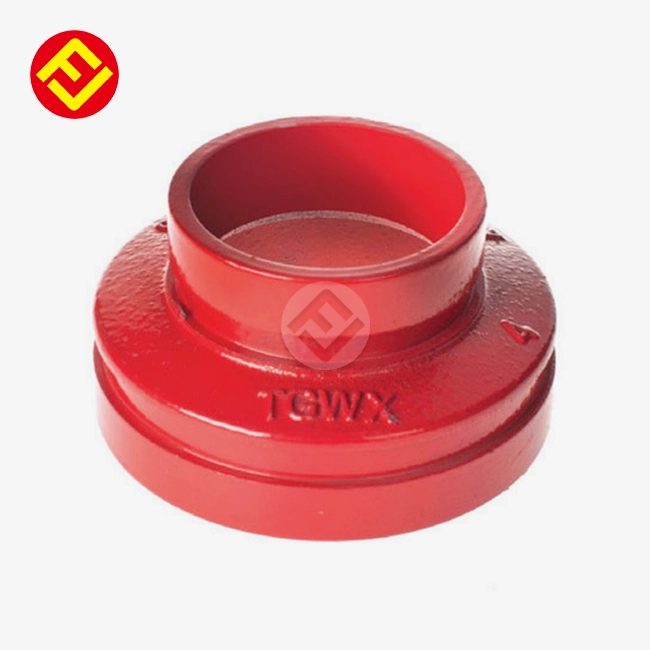
The connector is brilliant because of how it is built. One end has a carved flange face that is drilled to fit ANSI B16.1 Class 125 or ANSI B16.5 Class 150 bolt patterns. This makes it possible to use standard valves, pumps, and instruments. On the other end, there is a precisely cut groove that is meant to fit mechanical couplings with gaskets that are rated for the pressure you need. There is either a circular reducer for straight-axis changes or an eccentric reducer that keeps the pipe invert elevation constant. This is very important for drainage systems or other situations where sediment buildup is a problem.
Installers can connect new grooved systems to old flanged equipment without having to make custom transition pieces because of this arrangement. During updates, you can take off the old flanged connection, attach the adapter using the existing bolt holes, and then finish the grooved connection in minutes instead of the hours it would take to weld. The design allows for up to three degrees of angle misalignment and spinning in all 360 degrees during installation. This makes field alignment easier than it would be if the pipes had to be cut and reworked a lot.
Pressure Ratings and Compliance Certifications
Operating pressures depend on the size and type of material, but are usually between 300 and 750 psi for bigger widths and smaller shapes. The adapters made by FLA Industrial are certified by UL and FM for fire safety systems, CE for European safety rules, and ISO9001 for quality management. These licenses are important for getting permits and insurance, especially for projects that involve key infrastructure and need to be able to track down parts. Engineers can confidently specify these adapters because they meet international safety standards and will pass testing processes by a third party.
Challenges in System Upgrades and How Flange By Groove Adapters Address Them
When procurement managers and site leaders try to upgrade old piping infrastructure, they always run into problems that have a direct effect on project budgets and schedules. Knowing about these problems helps explain why these Flange By Groove Adapters are now required for all modernisation projects in North America.
Eliminating Welding Delays and Hot Work Permits
When upgrading a traditional system with flanged connections, qualified welders are usually needed to make the changes between different types of pipes. Scheduling specialised workers, getting hot work permits in buildings that are already occupied, following fire watch rules, and doing radiographic testing after the weld for pressure-critical applications are just a few of the problems that come up with this type of welding. In factories that make drugs or hospital mechanical rooms, doing hot work during business hours is often not allowed at all. This means that workers have to work long shifts at higher wages.
With these adapters, you don't have to do any hard work at all. Standard coupler installation tools and torque wrenches are all that installation teams need to make links. A recent hospital expansion project in Michigan made this benefit very clear: mechanical contractors used these adapters to replace twelve flanged pump connections with grooved systems in just four hours, instead of the two days that would have been needed for welding. The hospital kept its HVAC system running normally during the whole process, which saved them the cost of renting a temporary chiller.
Solving Compatibility Mismatches in Mixed-Generation Systems
Many places use equipment that was put decades ago, which can be confusing when new parts are added. You might need to connect a new variable-speed pump with a metric PN16 flange hole to imperial-sized grooved distribution pipes that are already in place. Standard flanges can't handle these changes without special cutting or a lot of different adapter pairings that could lead to leaks and weak spots in the structure.
This problem can be fixed with a single adapter that is properly specified. FLA Industrial stocks both ANSI and metric drilling designs in sizes DN65 to DN200, which are equivalent to 76mm to 219mm pipe outer diameters. Procurement teams can order the exact design that fits the needs of their equipment and get detailed models within 24 hours to check with engineers before committing. This response stops the common problem of finding mismatch during installation, which wastes time and money on labour.
Reducing Installation Labor and Associated Costs
In retrofit jobs, labour costs often go over material prices. This is especially true in cities where skilled tradespeople are paid more. Because these adapters make installation faster and easier, you save money right away. A soldered flange transition might need a four-person crew (a welder, a fitter, a fire watcher, and an inspector) to work for six hours, but a grooved adapter installation only needs two techs to work for thirty minutes. When it comes to big projects, the math makes sense: for example, when a water treatment plant upgrades forty link points, it saves about 220 hours of labour, which is a big chunk of money, even before you count the permit fees and inspection fees that are saved.
Another benefit of maintenance ease is that it saves time. When repairs or changes need to be made in the future, technicians can take off grooved couplings without cutting the pipes, do the work, and then put them back on using the same parts. This reversibility gets rid of the welding-cutting-welding cycle that wears down systems over time and makes maintenance windows longer and longer.

Comparative Analysis: Flange By Groove Adapters vs. Traditional Flanges
Procurement workers can make data-driven choices when they know how these Flange By Groove Adapters work with common flange types. Each link method has its own pros and cons that may be important in different areas of your application.
Performance Against Weld Neck Flanges
Because they have a reinforced hub design and a full-penetration weld that joins them to the pipe system, weld neck flanges have been the gold standard for high-pressure, high-temperature applications for a long time. They work great in chemical processing, steam service, and other situations where the working pressure is higher than 600 psi. But because they are permanently attached, they can't be changed. Once they are soldered, they have to be cut and re-welded, which takes time and can cause heat-affected zones that can damage the pipe's metalwork.
The grooved adapter alternative is as strong as the weld neck in its pressure-rated range, but it is more flexible. When grooved connections with ductile iron adapters are installed correctly, they can withstand operating pressures that are the same as welded joints within their rated specifications. The main difference shows up when changes are made to the system: grooved connections can be taken apart and put back together without damaging the material, so they keep their original performance features through many rounds. For uses in the 300–750 psi range, which is common in HVAC, fire protection, and city water systems, these adapters give functionally equivalent performance while being much easier to service.
Advantages Over Slip-On and Threaded Connections
Slip-on flanges are easier to install than weld necks, but they still need fillet welds on both sides of the flange, which means you still need a hot work permit and skilled welders. Though threaded flanges don't require welding, they do come with the risk of galling, lower pressure ratings, and possible leak paths through flaws in the threads. Both types don't have the vibration isolation properties that grooved couplings do. This is an important thing to think about when connecting rotating machines like compressors or pumps.
Grooved adapters are faster to install and last longer than both of the other options. The compression of the mechanical coupling makes a seal that can handle small pipe movements caused by temperature changes or equipment vibrations. This keeps the stress from building up and breaking rigid threaded connections. HVAC companies have found that grooved connections have much lower callback rates for leak fixes than threaded installations. This is especially true in systems that change temperatures often.
Material Selection for Specialized Environments
The best materials to use depend on the environment. When used in neutral pH water systems and at room temperature up to 230°F, standard ductile iron adapters with an epoxy coating work well in most general industry uses. They are very resistant to corrosion. Chemical inertness of properly finished epoxy surfaces is good for water treatment plants that deal with polluted water.
Carbon steel adapters with a galvanised finish are better for projects that will be open to weather, are near salt water, or need to be more resistant to chemicals. Galvanisation makes a layer of zinc that acts as a sacrifice to protect the base metal from oxidation. This keeps the metal in good shape longer in harsh conditions. As part of FLA Industrial's quality control, the thickness of the covering is checked using computer measurements to make sure that it meets ASTM standards for at least 80 microns of coverage. When specs call for certain grades of material or coatings, the company can customise and deliver perfectly matched parts within 7–15 days. This lets them meet project-specific needs without the long wait times that come with specialised forgings.
Procurement Considerations for Flange By Groove Adapters in System Upgrades
Not only do you have to choose the right parts for system changes, but you also have to work with suppliers who understand the practical challenges that procurement teams face. When choosing a supplier, there are a number of things that need to be carefully considered.
Supplier Capabilities and Certifications
Verification of approval should be the first thing you do when looking at possible sources. If a company has ISO9001 quality management certification, it means that they have set up process controls and paperwork for tracking that meets audit standards. Parts that meet NFPA standards for sprinkler systems have been approved by UL and FM for use in fire protection applications. Make sure that the certifications only cover the goods you're buying and not the whole company. For example, some companies only have certifications for certain product lines, but they market their whole catalogue under those credentials.
FLA Industrial & Trading Co., Ltd. keeps meticulous certifications for all of their Products" target="_blank" style="color:blue" >products, and test reports can be seen for reference. They have been making things for almost 40 years and have worked with Fortune Global 500 companies, which shows that they consistently do a good job. Their 2,000-ton inventory of standard parts gives procurement managers extra trust because it makes sure that urgent projects can be completed, and their 7–15 day custom production cycle lets them make Flange By Groove Adapters in unique configurations without too many delays.
Technical Support and Engineering Collaboration
Suppliers who offer technical support in addition to selling products are very helpful for complex improvements. Having access to detailed plans, 3D CAD models, and installation instructions speeds up the planning process and stops mistakes that could cost a lot of money in the field. The best suppliers answer technical questions within 24 to 48 hours and give you load calculations, material compatibility assessments, and advice on the best way to install things based on your specific needs.
When working with non-standard setups, this service is very helpful. You might need an eccentric reducer to keep drainage slopes in place, or you might need to make sure that a certain adapter will fit correctly with a strange flange drilling pattern from imported equipment. Suppliers with strong expert teams can confirm compatibility before you buy, so you don't have to worry about the worst-case situation of finding out during installation that something isn't compatible. The engineers at FLA Industrial help with the whole process, from creating forms to making sure the 3D designs are correct and checking parameters. They work as an extension of your project team and do a great job.
Order Flexibility and Logistics Planning
The facts of a project rarely match up exactly with the standard lead times or minimum order quantities set by suppliers. The best seller can handle both small orders for pilot setups and large promises for big projects without charging extra for either. Because FLA Industrial doesn't have a minimum order size, procurement teams can order test amounts to make sure they work with the project's needs before committing to the full requirements. This lowers risk in the design phase.
Logistics planning is very important when there are a lot of trades involved and strict project deadlines. Suppliers should be open and honest about how production is going and when items will be shipped, so you can plan when materials will arrive and when workers are available. Real-time updates stop the common problem of teams showing up to a job site without the right materials or materials sitting there useless while other trades finish work that needs to be done first. Reliable providers know that how well they deliver directly affects the critical path of your project and treat transportation as an important part of their business, not something that is added on at the last minute.

Future-Proofing Your System: Advantages and Long-Term Value of Grooved Connections
Smart procurement looks at more than just the needs of the current project. It also considers how the choices made today will affect operational flexibility and total cost of ownership in the future. These adapters give you strategic benefits that build up over time as the system is used.
Facilitating Incremental Upgrades and Expansions
When production goes up, facilities don't stay the same. Capacity needs to be increased, processes need to be improved by adding new equipment, and old parts need to be replaced every so often. Grooved connections in piping systems are much more cost-effective than bonded connections when these changes happen. When growth is needed, workers can disconnect current runs at grooved couplings, add more sections or branches, and then rejoin them without changing the infrastructure around them.
This modularity cuts down on disruption costs by a large amount. If a food processing company wants to add more refrigeration space, they can change the pipes during a planned weekend shutdown instead of having to stop production for a week to weld and check the work afterward. Grooved systems are appealing just for keeping operations running because they save time on output that often outweighs the cost savings on materials. When facilities upgrade, adding Flange By Groove Adapters sets them up for future changes that will have to be made as operations change.
Maintenance Efficiency and Lifecycle Cost Reduction
Maintenance teams like grooved connections because they make them easier to service. Replace worn gaskets, broken coupling parts, or broken equipment further downstream without breaking lines. This gets rid of the need for welding consumables and lowers the number of parts that need to be kept on hand. A mechanical supervisor can keep coupling gaskets and housing segments in stock that cover the facility's common sizes, knowing that most repair situations can be handled with the materials on hand and the staff that is already there, instead of hiring outside welders.
This independence cuts down on both direct and indirect costs related to maintenance and extended downtime. Figure out the lifetime costs by taking into account not only the initial cost of installation but also how often upkeep will be needed and how long repairs will take. Over ten years, systems that use these adapters usually have lower total costs of ownership, even though the parts may cost more at first compared to basic threaded connections. The crossover point normally happens in the first three to five years, when the upfront difference is no longer needed because the savings on upkeep have grown enough to cover it.
Supporting Sustainability and Resource Conservation Objectives
As companies keep track of metrics like embodied carbon, waste generation, and resource efficiency, sustainability programs have a bigger impact on the things they buy. These goals are well met by grooved connection systems in a number of ways. Installation without hot work gets rid of the need for welding, which uses a lot of energy and releases carbon into the air from portable engines or high electricity demand. Because couplings can be used again and again, they don't create as much waste as cut-and-replace welded systems do, where the removed sections turn into scrap metal that needs energy to be recycled.
It's also good that these devices use little material. As foundries use more recovered materials and less energy, making ductile iron has become more environmentally friendly. FLA Industrial's production methods follow environmental management guidelines that reduce trash and energy use. This makes their goods more environmentally friendly overall. When reporting progress toward corporate environmental goals, procurement teams that keep an eye on Scope 3 emissions (those that happen in the supply chain) can list these benefits.
Conclusion
Flange By Groove Adapters have been shown to be a reliable way to deal with the technical and practical issues that come up when upgrading a pipe system. Their dual-interface design means that they don't need to be welded, installation time is cut down by a huge amount, and they can work with both flanged equipment and grooved pipe networks. When compared to older ways of connecting, these adapters make installation faster, upkeep easier, and system flexibility better over the long run. People who work in procurement should know how to choose materials, evaluate suppliers, and think about lifecycle costs that go beyond the initial purchase decision. Including these parts in the planning stages of an upgrade makes it easier to make changes in the future, and it also helps meet operational reliability and sustainability goals in a wide range of industrial settings.

FAQ
What material should I select for my application environment?
Ductile iron Flange By Groove Adapters with a red epoxy finish can be used for most indoor uses, such as fire protection, HVAC systems, and distributing drinkable water as long as the temperature stays below 230°F. In these controlled conditions, the epoxy is very good at resisting rust. For outdoor sites, places near the coast where salt air is present, or chemical working areas that need better corrosion protection, carbon steel with a galvanised finish is better.
Can these adapters handle high-pressure applications?
Pressure ratings depend on the diameter and the type of material used. Usually, they are between 300 and 750 psi. Most of the time, smaller sizes can handle higher forces. Always make sure that the model you're looking at meets your working pressure needs, including short-term pressure changes. If you have specific high-pressure needs that go beyond standard ratings, FLA Industrial can customise solutions that meet your exact needs.
Do grooved connections require special maintenance?
As part of routine maintenance, the connection housings and seals are checked visually for damage or wear on a regular basis, usually when the system is shut down for maintenance. During normal usage, the connections don't need any upkeep. When grooved connections are put correctly, they keep their seal integrity throughout their service life without any upkeep. This is in contrast to threaded connections that need to be retightened on a regular basis or welded joints that develop stress cracks.
Partner with FLA Industrial for Your System Upgrade Needs
FLA Industrial & Trading Co., Ltd. has been making high-quality grooved adapters for almost 40 years and is ready to help you with your next system upgrade. As a reliable Flange By Groove Adapter provider, we work with Fortune Global 500 partners in the US, Germany, and Australia. We offer a large selection of products, quick customisation, and full expert support. Throughout your job, our engineering team checks the dimensions, makes sure the materials are compatible, and gives you advice on how to put them. We can meet both tight deadlines and unique needs because we keep 2,000 tonnes of standard parts in stock and can make custom parts in 7 to 15 days. For technical advice, product specs, or bulk quotes that are unique to your update project, email us at sales@flaindustrial.com.
References
1. Smith, J.R. and Anderson, M.K. (2021). Modern Piping Systems: Design Considerations for Industrial Applications. Technical Publishing Group, Boston.
2. National Fire Protection Association. (2019). NFPA 13: Standard for the Installation of Sprinkler Systems. NFPA Publications, Quincy, Massachusetts.
3. Johnson, P.L. (2020). "Comparative Analysis of Mechanical Pipe Joining Methods in Commercial Construction." Journal of Construction Engineering and Management, Vol. 146, No. 8.
4. American Water Works Association. (2018). AWWA C606: Grooved and Shouldered Joints. AWWA Standards, Denver, Colorado.
5. Chen, W. and Roberts, D. (2022). "Lifecycle Cost Assessment of Piping Connection Technologies in Industrial Facilities." Facilities Engineering Journal, Vol. 34, Issue 2, pp. 87-104.
6. International Organization for Standardization. (2020). ISO 9001:2015 Quality Management Systems — Requirements for Manufacturing Industries. ISO Publications, Geneva, Switzerland.