How Does a Stainless Rope Clamp Extend Cable System Life?
2026-08-06 10:21:34


When wire rope systems face premature failure, the culprit often isn't the cable itself—it's the termination point. A stainless rope clamp provides a mechanical solution that directly addresses the leading causes of cable degradation: corrosion penetration, load-induced slippage, and stress concentration at termination points. By creating a secure, weather-resistant anchor that distributes tension evenly while resisting environmental attack, these precision-engineered fasteners can double or even triple the functional lifespan of wire rope assemblies in marine, construction, and industrial settings.


Specification |
||||||||
| Specification | Pitch (P) | Total Height (L) (mm) | Hole Diameter (a) (mm) | Screw Diameter (A) (mm) | Shank Diameter (d) (mm) | Clip Height(h1)(mm) | Hexagon Opposite Side (S) (mm) | Applicable Wrench (mm) |
| M2 | 0.4 | 17.1 | 4.5 | 3 | 2.5 | 9 | 5.4 | 5.5 |
| M3 | 0.5 | 20.3 | 5.3 | 4 | 3.4 | 8.6 | 6.9 | 7 |
| M4 | 1.25 | 22.7 | 6.6 | 4 | 3.4 | 9.8 | 6.9 | 7 |
| M5 | 0.8 | 26.7 | 7.1 | 5 | 4.3 | 9.4 | 7.8 | 8 |
| M6 | 1 | 32.3 | 7.1 | 6 | 5.2 | 11 | 9.8 | 10 |
| M8 | 1.25 | 34.5 | 10.1 | 6 | 5.2 | 15 | 9.8 | |
| M10 | 1.5 | 44.8 | 10.1 | 8 | 7.1 | 15 | 12.5 | 12.5 |
| M12 | 1.75 | 51.2 | 14.8 | 10 | 3.5 | 18.1 | 15.8 | 16 |
| M14 | 2 | 56.3 | 14.4 | 10 | 3.6 | 21.3 | 15.8 | 16 |
| M16 | 2 | 64.6 | 18.6 | 12 | 10.5 | 24 | 17.8 | 18 |
| M18 | 2.5 | 73.6 | 20.1 | 12 | 10.7 | 29.5 | 17.8 | 18 |
| M20 | 2.5 | 73.9 | 20.5 | 12 | 10.7 | 29.8 | 17.8 | 18 |
| M22 | 2.5 | 76.5 | 25.1 | 12 | 10.7 | 32.5 | 17.8 | 18 |
| M24 | 3 | 79.9 | 27.1 | 12 | 10.7 | 33 | 17.8 | 18 |
| M26 | 3 | 86.6 | 27.8 | 12 | 10.7 | 35.6 | 17.8 | 18 |
| M30 | 3.5 | 100.3 | 33.3 | 16 | 14.1 | 35.6 | 23.8 | 24 |
| M32 | 3.5 | 100.3 | 33.6 | 16 | 14.5 | 35.6 | 23.8 | 24 |
Introduction
Cable system longevity isn't just about selecting high-grade wire rope—the entire assembly's durability hinges on how securely and safely each connection point performs under stress. In demanding industrial and marine environments, where saltwater spray, temperature swings, and constant vibration challenge even the most robust materials, the hardware securing your cables becomes just as critical as the cables themselves.
This guide delivers actionable insights for B2B procurement managers, site supervisors, and engineering teams who specify and purchase rigging hardware at scale. We examine how stainless rope clamps function within cable systems, what differentiates premium-grade clamps from basic alternatives, and which installation practices genuinely extend service life. Whether you're outfitting a shipyard, managing construction projects, or maintaining industrial lifting equipment, understanding these technical and procurement fundamentals helps you make decisions that enhance safety, reduce downtime, and optimize your total cost of ownership.
Understanding Stainless Rope Clamps and Their Role in Cable Systems
What Are Stainless Rope Clamps and How Do They Function?
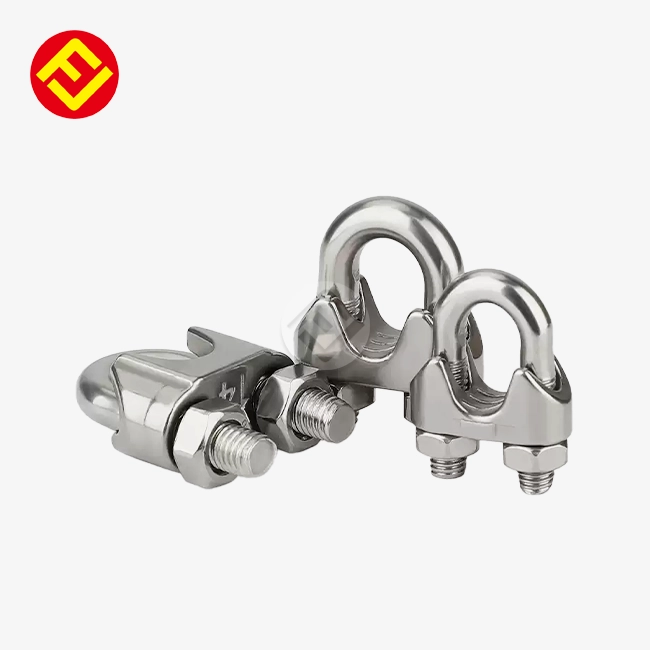
A Stainless Rope Clamp, also called a wire rope clip or cable clamp, has three main parts: a U-bolt that goes around the wire rope, a seat that holds the cable, and two nuts that tighten the whole thing. This seemingly simple device does a very important job: it clamps the dead end of a wire rope back against the live, load-bearing section, turning the free end of the rope into a safe loop or termination point.
The tech behind this tool is focused on making the grip work better and spreading the load out evenly. When torqued correctly, the saddle spreads the clamping pressure around the rope's diameter. This keeps the friction high enough to prevent sliding while also preventing localized crushing. The saddle groove's shape must exactly match the width of the cable. If it's too thin, the strands will get crushed, and if it's too deep, the rope will be able to move when it's loaded.
Material Grades and Their Impact on Performance
The choice of material has a big impact on how well these clamps hold up against damage from the surroundings. Two main types of stainless steel are used by FLA Industrial & Trading Co., Ltd. to make clamps: AISI 304 and AISI 316. The 304 grade has about 18% chromium and 8% nickel, which makes it very resistant to rust. It can be used outside for a wide range of things, from cable fences in businesses to guy wires on communication towers. The structural integrity of this austenitic alloy stays the same at temperatures ranging from -40°C to +200°C. This makes it suitable for continental climates and indoor industrial use.
The 316 grade adds 2% to 3% molybdenum to the metal, which makes it much more resistant to pitting and rust caused by salt. Not only is this an improvement, but 316 stainless steel can last five to ten years longer than 304 stainless steel in marine settings, on offshore platforms, and on coastal building sites. The molybdenum stops salt from getting in, which stops the rusting that happens below the surface and makes connection points weak even if they look fine on the outside.
Types and Specifications Across Industries
Clamps need to be set up in different ways for different businesses. For marine gear, most clamps need to be forged to DIN 741 or US Fed Spec FF-C-450 Type 1 standards. This means that the saddle and U-bolt are precisely formed instead of being cast. The metal grain structure is aligned along stress lines during this production process. This makes the tensile strength up to 20% higher than in cast forms.
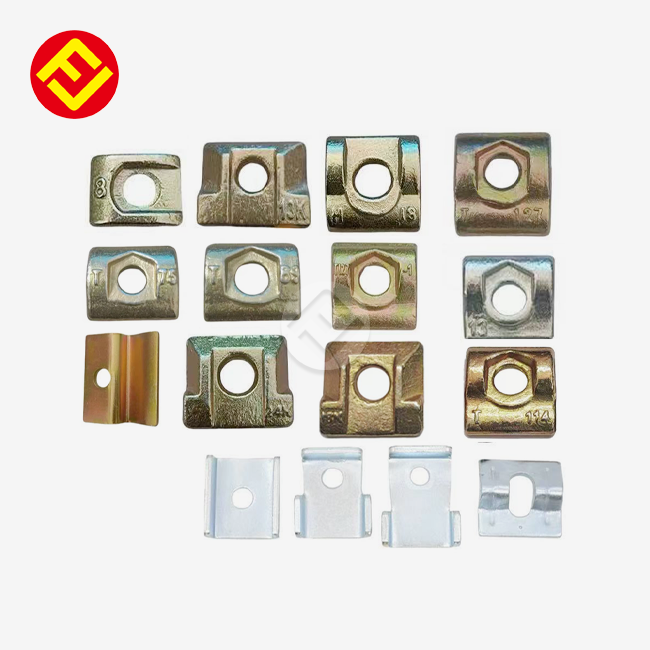
For lighter-duty wire fences and decorative installations where looks are important along with usefulness, construction and design uses often call for pressed or stamped clamps. Even though they are simpler, these designs are still strong enough to hold static loads and look better on modern building surfaces.
Specification charts give you the technical information you need to make the right choice. The diameter of the cable directly affects the size of the clamp that will work best and prevent damage. Clamps with saddle holes that are the right size for a 6mm wire rope are needed. Using an 8mm clamp on a 6mm rope will let it move around too much, and trying to force a 6mm cable into a 5mm clamp could damage the strands. In our catalog, FLA Industrial & Trading Co., Ltd. has detailed specification charts for each clamp size that show the suitable rope widths, working load limits, and suggested torque values.
How Stainless Rope Clamps Extend Cable System Life
Preventing Corrosion-Induced Failure
Most of the time, cable system degradation starts at the termination places, where water gets into the rope core through the ends of the uncovered strands. Traditional clamps made of zinc or carbon steel speed up this process through galvanic corrosion. This is when two different metals touch each other in a solution, like saltwater, and the less valuable metal corrodes more quickly. This electrochemical cell is made up of a galvanized clamp and stainless wire rope. Over time, the zinc covering will wear off, revealing the steel underneath.
By meeting or very close to matching the electrical potential of stainless wire rope, Stainless Rope Clamps get rid of galvanic action. The passive chromium oxide layer that forms naturally on stainless steel surfaces protects them all the time and fixes itself. If this microscopic layer is scratched or abraded, it returns within hours when exposed to oxygen. This keeps the clamp's corrosion resistance throughout its useful life. When tested with ASTM B117 salt spray, properly passivated 316 stainless clamps don't show any red rust after 1,000 hours of constant salt fog contact. This is a standard that galvanized hardware fails within 200 hours.
Maintaining Mechanical Integrity Under Load
Both dynamic and steady loading can be hard on wire terminations, but they do so in different ways. Dynamic loads, like those caused by a crane, a ship moving, or wind-driven vibrations, can cause cyclic stress that can eventually loosen connections that aren't properly secured. Static loads from fixed building installations cause wire rope to gradually shrink in diameter due to continued compression. This is known as "constructional stretch."
Precision-forged steel clamps are strong enough to handle both situations. The continuous bearing surface of the saddle doesn't bend when heavy loads are applied over a long period of time, which would cause softer materials to break down. The assembly's ability to hold torque during shaking is based on the quality of the U-bolt's threads. Coarse threads that meet DIN or ANSI standards are better at keeping torque than fine threads that tend to back off. When heat-treated correctly, stainless steel is very hard, so threads don't get stripped even when installers use suggested torque values of 40 to 50 foot-pounds for bigger clamp sizes.
Installation and Maintenance Protocols That Matter
When put wrong, even high-end hardware doesn't work. The "never saddle a dead horse" rule says that the saddle should always touch the live, load-bearing part of the rope while the U-bolt goes around the dead end. If you change this orientation, the grip becomes about 40% less effective, and the load-bearing strands get crushed. This creates stress concentrations that speed up fatigue failure.
For solid terminations, you always need more than one Stainless Rope Clamp. Based on tests of rope diameter, industry standards say that at least three clamps are needed for cables up to 6 mm in diameter, four clamps are needed for 8–19 mm in diameter, and five or more clamps are needed for larger ropes. The distance between clamps should be about six times the diameter of the rope. This way, the cable can make a smooth transition instead of a sharp bend that puts a lot of stress on one spot.
Retightening is an important maintenance step that is often forgotten but has a direct effect on how long a system lasts. When wire rope is first put together and loaded, it goes through a process called "constructional stretch." This is when the individual strands and wires settle into their load-bearing positions. This makes the rope 2 to 4 percent smaller overall, which makes the clamp assembly less tight. Retightening all nuts to the specified torque after 24 to 48 hours of load and again after the first week of use makes sure that the clamps keep working the way they were meant to. When compared to "install and forget" methods, facilities that follow inspection and retightening procedures every three months report 30 to 50 percent longer wire service life.

Comparing Stainless Rope Clamps to Alternative Solutions
Material Comparisons: Stainless Versus Galvanized and Aluminum
When buying something, people often compare the initial costs to the total costs over the product's life. Most of the time, galvanized rope clamps are 40–60% less expensive than stainless steel equivalents. This is especially helpful for large projects where money is tight. When you add in how often replacements are needed and how much they cost in labor, this estimate changes a lot. Galvanized clamps may need to be replaced every 18 to 36 months in coastal or industrial areas because the zinc coating wears off and the base steel corrodes. Stainless Rope Clamps from FLA Industrial & Trading Co., Ltd. usually last between 10 and 15 years in normal conditions, and many marine installations go longer than 20 years before they need to be replaced.
Aluminum clamps are used in specific situations where light weight is needed, like for temporary rigging or aircraft ground support equipment. Even though aluminum alloys don't rust, they can't hold as much weight because their tensile strength is only about 40% that of stainless steel. When torqued to the right level, the softer material also tends to thread gall more easily, which can mean special anti-seize Products" target="_blank" style="color:blue" >products are needed, which adds to the installation steps. In most building, industrial, and naval uses, aluminum's lower strength-to-weight ratio is more important than its lighter weight.
Structural Configurations and Their Applications
In addition to the choice of material, different clamp designs meet different operating needs. Standard U-bolt clamps work great for general-purpose terminations where fitting is easy, and there is room for a wrench to go around all sides of the connection. The simplex and duplex clamp types have built-in bolt designs that lower the profile height. This is useful for wire railings where hardware that sticks out can be a snag danger or is just plain ugly.
Stamping processes are used to make pressed clamps, which are of uniform quality for high-volume uses with lower load ratings. Their uniform thickness and automated production make sure that the sizes are always the same, which helps large distributors that serve the commercial construction market keep their inventory more consistent. Forged clamps are the best choice for critical applications where extra strength and dependability are worth the extra cost of production. Common examples of these are offshore oil platforms, suspension bridge cables, and industrial crane installations.
Clamps are often used with wire rope thimbles to keep the loop's round shape under load and protect the cable from wear. With this mix, you can make the strongest and longest-lasting ending way without using special hydraulic swaging tools. The clamps hold the unit in place, and the thimble stops the sharp bend radius that would happen at the connection point otherwise. They can terminate almost 90% of the rope's minimum breaking load when used together, compared to only 75% to 80% when clamps are used alone.
Procurement and Supply Chain Considerations for Stainless Rope Clamps
Evaluating Supplier Credentials and Quality Assurance
When buying something for a business, you have to do more than just compare unit prices on a worksheet. Supplier approval tells you if your cable systems will work as planned or turn into problems in the field. Having ISO 9001 certification means that a company has documented quality control methods that include checking the raw materials, inspecting the work in progress, and testing the finished product. Along with CE marking, FLA Industrial & Trading Co., Ltd. keeps this certification, which shows that they follow European safety rules that are often higher than domestic rules.
Material identification makes sure that the grade of stainless steel written on the clamp is the same grade that is in the alloy. Manufacturers with a good reputation use X-Ray Fluorescence (XRF) tests to make sure the amount of chromium, nickel, and molybdenum in their products meets AISI standards. This check makes sure that cheaper 201-grade stainless steel, which has manganese instead of nickel and rusts easily in saltwater, or 304 steel that is falsely marked as 316 is not used instead.
Load testing protocols tell the difference between hardware that has been tested for performance and products that just look the part. For slip-load testing, the assembled Stainless Rope Clamp is put on wire rope and tensile pull forces are applied to it. This makes sure that the clamp holds its rated capacity before the rope breaks. Dimensional tolerance inspection makes sure that the depth and radius of the saddle groove match the cable diameter within acceptable manufacturing tolerances. These quality control steps raise the cost of production but get rid of the fails in the field that hurt client relationships and put companies at risk of being sued.
Minimum Order Quantities and Pricing Structures
Large contractors and hardware sellers would do well to learn how minimum order quantity (MOQ) rules and volume prices affect the total cost of buying things. Standard catalog items from well-known companies like FLA Industrial usually ship with low minimum quantities—often as few as 50 to 100 pieces for common sizes. This lets distributors keep a wide range of SKUs in stock without having to spend a lot of money. Custom specs for non-standard rope diameters or special finishes usually need bigger minimums, around 500 to 1000 pieces, to make it worth the time and money to set up the tools and plan the production run.
Volume-tiered pricing rewards buyers who make bigger promises while still making the product available to buyers in the middle. Established sellers offer more than just lower unit prices. They also offer payment terms, consignment inventory programs, and technical help that make doing business with them more valuable. When a provider offers technical help to make sure you choose the right clamps for your cable system, you can avoid making costly specification mistakes that commodity-focused sellers miss in their haste to close deals.
Customization Options for Specialized Requirements
Catalog products that are already made work well for most uses, but some projects need changes. Different cable diameters, unique weather conditions, or interaction with custom rigging systems may need changes to the dimensions, different materials, or special surface treatments. Because FLA Industrial & Trading Co., Ltd. has been making things for 40 years, they have a lot of experience making unique, odd-shaped parts that other companies can't make cheaply.
The process of customization usually starts with engineering teams working together on a 3D design and going over technical models and application needs. Before committing to tooling and production, computer modeling makes sure that the suggested changes will work as planned. This upfront investment stops the costly changes that happen when buyers try to use standard goods in ways they were not meant to be used.
Custom configurations naturally have longer lead times than catalog items—usually 6–8 weeks for tooling and first production runs, compared to 1–2 weeks for standard stock items. Project delays can be avoided by planning purchases in a way that takes these deadlines into account. Even small investments in customization can have big operational benefits for many buyers, from faster and easier installation to better system performance that makes the extra lead time worth it.
Optimizing Cable System Performance Through Proper Use of Stainless Rope Clamps
Installation Best Practices That Prevent Premature Failure
The right way to install Stainless Rope Clamps influences whether they last as long as they're supposed to or break before their time. Applying torque needs a planned method instead of just tightening things up. When you use a calibrated torque wrench that is set to the manufacturer's specifications, the clamping pressure on all of the nuts in the assembly will be the same. Under-torquing makes it possible for the load to slip, while over-torquing crushes the wire rope strands, making weak spots that cause fatigue failure more quickly.
As important as the torque number is the order in which it is tightened. Installation starts with the "throat" clamp, which is the clamp closest to the terminated end. All the nuts in the assembly should be torqued to about half of the specified amount. Moving from one clamp to the next and doing this partial tightening process again and again keeps the load from building up on any one unit. The second pass raises the pressure to 75%, and the last pass makes sure that all of the screws meet all the requirements. This methodical approach spreads the load evenly across the end and keeps the rope from stretching.
It's important to keep threads oiled because stainless steel fasteners can gall, which is a type of cold welding where friction stops threads from tightening. Anti-seize compounds or dry-film lubricants made for stainless metal let you apply the right amount of pressure without worrying about problems with removal later on. This is a very important thing to think about for systems that need to be taken apart often for maintenance or review.
Inspection Schedules and Wear Indicators
Regular repair is a much more cost-effective way to extend the life of a wire system than replacing it when it breaks. The frequency of inspections should depend on how bad the environment is and how much work is being done. Marine systems and high-cycle dynamic uses need to be inspected every three months. Static architectural wires in safe places may only need to be looked at once a year.
Visual inspection shows clear issues like loose nuts, visible corrosion, ropes that aren't in the right place, or saddle geometry that isn't straight. A tactical inspection with a wrench to check torque retention finds loosening before it causes damaging slippage. The condition of the rope next to the clamps shows if the installation is working right or not. For example, flattened or bird-caged wire rope means that the clamps are too tight or the saddles are the wrong size, while rope movement relative to the clamp means that there isn't enough torque or clamp quantity.
Systematically writing down what was found during inspections is what makes predictive maintenance possible. By keeping track of torque readings, wear patterns that can be seen, and environmental conditions over a number of inspection cycles, you can see patterns of wear and tear that let you plan replacements before they fail. With this method, maintenance goes from being an emergency response to being a planned activity that causes the least amount of downtime for operations.
Emerging Innovations in Clamp Technology
Improvements in manufacturing keep making clamps work better and last longer. In addition to basic passivation, electropolishing is a new way to treat surfaces. It is an electrochemical process that gets rid of surface iron contamination and makes the finish very smooth. Compared to normal passivation, this improvement makes the metal up to 30% more resistant to corrosion and gives it a nice look that is good for building uses.
Tighter tolerances on dimensions are achieved with automated manufacturing that uses computer-controlled machining than with traditional casting or forging. The saddle slot radius is accurate to within 0.1 mm, which makes sure that the wire rope makes good contact with the bearing surface all the way around. This gets rid of stress spots that would speed up wear. Keeping the thread size and depth the same helps keep the force and lowers the risk of galling.
Advances in materials science look into new metals and coatings that improve efficiency. Duplex stainless steels have almost twice the yield strength of regular 316 stainless steel and are still very resistant to rust. They do this by mixing austenitic and ferritic crystal structures. These high-quality alloys make it possible to make clamps that are smaller and lighter while still holding the same amount of weight. This is useful for applications that need to be light, like supporting telecommunications towers or spacecraft on the ground.

Conclusion
How long a cable system lasts depends a lot on the quality of the termination hardware and how it is used. Premium-grade 304 or 316 alloy Stainless Rope Clamps offer superior corrosion resistance, mechanical strength, and long-term dependability, making them worth the small extra cost over cheaper alternatives. If you choose the right clamps for the cable thickness, attach them correctly, and follow the maintenance schedule, the service life of wire rope is usually doubled or tripled compared to hardware that isn't up to par or connections that aren't taken care of. These measurable performance gains directly lead to less downtime, higher safety margins, and lower total cost of ownership in industries like marine, building, and manufacturing where cable systems play a key role.
FAQ
How do I determine the correct clamp size for my cable diameter?
Make sure that the clamp's recommended cable diameter is the same size as your wire rope. Using a clamp that is too big lets the rope move and slip; using a clamp that is too small crushes the strands and creates failure points. Manufacturer specification charts show what lengths of rope work with each clamp type. If you want to find out what diameter your wire is, you should use calipers instead of nominal size labels because manufacturing tolerances and the way rope is made can cause differences.
What is the minimum number of clamps required per termination?
Minimum quantity is based on the diameter of the cable: three clamps for ropes up to 6 mm in diameter, four clamps for cables 8–19 mm in diameter, five clamps for cables 20–25 mm in diameter, and six or more for larger ropes. Clamps should be spaced about six rope diameters apart, with the first clamp one saddle width from the loop's throat. Never use fewer clamps than what is recommended; each one adds to the overall grip strength, and missing even one greatly increases the chance of slipping.
Can stainless rope clamps be reused after removal?
Even though the stainless steel is still usable, thread damage and saddle groove deformation often happen during the first use, especially if the right amount of torque was used. Most of the time, reusing something is not a good idea for important or dangerous tasks. If you have to reuse something because of a tight budget, make sure the saddle grooves are not flattening or distorting and carefully check the threads for galling or stripping. Also, use a little more torque to make up for the lower grip efficiency.
Partner with FLA Industrial & Trading Co., Ltd. for Reliable Wire Rope Solutions
Using high-quality hardware to secure your cable systems has a direct effect on the safety of the project, the cost of maintenance, and the continuity of operations. FLA Industrial & Trading Co., Ltd. has been making precision-engineered Stainless Rope Clamps out of approved 304 and 316 stainless steel for almost 40 years. From spectrochemical material proof to final load testing, our ISO 9001 and CE-certified production processes make sure that every clamp meets strict quality standards.
We know how hard it is to buy things because we are a trusted manufacturer of Stainless Rope Clamps that works with Fortune Global 500 companies in the marine, building, and industry sectors. Our wide range of products meets more than 1,000 specifications, and we offer low bulk prices, flexible minimum order quantities (MOQs), and customization choices for unique needs. Technical support throughout the entire project lifetime, from reviewing the original specifications to helping with installation, makes sure that the system works at its best.
Email our engineering team at sales@flaindustrial.com to talk about what you need for your cable system. We help you with detailed specifications, send you model kits to look over, and quickly respond with quotes that let you make confident buying choices.
References
1. Smith, J.R. (2019). Wire Rope Termination Methods and Efficiency Analysis. Industrial Rigging Press.
2. Marine Technology Society (2021). Corrosion Resistance Standards for Marine Hardware. Technical Report MTS-2021-04.
3. American Society of Mechanical Engineers (2020). Wire Rope User's Manual: Safety and Maintenance Protocols. ASME B30.26 Standard.
4. Thompson, L.K. & Wilson, D.P. (2018). Materials Selection for Corrosive Environments in Construction. Engineering Materials Journal, 45(3), 127-143.
5. International Association of Classification Societies (2022). Guidelines for Wire Rope and Rigging Hardware Inspection. IACS Recommendation No. 87.
6. Chen, M. & Rodriguez, A. (2020). Lifecycle Cost Analysis of Stainless Steel versus Galvanized Hardware in Marine Applications. Journal of Marine Engineering and Technology, 19(2), 89-104.