How Much Pressure Can a Grooved Coupling Clamp Handle?
2026-07-20 11:06:03


It is important to know the pressure limits when choosing pipe connectors for industrial systems. Working pressures for a Coupling Clamp Grooved can be anywhere from 175 PSI (1.2 MPa) to 500 PSI (3.45 MPa), but it depends on the pipe diameter, the material, and the design classification. Most flexible versions made for earthquake use can handle 300 PSI, while rigid versions made for high-pressure areas can handle more than 690 PSI (4.8 MPa) when paired with Schedule 40 pipes. The pressure level depends on the gasket material, the metallurgy of the case, and the accuracy of the grooves. These are all things that buying teams have to check with suppliers when they are qualifying them.


Specification |
||||
| Specification | Size (inch) | L(mm) | H(mm) | Diameter (mm) |
| 1 | 33 | 98 | 42 | 54 |
| 1 | 48 | 114 | 43 | 69 |
| 2 | 60 | 127 | 43 | 82 |
| 2 | 76 | 145 | 44 | 99 |
| 3 | 89 | 159 | 44 | 112 |
| 4 | 108 | 186 | 47 | 133 |
| 4 | 114 | 192 | 47 | 140 |
| 5 | 133 | 214 | 148 | 161 |
| 5 | 140 | 221 | 48 | 167 |
| 6 | 159 | 245 | 49.5 | 189 |
| 6 | 165 | 251 | 49.5 | 195 |
| 6 | 168 | 254 | 49.5 | 198 |
| 8 | 219 | 324 | 59 | 254 |
| 10 | 273-1.6 | 416 | 61 | 316 |
| 10 | 273-2.5 | 416 | 62 | 317 |
| 12 | 325-1.6 | 467 | 61 | 370 |
| 12 | 325-2.5 | 469 | 62 | 372 |
Understanding Grooved Coupling Clamps and Their Pressure Capabilities
Grooved pipe connectors are mechanical alternatives to soldered joints. They work by putting holes around the ends of pipes that are either machined or rolled out. The ASTM A536 Grade 65-45-12 ductile iron housing segments fit into these grooves and press down on an elastomeric gasket to make a sealed joint. When compared to traditional flanged connections, this technology gets rid of the need for hot work permits and cuts installation time by up to 60%.
Types and Pressure Ratings
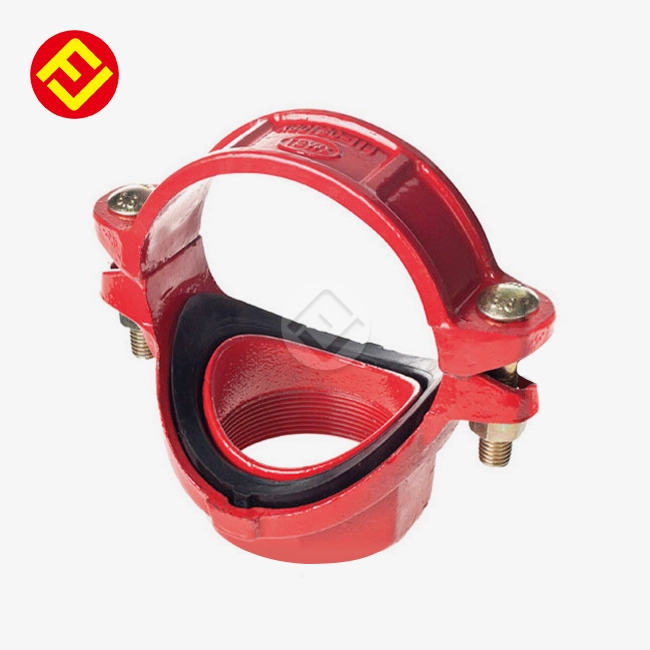
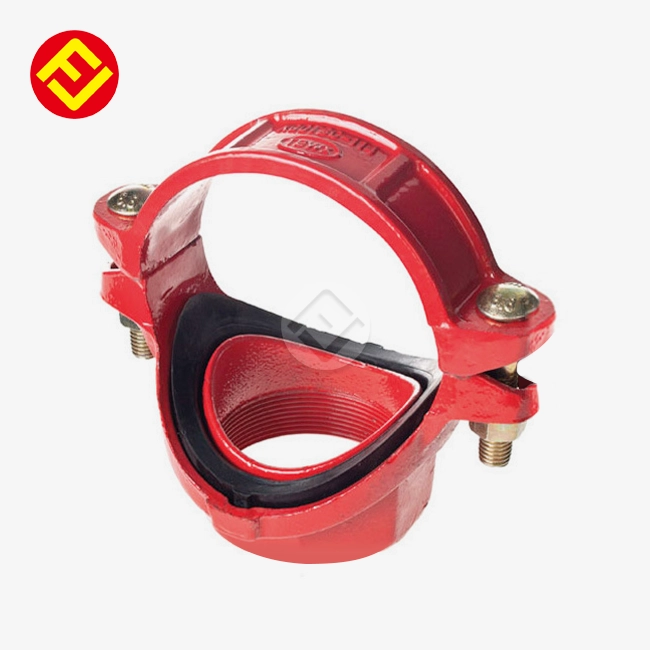
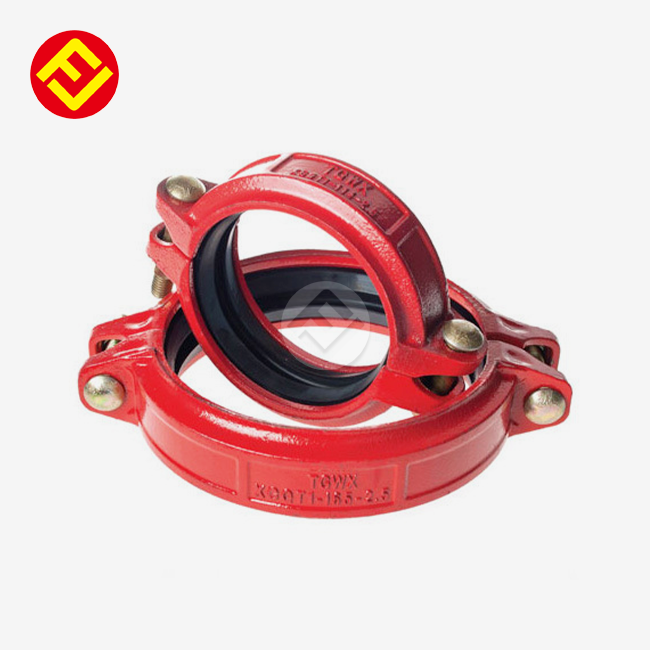
There are three main groups that the performance range falls into. Rigid Coupling Clamp Grooveds have tongue-and-groove housings that hold pipes in place and are good for static systems that need 400–500 PSI of pressure. These units transfer axial loads and stop longitudinal movement. This makes them perfect for high-rise building steps that go up and down. Flexible connections can bend up to 4 to 6 degrees and can handle thermal expansion. For widths less than 12 inches, they are usually rated between 250 and 375 PSI. This controlled movement is good for HVAC cold water loops and mine slurry lines because it keeps stress from building up at connection points. Heavy-duty versions with stronger housings can handle harsh service conditions, like chemical plants that deal with corrosive fluids or public water systems that experience surge pressures. They can keep working at above 450 PSI when installed according to AWWA C606 standards. The nominal sizes of the Products" target="_blank" style="color:blue" >products we sell at FLA Industrial & Trading Co., Ltd. range from 1" to 48". Standard setups can handle working pressures of up to 300 PSI. As the pressure inside the line rises, the pressure-responsive design triggers more closing force. This is made possible by the C-shaped gasket cross-section.
Material Selection Impact
Pressure resistance is directly controlled by the qualities of the metal. Ductile iron housings have a tensile strength of more than 65,000 PSI and a 12% stretch, so they don't break easily when hit by hydraulic shock. Carbon steel alternatives have a higher yield strength for small shapes, but they need strong defence against corrosion. Precision casting and CNC machining are both parts of our production process. This keeps keyway tolerances within ±0.5mm, which is important for proper groove contact. Surface treatments like hot-dip galvanising and epoxy finishing make things last longer in corrosive settings. Salt spray testing according to ASTM B117 confirms that they will last for 1,000 hours or more. Choosing the right gasket material is just as important. EPDM rubber is still the standard for applications involving potable water and steam up to 230°F. Nitrile (NBR) rubber types, on the other hand, are used for fluids that are made from petroleum. The shore hardness and compression set resistance of the gasket decide how well it seals over time, even when pressures change.
Key Factors Affecting the Pressure Handling of Grooved Coupling Clamps
System reliability includes more than just the ratings of its parts. It also includes the accuracy of its measurements, how it is installed, and how it is maintained. Procurement managers can reduce field mistakes by having a full understanding of these factors.
Dimensional Accuracy and Groove Specifications
According to the ANSI/AWWA C606 dimensional tables, the groove must be the right depth, width, and distance from the pipe end. Deviations greater than 1/32" make it harder for the housing to engage, which creates stress concentrations that speed up fatigue cracking. Roll-grooving keeps the pipe wall thickness, which is important for Schedule 10 thin-wall applications, while cut-grooving removes material, so thicker-walled pipe stock is needed. We check the groove dimensions with calibrated micrometres during incoming inspection and reject any material that doesn't meet standards before putting it together.
Installation Quality and Torque Management
To make sure the gasket is compressed without overstressing the housing castings, 'pad-to-pad' visual alignment (where the bolt pads touch) is used as a field reference. Torque wrenches calibrated to 60–80 ft-lbs for 2"–4" Coupling Clamp Grooveds stop under-tightening that causes weepage or over-tightening that cracks the housings. Installers must clean the pipe ends well, getting rid of mill scale, dirt, and lubricant residues, to keep the seal surface clean. Misalignment between the pipes should stay below.
Maintenance Protocols for Pressure Integrity
Periodic inspections based on the severity of the application keep the design pressure capacity. In critical systems like fire protection risers, visual checks for gasket extrusion, corrosion pitting on housings, and bolt elongation should happen every three months. Vibration monitoring finds fasteners that are becoming loose before they start to leak. When rotating slurry pipeline sections to redistribute wear, which is common in mining, gaskets need to be replaced to keep sealing effectively. Our gaskets are made from virgin EPDM compounds that are resistant to ozone degradation and compression set, keeping their elasticity for 20 years or more of service if they are properly maintained.

Grooved Coupling Clamp Pressure Comparison: Alternatives and Market Leaders
To make smart purchasing choices, you need to compare joining technologies and suppliers' abilities. Knowing how alternatives perform under pressure makes value offers clearer.
Technology Comparison
Welded joints can theoretically handle any amount of pressure, but they distort when heated and need expensive X-ray inspections. Hot work is often not allowed on the job site, which delays the project schedule. Flanged connections allow the parts to be taken apart, but they need precise bolt preload—ASME B16.5 Class 300 flanges need 80+ bolts for 24" diameters, which increases the cost of labour. Coupling Clamp Grooved systems are a good compromise between these two options because they can handle 85% of industrial applications' pressure ratings, can be taken apart without tools for maintenance access, and can be installed three times faster than threads. Mechanical Coupling Clamp Grooveds that use compression bands are also easy to install, but they don't stop vibrations as well as grooved elastomeric gaskets. For mining companies that work with gritty slurries, grooved technology is better because it can be rotated to change the wear patterns on pipes, which extends their service life without having to take the joints apart completely.
Brand Performance Benchmarks
Manufacturers with good reputations have built them up over decades of field performance data. Victaulic's Style 77 rigid Coupling Clamp Grooved can handle 750 PSI in smaller diameters with Schedule 40 pipe, and it has been approved by FM Global for use in fire safety systems. With a 300 PSI capacity and 4-degree flexibility, Tyco's AGS flexible connections meet seismic building codes. The higher prices of these high-end products are due to their extensive testing documentation and global technical support networks. FLA Industrial & Trading Co., Ltd. offers similar performance through UL/FM ratings and manufacturing that is ISO9001-certified. We've been in the production business for almost 40 years and work with Fortune Global 500 companies in the firefighting, HVAC, and city building sectors. Safety factors greater than 3:1 against maximum working pressure are proven by tough hydraulic burst tests. For example, a 300 PSI Coupling Clamp Grooved can handle 900+ PSI before breaking. Spectrographic research shows that the nodularity rates meet Grade 65-45-12 standards, which keeps the rock from breaking into brittle pieces during hydraulic transients.
Procurement Considerations: Buying Grooved Coupling Clamps Based on Pressure Requirements
To get the best total cost of ownership and supply chain reliability, strategic buying teams look at more than just catalogue pressure scores.
Evaluation Criteria for Pressure Applications
Match the Coupling Clamp Grooved pressure class to the design pressure of the system, making sure there are enough safety margins. For surge events to work, municipal water distribution networks that are designed for 150 PSI static pressure need Coupling Clamp Grooveds that can handle at least 300 PSI. Chemical processing plants that deal with exothermic reactions need to have their pressure ratings checked by a third party and written down in certified material test reports (CMTRs). Ask for pressure-temperature curves that show derating at higher temperatures. For example, a Coupling Clamp Grooved that is rated at 300 PSI at 70°F might drop to 240 PSI at 180°F, based on the gasket compound. Certification exams are a way to check the quality processes of suppliers. UL/FM lists show that a product meets fire safety standards, and ISO9001 registration shows that the process control is mature. Our reaction time of 24 to 48 hours for technical questions, such as 3D CAD models and weight reports, speeds up engineering reviews while bids are being evaluated.
Critical Supplier Questions
Before sending out a buy order, procurement managers should check a number of technical details:
• What is the hydraulic test pressure that proves the working pressure number is correct?
• Are seals made from new elastomers or materials that have already been used?
• Do all of the dimensions of the housings get checked, or is there a random sample?
• What is the smallest pipe wall plan that will work with the size of your groove?
• Could you give me pressure-drop calculations for certain flow rates?
Talking about custom gasket formulations for speciality fluids, accelerated production slots for emergency shutdowns, and vendor-managed inventory programs that lower on-site storage costs are all good things for people who buy in bulk. Our engineering team works together on non-standard size needs, like making big Coupling Clamp Grooveds to meet international pipe standards or small designs for retrofit projects that don't have a lot of room.
Installation Guide and Safety Tips for High-Pressure Grooved Coupling Clamps
When installed in the field correctly, the design pressure capacity is maximised while safety risks are kept to a minimum. Common failure modes can be avoided by following regular processes.
Step-by-Step Installation Procedure
First, use depth gauges to look at the grooves in the pipe. Depending on the diameter, standard groove depths range from 0.085" to 0.250". Clean the groove surfaces with wire brushes to get rid of rust and other things that can make it hard for the seal to sit properly. Apply approved compounds to gaskets (never petroleum-based products on EPDM) and place them over the pipe end so that the tabs of the gaskets are lined up. Slide Coupling Clamp Grooved housings onto pipes so that keys fit into grooves and the gasket stays in the middle. Tighten the bolts by hand in a star pattern, and then use calibrated wrenches to get the torque to the right level. Check that the pads touch each other and that the seal doesn't stick out past the edges of the case.
Pressure Testing and Safety Verification
Before the system is put into service, hydrostatic testing makes sure that the joints are solid. Slowly raise the pressure to 1.5 times the working pressure. Hold for 30 minutes, and then check all connections for leaks. Explosions can happen during pneumatic testing, so it should only be done in a controlled environment with the right obstacles. Keep an eye on the pressure gauges the whole time the system is starting up for any drops that don't make sense, which could mean there is a leak. Safety rules say to make sure the system is depressurised before removing the Coupling Clamp Grooved, to wear the right PPE when working with pressurised lines, and to follow lockout-tagout procedures during maintenance. Extreme temperatures can affect how well a gasket works. To keep elastomers flexible, don't install them below 20°F.
Troubleshooting Pressure-Related Issues
Weeping at the bolt heads is usually a sign of not enough force or uneven tightening. Retorque the bolts one at a time and make sure the groove depth meets the requirements. As a result of chemical incompatibilities or too much pressure, the gasket may have blown out. Look over the system pressure logs and the choice of seal material. Thread-locking solutions or lock screws are needed to stop loosening caused by vibration, especially in pump discharge situations. Re-torquing the bolts on a regular basis during the first month of use makes up for gasket cold flow and housing settlement.

Conclusion
Pressure capacity in Coupling Clamp Grooved pipe connections depends on a number of things that are all connected. These include the science of the material, the accuracy of the measurements, and the skill of the installer. For static systems, rigid Coupling Clamp Grooveds can handle 400 to 500 PSI, while flexible versions can handle 250 to 375 PSI of movement. When you put together ductile iron housings that meet ASTM A536 standards with EPDM gaskets that are properly squeezed, you get a seal that is reliable and has been proven by hydraulic burst testing. Purchasing teams have to look at the quality systems of suppliers, ask for thorough data on pressure and temperature, and make sure that the systems work with specific pipe plans. When you put something correctly, like managing the power and checking the gasket, the design pressure capacity stays the same for the whole service life. Strategic sourcing from certified manufacturers strikes a balance between performance needs and the total cost of ownership.
FAQ
What pressure rating should I specify for fire sprinkler systems?
To meet NFPA 13 standards, fire safety risers usually need Coupling Clamp Grooveds that are rated at least 300 PSI. Static pressures up to 175 PSI and short-term spike pressures from pump starts are all covered by this number. UL-listed flexible Coupling Clamp Grooveds can move with the ground during an earthquake while keeping the pressure intact during an emergency.
Can grooved couplings handle vacuum service?
When installed correctly, high-quality Coupling Clamp Grooveds can handle a full vacuum. The seal design keeps the Coupling Clamp Grooved from collapsing when the pressure is negative, but hard Coupling Clamp Grooveds work better in long-term vacuum situations than flexible ones. Check the supplier's paperwork to make sure the vacuum number is correct, especially for water return lines and process cooling systems.
How does temperature affect pressure capacity?
When temperatures rise, the shore hardness of the gasket decreases, which lowers the effective sealing pressure. Standard EPDM gaskets keep their full pressure rating up to 180°F. After that, they use derating curves to lower the pressure rating. For steam uses close to 230°F, you may need to lower the working pressure and use high-temperature gasket materials. For more information, look at pressure-temperature charts that are specific to your gasket material.
Do grooved couplings require periodic re-torquing?
After 24 to 48 hours of pressurised service, the initial fitting needs to be re-torqued to account for gasket cold flow. Every year, the strength of the bolts should be checked, especially in systems that are heated or cooled or that vibrate. Applications that experience big changes in temperature can benefit from checking the pressure every three months to keep the seals strong.
Partner with a Trusted Coupling Clamp Grooved Manufacturer
Choosing the right Coupling Clamp Grooved supplier can affect how long a project takes and how reliable the system is in the long run. FLA Industrial & Trading Co., Ltd. has been making things for almost 40 years and has a lot of experience with firefighting, HVAC, and industrial plumbing. Our ductile iron and carbon steel Coupling Clamp Grooveds come in diameters from 1" to 48" and can handle up to 300 PSI of pressure. They are certified by ISO9001, CE, and UL/FM. Before a package is sent out, we make sure it meets high-quality standards by hydraulic testing, spectrographic analysis, and checking the dimensions. Within 24 to 48 hours, technical support teams get back to you with engineering data, custom-sized solutions, and advice on how to use the product. Get in touch with our experts at sales@flaindustrial.com to talk about your pressure needs and get product suggestions that are perfect for your next project.
References
1. American Water Works Association. ANSI/AWWA C606-17: Grooved and Shouldered Joints. Denver: AWWA Publications, 2017.
2. ASTM International. ASTM A536-84 (2019): Standard Specification for Ductile Iron Castings. West Conshohocken: ASTM International, 2019.
3. Factory Mutual Research Corporation. Approval Standard Class Number 1920: Grooved Pipe Couplings and Fittings. Norwood: FM Global, 2018.
4. National Fire Protection Association. NFPA 13: Standard for the Installation of Sprinkler Systems. Quincy: NFPA Publications, 2022.
5. Underwriters Laboratories. UL 213: Standard for Rubber Gasketed Fittings for Fire-Protection Service. Northbrook: UL Standards, 2020.
6. Hydraulic Institute. Piping Systems for Centrifugal Pumps: Design and Installation Guidelines. Parsippany: Hydraulic Institute Publications, 2019.