How to Adjust Water 32mm Pressure Reducing Valve
2026-06-03 09:33:57


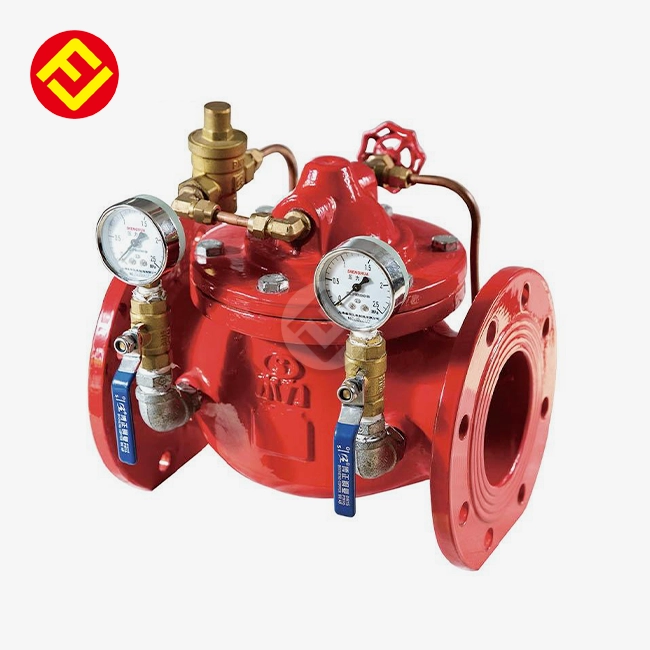
Finding the adjustment screw on top of the valve body, monitoring downstream pressure using a pressure gauge, and moving the screw clockwise to raise or anticlockwise to lower pressure are the steps involved in adjusting a 32mm pressure reducing valve. To keep the outlet weight consistent all through your framework, the valve consequently controls the gulf weight. This pivotal portion, which is as a rule made of brass, cast press, or stainless steel, guarantees steady stream rates whereas defending downstream gear in applications extending from civil water supply systems to fire avoidance frameworks.


Understanding the 32mm Pressure Reducing Valve
The link between sensitive downstream equipment and high-pressure supply lines is a pressure reducing valve with a 32mm connector. A spring-loaded diaphragm in the device's balanced seat design reacts to changes in output pressure by automatically adjusting the valve opening to maintain your predetermined pressure level.
Core Components and Operating Principles
The valve body has a number of essential components that cooperate. High-pressure inlet water is kept apart from the control mechanism by a diaphragm chamber. The spring pushes the diaphragm down, widening the valve seat, when the downstream pressure falls below your set point. On the other hand, the diaphragm lifts against spring tension when pressure increases, limiting flow. Your pipes, fittings, and related equipment are shielded from pressure spikes that could lead to early failure by this self-regulating behaviour.
Usually, a threaded spring seat that is accessible from the valve top serves as the adjustment mechanism. Installing pressure gauges for real-time monitoring is made possible by built-in gauge interfaces. The choice of material is crucial: stainless steel can withstand harsh fluids or hygienic needs, cast iron delivers heavy-duty strength for industrial settings, and brass offers exceptional corrosion resistance for typical water applications. Precision casting, CNC machining, and expert surface treatment are examples of manufacturing techniques that guarantee dimensional correctness within strict tolerances.
Common Applications Across Industries
In order to prevent excessive pressure at lower floors while keeping sufficient pressure at upper levels, high-rise structures rely on these valves within fire protection pipelines. They are used by municipal water systems to reduce transmission line pressure prior to distribution to residential areas. Stable pressure in heating and cooling loops helps HVAC systems use less energy and last longer. By incorporating them into process cooling lines, industrial facilities shield delicate machinery seals from blowouts brought on by pressure surges.
Residential and light commercial flow requirements are successfully bridged by the DN32 size specification. This dimension manages moderate flow volumes while retaining accurate pressure management, with pressure ratings usually falling between 0.1 and 1.6 MPa and flow coefficients optimised between 5.8 and 9.0 m³/h. This adaptability explains why procurement experts in the building, plumbing, and facility management industries choose this specific size for a variety of projects.
Step-by-Step Guide on How to Adjust Your 32mm Pressure Reducing Valve?
Making the right adjustments guarantees that your system performs at its best while staying within safe bounds. You should be aware of the connection between spring compression and outlet pressure before starting any adjustment process. Higher compression results in higher downstream pressure.
Preparation and Safety Measures
Safety is the most important thing. To release system pressure, turn off the main water supply and open the taps downstream. Before continuing, use a gauge to confirm that the pressure is zero. Collect the required equipment, such as Teflon tape, a flathead screwdriver, an adjustable wrench, and a pressure gauge with the proper fittings. Put on safety glasses to guard against unplanned water spills.
If there isn't one already, install a pressure gauge on the downstream gauge port. During adjustment, this real-time feedback is crucial. Take note of your present system pressure and use local plumbing codes and equipment specifications to establish your desired pressure. While commercial systems vary greatly based on particular requirements, the majority of residential applications aim for 40–60 PSI (about 0.28–0.41 MPa).
Adjustment Procedure
Restore the water supply gradually and give the system time to stabilise. Take off the protective cap from the valve top adjustment screw. Usually, the screw has a bolt head for wrench adjustment or a slot for screwdriver access. Pay close attention to the reading on your pressure gauge.
To raise downstream pressure, crank the adjustment screw in tiny clockwise increments, usually quarter turns. Higher output pressure is needed to overcome the spring's resistance as it compresses even more. To reduce pressure by releasing spring tension, turn anticlockwise. Before viewing the gauge, give the system 30 to 60 seconds to stabilise after each modification. Pressure might equalise throughout your network of pipes during this period.
Until you reach your desired pressure, keep making minor changes. Steer clear of sharp twists as they may result in pressure swings that put strain on pipes and connections. To help with future adjustments, record your final setting by counting turns from a reference point. To avoid contaminating the adjustment mechanism, replace the protective cap.
Verification and Troubleshooting
To test your adjustment, mimic peak demand by opening several fixtures at once. Within a reasonable range, pressure should be constant. Look for a water hammer, which is a banging sound that indicates pressure spikes and may indicate that the pressure reducing valve is broken or that the adjustment is too high.
The valve might need to be serviced if there are large variations in pressure during flow adjustments. Internal parts such as the seat or diaphragm may be worn. Leaking at the adjustment stem is a sign that the seal needs to be replaced due to deterioration. Even with proper adjustment, persistent problems frequently indicate that the valve is nearing the end of its useful life or that internal components have been compromised by debris.
Maintenance and Troubleshooting Tips for 32mm Pressure Reducing Valves
Valve life is extended by regular maintenance, and expensive system failures are avoided. Because of longer duty cycles and the possibility of contaminated water supplies, industrial installations need to be checked on more often than household ones.
Routine Inspection Schedule
Visual checks every three months find problems early. Check the body of the valve for rust, leaks, or chemical buildup. Compare the gauge readings to the starting point. If the pressure slowly rises, it means that the seat is wearing out or that garbage is building up. Listen for strange noises while it's running; hissing or whistling sounds like damage inside or the seat isn't properly seated.
Disassembly for cleaning on the inside is part of the annual thorough maintenance. Turn off the water and let the system drain all the way. Carefully take off the valve cover, making sure to keep track of which way each part faces. Check the diaphragm for cracks, stiffening, or deformation that won't go away. EPDM and NBR diaphragms can usually handle 200,000 rounds, but the quality of the water has a big effect on how long they last. If the diaphragm is broken, it needs to be replaced right away because if it fails, there is no more pressure control.
Mineral scale and other gunk can be removed from the valve seat with a soft brush and light soap. Do not use rough materials that can scratch sealed surfaces. Check the seat for scoring or pitting—even small damage can make it impossible to close properly. Some designs let you change just the seat, while others need the whole valve to be replaced when the wear gets too high.
Water Quality Considerations
Minerals build up faster on internal parts that are in hard water, which slowly limits the movement of the diaphragm and the range of adjustments. By adding a filter upstream, particles are caught before they reach the valve, which greatly increases the time between service visits. The built-in 0.25 mm stainless steel mesh filter that most good valves have is helpful, but pre-filtration is even better at protecting things.
Most of the time, chlorinated city water doesn't cause corrosion in brass or stainless steel parts. Well water that has a lot of iron in it or a pH that is too acidic can speed up corrosion, especially in metal valves. In these situations, the higher price of stainless steel types is worth it. Testing the water quality on a regular basis can help you figure out what repairs you need to do and what materials to use for new parts.
Common Problems and Solutions
When outlet pressure slowly rises when no water is flowing, this is called pressure creep. It usually means that the seat is worn and doesn't seal fully. This problem can be fixed by replacing the seat or the whole valve. On the other hand, if the pressure doesn't go up even after being adjusted, it means that either the spring is broken or the adjustment mechanism is badly scaled and needs to be completely rebuilt.
When the valve body leaks, it's usually because the bonnet bolts are loose or the seals are worn out. Most leaks can be stopped by tightening fasteners to the manufacturer's specs. Leaks that won't go away mean that the housing is broken and the valve needs to be replaced. External rust that weakens the body poses a safety risk; replace these valves right away instead of trying to fix them.
Several things can lead to noisy running. Turbulence is caused by a fast inlet velocity. Putting the valve in a bigger piece of pipe lowers both velocity and noise. Over time, cavitation caused by too much pressure drop damages internal parts. This can be avoided by choosing a valve with the right flow capacity.
Comparison and Selection Criteria for 32mm Pressure Reducing Valves
Choosing the right valve involves balancing technical requirements, budget constraints, and long-term reliability expectations. Understanding how different specifications affect performance helps procurement professionals make informed decisions.
Size Considerations
The 32mm designation refers to nominal pipe size, corresponding to approximately 1.25-inch connections in imperial measurements. This size suits applications requiring moderate flow capacity—typically 15-40 liters per minute depending on pressure differential. Comparing adjacent sizes clarifies appropriate selection. A 25mm valve handles lower flow suitable for small commercial or large residential applications, while 40mm units accommodate higher demands in industrial settings.
Oversizing causes poor control at low flows as the valve operates near its minimum stable range. Undersizing creates excessive pressure drop and velocity, reducing efficiency and potentially causing erosion. Calculate your maximum flow requirement considering all fixtures operating simultaneously, then select the valve size matching that flow at acceptable pressure drop—typically not exceeding 0.1 MPa.
Material Selection Impact
Brass dominates standard installations due to favorable cost-performance characteristics. Dezincification-resistant brass formulations prevent selective corrosion in aggressive water conditions. The nickel-plated surface finish enhances corrosion protection while providing an attractive appearance suitable for exposed installations.
Cast iron suits heavy-duty applications where physical abuse might damage softer materials. Industrial environments with overhead crane operations or material handling equipment near piping benefit from cast iron's impact resistance. The painted finish protects against atmospheric corrosion while color coding aids system identification.
Stainless steel 316 represents the premium choice for chemical compatibility, hygienic requirements, or extreme corrosion resistance. Pharmaceutical, food processing, and coastal installations justify the investment. The material's longevity often yields lower total cost of ownership despite higher initial expense.
Manual versus Automatic Operation
Basic manual adjustment pressure reducing valves require human intervention to change pressure settings, suitable for stable applications where conditions rarely change. The simple design enhances reliability and reduces cost. Adjustment takes minutes once you understand the procedure, making this type ideal for construction sites and permanent installations with predictable demands.
Automatic pilot-operated designs maintain pressure despite wide inlet pressure variations without manual intervention. Complex systems with multiple pressure zones or applications where inlet pressure fluctuates significantly benefit from automatic operation. The additional cost buys convenience and tighter pressure control, crucial for sensitive equipment protection.
Certification and Supplier Reputation
International certifications validate product quality and safety compliance. ISO9001 confirms the manufacturer implements robust quality management systems. CE marking indicates conformity with European safety directives, essential for projects in EU markets. UL listing verifies compliance with North American safety standards, while FM approval specifically addresses fire protection applications.
Established manufacturers with decades of experience typically provide superior technical support, comprehensive documentation, and reliable warranty service. Companies like FLA Industrial & Trading Co., Ltd. combine manufacturing expertise with responsive customer service, addressing technical questions within 24-48 hours. This support proves invaluable during specification, installation, and troubleshooting phases.
Procurement Guidance for 32mm Pressure Reducing Valves
Strategic sourcing decisions affect project timelines, budgets, and long-term operational costs. Understanding market dynamics helps buyers negotiate favorable terms while ensuring quality.
Sourcing Channels
Online B2B platforms offer broad selection and competitive pricing through supplier comparison. These marketplaces work well for standard specifications and small quantities. Evaluate supplier credentials carefully—verify certifications, review customer feedback, and confirm return policies before ordering.
Direct engagement with manufacturers provides advantages for larger projects. Customization becomes feasible when dealing directly with production facilities. Companies operating their own foundries and machine shops can modify designs to match unique requirements, producing special-shaped parts within 7-15 days. Volume discounts improve significantly when eliminating distributor margins.
Local distributors offer immediate availability and personalized service beneficial for urgent replacements or small contractors lacking storage capacity. The convenience premium often justifies slightly higher unit costs when downtime expenses exceed product cost differences.
Volume Purchasing Benefits
Bulk orders reduce unit costs through manufacturing economies of scale. Suppliers schedule production runs more efficiently when handling larger quantities, passing savings to customers. Transportation costs per unit decrease substantially when shipping full containers rather than small parcels.
Lead time considerations grow more complex with volume. Stock items ship immediately in modest quantities, while large custom orders require production scheduling that might extend timelines to several weeks. Planning procurement around project schedules prevents costly delays. Maintaining strategic inventory of common sizes provides flexibility for unexpected needs without excessive capital tied up in stock.
Price Determinants
Material composition significantly affects pricing. Brass valves cost substantially more than cast iron due to raw material expenses, while stainless steel commands premium pricing reflecting superior corrosion resistance. Manufacturing complexity also influences cost—valves requiring extensive machining or sophisticated surface treatments naturally carry higher prices than simple castings.
Brand reputation affects pricing beyond tangible quality differences. Established manufacturers charge premiums based on perceived reliability and comprehensive support services. Lesser-known suppliers may offer attractive pricing on functionally equivalent Products" target="_blank" style="color:blue" >products. Balancing cost savings against risk requires evaluating the supplier's track record, manufacturing capabilities, and quality control processes.
Certification compliance adds cost but provides essential assurance of safety and performance. Valves meeting UL, FM, or CE requirements undergo rigorous testing and documentation, justifying price premiums in applications where liability concerns or code compliance matters. Budget projects sometimes accept non-certified components, though this decision carries risks worth careful consideration.
Custom Requirements
Standard catalog items meet most needs, but unique projects sometimes demand modifications. Custom pressure ranges, special connection types, exotic materials, or integrated accessories require engineering collaboration between buyer and manufacturer. Suppliers with in-house design capabilities and flexible manufacturing systems accommodate such requests most effectively.
Submit detailed specifications including operating pressures, flow requirements, connection standards, and environmental conditions. Three-dimensional CAD models facilitate accurate communication of mechanical requirements, reducing errors and accelerating approval cycles. Prototyping services allow functional testing before committing to production quantities, especially valuable for critical applications where failure consequences are severe.
Conclusion
Proper adjustment and maintenance of your 32mm pressure reducing valve ensures reliable pressure control protecting valuable equipment and extending system life. Understanding the valve's operating principles, following systematic adjustment procedures, and implementing regular maintenance schedules prevent most problems before they cause failures. Material selection, size specification, and supplier evaluation critically impact long-term satisfaction and total cost of ownership. Whether sourcing for fire protection systems, municipal infrastructure, or industrial processes, matching valve characteristics to application demands while partnering with reputable suppliers delivers optimal results for your projects.
FAQs
How often should I adjust my pressure reducing valve?
Adjustment frequency depends on application stability and upstream pressure consistency. Most installations require no adjustment after initial setup unless system demands change or upstream pressure varies significantly. Annual verification during routine maintenance confirms proper operation. Municipal supply pressure changes seasonally in some areas, necessitating adjustment twice yearly. Industrial systems with variable operating conditions may require quarterly checks. Always adjust immediately if pressure gauges show readings outside acceptable ranges or if equipment exhibits symptoms of pressure problems.
Can I install and adjust the valve myself?
Licensed professionals should handle installation in commercial buildings and regulated applications. Residential installations often permit homeowner work under local codes, though DIY attempts risk improper adjustment causing equipment damage or code violations. The adjustment process itself proves straightforward for mechanically inclined individuals with proper tools and patience. If you lack confidence or experience, hiring a qualified plumber ensures correct installation and adjustment while providing warranty protection for the work performed.
When should I replace rather than adjust?
Replace valves showing physical damage like cracks, severe corrosion, or persistent leaks despite maintenance. Internal component failure indicated by inability to adjust pressure, significant pressure fluctuations during flow changes, or noisy operation typically means replacement makes more economic sense than repair. Age matters too—valves exceeding their expected service life deserve replacement even if currently functional, preventing unexpected failures during critical operations. Upgrading to certified models during replacement improves safety compliance and may reduce insurance costs.
Source Quality 32mm Pressure Reducing Valves from FLA Industrial
Managing water pressure effectively requires reliable components engineered for demanding applications. FLA Industrial & Trading Co., Ltd. brings nearly 40 years of manufacturing excellence to every valve we produce, serving as a trusted 32mm pressure reducing valve supplier to Fortune Global 500 companies and contractors worldwide. Our extensive range includes brass, cast iron, and stainless steel constructions certified to ISO9001, CE, UL, and FM standards. With over 2,000 tons of standard products in stock and rapid custom manufacturing capabilities delivering specialized designs within 7-15 days, we meet urgent project timelines without compromising quality. Our engineering team provides comprehensive technical support from initial specification through installation troubleshooting. Contact sales@flaindustrial.com today for detailed specifications, competitive quotations, and expert guidance tailored to your specific pressure control requirements.
References
Anderson, J.M. (2019). Pressure Control Systems in Building Services Engineering. Technical Press International.
Chen, L. & Morrison, P.K. (2021). Valve Technology and Performance Standards for Commercial Plumbing. Industrial Equipment Publishers.
International Association of Plumbing and Mechanical Officials (2022). Uniform Plumbing Code: Pressure Regulation Requirements. IAPMO Publications.
Reynolds, D.T. (2020). Fluid Mechanics for Mechanical Systems: Valve Selection and Application. Engineering Education Press.
Smith, R.W. & Thompson, K.A. (2018). Fire Protection System Components: Installation and Maintenance Guide. National Fire Safety Foundation.
Williams, H.J. (2023). Industrial Water Systems: Design, Operation, and Maintenance Best Practices. Process Industries Technical Manual Series.