Installing Elbow Groove Fittings for Compact Piping Solutions
2026-06-29 15:41:35


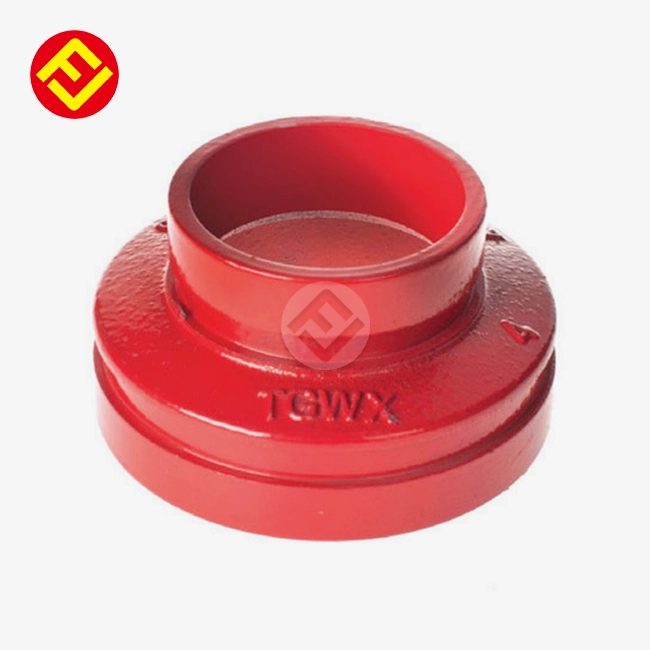
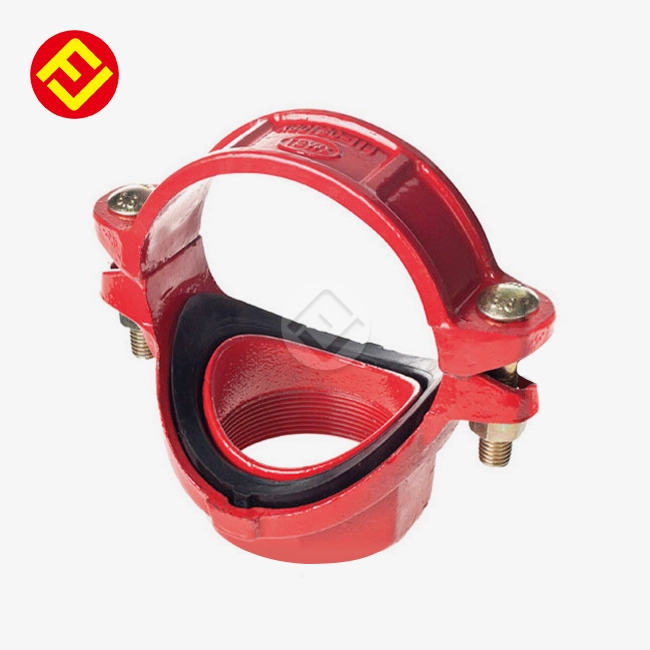
Installing grooved elbow joints in small pipe systems is a game-changing method for building engineers and mechanical workers. With their precisely machined holes on both ends, these specialised pipe fittings make it possible to quickly change directions without welding or threading. The elbow groove design works with curves of 90° and 45° in water distribution systems, fire protection networks, and HVAC setups. Grooved mechanical piping systems get around important project problems like high labour costs, tight schedules, and limited work spaces by getting rid of the need for hot work and cutting installation time by up to 60% compared to traditional methods. They do this while maintaining structural integrity and leak-free performance.

Specification |
|||
| Nominal Diameter (mm) | Steel Pipe Outer Diameter (mm) | Nominal Pressure (MPa) | Unit |
| 50 | 60 | 2.5 | Piece |
| 65 | 76 | 2.5 | Piece |
| 80 | 89 | 2.5 | Piece |
| 100 | 114 | 2.5 | Piece |
| 125 | 140 | 2.5 | Piece |
| 150 | 165 | 2.5 | Piece |
| 200 | 219 | 2.5 | Piece |
Understanding Elbow Groove Fittings: Design, Types, and Applications
Grooved mechanical plumbing is a big step forward in the way we connect pipe systems. The basic idea is based on a groove that is machined around the ends of the fittings. This groove fits with mechanical couplings and elastomeric seals to make parts that are pressure-tight.
Core Design Principles
Grooved joints are very different in shape from threaded or flanged ones. Each coupling has a precisely machined groove with standard measurements for groove width (A dimension), groove depth (C dimension), and distance to groove (B dimension). These dimensions must match the coupling specs. This level of accuracy in measurements makes sure that the coupler housing keys fit correctly, which stops axial movement but allows controlled rotational deflection. The base material is ductile iron casts that meet ASTM A536 Grade 65-45-12 standards. These castings have a tensile strength of over 65,000 psi and an impact protection that regular grey iron can't match.
Common Fitting Variations
The market is mostly made up of two main types. The middle radius of a long radius elbow is 1.5 times the standard pipe diameter. This makes flow changes smoother and reduces friction loss. Short radius versions work well in places where longer sweep angles aren't possible because of room issues, but they cause bigger drops in pressure. Both designs come in 90° and 45° angles, and can be protected on the outside with hot-dip galvanisation or red epoxy powder finish that meets ASTM A153 standards. Options made of carbon steel work with normal connection systems and are good for lower-pressure situations.
Differentiation from Welded Joints
Grooved joints are easy to install with basic hand tools, while butt-weld elbows need qualified welders and a heat treatment after the weld. Weld flaws like porosity, undercut, or partial fusion are gone with the mechanical joint. Inspection is done visually instead of using x-rays, which cuts quality assurance costs by a large amount. The design of the coupler also makes every part a natural union. This makes it easier to make changes or replace equipment in the future without having to cut and reweld.
Application Environments
Grooved technology is used a lot in fire protection systems because it is reliable and meets UL and FM approval standards. Elastomeric seals help commercial water supply networks by reducing vibrations. This keeps high-rise buildings that are subject to heat cycles from getting fatigue cracks. The quick-connect feature helps HVAC systems stick to tight building schedules, and industrial wastewater treatment plants like how easy it is to take apart for maintenance. Different environments need different levels of pressure, resistance to rust, and ability to handle seismic movement. Grooved systems meet all of these needs.
How to Install Elbow Groove Fittings: Step-by-Step Process and Best Practices
Long-term system success depends on how well the system was installed. Even though elbow groove connections are faster, leaks and coupling failure can be avoided by paying close attention to the details during assembly.
Pre-Installation Verification
First, use Go/No-Go scales or vernier callipers to check the groove sizes. Check that the groove's width is within the allowed range (usually 0.015 inches) and that the bottom of the groove doesn't have any casting flaws. Make sure the coating is still in good shape, especially around the grooves where the connection keys will touch the fitting. Any damage to the covering here can cause rust to start under the coupling. Check the pressure values on both the fitting and the coupling to make sure they work with the design specs of the system.
Gasket Selection and Placement
Choose rubber seals based on the temperature range and the fluids that they can handle. EPDM works well with water up to 230°F, while nitrile is better for oil-based liquids. For use with high-temperature steam, special PTFE or graphite alloys are needed. Place the gasket evenly around the groove and make sure it fits completely in the bottom of the slot without bending or crossing over at the ends. When gaskets aren't lined up right, they create leak paths that will only be found by hydraulic tests after a lot of work has been done.
Coupling Installation Technique
Slide coupling housings over the ends of the pipes so that the seal lips can easily fold back as the pipes go in. To make sure there is even tension, line up the bolt pads so they are not parallel to the pipe axis. Put the bolts and nuts in place and use a suitable anti-seize powder to grease the threads. Using calibrated torque tools, tighten nuts in a star design. Depending on the size, normal couplings need 45 to 75 ft-lbs. Too much torque can cause seals to break and housing shape to change, while too little torque can cause blow-off when pressure rises.
Common Installation Challenges
When pipe parts aren't lined up correctly, the gaskets don't contract evenly, which can lead to leaks. Before making the final link, hold both sides up with pipe stands or hangers. If you break a groove by treating it incorrectly, you will need to either replace the groove or use special repair covers. When installing gaskets in cold weather, they need to be flexible. To avoid fitting problems, warm the gaskets to room temperature before installing them. Write down where each joint is and how much force it needs to help with warranty claims and planning future upkeep.
Choosing the Right Elbow Groove Fittings for Your Project: A Rational Procurement Guide
It's important for strategic procurement choices to take into account technical needs, the skills of the supplier, and the total cost of ownership. Because there are so many materials, pressure classes, and finishing choices, they need to be evaluated in a planned way for your elbow groove project.
Material Selection Criteria
For most industrial uses, ductile iron is a cost-effective material with a great strength-to-weight ratio. Fittings made of carbon steel work well with systems that have higher pressures or where assembly is easier from higher up. Although the material costs a lot more, stainless steel types can be used in places that are corrosive, like chemical processing or sites near the coast. Each type of material needs coupling housings and seals that are compatible with that material. Mixing materials that are not compatible speeds up galvanic rusting at connection points.
Certification and Compliance Requirements
For fire safety reasons, the whole system has to have UL Listed and FM Approved parts. AWWA C606 guidelines for groove sizes and NSF-61 approval for potable water contact are often needed by municipal water systems. For international projects, manufacturing methods that are CE marked or ISO 9001 approved may be needed. Make sure that the supplier's paperwork has material test results (MTRs) that prove the chemical make-up and mechanical qualities, especially the percentages of nodularity in ductile iron castings.
Supplier Evaluation Framework
Product accuracy is directly affected by how well a product can be made. Traders who buy from various foundries are less able to control the quality of the castings than suppliers who have their own foundries. Instead of just saying "pass" or "fail," look for measurement inspection records that show statistical process control. Using dry film thickness gauges to measure coating thickness should show that samples from different batches are all the same. Companies that keep a lot of stock, like FLA Industrial, which has 2,000 tonnes of stock, lower the risk of wait times for standard sizes while still being able to make special parts for non-standard needs.
Procurement Volume Considerations
Large builders benefit from working with sellers who can handle large orders without having to meet a minimum order quantity. Distributors and wholesalers need a wide range of SKUs to effectively serve their customers. Delivery plans that work with building goals should be taken into account during project-specific sourcing. Suppliers that offer 7–15 day turnaround on custom setups can avoid costly schedule delays. Getting rough prices, unit weights, and 3D CAD models in 24 to 48 hours speeds up the budget approval and engineering review processes.
Compact Piping Solutions: Maximizing Space and Efficiency with Grooved Fittings
In modern building, where mechanical rooms are getting smaller and infrastructure density is rising, space optimisation is becoming more and more important. Grooved systems get around these problems by having benefits in the way they are designed.
Modular Flexibility Benefits
Being able to move parts separately before installing the final coupling lets you make changes in the field that you can't do with rigidly welded systems. Pipe manufacturing shops can put together complicated manifold arrangements with many branch connections ahead of time, ship them as units, and with little work, the final connections can be made on-site. This modularity makes busy building zones less crowded and cuts down on activities that are on the critical path. Retrofit projects are especially helpful when adding new branches to existing systems only requires cutting a piece, putting an elbow groove fitting, putting a grooved tee, and joining with couplings. This can all be done during short periods of system shutdown.
Seismic and Thermal Movement Accommodation
The mechanical joint naturally allows a small amount of linear expansion and rotational movement without putting stress on the pipes next to it. In places where earthquakes are common, this controlled movement keeps joints from breaking during earthquakes. When chilled water or hot water systems cycle temperatures every day, pipes expand. Rigid parts need to be able to handle this expansion through flexible connections or expansion loops. Grooved connections spread this movement across more than one joint, which cuts down on the need for specialised expansion devices and makes pipe routing easier in tight areas.
Case Study: High-Rise Fire Protection Retrofit
To meet new building rules, a 40-story business tower in Chicago had to get new fire sprinkler systems. The narrow riser leads in the old building meant that flanged connections could not be used without moving the electrical pipe and structural supports. Engineers asked for grooved fittings to be used on all of the vertical shafts and distribution lines. It saved a lot of money by not having to evacuate the building during the night shifts when the links were being made in areas that were still occupied. The project was finished three weeks earlier than planned for the welding system, showing real-world gains in speed that can be measured.
Maintenance, Inspection, and Longevity of Grooved Pipe Fittings
Systematic repair plans and proactive inspection procedures are key to long-term dependability. When it comes to maintenance, grooved methods are better than permanently joined ones.
Non-Destructive Testing Methods
Visual inspection is still the most important tool for upkeep. Every year, inspections should check the state of the outside coating and look for rust around the coupling housings, where water builds up. Using calibrated tools to check the torque of the coupling bolts makes sure that the links haven't come loose from shaking or temperature changes. Ultrasonic thickness testing on uncovered pipe sections measures how fast rusting happens in harsh settings. However, the fittings themselves don't rust because they are made with smooth casting surfaces and protective coatings.
Gasket Lifecycle Management
Elastomeric gaskets have limited useful lives that are based on how they are exposed to temperature, the chemistry of the fluid, and changes in system pressure. EPDM gaskets that are used with regular water usually last 25 years or more. However, gaskets that are used in systems with high temperatures or chemicals may need to be replaced every 10 to 15 years. Because grooved joints are easy to take apart, gaskets can be checked and replaced without having to rethink the whole system. When you replace gaskets, look at the groove surfaces to see if they have any pits or layer wear that could make the new cover less effective.
Preventive Maintenance Scheduling
Make review plans based on how important the system is and how it is being used. Fire prevention systems that are inspected by the government usually get checked every year, even if there are practical signs of problems. Pipes used in industrial processes that work at high temperatures or with harmful fluids should be inspected every three months during planned repair breaks. Keep track of all the results of all the inspections, torque readings, and part repairs so that you can figure out how much to spend on maintenance and what parts to buy in the future.
Conclusion
When it comes to installation speed, ease of upkeep, and being able to fit into tight areas, grooved mechanical pipe systems really shine, including elbow groove configurations. The precisely designed groove geometry makes pressure-tight links that can be used by people who don't know how to weld or have hot work permits. Different pressure levels and corrosion conditions can be handled by materials like ductile iron, carbon steel, and stainless steel. Standardised connection systems make sure that parts can work together. For execution to go well, the groove dimensions must be checked, the right gasket must be chosen, and the right amount of pressure must be applied during assembly. Buying strategically from sellers who keep a lot of stock and can make things to order lowers the risks in the supply chain and meets both standard and unique project needs.
FAQ
What differentiates long radius from short radius grooved elbows?
Long radius elbow grooves have a centerline bend radius that is 1.5 times the standard diameter. This makes changes in direction more gentle while reducing friction loss. Short radius fittings have shorter turns for setups with limited room, but they also make the flow rougher and cause the pressure to drop. The choice relies on the mounting room that is available and the trade-offs that are reasonable for hydraulic performance.
Can grooved fittings handle steam applications?
Standard EPDM seals can only handle temperatures up to about 230°F, so they can't be used with steam. Specialised high-temperature gaskets made of PTFE or graphite composites allow working ranges to go up to 400°F+, but the connection housings must also be able to handle high temperatures. Before defining grooved links in steam systems, make sure the whole system works with them.
How do I verify groove dimensions meet specifications?
Use Go/No-Go ring gauges that are matched to the specs given by the connection maker. Check the groove width (A dimension) and the distance to the groove (B dimension). It is possible to measure the depth of a groove with vernier callipers. Deviations greater than ±0.015 inches usually make it hard to place the coupling or increase the risk of a leak, which requires rejecting the fitting.
Are grooved fittings from different manufacturers interchangeable?
Cross-manufacturer compatibility usually exists as long as parts meet AWWA C606 measurement standards. But mixing brands is often not allowed in important uses, like fire safety systems that need UL/FM approval, to keep the certification current. Before buying, check with the coupling makers to see if their Products" target="_blank" style="color:blue" >products are compatible with certain fitting names.
Partner with a Trusted Elbow Groove Manufacturer for Your Next Project
Working with an expert elbow groove provider is very important when your piping system needs to be reliable, fast, and adaptable. FLA Industrial & Trading Co., Ltd. has been making pipe fittings for almost 40 years and has over 1,000 product specs. Their products are certified by ISO 9001, UL, FM, and CE. Our advanced casting and cutting methods make sure that every fitting is the right size, and our 2,000-ton collection means that standard sizes can be shipped right away. Custom designs are shipped between 7 and 15 days, and expert teams are available 24 hours a day to provide 3D CAD models and engineering support. Get in touch with our experts at sales@flaindustrial.com to talk about your project needs and get full specifications that fit your system design guidelines.
References
American Water Works Association. (2016). AWWA C606: Grooved and Shouldered Joints. Denver: AWWA Press.
ASTM International. (2019). ASTM A536: Standard Specification for Ductile Iron Castings. West Conshohocken: ASTM Standards.
National Fire Protection Association. (2020). NFPA 13: Standard for the Installation of Sprinkler Systems. Quincy: NFPA Publications.
Victaulic Company. (2018). Grooved Mechanical Piping Systems: Design and Installation Manual. Easton: Victaulic Technical Services.
Zhang, H., & Peterson, R. (2021). Seismic Performance of Grooved Piping Connections in High-Rise Buildings. Journal of Structural Engineering, 147(4), 04021012.
Müller, K., & Schmidt, J. (2017). Comparative Analysis of Pipe Joining Methods in Industrial Applications. International Journal of Pressure Vessels and Piping, 156, 23-35.