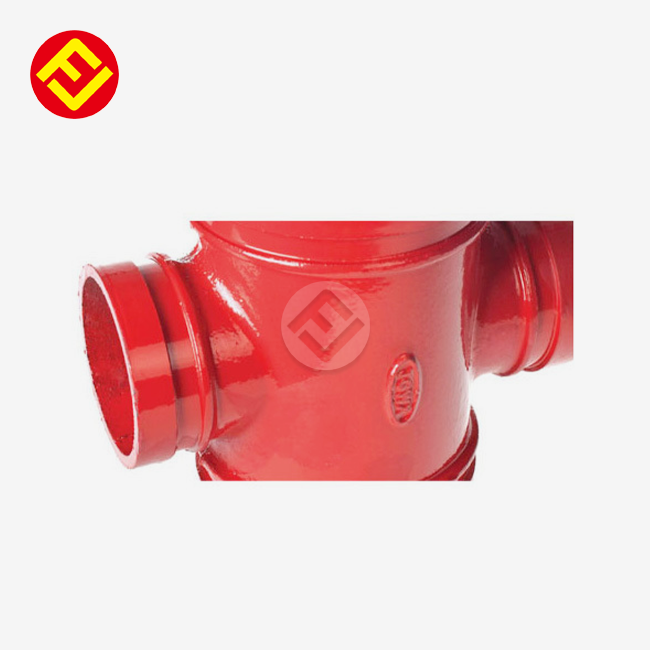
Professional Grooved Equal Tee Manufacturer and Exporter
2026-07-17 11:36:40


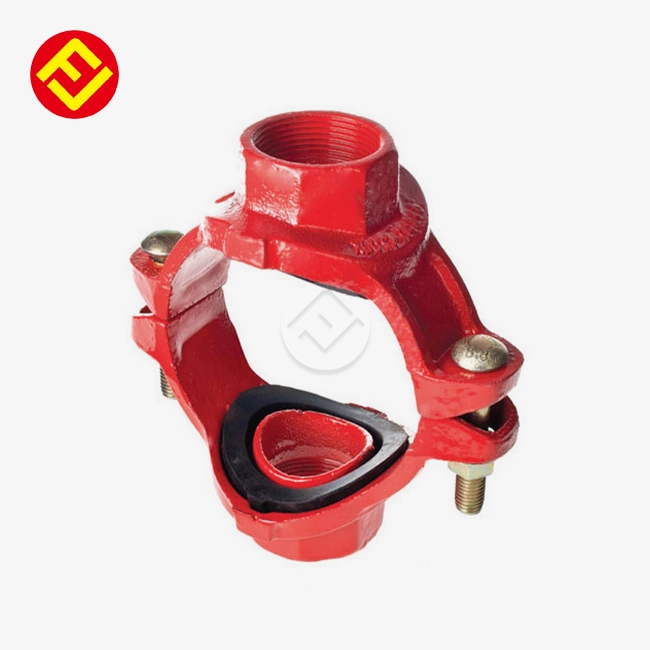
Choosing the right Grooved Equal Tee is essential for system performance and life when your pipe project needs solid three-way connections. We, at FLA Industrial & Trading Co., Ltd., make precision-engineered grooved ductile iron valves that are used to split and join pipeline systems in fire protection, HVAC, industrial fluid transport, and city water systems. Our tees go through strict casting and cutting processes and are finished with either red paint or galvanisation. They are also certified by ISO9001, CE, and UL/FM, which means that you can be sure that every piece will meet the requirements for accuracy in size and structural stability in your projects.

Specification |
|||
| Nominal Diameter (mm) | Pipe Fitting Outer Diameter D (mm) | Nominal Pressure (MPa) | Basic Outline Dimension L (mm) |
| 32 | 42.4 | 2.5 | 60 |
| 40 | 48.7 | 2.5 | 60 |
| 50 | 57 | 2.5 | 70 |
| 50 | 60.3 | 2.5 | 70 |
| 65 | 76.1 | 2.5 | 76 |
| 80 | 88.9 | 2.5 | 85 |
| 100 | 108 | 2.5 | 95 |
| 100 | 114.3 | 2.5 | 95 |
| 125 | 133 | 2.5 | 110 |
| 125 | 139.7 | 2.5 | 110 |
| 150 | 159 | 2.5 | 120 |
| 150 | 165 | 2.5 | 120 |
| 150 | 168.3 | 2.5 | 120 |
| 200 | 219.1 | 1.6 | 165 |
| 250 | 273 | 1.6 | 215 |
| 300 | 323.9 | 1.6 | 230 |
| 350 | 377 | 1.6 | 280 |
Understanding Grooved Equal Tees: Specifications, Sizes, and Applications
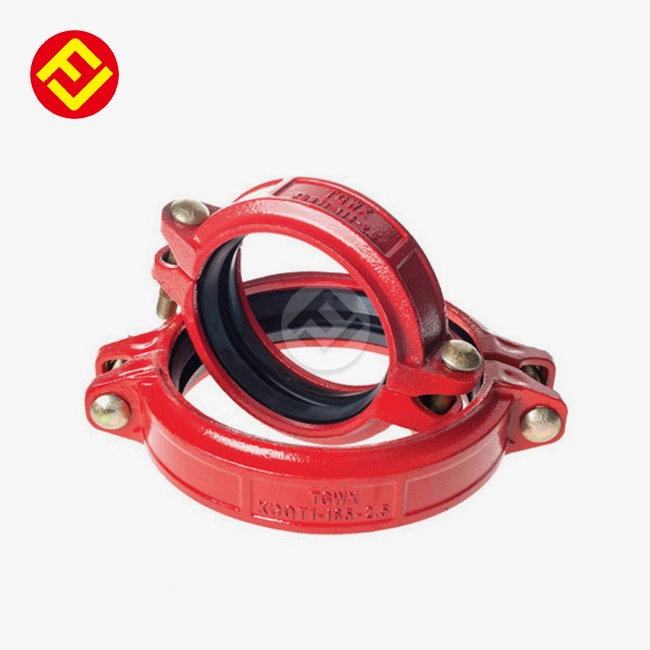
The way contractors and engineers install mechanical pipes has changed because of grooved piping systems. Unlike traditional soldered or threaded connections, grooved mechanical fittings make secure joints through special groove profiles and coupling housings. This gets rid of the dangers of hot work and cuts installation time by a huge amount.
What Makes Grooved Equal Tees Distinct
A three-way junction joins pipes with the same standard diameter at right angles to each other, letting fluid flow split or join smoothly. The grooved design has carefully machined roll-grooved or cut-grooved ends that connect to mechanical connections and hold the joint together by compression instead of fusion. This method solves a number of important problems that come up in B2B business settings. When compared to welding methods, installation speed goes up by about 50%. This is especially helpful when project deadlines are tight. It's possible for the mechanical connection to bend, expand, and contract due to changes in temperature and seismic activity. This is a movement that would crush rigidly welded joints to pieces.
Material Selection and Performance Characteristics
Our fittings are mostly made of ductile iron that meets ASTM A536 Grade 65-45-12 standards. It has a minimum tensile strength of 65,000 psi and a yield strength of 45,000 psi. This metal makeup is better at withstanding impacts than regular cast iron, which is important for places like building sites and factories where people are rough with tools. The spheroidal graphite structure in ductile iron gives it strength and flexibility, keeping it from breaking into weak pieces when it's hit with shock loads.
Different types of surface treatments can be used in a range of environments. Red alkyd enamel coating effectively stops rust and is suitable for use indoors and in normal weather conditions. A hot-dip galvanised finish that meets ASTM A153 standards makes things less likely to rust in damp places, along the coast, or chemical processing plants where harsh chemicals come into contact with the outside of the building.
Size Ranges and Application Environments
We can manufacture pipe fittings, including the Grooved Equal Tee, with nominal sizes ranging from 32mm to 350mm, which meet the standard piping requirements used in commercial buildings and industrial settings. The groove dimensions are closely aligned with ANSI/AWWA C606 standards. This ensures compatibility with standard couplings in the industry and maintains reliable leak-proof performance. Pressure ratings typically range from 300 psi to 1000 psi, although this can vary depending on the coupling style and wall thickness. These Products" target="_blank" style="color:blue" >products meet UL/FM approval standards for fire protection systems that require dependable performance.
Fire safety systems are one of the main areas of use. These fittings are used by wet and dry sprinkler stems to send water evenly to branch lines. They have qualities that reduce vibrations, which stop pump resonance and water hammer shock waves. Thermal expansion management makes it possible to quickly take apart HVAC hydronic loops in large commercial complexes for maintenance or equipment replacement without having to cut any pipes. The shorter downtime during installation and change projects is appreciated by industrial facilities that deal with water, oil, and process fluids. Strong, pressure-resistant links are added to municipal water distribution networks so that service quality is maintained for decades.
Comparing Grooved Equal Tees with Other Tee Types: Making the Right Choice
When procurement workers look at different ways to connect pipes, they have a lot of choices, and each one has its own pros and cons. Knowing these differences helps you make choices that are in line with the needs of the job and your budget.
Installation Method Comparison
Welded tee fittings make lasting joints by fusing together. They are very strong, but they need trained welders, hot work permits, and a lot of work hours. Once the system is set up, changes need to be made by cutting and rewelding, which makes future expansions harder. Threaded connections can be put together quickly for pipes with a smaller diameter, but the joints weaken over time, and it's hard to get good seals on pipes bigger than 2 inches in diameter. Flanged tees make it possible to take things apart, but they add a lot of weight, cost a lot of money, and need to be maintained with bolts, which raises the total cost of ownership.
Mechanical links with grooves are the best of both worlds. No special welding licence is needed for installation; all you need are pipe grooving tools and common hand tools. A normal link can be made in minutes, not hours like welding does. Because it is mechanical, it can be taken apart for repair or to change its design without damaging any of the parts. When a system is flexible, it can adapt to changes in temperature and pressure, which lowers the stress levels that cause stiff systems to fail early.
Pressure Rating and Durability Considerations
The pressure capacity is based on the wall thickness and the form of the coupler. Standard configurations can handle up to 300 psi of working pressure, which is enough for most commercial building systems. For tough industry uses, high-pressure versions can hit 1000 psi. During production, hydrostatic testing makes sure that the shell is solid and there are no holes that could let water in. This gives customers peace of mind before the fittings get to job sites.
Corrosion resistance is based on both the base material and how the surface is treated. When properly coated, ductile iron is naturally resistant to most types of water chemistry. A galvanised finish makes something last longer in harsh conditions, but it's still important to check its chemical compatibility for certain fluids. The grooved connection design gets rid of fluid areas that can cause crevice rust, which happens at threaded joints.
Cost Analysis Across Product Lifecycle
The cost of the initial purchase is only one part of the total cost of the project. In commercial construction, the cost of labour usually exceeds the cost of materials. Grooved systems, including the Grooved Equal Tee, require much less work because they are designed for fast and simple assembly. This saves significant time and money on large projects with hundreds of connections. Eliminating hot work reduces insurance costs and the need for fire watch personnel. Future repair access also helps avoid costly downtime—a flanged connection may require scaffolding and longer shutdown periods, while a grooved joint allows quick coupling removal and efficient replacement of components.

How to Select and Procure the Best Grooved Equal Tee for Your Project
A good procurement process strikes a balance between technical requirements, supplier dependability, and business terms so that value is delivered without sacrificing quality or project timelines.
Technical Specification Criteria
Verifying the grade of the material is the basis of quality assurance. The spectrochemical test should show that the ductile iron spheroidal graphite structure is nodular, which guarantees an ASTM A536 Grade 65-45-12 grade. For size compatibility, the nominal diameter must match the specs of the current pipe, and the groove measurements must fall within the tolerances, which are usually 0.015 inches for the groove diameter and width. Using go/no-go gauges and pi tapes for dimension verification keeps pipes from separating under pressure, which is a very important safety factor.
Different applications and places have different certification requirements. UL/FM approval proves that parts meet safety standards for life-safety systems and is required for all fire protection installations. The CE mark shows that an export project meets European health and safety standards. If a company has ISO9001 certification, it means that its quality control methods keep production standards uniform. Instead of accepting claims without checking them, purchasing managers should ask for proof that the certification is real.
Supplier Evaluation and Sourcing Strategy
Established manufacturers with decades of experience show that they can make things and keep the quality high. FLA Industrial & Trading Co., Ltd. has been making things for almost 40 years and uses cutting-edge technology and strict quality control to make more than 1,000 different product specs. Working with Fortune Global 500 companies proves that we can be trusted and that we do good work. This operating past gives us faith that our production capacity and technical support will allow us to keep working together for a long time.
The ability to make custom orders meets the unique needs of repair jobs and other specialised uses. Customising odd-shaped parts and making fittings with specific sizes and shapes to meet the needs of each job is what we do best. When project schedules are tight, quick responses (within 24 to 48 hours) to requests for pricing, dimensional information, or 3D designs speed up the decision-making process. From coming up with the first idea to confirming the 3D design, engineering help makes sure that plans are optimised and parameters are checked before production starts.
International Procurement Logistics
When buying in bulk from other countries, it can be hard to keep track of minimum order quantities, coordinate shipping, and make sure that customs rules are followed. We have 2,000 tonnes of stock, so we can ship standard items quickly. Custom orders take 7–15 days to arrive. Volume freedom lets you meet the needs of both small batches and large volumes without any problems, allowing you to expand as the project grows. Expertise in export paperwork makes the customs process go more smoothly, which cuts down on wait times at international borders. Knowing the incoterms and getting the right insurance protects investments while they're in transit. After-sales help that is available across time zones makes sure that technology questions are answered quickly, no matter where they are in the world.
Installation Guidelines and Best Practices for Grooved Equal Tees
The stability of the system and how long it works are directly affected by the way it was installed. By following set processes, common failure modes can be avoided, and joint performance can be maximised.
Step-by-Step Installation Process
Clean, straight cuts perpendicular to the pipeline are the first step in preparing a pipe for installing a Grooved Equal Tee connection. To keep the gasket from getting damaged during assembly, any burrs or rough edges must be removed. It's important to achieve accurate groove dimensions; the depth, width, and distance from the pipe end must all meet the required specifications. A groove that is too shallow prevents the joint from engaging properly, while a groove that is too deep can damage the seals and allow water leakage. Cut grooving creates a rougher surface compared with roll grooving, which is usually more suitable for pipes with thinner walls.
To line up the components, you have to place the tee so that the outlet angles match the needs of the system. Following the manufacturer's instructions for gasket placement will ensure that it fits correctly in coupling housings without turning or pinching. Lubricants that are compatible with gasket material make assembly easier; lubricants that are not compatible cause the gasket to swell and the seal to fail. To install the housing, place coupling pieces around the pipe ends with grooves, then insert bolts and tighten nuts in a star pattern to make sure the compression is even. To get the preload that was specified without over-tightening, you should use calibrated tools and follow the torque specs that the coupling manufacturer gives you.
Common Installation Challenges and Solutions
Alignment problems during production lead to uneven stress distribution and possible leak paths. This problem can be avoided by using alignment tools and double-checking measurements from reference points before the final tightening. Groove mismatches do happen between different maker products, even though they are supposed to be standardised. Making sure they are compatible by trying before buying a lot of them can help keep things running smoothly on the job site. If you use the wrong amount of force, you could either under-tighten, which could cause the parts to separate under pressure, or over-tighten, which could bend the housings and crack the seals. Using torque wrenches and sticking to the torque values that have been written down takes away the need to guess.
Maintenance and Inspection Protocols
Visual checks that are done on a regular basis find early signs of trouble before they become problems. If you look for gasket extrusion, housing deformation, or coating degradation, you can tell that problems are starting to happen. Cleaning procedures get rid of built-up dirt and grime that could hide corrosion or mechanical damage. Pressure testing after changes makes sure the system is still working properly before it is put back into service. Instead of waiting for parts to break, replacement plans should focus on parts that are worn out or damaged. Having extras of popular sizes on hand cuts down on downtime when fixes need to be done quickly. These habits help engineers and technicians make things more reliable while keeping repair costs low.

Why Choose FLA Industrial & Trading Co., Ltd. as Your Professional Grooved Equal Tee Manufacturer and Exporter
Our manufacturing mindset blends cutting-edge production technology with strict quality control, ensuring that thousands of installations around the world always get the same level of performance.
Manufacturing Capabilities and Quality Assurance
Accurate measurements are needed for leak-proof joints, which are achieved through precision casting and drilling. Before production starts, material verification tests make sure that all arriving ductile iron meets the required chemical makeup and mechanical property standards. Every fitting is measured to make sure that the groove sizes, outlet spacing, and overall shape all meet standards. Random samples from each production batch are put through hydrostatic testing to make sure the pressure numbers are correct. Surface quality evaluation checks the thickness and adhesion of the coating to make sure it will not rust over time. A final visual and physical check finds any flaws before the goods are packed, which keeps the standard level high.
Product Portfolio and Customization Services
Standard catalogue items come in all the sizes and configurations that are needed for normal installations. Custom engineering lets you meet the specific needs of a project that regular goods can't. Our technical team works with customers from the idea stage all the way through production, making sure that designs are optimised and that factors meet the needs of the application. This adaptability is helpful for retrofit projects that need to work with limited space or for specific industrial processes that need to change the flow characteristics.
Global Export Experience and Supply Chain Management
Our logistics coordination and documentation skills have been improved by a lot of experience shipping to international markets like the US, Germany, and Australia. Understanding the licensing and compliance standards in your area can help you avoid delays caused by legal problems. Supply chain management makes sure that production schedules and stockpile levels are balanced so that orders are filled on time, and projects stay on schedule. Distributor and OEM client ties are strengthened by consistent quality and dependable service, which helps them keep their businesses running.
Technical Support and Customer Service Commitment
When problems come up during design, installation, or operation, responsive expert support quickly solves them. Talking to an expert can help you figure out how to handle complicated application situations or fix problems. This dedication to customer satisfaction goes beyond just delivering products; it also includes forming partnerships that help projects reach their long-term goals by providing quality, dependability, and all-around support.
Conclusion
Choosing grooved mechanical piping systems is a smart choice that affects how long a project takes, how much it costs to build, and how reliable the system is in the long run. Grooved Equal Tees made of ductile iron that are made to strict quality standards give fire protection, HVAC, industrial, and municipal water systems the performance and durability they need. Procurement experts can choose parts that meet technical needs and maximise the value of the whole project by learning about the properties of the materials, their pressure ratings, and the best ways to put them together. Partnering with experienced manufacturers who have decades of production experience and a full range of support services will ensure the quality of the product and the reliability of the supply chain throughout the project's execution and its operational service life.
FAQ
Can Grooved Equal Tees accommodate thermal expansion in piping systems?
Grooved mechanical connections naturally let pipes move in a straight line and bend at an angle. The form of the couplings lets each part move in a controlled way, and they can handle changes in temperature without putting stress on the pipe walls. This flexibility stops the buildup of stress that leads to cracks in systems that are rigidly welded and go through thermal cycling.
What factors cause immediate leakage after installation?
New link leaks are caused by three main problems. If the groove width is too thin, it stops the coupling lock from working, or if it's too deep, it cuts into the gaskets, weakening the seal. When the housing is tightened and the gasket pinches, it creates leak paths when the gasket is compressed unevenly. Different lubricants make gaskets swell, which changes the shape of the sealing surfaces. These types of failure can be avoided by comparing groove measurements to standard sheets and following the steps for assembly.
How do I verify compatibility between different component manufacturers?
Fittings made to the ANSI/AWWA C606 standard groove specifications usually fit together with standard joints in terms of size. Interchangeability is based on the groove's diameter, width, and profile tolerances. When buying in bulk from more than one manufacturer, procurement workers should ask for evidence of dimensional verification and think about compatibility testing. For fire prevention uses where liability is a worry, UL/FM warranty terms often say that systems must be matched and come from the same maker.
Partner with FLA Industrial & Trading Co., Ltd. for Your Grooved Piping Solutions
The difference between a smoothly running project and one that runs late and costs a lot of money is having reliable Grooved Equal Tee providers. FLA Industrial & Trading Co., Ltd. can help you with your pipe system needs by making ductile iron fittings that are precisely made and come with ISO9001, CE, and UL/FM certifications. When you ask a technical question, our engineering team answers within 24 to 48 hours with dimensional details, pressure ratings, and 3D design help that speeds up the decision-making process. Our manufacturing capabilities allow us to deliver high-quality products within 7 to 15 days, whether you need standard configurations from our 2,000-ton inventory or custom solutions for unique uses. Email our team at sales@flaindustrial.com to talk about the details of your project and find out how our experience working with Fortune Global 500 partners can help you with your buying needs.
References
1. American Water Works Association. ANSI/AWWA C606 Standard for Grooved and Shouldered Joints. Denver: AWWA, 2020.
2. ASTM International. ASTM A536-84: Standard Specification for Ductile Iron Castings. West Conshohocken: ASTM International, 2019.
3. National Fire Protection Association. NFPA 13: Standard for the Installation of Sprinkler Systems. Quincy: NFPA, 2022.
4. Underwriters Laboratories. UL 213: Standard for Rubber Gasketed Fittings for Fire Protection Service. Northbrook: UL Standards, 2018.
5. Hendricks, David W. Fundamentals of Water Treatment Unit Processes: Physical, Chemical, and Biological. Boca Raton: CRC Press, 2016.
6. American Society of Mechanical Engineers. ASME B31.1: Power Piping Code. New York: ASME, 2020.