High Quality Coupling Grooved for Industrial Piping
2026-07-17 11:36:39


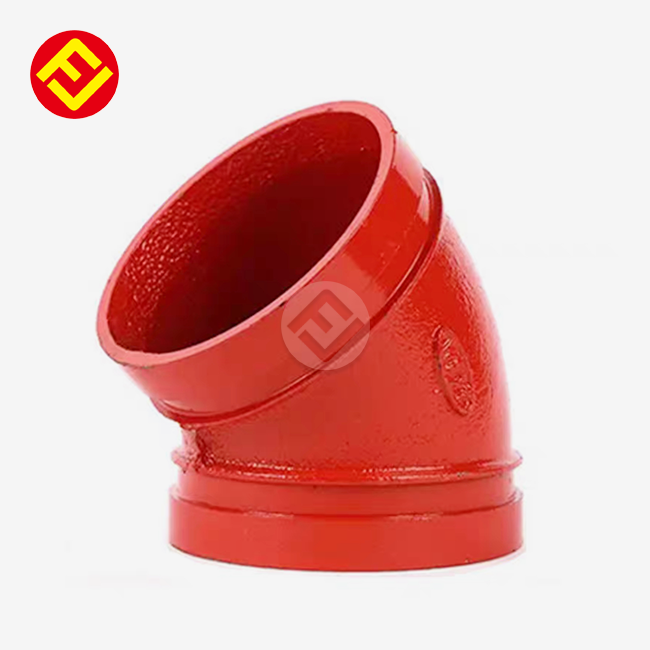
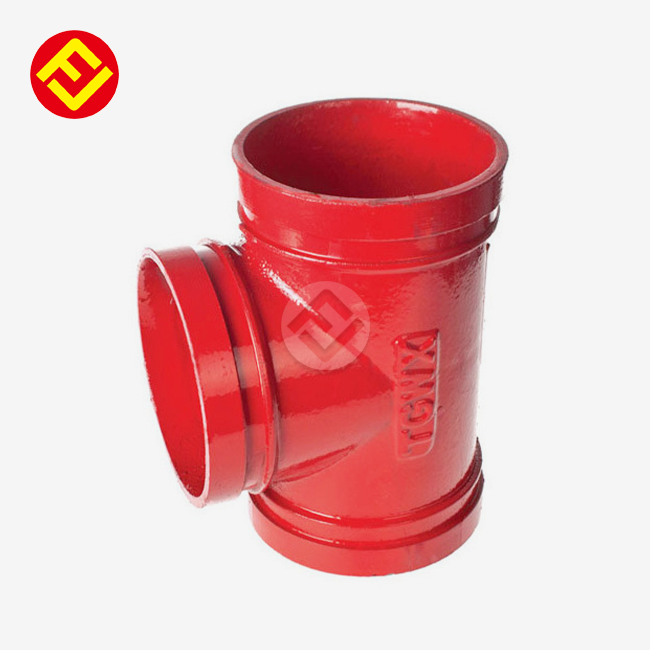
When you're in charge of a building project, a water treatment plant, or fire protection equipment, the safety and availability of your system depend on how well your pipe connections are made. A Coupling Grooved system is one of the best ways to join pipes mechanically today. It is made from ductile iron or carbon steel and can be put together quickly without welding or threading. This technology gets rid of the dangers of hot work, cuts installation time by up to 50% compared to traditional flanging, and can handle heat expansion because it is naturally flexible. At FLA Industrial & Trading Co., Ltd., we make high-quality grooved pipe fittings that are certified by ISO 9001, CE, and UL/FM. We make sure that every unit meets strict pressure levels and is the right size for use in important infrastructure.

Specifications |
||||
| Specification | Size (inch) | L(mm) | H(mm) | Diameter (mm) |
| 1 | 33 | 98 | 42 | 54 |
| 1/2 | 48 | 114 | 43 | 69 |
| 2 | 60 | 127 | 43 | 32 |
| 2/2 | 76 | 145 | 44 | 99 |
| 3 | 89 | 159 | 44 | 112 |
| 4 | 108 | 186 | 47 | 133 |
| 4 | 114 | 192 | 47 | 140 |
| 5 | 133 | 214 | 48 | 161 |
| 5 | 140 | 221 | 48 | 167 |
| 6 | 159 | 245 | 49.5 | 189 |
| 6 | 165 | 251 | 49.5 | 195 |
| 6 | 168 | 254 | 49.5 | 198 |
| 3 | 219 | 324 | 59 | 254 |
| 10 | 273-1.6 | 416 | 61 | 316 |
| 10 | 273-2.5 | 416 | 62 | 317 |
| 12 | 325-1.6 | 467 | 61 | 370 |
| 6 | 325-2.5 | 469 | 62 | 372 |
Understanding Grooved Couplings and Their Industrial Applications
Changing pressure, temperature, and structural movement are all problems that modern pipe systems have to deal with all the time. Instead of bonded or threaded links, grooved coupling technology meets these needs with a mechanical interlock system.
How Grooved Coupling Systems Function
The basic design has a groove around the outside of the pipe end that fits into a two-piece housing. This groove can be roll-formed or cut into the pipe end. Between the frame and the pipe is an elastic gasket that makes a pressure-responsive seal that gets stronger when there is pressure inside the system. In contrast to rigid connections, this assembly lets you control the movement while still keeping its leak-tight integrity. The housing segments have a tensile strength of over 65,000 psi and are usually made from ASTM A536 Grade 65-45-12 ductile iron. This mechanical benefit is especially useful in places where shaking, earthquakes, or changes in temperature would weaken parts that are welded.
Primary Industry Applications
The main area where grooved fittings are used is in fire safety devices. These connections are needed for NFPA 13-compliant sprinkler installations in high-rise buildings because they can handle high static head pressures and allow quick retrofit work to be done in occupied buildings without any smoke or flame risks. We have provided parts for business projects where the speed of installation had a direct effect on when the projects were finished and when occupancy permits were issued.
The ability of flexible grooved joints to isolate vibrations is very helpful for HVAC and chiller plants. They work as overflow isolators when placed at pump connections, so you don't need to buy expensive flanged rubber expansion bellows. This app is especially useful for mechanical workers who are in charge of large equipment rooms where pump vibrations could damage rigid pipes.
Grooved links are used by municipal water systems because they have been shown to last longer in harsh underground conditions. Many of the installations we work on last longer than 30 years thanks to the finish options we offer, such as electrostatic epoxy powder coating and hot-dip galvanisation that meet ASTM A153 standards. When a water treatment plant's capacity grows, it's easy to make changes to the system because grooved joints can be taken apart and put back together without cutting the pipe.
When abrasive slurry wears down pipes unevenly, mining operations have special needs. The Coupling Grooved system lets repair teams turn pipe sections during short periods of shutdown. This evens out wear patterns and extends the life of parts until they need to be replaced. In environments with continuous operation, this feature means measurable cost savings.
How to Choose High-Quality Grooved Couplings for Industrial Piping
When making procurement decisions, you have to weigh technical requirements against the costs of the project and the reliability of the supplier. Making the wrong choice can cause early failure, system downtime, and safety risks.
Material Selection Criteria
When it comes to general water service uses, ductile iron housings are preferred over grey cast iron because they are more resistant to pressure and easier to machine. To get dimensions that are accurate to within 0.005 inches, our manufacturing process starts with sand casting and then moves on to precision machining. Different types of carbon steel are stronger for high-pressure steam systems or uses where weight reduction is important.
When you choose a gasket material, it directly affects the temperature ranges it can handle and how well it works with chemicals. EPDM (Grade E) gaskets work with water systems from -230°F to -230°F, and Nitrile (Grade T) gaskets work with oil from -180°F to -230°F. The C-shaped cross-section design uses internal pressure to increase binding force, which is a big plus over flat gaskets that can blow out when there is a rush.
Pressure and Temperature Ratings
Standard grooved couplings can handle working pressures between 300 PSI and 1,000 PSI, depending on the size and weight class of the housing. Heavy housings are used for situations with steam service or water hammer, while light housings are best for low-pressure drainage systems. Knowing the highest pressure your system can handle, along with any safety factors that come with it, keeps you from under-specifying, which could cause a catastrophic joint failure.
Temperature affects more than just the material of the seal. Ductile iron castings keep their shape even when the temperature changes a lot, but bolt materials need extra care. For normal uses, we recommend Grade 5 bolts with anti-corrosion coatings. For harsh conditions, we recommend stainless steel fasteners.
Standards Compliance and Certification
Following the rules set by ASTM, ANSI/AWWA C606, and NFPA guarantees that Coupling Grooved Products" target="_blank" style="color:blue" >products meet dimensional requirements and work properly in piping systems. For fire safety reasons, projects that require UL or FM approval must obtain listed components from approved manufacturers. Regular third-party audits at our production facilities help keep these certifications up to date. This provides the documentation needed to satisfy authority having jurisdiction requirements during plan reviews and inspections.
Comparing Connection Methods
Purchasing managers often compare grooved connections to others like flanged, bonded, and threaded. Flanged joints make it easier to take things apart, but they need to be lined up perfectly and take up more room. Welding makes lasting joints, but it needs skilled workers, fire watch rules, and a check after the weld is done. Threading works for pipes with small diameters, but it weakens the walls of the pipe and makes it less useful again.
Grooved technology has the best features of all of them: it's almost as strong as bonded joins, it's easier to install than threading, and it's easier to maintain than flanges. The flexible joint design can handle displacement of up to 4 degrees, which means that less field adjustment is needed during installation. These useful benefits mean that you'll need less labour, which will help cover the higher costs of materials for medium and large projects.

Installation and Maintenance Best Practices for Grooved Couplings
Using the right installation methods will determine whether a grooved system lasts for decades without breaking or fails too soon. We've kept track of thousands of installations and found the key control points that make the difference between projects that go well and ones that don't.
Step-by-Step Installation Process
The preparation of the grooves is what makes joints strong. Roll grooving, which is done with portable hydraulic tools, makes the groove without cutting away any metal, so the full thickness of the pipe wall is kept. This method works for Schedule 40 and Schedule 10 pipes because the thick walls let them bend without breaking. Cut grooving tools take away material to make the groove, which is needed for Schedule 80 pipe or pipe that is lined on the inside, since growth could damage the coatings. ANSI/AWWA C606 says that the groove's depth, width, and distance from the pipe end must all be within certain limits. Deviations as small as 1/32 inch can stop the housing from engaging properly.
Inspection of the gasket finds problems with the way it was made or damage from being handled. Feel the inside of the seal with your fingers to look for holes, cracks, mould flash, or other things that could allow water to leak out. Use only a small amount of the lubricant recommended by the maker to make fitting easier. Too much lubricant can collect dirt and damage gasket material over time.
The key direction is important when installing a Coupling Grooved connection in piping systems. The housing segments have rolled keys that need to fit fully into the pipe groove. Place the gasket in the middle of the joint, then position the two housing halves together and hand-tighten the bolts in a star pattern to ensure that the clamping force is evenly distributed. Visual inspection should show "pad-to-pad" contact, where the bolt pad surfaces of both housing halves meet completely. This confirms that the assembly is correct and that torque tools are not required for most standard pressure applications. Some high-pressure systems do require torque settings according to the manufacturer's installation instructions.
Preventive Maintenance Protocols
Inspections that happen every six months for the first year and then once a year after that catch problems as they start to grow. Check to see if the gasket sticks out past the frame. This could mean that the seal is broken. Instead of trying to tighten joints that are already properly joined, check the tightness of the bolts by visually comparing the pads. Overtightening can damage seals and bend the housings.
Making changes to a system needs careful planning. When you take off grooved couplings to change equipment or rearrange pipes, check the gaskets for damage to the surface or tension set. It is better to buy new gaskets instead of trying to reuse old ones because the elastomer permanently bonds to the pipe's surface imperfections. But housing parts can be used more than once as long as they are checked and there are no cracks or deformations.
NFPA 25 inspection and testing rules need to be followed with more care when it comes to fire sprinkler systems. Keep records of all upkeep tasks to please insurance companies and government regulators. You can use the technical data sheets we give you in your preventive maintenance plans to find out how often to check things and what the acceptance criteria are.
Cost-Effective Procurement Strategies for Bulk and Custom Grooved Couplings
Strategic procurement weighs unit cost against the overall costs of the project, taking into account things like inventory holding costs, delivery reliability, and the technical support capabilities of the supplier.
Bulk Purchasing Advantages
When you commit to a volume, you can access pricing tiers that improve project margins and keep the supply chain running smoothly. Hardware distributors who sell to contractors can save money by buying 500 units of 10 common sizes instead of 50 units of each size. This way, distributors don't have to worry about running out of stock or having too much of one size. Our 2,000-ton inventory lets us ship standard configurations right away, so there is no need to worry about lead times, which can slow down construction schedules.
Controls in the manufacturing process are needed to make sure that quality is the same across large orders. When we cast things, we use automatic moulding equipment that keeps the sizes consistent within very small ranges. Every mould is looked at with an X-ray to find any internal holes that might affect the pressure ratings. Surface treatment is done according to written instructions, and magnetic scales are used to check the thickness of the coating. This makes sure that the rust protection meets the requirements.
Custom Manufacturing Capabilities
For non-standard applications, engineers need to work together to find the best solutions. Our OEM skills help with projects that need pipes made of odd materials, with sizes that are too big, or with special coating needs. We've made special grooved joints for mining operations that need metals that don't wear down easily, offshore platforms that need better corrosion protection, and earthquake zones that need certain levels of flexibility.
You start the customisation process by sending in exact specs, such as the type of pipe, its wall thickness, how it will be used, and any relevant codes. Our engineering team gets back to you within 24 to 48 hours with a basic size estimate, suggestions for materials, and a feasibility review. With 3D CAD models, you can virtually check the fit before you spend money on tools. Usually, prototype production delivers within 15 working days so that it can be tested and evaluated.
Supplier Evaluation Criteria
When choosing a Coupling Grooved manufacturer, you need to look at more than just unit price. How well a supplier can meet your project deadlines depends on how much they can produce. For example, our facilities can handle up to 300 tonnes of work at once for big projects. Quality approvals from well-known groups like ISO 9001 show that the process is controlled in a planned way, rather than changing from batch to batch.
When installation questions come up or system changes need to be made, having access to technical support is important. We offer mechanical help from reviewing specifications to fixing problems in the field, backed by decades of real-world experience. This helps stop mistakes that cost a lot of money and speeds up the project completion compared to suppliers who only sell products without any expertise.
Technical Specifications and Compliance for High-Quality Grooved Couplings
Routine buying is different from strategic buying, which improves system performance and lifecycle costs over time. Strategic buying requires in-depth technical knowledge.
Dimensional Standards and Tolerances
The groove sizes are based on ANSI/AWWA C606 standards, which list the width, depth, and distance from the pipe end for each specified pipe size. When pipes from different manufacturers connect at the same coupling, these standard sizes make sure that they can be used interchangeably. Housing bolt hole spacing, key dimensions, and gasket seating surfaces keep all approved component suppliers' products working together.
Assembly fit is affected by the buildup of tolerances. If the pipe groove is cut 0.005 inches too shallow, the gasket is 0.010 inches too small, and the housing keys are 0.005 inches too big, they might not fit properly. Our quality control system checks each production lot's sample castings with a coordinate measuring machine (CMM) to make sure they meet the required dimensions before they are machined in bulk and shipped.
Pressure Testing Requirements
Pressure values are checked with hydrostatic testing, which is done in a controlled environment. For two hours, we test sample parts from each production batch at 1.5 times the rated working pressure, looking for leaks or changes in the structure. This destructive testing gives us statistical faith that production units will always work safely under their rated circumstances.
Similar rules apply to field pressure testing of installed systems, but they have to take into account the limitations of the system. For grooved systems, pneumatic testing with compressed air is not allowed because of the high risk of catastrophic failure. Water is still the only acceptable test medium. The acceptance standards, test pressure, and length of time must all be in line with relevant rules, like NFPA 13 for fire sprinkler systems.
Certification Documentation
For projects to be approved, products often need to be certified to show that they meet certain standards. We offer mill test records for ductile iron castings that show the chemical makeup and mechanical qualities, gasket material certifications that show the elastomer formulation, and coating test results that show the thickness and stickiness of the finish. For fire safety purposes, UL and FM listings can be found on housing castings and certification papers.
To keep these certifications, independent testing labs must do regular compliance checks. Every year, the factory is inspected to make sure that the ways things are made, the materials used, and the quality control methods are still up to listing standards. This approval by a third party gives customers peace of mind that goods will always work as promised.

Conclusion
To choose good Coupling Grooved pipe connections, you need to know how the materials, design features, fitting methods, and legal requirements all work together to make the system reliable. The Coupling Grooved mechanical joining method gets rid of the risks of welding while cutting down on installation work. This is especially helpful for Coupling Grooved projects with tight deadlines or buildings that are already occupied. When ductile iron is built with the right gasket materials and Coupling Grooved assemblies, it can last for decades without leaking in a wide range of demanding situations, from fire protection to industrial process systems. Coupling Grooved solutions provide additional flexibility for applications that require efficient installation and dependable performance. Strategic procurement looks at more than just unit prices. It also looks at what the provider can do, like customization, expert help, and making sure there is enough paperwork to meet regulatory needs for Coupling Grooved products. Our commitment to quality standards and years of experience in manufacturing make FLA Industrial & Trading Co., Ltd. the best company to help you with your most important piping projects by providing Coupling Grooved parts that meet both specifications and deadlines.
FAQ
What distinguishes rigid from flexible grooved couplings?
The tongue-and-groove design of rigid grooved couplings keeps the pipe ends in place, making the connection work like a welded or flanged one. This setup works well for situations where the pipes that are linked can't move at all, like when there are vertical risers or horizontal runs that are held in place firmly. Flexible grooved joints let you control how much a line can stretch or contract and how much it can bend at an angle of up to 4 degrees. This makes them suitable for heat cycling and earthquake movement. In many systems, flexible variants work well as separate expansion joints. This cuts down on the number of parts and possible leak points while keeping the system flexible.
Can different manufacturers' grooved components be intermixed?
The groove sizes on pipes are set by ANSI/AWWA C606 standards, but coupling housings and gaskets have their own unique design elements. Different manufacturers make housing keys with slightly different key profiles, gasket cross-sections, and bolt configurations, even though they all meet the same performance standards. Mixing parts from different sources can void UL and FM ratings, cancel warranties, and cause assembly mismatches that could damage the seal. Using parts from a single source for all of your plumbing systems makes sure that they work with each other and keeps your certifications current for insurance and legal reasons.
How do I verify proper grooved coupling installation?
"Pad-to-pad" contact means that the flat bolt pad surfaces of both housing halves meet completely, with no gap that can be seen. This visual proof shows that the bolts are tight enough and the gasket is compressed enough for normal pressure uses. When you try to measure bolt torque on joints that are already put together, you often end up overtightening them, which damages gaskets or bends housings. In some high-pressure situations, torque tools do need to be adjusted according to the manufacturer's instructions. Also, make sure that the housing keys fully engage the pipe grooves by making sure that the housing segments fit flat against the pipe surfaces with no gaps.
Partner with FLA Industrial & Trading Co., Ltd. for Your Grooved Coupling Requirements
Due to 30 years of high-quality production, FLA Industrial & Trading Co., Ltd. is a Coupling Grooved supplier that construction companies, municipal water authorities, and industrial facilities all over North America trust. Our ductile iron and carbon steel fittings are made from tested materials that meet ASTM standards. They are also carefully machined and go through strict quality control measures that include water testing for every production batch. We keep 2,000 tonnes of standard sizes in stock so they can be shipped right away. For non-standard uses, we offer custom engineering with delivery in 7–15 working days. Our technical team can help you with any application, from choosing the right parts to installing them in the field. This includes specifying parts for a high-rise fire sprinkler system, a municipal water project, or industrial process piping. To talk about your project needs, email our procurement specialists at sales@flaindustrial.com. Within 48 hours, you'll get detailed specifications.
References
1. American Water Works Association. (2020). ANSI/AWWA C606-20: Grooved and Shouldered Joints. Denver: AWWA Standards.
2. ASTM International. (2019). ASTM A536-84: Standard Specification for Ductile Iron Castings. West Conshohocken: ASTM International.
3. National Fire Protection Association. (2022). NFPA 13: Standard for the Installation of Sprinkler Systems. Quincy: NFPA Publications.
4. Manufacturers Standardization Society. (2018). MSS SP-97: Integrally Reinforced Forged Branch Outlet Fittings—Socket Welding, Threaded and Buttwelding Ends. Vienna: MSS Standards.
5. Factory Mutual Research Corporation. (2021). FM Approval Guide: Pipe Hangers and Couplings for Automatic Sprinkler Systems. Johnston: FM Global.
6. International Organization for Standardization. (2015). ISO 9001:2015 Quality Management Systems—Requirements. Geneva: ISO Central Secretariat.