Small Pneumatic Jacks: Compact Lifting Power for Your Garage
2026-06-30 15:52:41


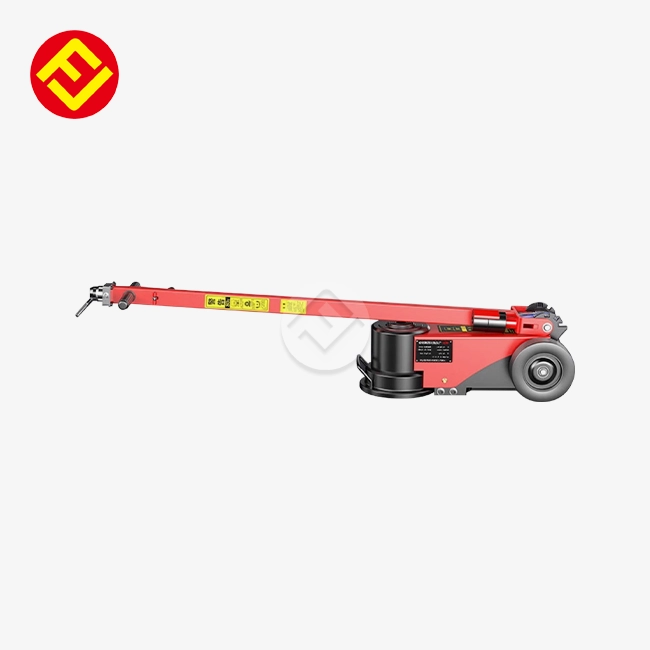
A small pneumatic jack is just what expert operations need when they need lifting power that is fast, safe, and doesn't take up too much room. These air-powered lifting tools turn compressed air into quick vertical force, which lets workers lift heavy parts, cars, and machinery in seconds instead of minutes. Unlike traditional hydraulic systems that need to be pumped over and over by hand, or large electric models that need their own power sources, pneumatic jacks connect directly to normal shop air compressor lines, so they are ready to use right away and don't tire operators out as quickly. This technology solves some of the most important problems in operations, like how to insert something very low under modified cars, how to make cycle times very fast for high-volume service bays, and how to build something that will last in tough garage settings where dependability is a must.


Specifications |
|||||||
| Type | Product Model | Lifting Capacity | Working Pressure | Minimum Height | Lifting Height | Stroke | Net Weight |
| Straight Rod | National Standard 50T | 50T/25T | 0.8-1.2mpa | 195mm | 430mm | 235mm | 46kg |
| Straight Rod | National Standard 80T | 80T/40T | 0.8-1.2mpa | 195mm | 370mm | 175mm | 60kg |
| Straight Rod | National Standard 120T | 120T/60T | 0.8-1.2mpa | 205mm | 385mm | 180mm | 90kg |
| Straight Rod | National Standard 150T | 150T/75T | 0.8-1.2mpa | 205mm | 400mm | 195mm | 100kg |
| Folding Rod | National Standard 50T | 50T/25T | 0.8-1.2mpa | 195mm | 430mm | 235mm | 46kg |
| Folding Rod | National Standard 80T | 30T/40T | 0.8-1.2mpa | 195mm | 370mm | 175mm | 60kg |
| Folding Rod | National Standard 100T | 100T/50T | 0.8-1.2mpa | 205mm | 380mm | 175mm | 73kg |
Understanding Small Pneumatic Jacks: Basics and BenefitsHow Pneumatic Lifting Technology Works
These moving tools get most of their power from compressed air. When the small pneumatic jack is hooked up to an air source that works at between 0.4 and 0.8 MPa, it uses gas pressure to move up in a controlled way. The design is usually made of carbon steel or alloy steel, and the insides of the cylinders are chrome-plated to reduce friction and stop rust. High-quality seals made of fluororubber or nitrile rubber keep the pressure stable and let the system work smoothly in temperatures ranging from -20°C to +80°C. This engineering method gets rid of the problems that traditional jacks have with hydraulic fluid leaking, which means that they don't need as much upkeep and are better for the environment in busy workplaces.
Operational Advantages Over Alternative Systems
The speed benefit is clear as soon as the product is used. It takes less than five seconds to reach full extension, which is a huge improvement over hydraulic options that need 30 to 50 pump strokes to do the same job. This quick deployment directly leads to higher shop output and less stress on technicians who have to do heavy pulling over and over again. The low height when folded makes it possible to get under low-clearance sports cars, modified vehicles, and machinery setups that regular floor jacks can't reach. Because some models are made of lightweight aluminum alloy, they are still very portable. This means that techs can move tools between workstations without having to strain their bodies.
Diverse Configurations for Varied Applications
Different design configurations solve different lifting problems. Bottle-shaped types allow for vertical lifting in small areas, making them perfect for maintaining building equipment and heavy machinery. Different types of floor jacks are more stable for use in cars because their bigger bases safely spread load forces. Specialized low-profile models keep their collapsed heights around 130–150 mm while extending to 400 mm or more, making it easier to get into cars that have had aftermarket suspension changes. As standard equipment, each configuration comes with safety valves and exhaust mufflers that keep workers and the area around the work area safe from pressure-related dangers.
How to Use and Maintain Small Pneumatic Jacks Safely and Effectively
Proper Operating Procedures
For safe action to happen, the right placement is essential. The small pneumatic jack needs to be placed on a flat, hard surface that is free of any trash or bumps that could make it less stable. Before connecting the air source, check the unit for damage that can be seen. Look for cracks in the rubber seals and deformation in the metal parts. Make sure there are no leaks at the connection point when you connect the standard air hose link. Gradually apply air pressure while keeping an eye on the load's rise and being aware of people and equipment around you. During the lifting process, it is necessary to keep an eye on the load to make sure it stays balanced and the jack stays in the right place under the lift point.
Essential Safety Protocols
For long times of work, these tools need motorized support systems. Pneumatic jacks are great for quickly moving things around, but they should never be used to support long-term static loads. When the height you want is reached, use jack stands or other mechanical locking devices to keep the load in place before you start working under it. Individual safety gear is still required, such as safety glasses to protect against possible pressure release events and steel-toed shoes to prevent accidental load changes. When using lifting tools, make sure you can clearly communicate with your team members and set rules to stop any unexpected moves while people work in nearby areas.
Maintenance Best Practices
Schedules for regular inspections keep things running safely and stop them from breaking down too soon. Every month, check the integrity of the seal by looking at the rubber parts for hardness, breaking or surface wear that could be caused by chemicals in the workshop. The inside of the chrome-plated cylinder needs to be looked at visually for any cracking or rust that could make the seal less effective. Regularly drain water from the air supply line because water buildup speeds up internal rust and shortens the life of parts. To test for leaks, you need to raise the jack's working pressure, cut off its air supply, and watch for height loss over the course of 24 hours. Any drop that can be measured means that the seal is breaking down and needs to be fixed right away.
Systematic evaluation is the first step in fixing common problems. Slow lifting usually means that there isn't enough air pressure, that the entry filter is clogged, or that the internal valves are wearing out. Make sure the output of the compressor is within the 85–145 PSI range before looking into the internal parts. If seals start to leak air, they probably need to be replaced. This is especially true after a long time of use in tough chemical conditions. The built-in safety valve sometimes lets out air if the working limits are pushed too far. This is meant to be a safety feature, not a failure.
Comparing Small Pneumatic Jacks: Making the Right Choice for Your Business
Performance Metrics Analysis
The main difference between hydraulic technology and other methods is the speed of lifting. An air-powered small pneumatic jack can reach its working height in less than five seconds, while a hydraulic jack needs 20 to 40 seconds of pumping by hand. This tenfold reduction in cycle time leads to big productivity gains in places that process dozens of cars every day. For small-class configurations, the load capacity is usually between 2.5 and 3 tonnes, which is enough for light business trucks, passenger cars, and moderate industrial machines. The adjustable air pressure lets you change the lifting speed, which lets you place things precisely, which is useful for alignment tasks and careful assembly work.
Reliability comparisons reveal distinct advantages. There are fewer technical failure places in pneumatic systems than in hydraulic ones because they have fewer moving parts. When there is no hydraulic fluid, oil pollution, temperature changes, and chemical incompatibilities that damage seals are not present. Maintenance needs go down a lot because air-powered units only need to have their seals checked and filters cleaned on a regular basis, instead of having fluids replaced and hydraulic lines serviced. The operating temperature range is 100 degrees Celsius, or -20°C to +80°C. This means that it can be used outside in the winter and in warm factories without losing any performance.
Equipment Selection Criteria
Initial picking choices are based on capacity needs. To find the right tonnage values, you need to figure out the highest load weight, taking into account any safety margins. The specs for lifting height must take into account both the highest service needs and the folded size for low-clearance access. How the material is made affects both how long it lasts and how portable it is. For fixed installations, carbon steel frames are the strongest. For mobile operations that need to move between work areas often, aluminum alloy frames are lighter.
Certification standards show how well a product is made and how well it follows the rules. Getting ISO9001 approval shows that you handle quality in a planned way throughout the whole production process. The CE mark shows that the product meets European safety standards and lets you know about the right way to validate the design and test it. ATEX certification covers the explosion-proof needs of working in possibly dangerous places, like chemical processing plants and mine repair facilities. Compliance with the Pressure Equipment Directive (PED) or a similar national standard (GB in China) makes sure that the structure stays strong at the recommended working pressures.
Supplier Evaluation Framework
The place where goods are made affects both prices and the regularity of quality. China has become a major production hub because it offers cheap prices without lowering technical standards when buying from well-known makers. Long-term dependability is based on the quality of the producing process. Accurate measurements are made by precision turning and casting, and strong structures are kept together with the right bonding methods. Comprehensive testing procedures, such as leak testing, pressure testing, and life cycle validation, set high-end makers apart from low-cost options.
Warranty coverage shows that the company that made the product is sure that it will last. Standard terms usually last between 12 and 24 months and cover flaws in the materials and the work, but not damage caused by overuse or poor upkeep. When buying in bulk, the ability to provide after-sales help is very important. When service problems happen, they don't last long because there is technical help, replacement parts, and quick contact routes.
Procurement Guide: Where and How to Buy Small Pneumatic Jacks
Identifying Reputable Manufacturers
FLA Industrial & Trading Co., Ltd. is one of the best makers, and they have been making hardware tools for almost 40 years, which they use to make small pneumatic jacks for professional operations. Because they have so much knowledge, they can improve their manufacturing methods, keep an eye on quality, and fully understand what a professional workshop needs. Well-known companies make sure their Products" target="_blank" style="color:blue" >products are always of high quality by controlling every step of the production process, from careful building to precise cutting and welding. Chrome plating has strict requirements for thickness and strength, which makes sure that cylinders last a long time even in tough working circumstances.
Geographic factors affect how well processes work and how well communication works. Manufacturers with established foreign distribution networks can help with shipping, providing the necessary paperwork to clear customs, and providing localized expert resources. Language skills and managing time zones can slow down procurement conversation, especially when technical questions or specific requirements need to be talked over in depth.
Supplier Assessment Checklist
Verification of certification is the basis for evaluating a seller. Ask for copies of the ISO9001 certificates and make sure they are still good and cover the right things. Test records that show the documents meet safety standards should be included with CE paperwork. Customer reviews and comments give you an idea of how well a provider works in real life and how reliable they are. Talk to current customers in your industry to find out what they think about how long your products last, how well your warranties work, and how good your expert help is.
Assessing production potential keeps the supply chain from breaking down. Keeping a wide range of SKUs in stock shows that a manufacturer can adapt to changing market needs and keep a deep inventory. FLA Industrial & Trading Co., Ltd. has more than 1,000 product specs, which shows that they can manufacture a lot of items and that many of the parts are the same. This makes new parts easy to find throughout the duration of a product.
Negotiation Strategies for Volume Purchases
You can save a lot of money by buying in bulk, and the supply will stay stable. Usually, promises to buy a lot of something set off tiered pricing systems, with breakpoints at certain amounts that meet certain operational scales. Instead of giving transactional quotes, purchasing managers should show expected yearly needs, changes in seasonal demand, and growth predictions to set partnership-based price models. When negotiating payment terms, it's important to find a balance between managing cash flow and reducing seller risk. Usually, letter of credit agreements or progress payment plans are reached for initial orders before net-term relationships are established.
Customization options add strategic value on top of regular product lines. Engineering teams at well-known companies make pneumatic lifting options that are specifically designed to meet the needs of each job. Customized choices of materials can be made to fit specific weather conditions, such as facilities near water that need to be more resistant to corrosion or facilities that need to work in high temperatures. Installation problems caused by current workshop setups or equipment designs can be fixed with custom-shaped parts and non-standard mounting configurations.
Future Trends and Innovations in Small Pneumatic Jack Technology
Material Science Advancements
The development of lightweight alloys keeps structures strong while reducing user stress. Modern aluminum alloys have strength-to-weight ratios that were previously only possible in heavier steel builds. This means that one person can now move heavy tools that used to need a team. Adding composite materials to non-structural parts lowers the total weight even more without lowering the longevity. New developments in surface treatment go beyond simple spray painting to provide better corrosion protection. For example, advanced anodizing processes create stronger, longer-lasting protected layers that are not easily damaged by chemicals or wear and tear.
Digital Integration Developments
Load tracking systems are a new type of safety technology. Digital pressure monitors tell workers in real time how much weight is actually being lifted. This lets them know when they are getting close to the lifting limit and avoids dangerous overloading situations. Integration with workplace management systems lets you keep track of how many small pneumatic jacks are being used, automate repair schedules, and get the most out of your fleet management. Data analysis can help with predictive maintenance by showing trends of performance degradation before they lead to catastrophic breakdowns.
Sustainability Considerations
Environmental awareness is becoming more and more important in purchasing choices. Pneumatic technology already has benefits over hydraulic ones because it doesn't have the risk of oil leaks or dirt contamination that comes with them. Future improvements will focus on building with reusable materials, which will make it easier to get rid of old things and get their parts back. Improving energy economy means using less air per lift cycle, lowering the loads on compressors, and lowering the amount of electricity used by all facility activities.
Conclusion
To choose the right small pneumatic jack equipment, you have to weigh the operating needs against the performance specs, safety features, and total ownership costs. High-quality air-powered jacks are easy to set up, don't need much upkeep, and are built to last. This makes them more productive in automotive service, industrial manufacturing, and building. To be successful at procurement, you need to carefully evaluate suppliers, pay attention to approval standards, and build partnerships with makers who can show they have technical knowledge and quick support. As technology improves and digital tracking and predictive maintenance become more common, businesses that adopt them early will continue to have a competitive edge by improving safety and efficiency.
FAQ
What load capacity should I specify for automotive service applications?
A 2.5- to 3-ton load grade is needed for most passenger cars and light trucks. For normal wheel service, brake repair, and suspension work, this range has enough lifting force with enough safety limits. Because of the weight of the axles and the service needs of commercial vehicles, higher capability standards are needed.
How does maintenance compare between pneumatic and hydraulic jacks?
Pneumatic systems need a lot less upkeep because their internal mechanisms are easier and they don't need hydraulic fluid. As part of routine care, the seals are checked, the air filters are cleaned, and the supply lines are drained of wetness. Alternatives that use hydraulics need to have their fluids and seals serviced and their hydraulic lines checked for soundness on a frequent basis.
Can these jacks safely lift vehicles on slight inclines?
Without a doubt not. For safe use, a small pneumatic jack needs flat, stable surfaces. Even small slopes put horizontal shear forces on internal parts, which can cause the structure to fail and the load to fall. Before moving, you should always make sure the car is on level ground.
What air compressor specifications are necessary?
Standard shop blowers that put out 85 to 145 PSI are strong enough. It is not necessary to have a high CFM rate because the air volume needs are still low compared to impact tools or spray equipment.
Partner with FLA Industrial & Trading Co., Ltd. for Reliable Pneumatic Lifting Solutions
The success of a workshop depends on tools that work well even when conditions are tough. We are a known small pneumatic jack manufacturer with almost 40 years of experience in this field. We know exactly what hardware stores, building companies and industrial facilities need. Over 1,000 different specs are included in our wide range of products, which are made to the high standards of ISO9001 and CE approval that Fortune Global 500 companies trust. Our technical support is quick to respond; we can send prices and specs within 24 to 48 hours. We can also make changes that help procurement teams solve specific operational problems. Whether you run a high-volume tire service center, an industrial assembly line or an equipment repair facility in the US, Germany or Australia, our engineering know-how and high-quality production will make sure that your investment in lifting equipment works well year after year. Contact our team at sales@flaindustrial.com to discuss volume pricing for small pneumatic jack suppliers, explore custom configuration options, or request technical specifications tailored to your specific applications.
References
Society of Automotive Engineers (2022). "Pneumatic Lifting Systems: Design Standards and Safety Protocols for Professional Workshop Equipment." SAE Technical Paper Series, Volume 131, Issue 4, pp. 287-304.
Industrial Equipment Manufacturers Association (2023). "Comparative Analysis of Lifting Technologies: Hydraulic, Pneumatic, and Electric Systems in High-Volume Service Environments." IEMA Annual Technical Review, pp. 156-173.
American National Standards Institute (2021). "ANSI/ASME B30.1 Safety Standard for Jacks, Industrial Rollers, Air Casters, and Hydraulic Gantries." American Society of Mechanical Engineers Press, New York.
Chen, W., & Zhang, L. (2023). "Material Selection and Corrosion Resistance in Pneumatic Cylinder Manufacturing: A Thirty-Year Industry Perspective." Journal of Manufacturing Science and Engineering, 145(3), Article 031002.
European Committee for Standardization (2022). "EN 1494:2022 Mobile or Movable Jacks and Associated Lifting Equipment: Safety Requirements and Test Methods." CEN Publications, Brussels.
National Institute for Occupational Safety and Health (2021). "Workplace Safety Guidelines for Pneumatic Tool Systems in Automotive and Industrial Repair Facilities." NIOSH Publication No. 2021-118, Centers for Disease Control and Prevention.